

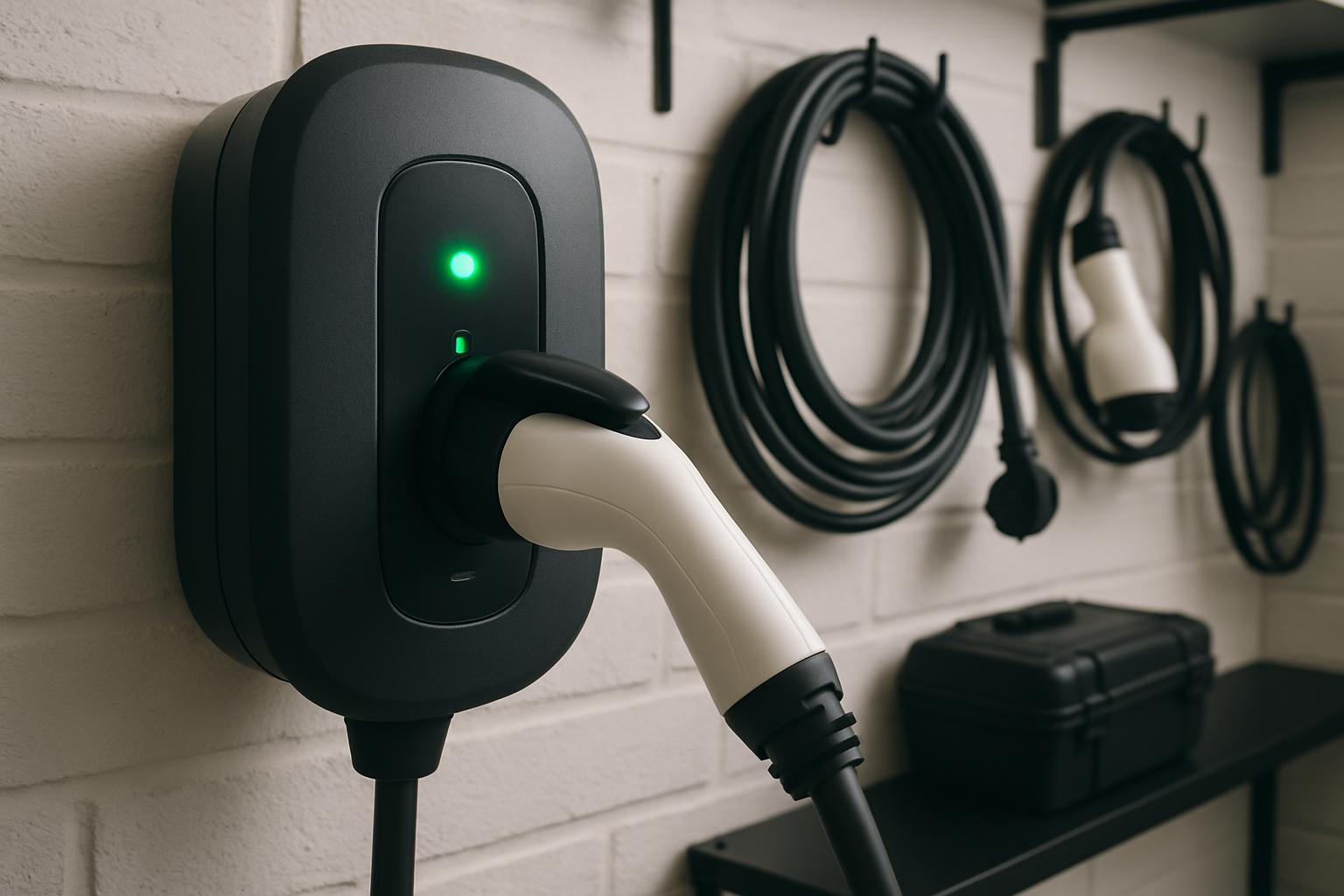
“Set your charge limit to 80% and stop worrying about superchargers” is the battery advice that gets shared most often in EV forums. The electrochemistry says it is only half right.
The 80% guidance is correct. The dismissal of DC fast charging as a secondary concern is also defensible. What the advice misses entirely is the relative weight of these variables. Charging ceiling behavior accounts for a substantially larger share of long-term degradation than charging speed does. If you have to choose which habit to optimize first, the ceiling is not a tie with fast charging frequency. It is not close.
Why Your Charge Ceiling Is the Variable That Matters Most
Lithium-ion cells degrade fastest at the extremes of their state of charge. At 100%, the cathode material undergoes structural stress during every full charge cycle, and the risk of lithium plating on the anode increases. These are electrochemical processes that compound over time and do not reverse.
Think of battery degradation less like a gas tank shrinking and more like a rubber band that loses a little stretch each time you pull it to its maximum. At 80%, you are working in the middle of the band’s range. At 100%, you are pulling it to the limit every single night.
Research published through the National Renewable Energy Laboratory (NREL) on lithium-ion aging consistently identifies state of charge ceiling as a primary driver of capacity loss. For a vehicle rated at 250 miles of EPA range, the difference between a 100% daily charge ceiling and an 80% ceiling can translate to roughly 15 to 25 fewer miles of usable range by year five. That does not happen in one dramatic event. It accumulates charge cycle by charge cycle, invisible until the day you realize your comfortable highway range is no longer what it was when the car was new.
Most current EVs allow you to set a charge limit directly from the infotainment screen or companion app. The feature is not buried. Hyundai, Kia, Tesla, GM’s Ultium-based vehicles, and Ford’s Mach-E all support configurable charge limits as standard functionality. If you have not set yours to 80%, you have the most impactful battery preservation action available to you sitting unused in your menu.
What That Range Loss Actually Costs You
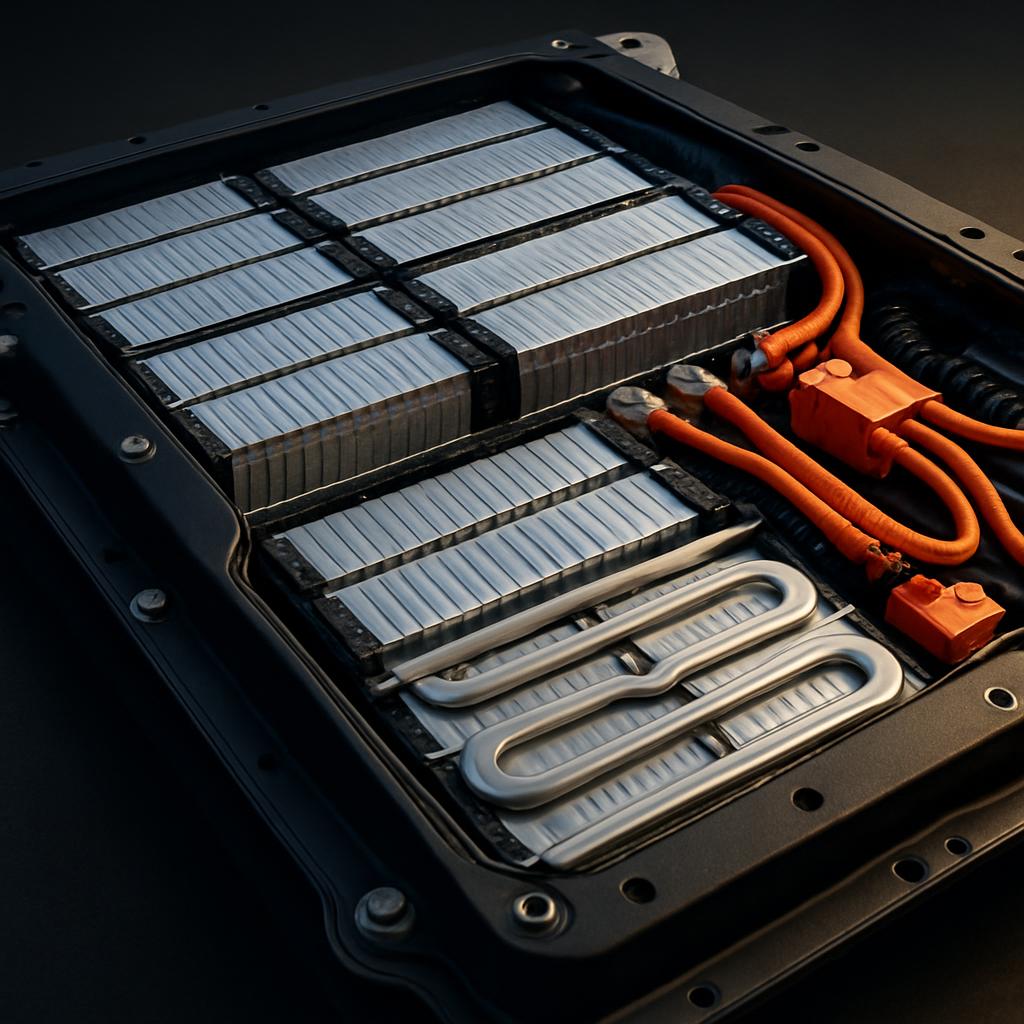
Battery capacity loss does not distribute evenly across a vehicle’s life. The degradation curve is steepest in the first two years and then flattens. That matters because the habits you establish in the first 24 months of ownership disproportionately shape where the battery settles for the rest of its life.
For a 250-mile EPA vehicle, losing 20 usable miles means your real-world comfortable operating range drops from roughly 200 miles (accounting for the buffer most owners maintain) to roughly 180 miles. That gap does not strand you on a typical Tuesday. According to DOE data via the Alternative Fuels Data Center, the average American EV owner drives approximately 37 miles per day. At that usage rate, a 20-mile capacity loss is nearly invisible in daily operation but consistently relevant on any trip that stretches the battery close to its limit.
The financial case is starker. Battery replacement on a mainstream EV currently runs approximately $10,000 to $20,000 depending on pack size and model, according to repair cost reporting from Consumer Reports and independent service centers. Daily 100% charging is not going to send you to a replacement shop. But owners who charge to 100% nightly for five-plus years are routinely ending up with battery warranty claims or reduced trade-in values because they are closer to the degradation threshold. Most manufacturers warrant battery capacity at 70% retention. Crossing that threshold at year seven instead of year eleven is a real financial difference, and it rarely shows up in anyone’s pre-purchase math.
DC Fast Charging: The Misassigned Villain
High-speed DC fast charging does accelerate some forms of lithium-ion degradation, specifically through heat generation and elevated charge rates applied at the cell level. That is real physics. What most coverage gets wrong is the magnitude.
Manufacturers including Tesla, GM, and Hyundai have integrated active thermal management systems that limit peak charge rates to protect cell temperature. Those systems work as designed. I have plugged into a DC fast charger rated at 150 kW that delivered 61 kW for the first 20 minutes because the prior session had not allowed the charger to thermal cycle properly. The charger throttled itself. The car’s battery management system did exactly what it was supposed to do. The cell-level stress from that session was minimal. The frustrating part of that stop was the infrastructure, not the battery.
The practical consequence is that occasional DC fast charging, meaning once or twice a week on a vehicle with active thermal management, produces measurably less long-term degradation than daily 100% ceiling charging does. The following table reflects estimated capacity retention ranges at five years based on charging behavior profiles, consistent with NREL lithium-ion battery aging research:
| Charging Profile | DC Fast Charge Frequency | Est. Capacity Retained at 5 Years | Range Impact on 250-mi EPA Vehicle |
|---|---|---|---|
| 100% daily ceiling | Monthly | ~82-85% | 37-45 mi lost |
| 100% daily ceiling | Weekly | ~79-82% | 45-52 mi lost |
| 80% daily ceiling | Weekly | ~89-91% | 22-27 mi lost |
| 80% daily ceiling | Monthly | ~91-93% | 17-22 mi lost |
Ranges consistent with NREL lithium-ion battery aging research. Individual results vary by vehicle chemistry, thermal management system, and climate.
An owner who charges to 80% and uses DC fast charging weekly retains more battery capacity at five years than an owner who avoids fast charging entirely but charges to 100% every night. The hierarchy is ceiling first. Fast charging frequency is a real but second-order consideration.
Temperature: The Variable Most Battery Guides Skip
Storing a battery at high state of charge in elevated temperatures accelerates degradation beyond what either variable produces on its own. Cold weather reduces available capacity temporarily but does not cause lasting cell damage under normal operating conditions. Sustained heat does.
When I was still doing cell-level testing, we ran discharge cycles at negative 20 degrees Celsius and negative 10 degrees Celsius back to back. The capacity drop between those two temperatures was sharper than almost any published range table shows. That data does not make it into press releases. The more operationally relevant finding is what happens on the other end of the temperature scale: a battery stored at 100% charge in sustained heat above 86 degrees Fahrenheit loses capacity at a compounding rate. Parking in direct sun daily with a full charge is not catastrophic in a single week. Over a three-month summer in Phoenix or Dallas, it registers in ways that show up on your range estimate two years later.
The guidance is specific: if the car is sitting unused for more than a few days, set the charge to 50%. Most current EVs allow you to configure both a departure charge schedule and a storage charge level. If you are not using both of those settings, you are leaving the most effective built-in battery protection tools untouched.
What the Data Confirms and What Remains Variable
What the data confirms: Set your daily charge ceiling to 80%. Charge to 100% only before a long trip when the full range is actually needed. Set a storage charge level of 50% for any period when the car will sit unused for more than a few days. These three behaviors, applied consistently, represent the highest-return actions an EV owner can take for long-term battery health. The charging ceiling habit alone can mean 10 to 15 additional percentage points of retained capacity at the five-year mark compared to daily full charges, which on a 75 kWh pack is roughly 7 to 11 kWh of usable energy. That is the difference between a battery that still serves road trips at year six and one that does not.
One honest limitation: the 80% ceiling creates real planning friction. If your typical commute is 60 miles and you charge to 80% on a 200-mile-rated vehicle, your comfortable buffer shrinks. On unexpected detour days, you will notice it. The answer is not to abandon the ceiling habit; it is to plan your weekly schedule around one full charge before any long-distance day and charge to 80% for every other session.
What remains variable: Battery chemistry differs significantly between manufacturers and even model years. Lithium iron phosphate cells, used in some Tesla base trims and a growing number of vehicles entering the US market, are more tolerant of regular full charges than NMC cells are. Some manufacturers explicitly recommend charging LFP batteries to 100% periodically to allow the battery management system to calibrate accurately. Check your owner’s manual for the specific guidance for your battery chemistry. The principle holds across chemistries. The threshold where it matters changes.
The federal EV tax credit structure is stable through 2032 under current law. Vehicle-specific battery warranty terms are another matter. Read yours before assuming the 70% threshold applies to your specific pack.
References
EPA Fuel Economy Data
DOE EV Resources
NREL Homepage
Consumer Reports Cars
DOE Charging Station Locator