

You flip the front tires for the first time in 18 months and stop cold. The outer edge looks fine. The inner edge is nearly bald, the tread blocks worn almost flush with the sidewall. The car drove straight. No vibration. No warning light. Nothing in the last 1,000 miles told you anything was wrong.
That is exactly how uneven wear works. By the time you notice it, the damage is done. You are not replacing tires early because of bad luck. You are replacing them because something mechanical has been grinding them down from a direction you were never watching.
The Alignment Failure Nobody Caught
Camber angle is the tilt of the wheel when viewed from the front of the car. Zero degrees is perfectly vertical. Negative camber tips the top of the wheel inward. A small amount is intentional: it improves cornering stability. Too much, and the inner portion of the tire carries disproportionate load on every mile you drive.
A vehicle that has taken a hard pothole hit, a curb strike, or a significant impact can shift camber by more than a degree without triggering any driver-perceptible handling change. AAA estimates that road damage accounts for a significant share of suspension-related repair calls annually. The car still tracks straight. The alignment still passes a basic eyeball test. But the inner shoulder of the front tires is taking a beating on every rotation.
I had a 2019 Camry in my bay last year with 28,000 miles on what should have been 50,000-mile tires. Owner had no complaints. The front left was at 3/32 on the inside, fine on the outside. Camber was off by 1.4 degrees on that corner. One pothole impact sometime in the prior year, probably. The alignment had never been checked after purchase.
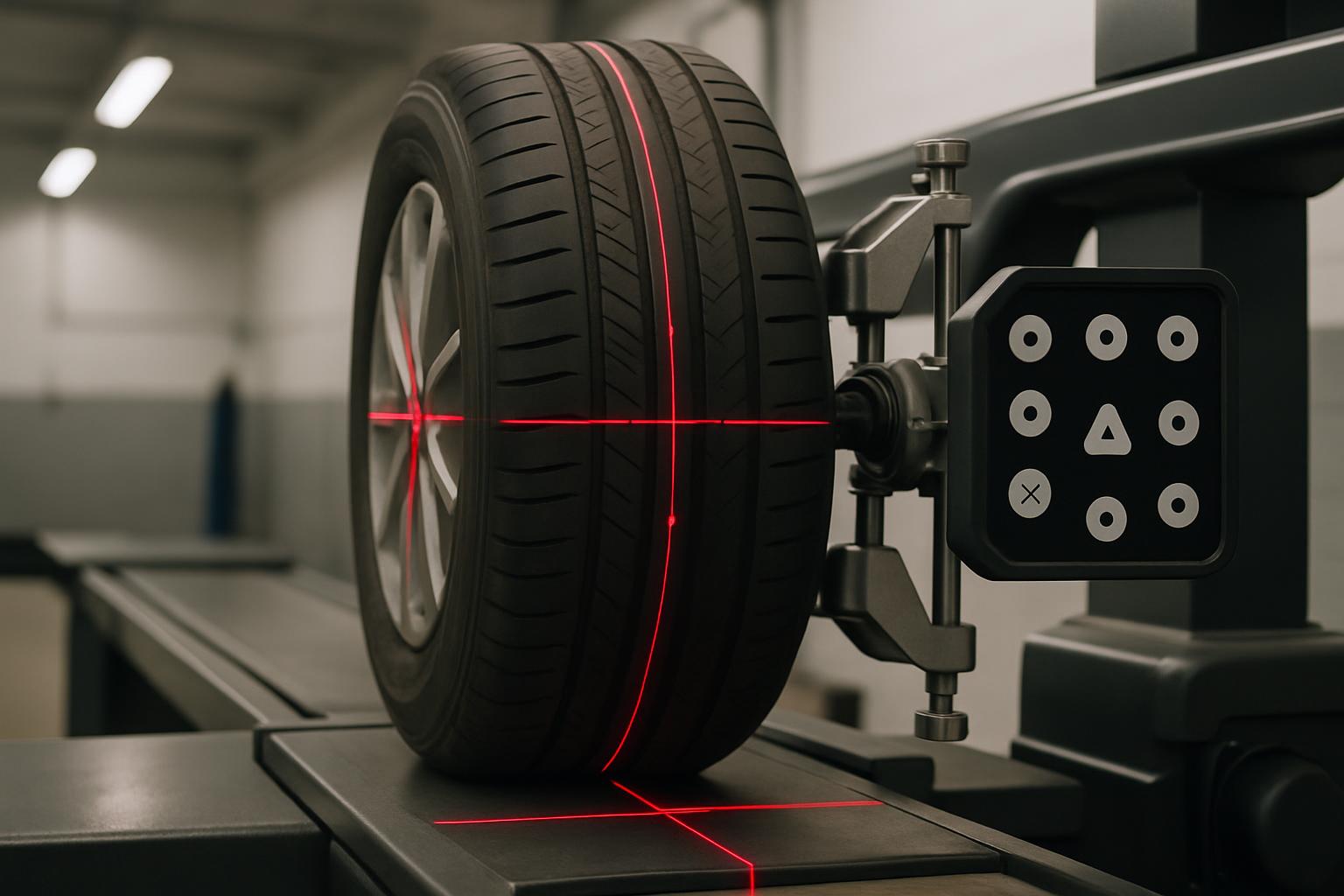
The fix for camber-induced wear is not a tire rotation. It is an alignment. Specifically, a four-wheel alignment on a rack that measures all four corners, not a two-wheel eyeball pass. Dealer alignment service typically runs $80 to $130. An independent alignment shop runs $60 to $100. Either way, it is not the tire.
What Pressure Neglect Actually Does
Low tire pressure does not wear tires evenly. That is the assumption most people carry. What it actually does is collapse the sidewalls slightly, shifting the contact patch to both outer shoulders while the center of the tread lifts off the road surface under load.
The result is cupped or feathered wear on the outer edges, with the center of the tread appearing comparatively newer. It looks like an overinflation problem. It is not.
According to the AAA tire safety data, approximately 20% of passenger vehicles on the road at any given time have at least one significantly underinflated tire. Manufacturers specify cold inflation pressure on the door jamb sticker, not on the tire sidewall. The sidewall number is the tire’s maximum rated pressure, not the operating recommendation. These are different numbers, sometimes by 10 to 15 psi, and mixing them up is a fast route to premature wear.

Overinflation does the opposite. The contact patch shrinks to the center of the tread, which then wears faster than the shoulders. Center wear in the front tires is almost always a pressure problem. Check the door jamb, check your actual cold pressure, and stop using gas station gauge estimates for a reference point.
The Role of Worn Shocks and Struts
Here is the thing about shock absorbers and struts: they do not just affect ride comfort. They control how firmly the tire stays planted against the road surface at speed. A worn shock allows the tire to bounce and rebound. That condition is called cupping or scalloping wear, where the tread surface develops a wavy, irregular pattern with alternating high and low spots around the circumference.
Run your hand across a cupped tire and it feels like a series of shallow scoops carved into the rubber. It is not from alignment. It is from the wheel bouncing rather than rolling in consistent contact with the road.
Most manufacturers recommend inspecting shocks and struts every 50,000 miles and replacing by 75,000 to 100,000 miles under normal conditions. Consumer Reports reliability data consistently identifies worn suspension components as a common contributor to tire wear complaints on high-mileage vehicles. On trucks and SUVs used for towing or loaded hauling, the interval runs shorter because the load amplifies the bounce cycle.
A worn strut does not always announce itself with a harsh ride. Sometimes the degradation is gradual enough that the driver adapts without noticing. The tires, however, do not adapt. They record every bounce in the tread wear pattern.
Toe Setting and the Scrub You Cannot Feel
Toe is the direction the wheels point when viewed from above. Toe-in means the fronts of the tires angle slightly toward each other. Toe-out means the opposite. Both can occur as alignment shifts from road impact, worn tie rod ends, or deteriorated steering components.
Toe misalignment causes a scrubbing wear pattern. The tire is dragged laterally with every rotation instead of rolling cleanly forward. The wear appears as feathering: tread blocks sharp on one side, rounded on the other, like a row of fins. It is most obvious when you run your hand across the tread from side to side. One direction feels smooth. The other catches.
This type of wear is aggressive. A vehicle with significant toe misalignment can scrub through a set of tires in 15,000 to 20,000 miles rather than the expected 40,000 to 60,000. The driver rarely feels it as a handling issue because toe misalignment does not pull the car the same way camber does. The steering feels normal. The tire is still being destroyed.
The Diagnostic Decision Table
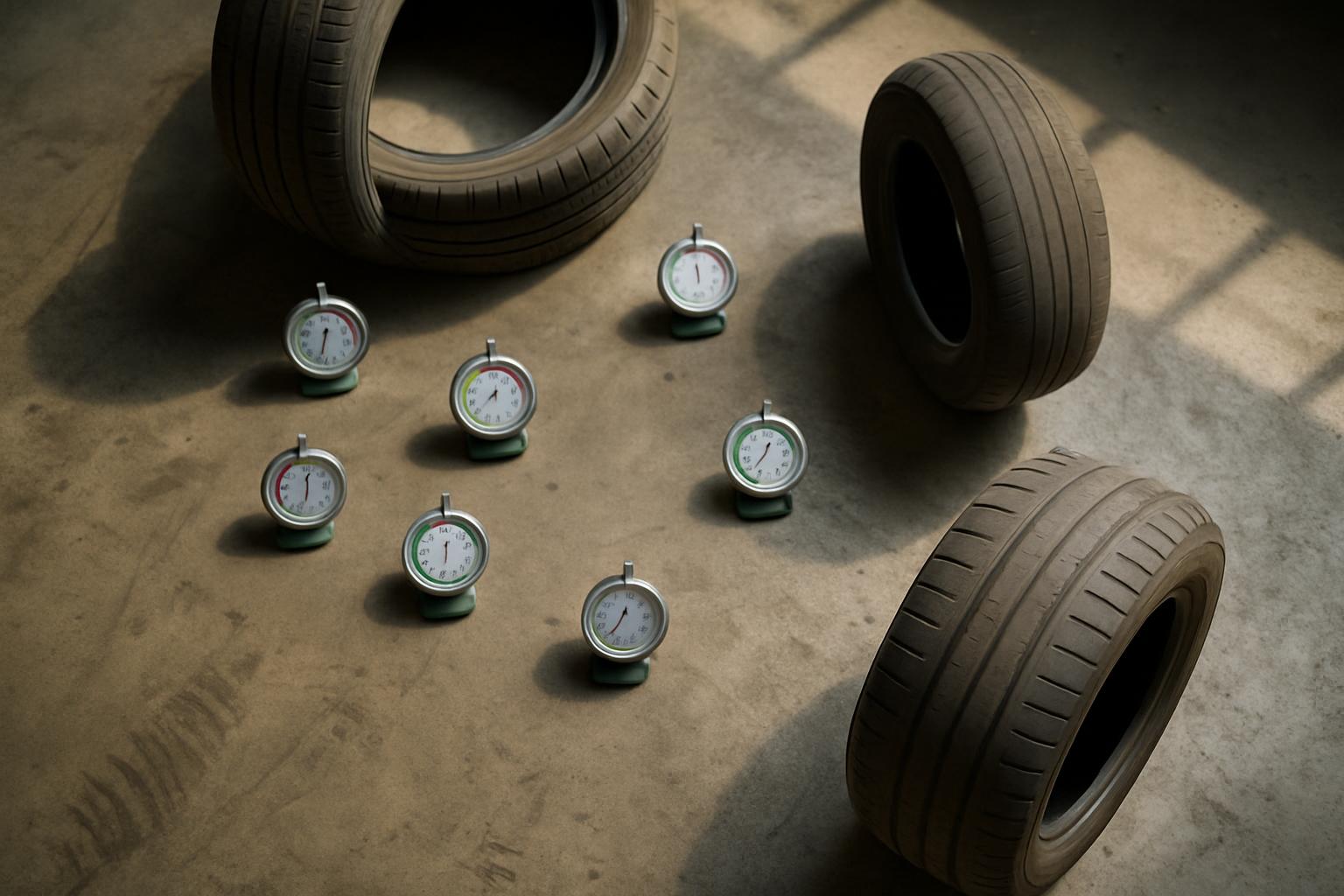
Understanding which wear pattern you have tells you which mechanical system to check. These are not interchangeable problems.
| Wear Pattern | What It Looks Like | Likely Cause | First Check |
|---|---|---|---|
| Inner edge worn, outer fine | Bald or low tread only on inside shoulder | Negative camber excess | Four-wheel alignment |
| Outer edges worn, center fine | Both shoulders low, center newer | Chronic underinflation | Door jamb pressure spec |
| Center worn, shoulders fine | Center tread low, shoulders newer | Chronic overinflation | Door jamb pressure spec |
| Cupping or scalloping | Wavy, irregular patches around circumference | Worn shocks or struts | Bounce test; shop inspection |
| Feathering (one side sharp, one rounded) | Sawtooth feel across tread blocks | Toe misalignment | Four-wheel alignment, tie rods |
| One-sided wear, single tire | Heavy wear on one side of one tire only | Bent control arm or spindle | Full suspension inspection |
The most common mistake owners make is rotating tires to fix a wear problem without diagnosing the cause first. Rotation moves tires to new positions. It does not change the alignment, the pressure, or the shock condition that caused the wear in the first place. You will wear out the next set in the same pattern.
When Rotation Alone Is Not Enough
Tire rotation remains a legitimate maintenance step, but it only helps when the underlying conditions are correct. The standard interval is every 5,000 to 7,500 miles, often paired with an oil change. Rotating on schedule distributes wear across all four tires, preventing one position from accumulating disproportionate mileage.
The problem is that most owners rotate on time but skip alignment checks. Manufacturer service schedules typically recommend a four-wheel alignment check every 12,000 to 15,000 miles or after any significant impact. In practice, most vehicles I see go years between alignment checks, and the tires tell the story.
If a car has worn through a set of tires unevenly and you have not checked alignment, replacing the tires without the alignment is the most expensive version of the same mistake twice. The new tires will replicate the same wear pattern in the same time frame.
What to Do Before the Next Set
Get a four-wheel alignment before mounting new tires. Not after. A shop that offers to align after mounting is doing it in the wrong order. The alignment spec determines how the tire seats and begins wearing from the first mile. Spending $80 to $120 on alignment before a $600 to $900 tire purchase is not optional maintenance. It is the prerequisite for getting the mileage you paid for.
Check your cold tire pressure against the door jamb spec, not the tire sidewall number. Do this monthly, not when a tire looks low.
If the wear pattern is cupped or scalloped and the vehicle has more than 60,000 miles, budget for a strut inspection alongside the alignment. A wheel alignment on a car with worn struts will not hold its settings correctly under load. The struts need to come first.
Skipping a $120 alignment to save $120 is how people end up spending $800 on tires every two years instead of every four. That math is not subtle.
References
AAA Tire Safety and Road Hazard Data
Consumer Reports Car Reliability Data
CarMD Vehicle Health Index
RepairPal Alignment Cost Estimates