

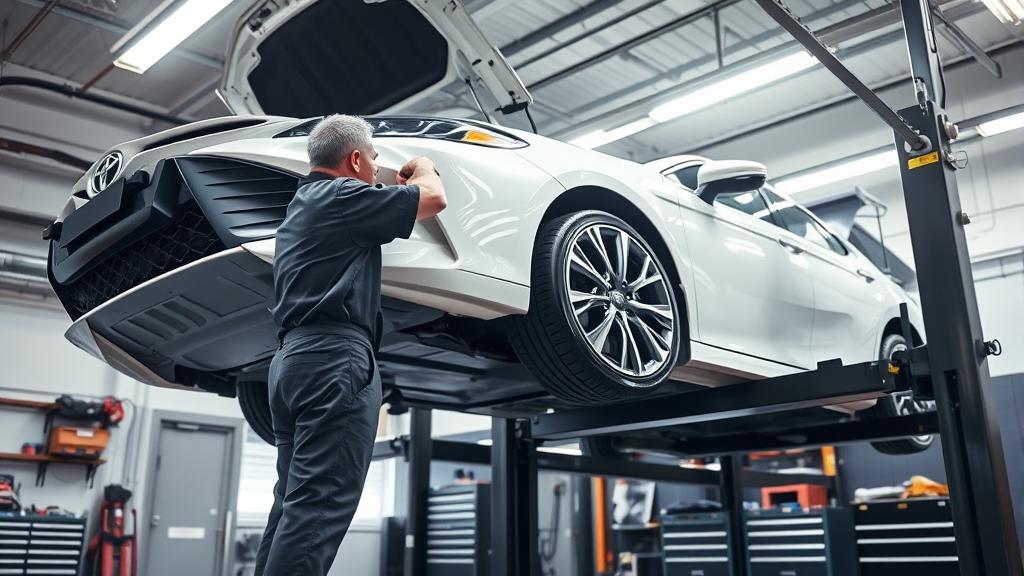
Sixty thousand miles is around the point where a neglected car starts making a case for itself. Not all at once. Slowly, in the form of a rough idle here, a longer crank there, a pull to the left on a freeway that wasn’t there six months ago.
The 60,000-mile service is not a made-up milestone from a dealer looking to sell you something. It aligns with the actual wear cycles of components like spark plugs, coolant, transmission fluid, and the serpentine belt. Skip it, and nothing catastrophic happens on mile 60,001. But skip it long enough and the math gets ugly fast.
Spark Plugs: Small Part, Large Downstream Cost
Most modern vehicles use iridium or platinum spark plugs rated for 60,000 to 100,000 miles. Manufacturers, including Toyota, Honda, and Ford specify replacement at or around the 60k mark depending on the engine. Leave them in the past that interval, and combustion efficiency drops.
What that means in practice: the engine starts running rich, fuel mileage drops by two to four percent, and the catalytic converter starts taking on carbon deposits it was not designed to handle.
I have seen catalytic converters fail at 90,000 miles on vehicles that never had their spark plugs changed from the factory. A set of iridium plugs for a four-cylinder engine typically runs $150 to $300 in parts and labor. A catalytic converter replacement on the same car runs $900 to $1,800, and that is before the diagnostic time.
The plugs are the cheaper bet by a wide margin.
The Coolant Flush That Protects More Than the Radiator
Skip this long enough and the head gasket is next. Here is why that happens.
Coolant contains corrosion inhibitors that break down over time. Most manufacturers recommend a flush between 50,000 and 100,000 miles, with many falling right at the 60k interval. When those inhibitors are depleted, the coolant becomes acidic. Acidic coolant eats aluminium, and modern engine blocks and heads are mostly aluminium.
A coolant flush typically costs $80 to $120 at an independent shop. A head gasket job on the same engine runs $1,500 to $2,500 depending on the vehicle. That gap is not an edge case. According to CarMD’s repair data, head gasket failure is consistently among the top 10 most expensive repairs on vehicles between eight and twelve years old.
The vehicles that show up with head gasket problems at that age almost always have one thing in common: deferred maintenance on fluids.

Transmission Fluid: The One People Forget Until It Is Too Late
Transmission fluid degrades with heat cycles. Automatic transmission fluid in a vehicle that does highway miles and city driving has seen thousands of heat cycles by 60,000 miles, and in most vehicles it needs to be serviced at that point.
A lot of manufacturers started labelling their automatic transmission fluid as “lifetime fill.” That language has caused more transmission failures than I care to count. “Lifetime” means the fluid lasts the life of the transmission, not the vehicle. Those are not the same number.
A transmission fluid service at 60k runs $150 to $250 at most independent shops. A transmission rebuild or replacement on a midsize sedan runs $2,800 to $4,500, sometimes more on trucks and SUVs. According to J.D. Power’s 2025 Vehicle Dependability Study, transmission-related issues are among the top categories driving long-term ownership cost increases on vehicles past the 60,000-mile mark.
If the fluid comes out dark brown with a burnt smell, the damage may already have started. That is what deferred maintenance looks like from the inside of a pan.
The Serpentine Belt Is Cheap Until It Is Not
The serpentine belt drives the alternator, power steering pump, water pump, and AC compressor from a single rotating loop. On most modern vehicles, it also drives the water pump, which means a belt failure can cause immediate overheating.
Manufacturers typically recommend replacement at 60,000 to 90,000 miles. Rubber belts fail faster in extreme heat or cold climates. The belt itself usually runs $25 to $60 in parts. Labor to install it runs $60 to $140, depending on how buried it is in the engine bay.
A belt that snaps on the highway does not just leave you stranded. It can damage the power steering pump and alternator in the same event if the failure is violent. Roadside towing plus emergency belt replacement plus any collateral damage runs $350 to $500 minimum. That is three to four times the cost of preventive replacement.
Brake Fluid Gets Overlooked, and It Matters
Brake fluid is hygroscopic. It absorbs moisture from the air over time, and that moisture lowers the fluid’s boiling point. On a vehicle that has been on the road for 60,000 miles, the brake fluid may be holding enough moisture to introduce vapor lock under hard braking.
Most manufacturers recommend a brake fluid flush every two to three years or every 30,000 to 45,000 miles. By 60,000 miles, a lot of vehicles are significantly overdue.
A flush runs $80 to $120. Replacing a seized brake caliper because corrosion and degraded fluid accelerated wear runs $250 to $500 per axle. The fluid is the easy, cheap fix.
Air and Cabin Filters: Low Cost, High Neglect
The engine air filter at 60k is often clogged on vehicles that do a lot of city driving or live in dusty environments. A restricted filter makes the engine work harder to pull air, which affects fuel economy and can cause misfires in extreme cases.
Engine air filter replacement typically runs $30 to $60 parts and labor. The cabin air filter, which filters what you breathe inside the car, usually costs the same or less.
Neither is glamorous maintenance. Both get skipped more than almost any other item on the 60k list. According to AAA’s annual maintenance survey data, cabin filter replacement is one of the most consistently deferred items across all vehicle types and model years. Consumer Reports reliability data shows that vehicles with documented regular fluid and filter maintenance have meaningfully longer trouble-free ownership periods on average than those without.
What a Full 60,000-Mile Service Actually Costs
At an independent shop in 2026, a complete 60k service covering spark plugs, coolant flush, transmission fluid, serpentine belt, brake fluid, and both filters typically runs $600 to $900 for a mainstream domestic or Japanese vehicle. More for a European vehicle with higher parts cost.
That number sounds large until you compare it to the repair cost of any single item on the “what breaks when you skip this” list. One head gasket job erases eight years of 60k services. One transmission replacement erases roughly ten.
The math on preventive maintenance is not subtle.
The Bottom Line
If the repair bill is coming from neglect, it is always more expensive than the service would have been. That is not a philosophical point. It is what the numbers show, consistently.
Get the 60,000-mile service done. If you are already past it and have not had the work done, start with spark plugs and transmission fluid. Those are the two items most likely to cause cascading damage on a vehicle running significantly overdue. A shop that is worth using will tell you the actual condition of each component when they inspect it, not just replace everything on a list.
One honest gap in this article: specific intervals vary by make, model, and how the vehicle is driven. The ranges here are drawn from CarMD data and AAA benchmarks, and they apply broadly to domestic and Japanese passenger vehicles. Pull your owner’s manual or check your manufacturer’s website for the intervals that apply to your specific car before committing to a service schedule.
If the quote for catching up on deferred 60k maintenance runs past 60 percent of what the car is worth on Kelley Blue Book, run the replace-versus-repair calculation before you approve the work.
References
Disclaimer: The information provided in this article is for educational and informational purposes only. It does not constitute professional advice. Readers should conduct their own research and consult with qualified professionals before making any decisions.