

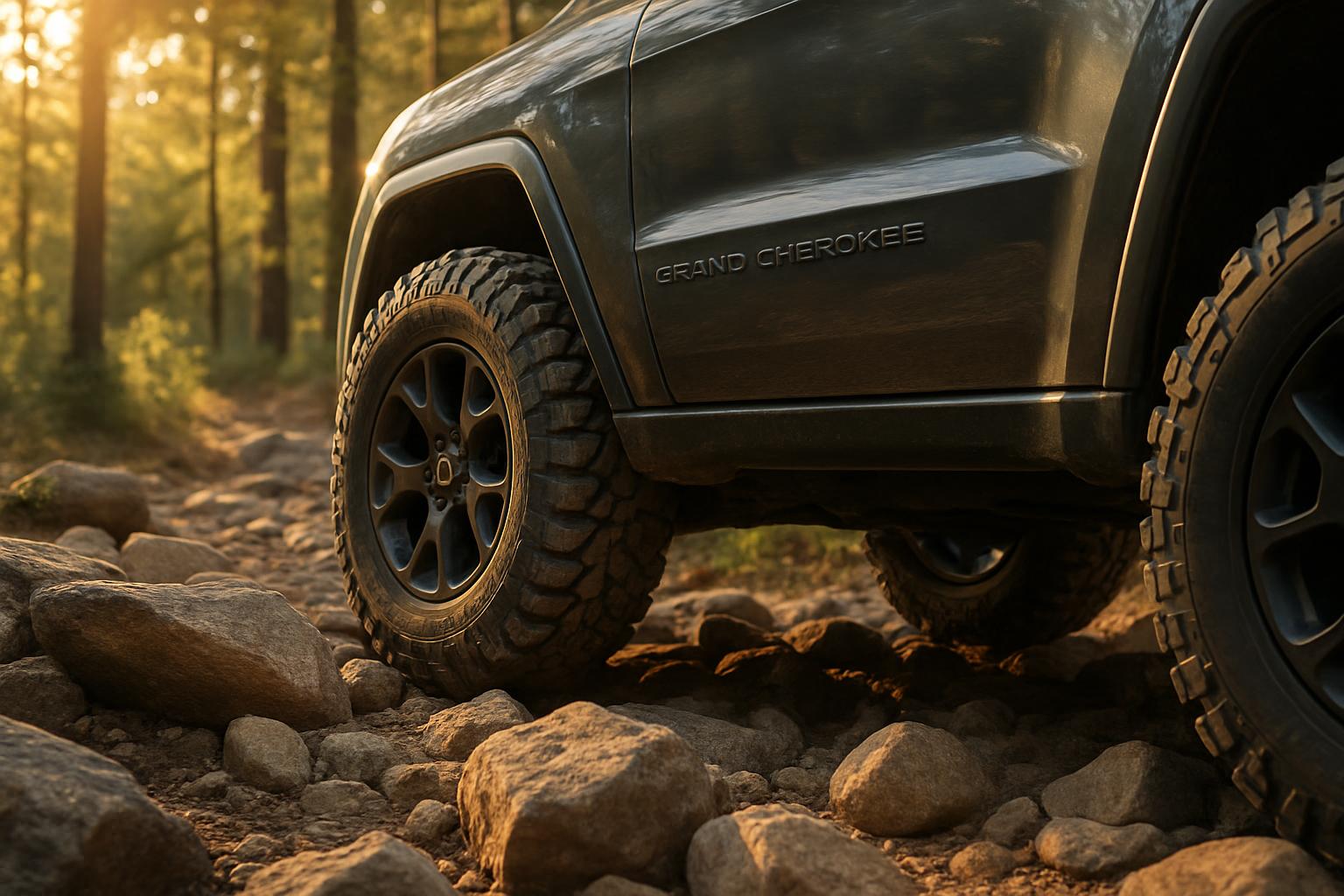
The expansion joints on I-24 between Nashville and Cookeville hit at roughly 72 mph. Half-inch seams in the concrete, close enough together that they arrive before you’ve processed the first one. In the Grand Cherokee, the cabin registered a brief compression and moved on. Two days later on the same road in the Explorer, those joints came through the steering column and into both hands. Not violently. But clearly, and repeatedly, for six hours.
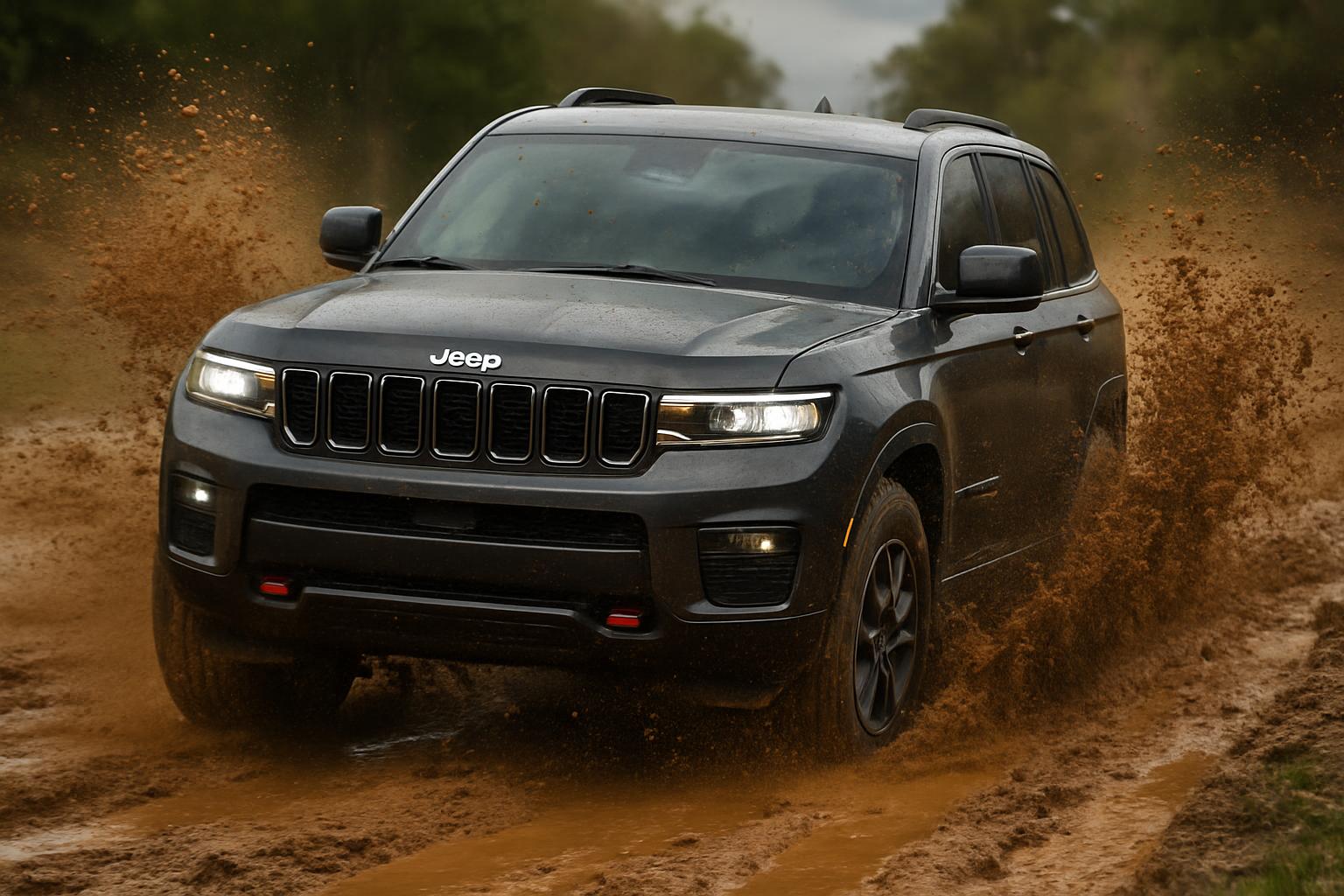
That gap is what this comparison is actually about. Not the horsepower figures, not the screen sizes both manufacturers print in bold, not the off-road mode count. The dimension where these two vehicles diverge most sharply from what their specs imply is ride quality on real American highways, and the verdict runs exactly opposite to what most buyers assume going in. The Grand Cherokee, which every advertisement frames as a trail machine with a Trail Rated badge on the hood, is the more composed and comfortable family vehicle on pavement. The Explorer, marketed as the refined, approachable family hauler, has a suspension tune that makes itself known over distance in a way that compounds.
Ride Quality: The Inversion
The Grand Cherokee’s available Quadra-Lift air suspension adjusts its damping character continuously, not just between driver-selected modes. On the highway portion of my test loop, in Normal height setting, the Cherokee absorbed the mid-frequency road chop that most SUVs translate into a low drumbeat through the seat. It felt like a heavier, longer vehicle than it is. That is not an accident. Jeep has been refining this platform through the fifth-generation cycle, and the 2026 update builds on what was already working.
On the chip-seal section of US-70 outside Crossville, the Grand Cherokee’s cabin stayed quiet in a way that required something active in the dampers. The Explorer on that same road introduced a low-frequency vibration that worked through the door armrest and the seat foam. Not jarring. The kind of thing you notice around mile 180, when your lower back starts talking. My passenger on the Explorer run, a six-hour loop through Tennessee highway construction east of Nashville, mentioned it first. I had been sitting with it for an hour already.
Ford’s Explorer uses a MacPherson strut front and multi-link rear setup that does an excellent job managing lateral body motion, particularly in corners. That is the trade. The Explorer’s tune prioritizes stability over compliance. It is a better-handling vehicle in a single-lane-change scenario. Over a day’s worth of driving, the ride quality difference between these two is not ambiguous.
The Grand Cherokee wins on ride quality. It is not close over any distance beyond 150 miles.
Interior, Cockpit, and the Infotainment Problem
Step into the Grand Cherokee Laredo and the cabin communicates effort. The Uconnect 5 system on the 10.25-inch display responds in real time; tap-to-response is immediate in a way that sounds unremarkable until you spend an afternoon in the Explorer. The physical climate control knobs are still present, sitting below the screen in their correct positions, which matters more than it sounds at 75 mph when you do not want to navigate a sub-menu to lower the temperature. The voice command recognition, however, degrades noticeably in highway cabin noise above 70 mph. At that speed, with any road surface working against you, the system misreads roughly one in three natural-language commands. Use the touchscreen.
The Explorer’s SYNC 4 system is a more complicated situation. The screen is physically larger on upper trims, and the interface is polished in photographs and in the showroom. In use, there is lag on every tap. I went through the climate menu four times in a row on the same section of highway to confirm it was not an anomaly. The hesitation was there every time. It is not a glitch. It is the product. Ford has addressed parts of this in recent software updates, but on the 2026 ST-Line unit I tested, the delay sat consistently in the 200 to 400 millisecond range before screen registration. On a vehicle that starts around $42,000, that is embarrassing.
The Grand Cherokee’s door close tells you something. The sound is a dampened, solid clunk that implies mass behind the panel. The Explorer’s mid-range XLT door closes with a slightly thinner note in the upper quadrant, a hollowness you hear and feel in the handle. These details compound. After a week in each vehicle, the Grand Cherokee feels like it was built to specifications. The Explorer feels like it was built to a price.
The Grand Cherokee wins the interior quality contest. The Explorer’s infotainment lag is not a preference issue.
Third Row and Cargo Reality
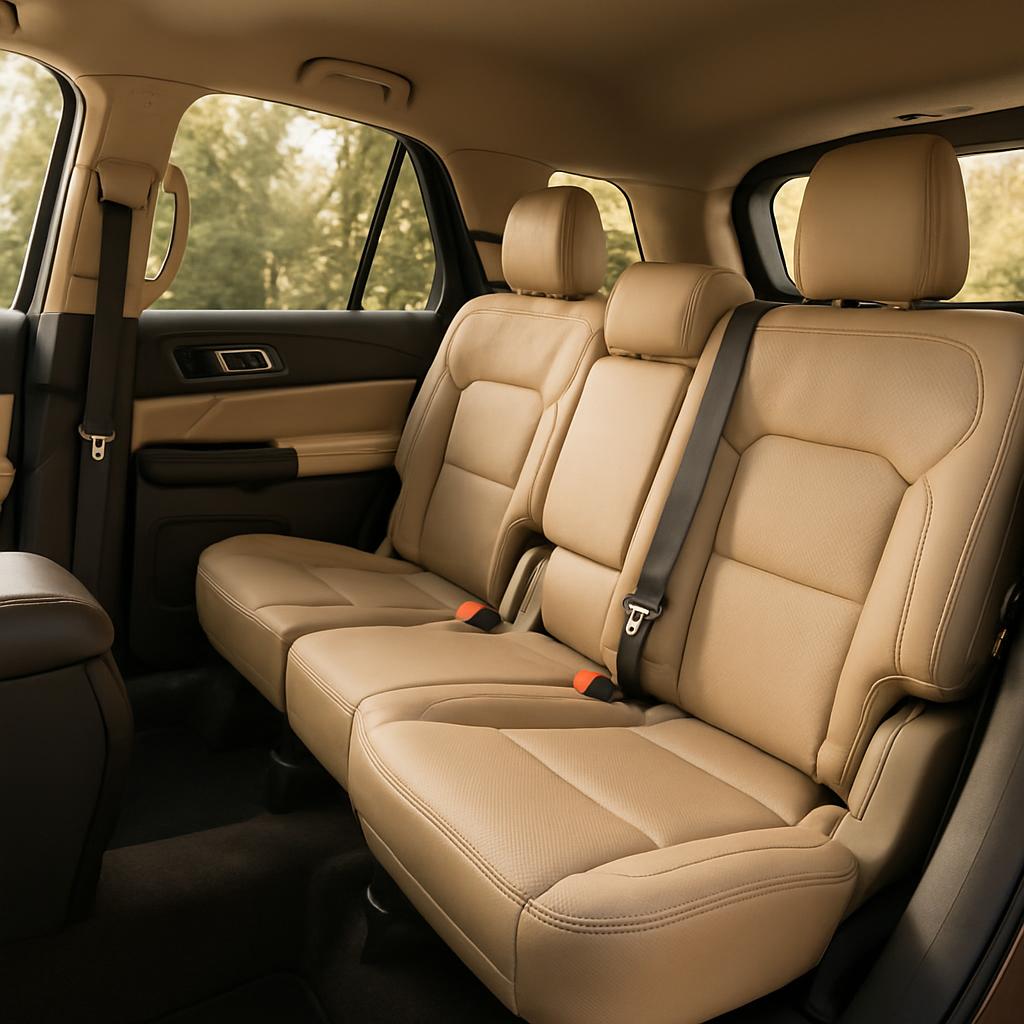
The Grand Cherokee’s third-row situation deserves an honest accounting, because it is a real problem for some buyers. The standard five-seat Grand Cherokee has no third row at all. Buyers who need seven seats step up to the Grand Cherokee L, which adds roughly $3,500 to $5,000 at comparable trim levels, per Edmunds pricing data. Once you’re in the L, the fold mechanism for the third row is what I have previously described as optimistic engineering. You need to read the manual the first three times. The pull handle location is counterintuitive, the seatback requires a specific angle before the seat cushion releases, and if any cargo is pressing against it from the rear, nothing moves. Getting a six-foot adult into that third row requires a posture negotiation. Once they are in, the headroom is marginal. Do not put a person you like back there on a four-hour drive.
The Explorer includes three-row seating as standard across most configurations. The third row fits adults up to roughly 5’8″ for shorter distances before knee clearance becomes the conversation. Neither vehicle solves the fundamental geometry problem of cramped third-row seating in a non-full-size platform. The Explorer’s 18.2 cubic feet of cargo space behind the third row edges the Grand Cherokee L’s 17.2, per manufacturer specifications. For families running seven seats routinely, the Explorer’s structural advantage here is genuine. The Grand Cherokee L requires more money to reach the same passenger count, and the fold mechanism will annoy you the first dozen times.
Performance, Towing, and What the Specs Miss
The 2026 Grand Cherokee’s base powertrain is a 3.6-liter Pentastar V6 producing 293 horsepower. The eight-speed automatic moves through gears without drawing attention to itself, which is exactly what you want on a long drive. The optional 4xe plug-in hybrid is a different situation: its regenerative braking at light throttle is grabby in stop-and-go in a way that the standard drivetrain’s behavior is not. You adjust to it within an hour. But it does not fully disappear the way a transparent powertrain should on a long haul.
The Explorer’s turbocharged 2.3-liter four-cylinder makes 300 horsepower and is genuinely responsive in city driving. At highway cruise, around 65 to 70 mph on a long grade, there is a faint engine drone when the nine-speed automatic holds a gear it would prefer to shift out of. You notice it on a quiet interstate at night, and once you hear it, you hear it every time. The Grand Cherokee’s V6 pulls with more composure across the rev range. Power delivery is smoother, and the four-wheel-drive system absorbs grade transitions without the slight hesitation the Explorer’s transmission introduces under moderate uphill load.
The Explorer’s platform behavior under trailer load is noticeably more stable at highway speed than the Grand Cherokee’s. The trailer sway control calibration is better at this weight range. That is a real win for the Explorer, and buyers who tow regularly should know it. The Grand Cherokee carries a 6,200-pound standard tow rating versus the Explorer’s 5,600 pounds on paper, but the Explorer hauls a trailer at those weights with more confidence through the physics of the maneuver.
| Spec | 2026 Jeep Grand Cherokee | 2026 Ford Explorer | Best For |
|---|---|---|---|
| Base MSRP (approx.) | $42,500 | $39,000 | Explorer (entry price) |
| Base engine output | 3.6L V6, 293 hp | 2.3L Turbo-4, 300 hp | Grand Cherokee (refinement) |
| EPA combined MPG | 22 mpg | 24 mpg | Explorer (fuel economy) |
| Standard tow capacity | 6,200 lbs | 5,600 lbs | Grand Cherokee (tow rating) |
| Standard seating | 5 (L: 7, adds cost) | 7 | Explorer (family capacity) |
| Cargo behind 3rd row | 17.2 cu ft (GC L) | 18.2 cu ft | Explorer (cargo volume) |
| Air suspension available | Yes (Quadra-Lift) | No | Grand Cherokee (ride quality) |
| PHEV option | Yes (4xe, approx. $57k) | No | Grand Cherokee (electrification) |
| IIHS recognition | Top Safety Pick (select trims) | Top Safety Pick (select trims) | Even |
Sources: EPA fueleconomy.gov, IIHS 2025 ratings, Edmunds, manufacturer specification pages.
Who Should Not Buy the Grand Cherokee
Skip the Grand Cherokee if three-row seating is a weekly functional requirement, not an occasional use case. The standard model is a five-seat vehicle and the Grand Cherokee L’s fold mechanism is a genuine friction point for anyone who reconfigures the cabin regularly. The premium for the L shifts the pricing equation against the Explorer at base trim levels, sometimes by enough to change the conclusion.
Skip it if fuel economy is a meaningful budget line. The Explorer’s two to three mpg combined EPA advantage is real and compounds across a five-year ownership cycle. If your driving is primarily urban and your towing needs sit below 4,000 pounds, the EcoBoost four-cylinder’s stop-and-go efficiency is a practical edge the Grand Cherokee V6 does not match.
The Grand Cherokee’s comfort and software quality advantages matter primarily to buyers who put serious miles on the vehicle, highway miles especially, with a full passenger load. If you are commuting 12 miles each way in a city, that suspension tune is largely invisible.
The Verdict
The 2026 Grand Cherokee is the better family highway SUV of these two. Its ride compliance on extended drives, cabin material quality, infotainment responsiveness, and available plug-in hybrid powertrain all point in the same direction. IIHS has awarded Top Safety Pick recognition to select trims of both vehicles, per the 2025 IIHS ratings database, so safety is not the differentiator here.
The inversion is real. Jeep built the vehicle that feels less like a truck over a long drive. Ford built the vehicle that handles a corner better and fits a seventh seat without a surcharge. If your family’s highway miles outnumber trail miles by a factor of fifty to one, which describes most buyers in this segment, that swap matters in the direction of the Grand Cherokee.
Buy the Grand Cherokee if you drive more than 150 highway miles at a stretch and comfort is your primary measure. Buy the Explorer if you seat seven routinely or value fuel economy over ride compliance.
One honest qualification: long-term reliability data specific to the 2026 model year is still forming. Consulting Consumer Reports reliability surveys and J.D. Power’s most recent Vehicle Dependability Study for prior model years gives you the best available picture until 2026-specific data matures. Run both vehicles through Edmunds’ True Cost to Own tool using your zip code and intended trim before finalizing. The five-year ownership cost difference, factoring in depreciation and fuel, often shifts the conclusion further than the sticker spread suggests.
References
IIHS Vehicle Safety Ratings
NHTSA Safety Ratings
EPA Fuel Economy Data
Edmunds True Cost to Own
Jeep Official Site
Ford Official Site