

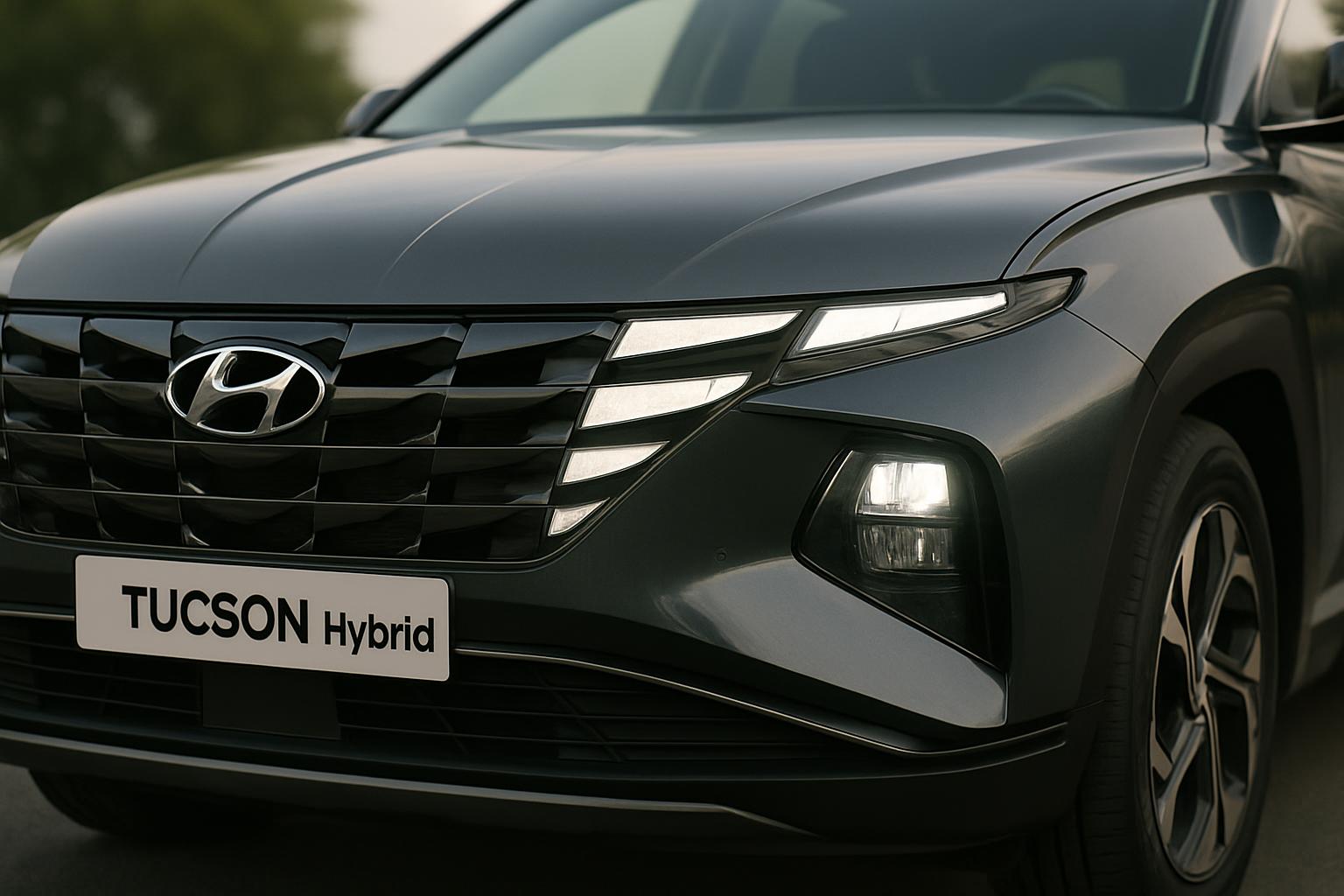
The assumption that follows the Tucson Hybrid into every dealership is the same one: you are settling. The RAV4 Hybrid went to someone else, the wait list stretched out, and now here you are, in a Hyundai. That framing is wrong, and it costs buyers real decisions. The Tucson Hybrid is not a consolation vehicle. In several specific and verifiable ways, it is a better choice than the Toyota.
Not for everyone. That qualifier matters and will get its own section. But the buyers who walk out of a Tucson Hybrid test drive unconvinced are usually the ones who never scheduled one.
The Reputation Problem Has a History
The Tucson earned its runner-up status honestly, several years ago. Earlier generations were fine in the way that most compact crossovers were fine: nothing notably wrong, nothing notably right. The powertrain felt workmanlike. The cabin materials at the lower trims were exactly what they looked like. The hybrid option, when it arrived, was seen as Hyundai’s answer to a question Toyota had already answered.
That history has calcified into a market assumption that has not caught up to the current vehicle. Buyers still walk in expecting to find last decade’s Tucson wearing a different badge. They find something different. The current-generation hybrid is not the old hybrid with updated software. The platform, the powertrain integration, and the cabin quality are meaningfully changed in ways that do not announce themselves in brochures.
Hyundai’s IIHS performance in recent cycles supports this. The Tucson has earned strong ratings across front crash prevention, headlight performance, and side impact protection, placing it consistently in the same safety tier as the RAV4. Safety credibility used to be Toyota’s advantage here. It is no longer a gap.
The Cabin Before the Drive
Sit in a current Tucson Hybrid SEL before you form a verdict about it. The seat foam at the front is firmer than a first press suggests, which matters on a long drive. The lower back support holds shape through several hours of highway miles without the gradual flattening you feel in the base CR-V’s front seat around hour three. The steering wheel rim has a slightly textured grip that does not feel premium in a show-car way but feels solid under a real hand in real driving.
The infotainment display on upper trims is clean and quick to respond. The physical climate controls sit directly below it as actual knobs and buttons, not a secondary touchscreen. You can adjust the temperature by reaching forward and turning something without looking at it. Several competitors have removed this capability in the name of minimalism. The Tucson kept it, and the judgment is correct.
I’ve reviewed vehicles where the camera system was so bad I asked the comms rep if the unit was faulty. The Tucson’s surround-view camera is not that. The image is clear enough to use confidently in a tight parking structure without adjusting your expectations. It does not rival a top-spec Audi display, but it is not trying to.
The lower door panels are hard plastic. They are present, they flex when pressed, and they are the cost-cutting edge of the interior. The Tucson does not hide this. For buyers who judge interior quality by what they can flex, it will read as a problem. For buyers who spend their attention on the steering wheel, the seat, and the center console, it disappears completely.
The Powertrain on the Road
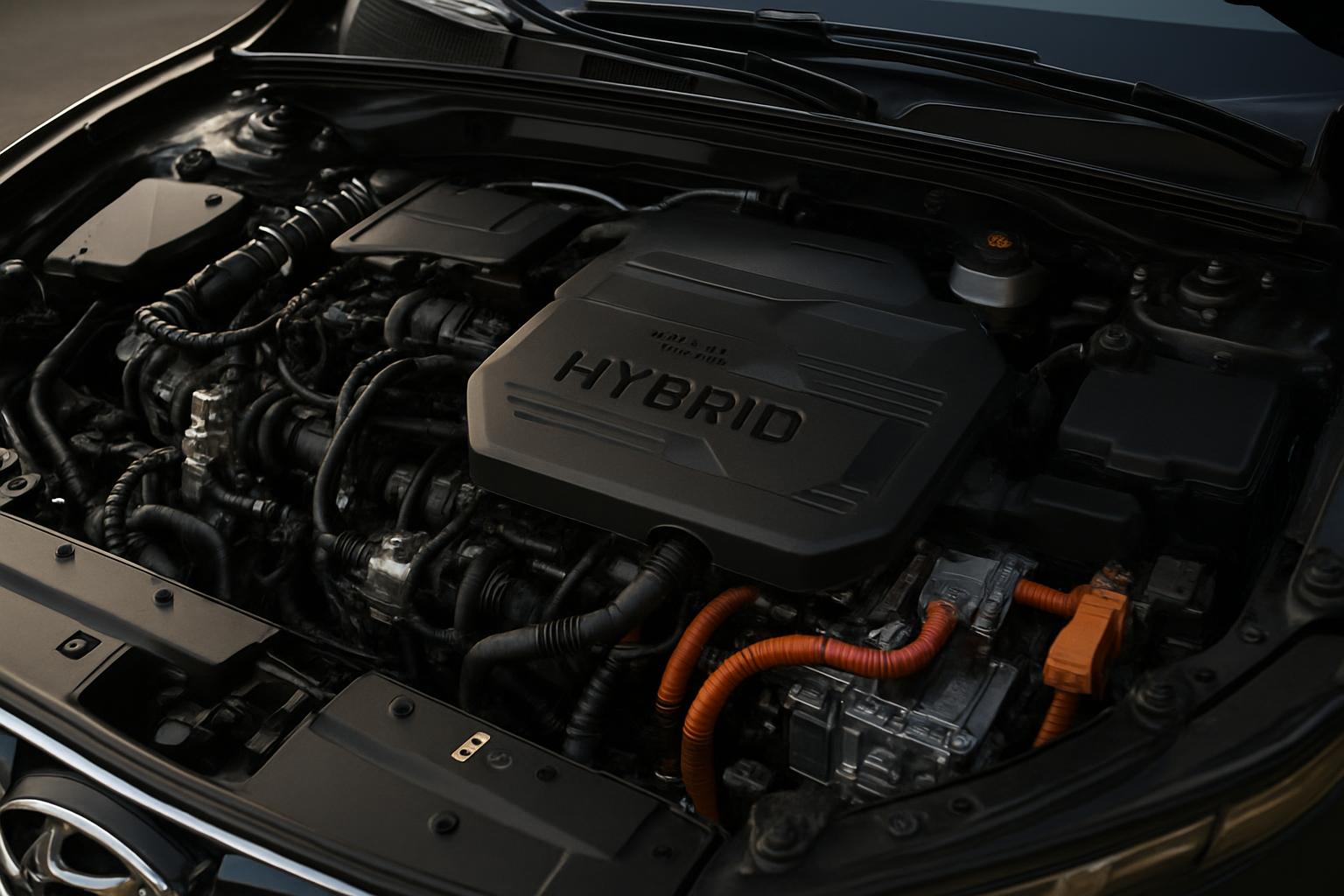
The hybrid powertrain has a character that the spec sheet underdelivers. Off a stop light in a city block, the electric assist pulls cleanly and quietly in a way that makes the base gas Tucson feel like a different class of vehicle. At low speeds, you are aware of how little noise is happening. That quality does not survive the whole drive, but it survives the first twenty minutes, which is where most buyers form their impressions.
At freeway speed, the Tucson Hybrid settles. The cabin does not go library-quiet, but it goes composed. Tire noise from the standard rubber becomes present above 75 miles per hour in a way that is real but not harsh. The structure of the vehicle manages vibration from rough freeway sections better than I expected, with road surface input that arrives at the seat cushion as a dull report rather than a transmitted jolt. The RAV4 Hybrid is quieter still at a matched speed. That is honest and worth stating. But the Tucson Hybrid’s margin of inferiority is narrower than the gap in their respective reputations.
The powertrain feels unhurried but never strained. On a two-lane road with a posted 55-mph limit and a gradual grade, the transition between electric assist and engine engagement happens without drama and without the slight lurch that earlier hybrid systems produced when load changed quickly. Hyundai’s integration is smooth enough that passengers who have not driven in a hybrid before often do not notice it is one until someone mentions the fuel receipts.
The regenerative braking calibration takes a few minutes to trust. The pedal feel under light braking is slightly softer than a purely hydraulic system, and first-time hybrid drivers occasionally over-brake in the first few miles. By the second day, it is invisible. By the end of the week, you stop thinking about it entirely.
Where the RAV4 Still Wins
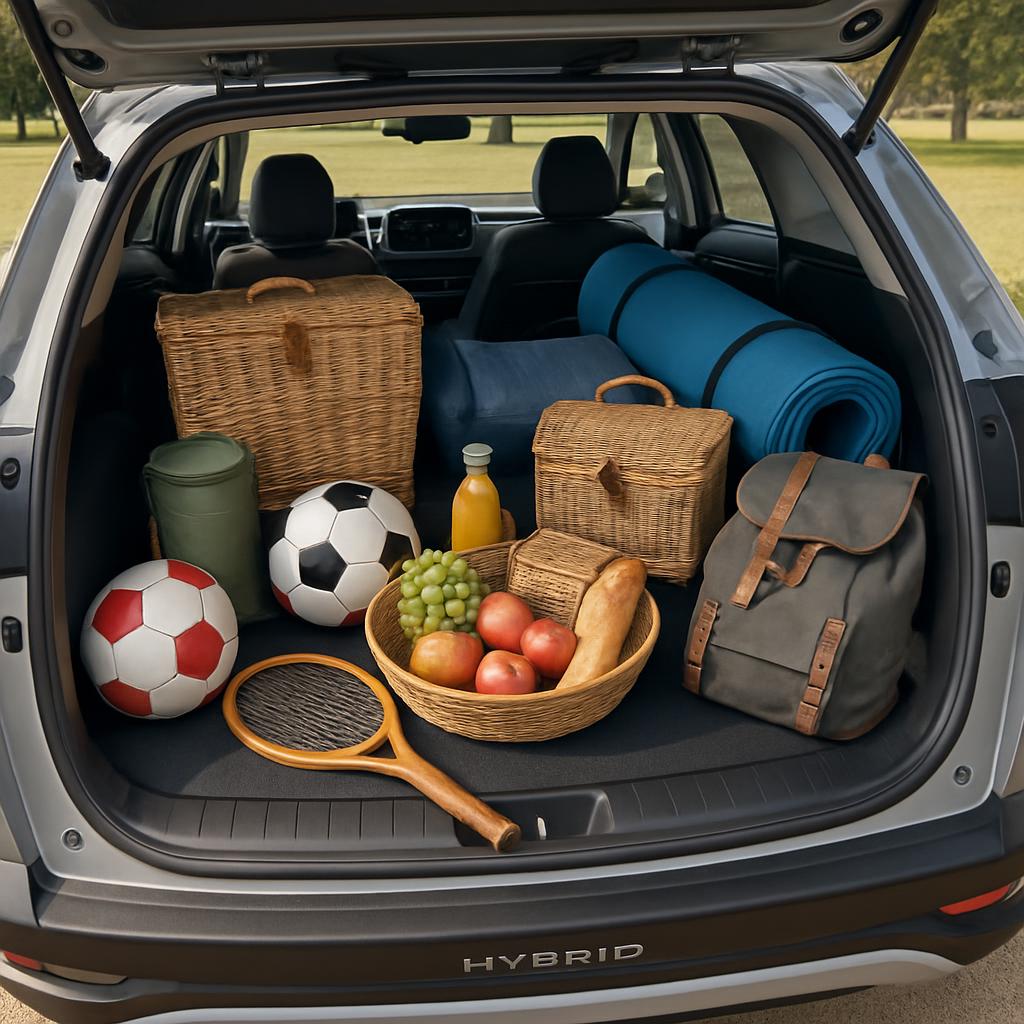
The Tucson actually outperforms the RAV4 on cargo room behind the rear seat — this surprises most buyers who assumed the Toyota had the spatial advantage. If loading capacity is the primary job, the Tucson is the stronger choice here, not the weaker one.
The RAV4’s resale value retention is also better documented and historically consistent. Toyota’s brand equity in the compact crossover segment is not myth. If you plan to sell or trade within three to four years and you are optimizing for retained value, the Toyota carries a real advantage.
The RAV4 Hybrid also carries a longer track record in high-mileage applications. Fleet operators and buyers who expect to cross 150,000 miles have more longitudinal data on the Toyota’s hybrid system. Hyundai’s current generation has been strong, but “strong for several years” is not the same as “strong for two decades.” That is a legitimate distinction.
How the Main Alternatives Compare
| Dimension | Tucson Hybrid | RAV4 Hybrid | CR-V Hybrid | Best For |
|---|---|---|---|---|
| Highway cabin refinement | Composed, moderate tire noise above 75 | Quieter at matched speed | More road noise than either | Tucson or RAV4 |
| Cargo practicality | More space than most expect — outperforms RAV4 | Slightly less rear cargo than Tucson | Long, flexible floor | Tucson or CR-V |
| Hybrid system smoothness | Seamless, no lurch | Smooth, slightly more linear | Smooth but less refined feel | Tucson or RAV4 |
| Physical climate controls | Yes, full knob and button | Yes, partial physical controls | Partial physical controls | Tucson |
| IIHS safety tier | Top tier, recent cycles | Top tier, consistent | Top tier, consistent | All three |
| Interior feel above base trim | Above segment average | Above segment average | Slightly softer at entry price | Tucson or RAV4 |
| Long-term reliability data | Strong, shorter track record | Strong, longer track record | Strong, mid-length track record | RAV4 |
| Resale value | Good, improving | Best in segment | Good | RAV4 |
Who Should Not Buy This
The Tucson Hybrid is the wrong vehicle if resale value is the primary financial calculation. The RAV4 Hybrid holds value better, and buyers who plan to sell or trade within three years should weight that accordingly.
Skip it if resale value is your primary financial calculation. The RAV4 Hybrid holds value better, full stop, and that gap is meaningful over a three-year ownership cycle.
And skip it if the most important thing to you is having a hybrid system with twenty years of owner-community data behind it. Hyundai’s current hybrid generation has performed well. It has not been performing well for twenty years. Those are different claims, and buyers who want maximum reliability confidence should make that distinction honestly.
The Verdict
The Tucson Hybrid is not trying to beat the RAV4 Hybrid across every dimension. It is not going to. What it offers is a more refined low-speed driving experience, a physical control layout that other manufacturers have abandoned, and a hybrid integration that rewards daily drivers who cover real miles in real traffic. The buyers who dismiss it without driving it are relying on a reputation the current vehicle has outrun.
If you drive more than 15,000 miles a year in mixed conditions, the Tucson Hybrid’s real-world efficiency and composure justify serious consideration against anything in this segment. The reputation is lagging behind the car.
For current EPA ratings and pricing, check fueleconomy.gov and hyundai.com.