

Somewhere past mile 180 on I-90 heading east out of Seattle, I asked the Forester to close a gap on a semi. It thought about it for a beat too long. The CVT gathered itself, the 2.5-liter climbed toward 4,200 rpm and held there, audible above the wind noise already present at the A-pillar, while the car methodically ate the distance. It got the job done. It communicated every bit of effort in the doing.
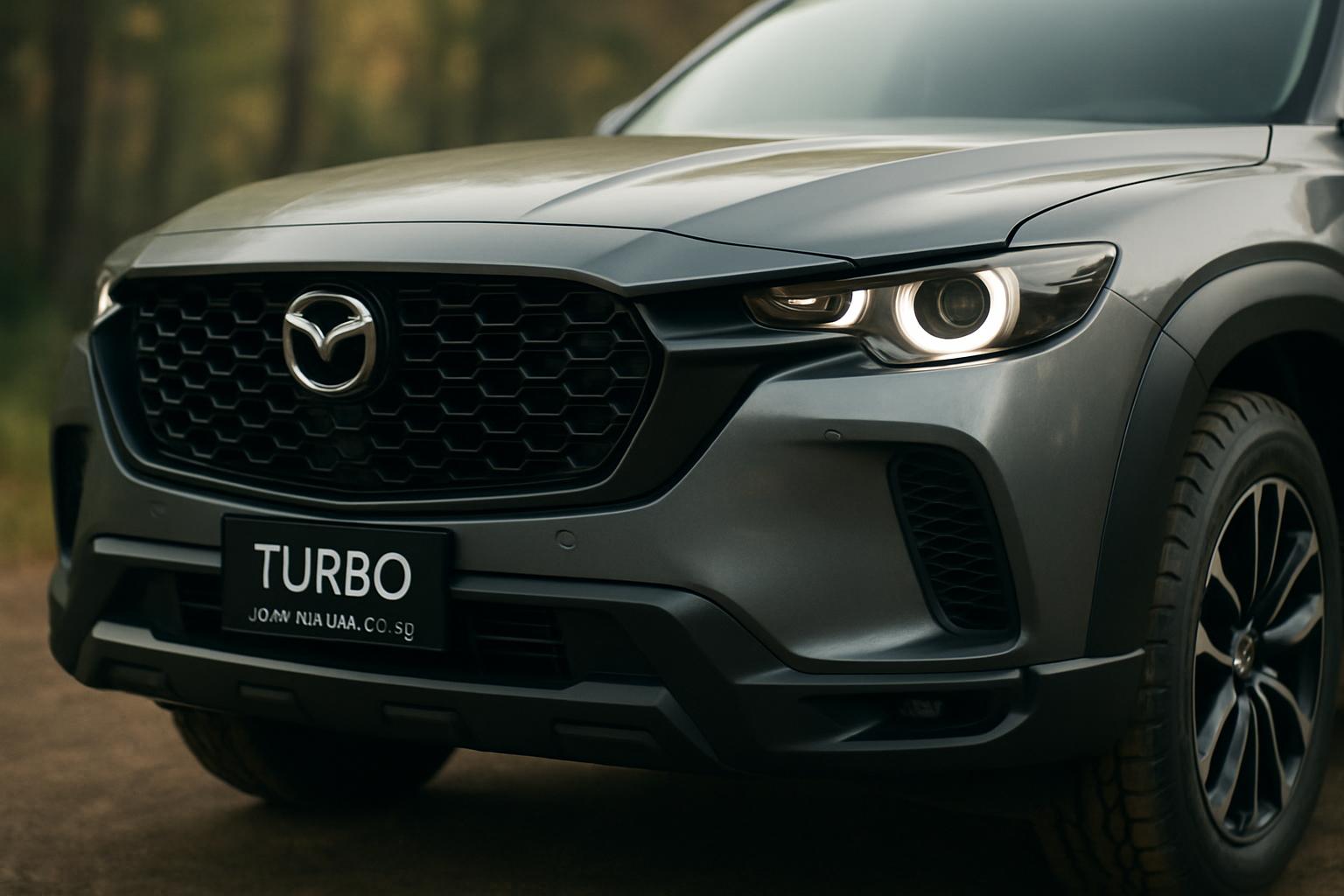
The Mazda CX-50 Turbo, which I’d run the same route 48 hours earlier, had made that maneuver feel like nothing at all. A moderate press of the throttle, a downshift the six-speed automatic handled without consulting me, and 310 lb-ft of torque that had already arrived by 2,000 rpm. The semi was behind me before I’d fully processed the decision. The cabin stayed quiet. The engine note didn’t change.
Both vehicles share a tightly overlapping buyer: someone commuting five days a week and wanting AWD confidence in December. Someone who mentions “adventure” in their self-description but whose last genuine off-road moment was a gravel parking lot at a ski resort. The spec sheet suggests the Forester is the harder-working, more capable machine. On most of the actual miles these buyers will drive, that is not what happens.
What the Numbers Don’t Tell You
Ground clearance: Forester 8.7 inches, CX-50 8.6 inches. That 0.1-inch edge goes to the Subaru in every spec table out there, including this one. What doesn’t get a column in those tables is the torque curve. The Forester makes 178 lb-ft at 3,600 rpm. The CX-50 Turbo makes 310 lb-ft at 2,000 rpm. On a test track, that gap is acceleration numbers. On a sustained two-hour highway run, it’s the difference between a powertrain that feels effortless and one operating perpetually near the top of its capability range.
Horsepower is usually the cited metric: 182 versus 227. Buyers in this segment don’t think of horsepower as a highway comfort indicator. They should. The torque figure is the one that governs how easily a vehicle responds to real-world inputs above 60 mph. The Forester’s 178 lb-ft at 3,600 rpm means the engine has to be revved before it delivers. The CX-50’s 310 lb-ft at 2,000 rpm means the delivery has already begun before you’re aware of asking.
On sustained highway driving above 70 mph, the CX-50 Turbo operates in a different category of composure than the Forester, and the spec sheet will not warn you about this before you buy.
Cockpit and Controls
The CX-50 puts you inside the car rather than above it. The seating position sits lower than the segment average, the steering wheel carries real progressive weight through a corner, and the center console rises high enough that you’re cocooned rather than perched. The door closes with a single low-register thunk, the kind that ends without echo. Nothing rattles to catch up afterward. Mazda’s decision to route all infotainment inputs through a rotary knob rather than a touchscreen remains the single most-complained-about feature in CX-50 owner forums, and the complaint is valid: adjusting a destination address at a red light requires three turns and a push where a tap would do it. You adapt in an afternoon. The inconvenience doesn’t disappear. You just learn to work around it.
And the Forester does something the CX-50 simply cannot: it gives you elevation. The upright seating position and generous greenhouse deliver sightlines that feel one class larger than the vehicle’s footprint. Rear headroom is substantial. Taller passengers in the back seat of a CX-50 begin making small adjustments around hour two. In the Forester, they don’t notice. The Subaru’s controls are honest and functional without trying to be atmospheric. The cabin is useful. It does not try to be anything else.
The CX-50’s cockpit is the more deliberately designed environment. The Forester’s is the more accommodating one, and for families with real rear-seat occupants, that is the more practical distinction.
Highway Composure
The Forester’s 2.5-liter naturally aspirated engine was built for versatility across varied terrain and conditions. Highway touring was not its primary design brief. At steady freeway speeds, the CVT settles into a reasonable cruising range. Ask for more speed and you feel the transmission hunting before committing, the engine climbing into the 4,000s, the cabin sound floor rising to a level that isn’t unpleasant but is present. The A-pillar generates wind turbulence above 70 mph that you stop actively noticing around the third week of ownership. Stopping noticing it is not the same as it stopping.
I ran a CR-V back-to-back against a RAV4 Hybrid on the same 200-mile route last fall. The Toyota was quieter at 75 in a way I hadn’t expected, the Honda’s tire noise more present than its price tier suggested it should be. The Forester-versus-CX-50 contrast on that same axis is more pronounced. It’s not a subtle difference. You’ll notice it on a 15-minute highway stretch during the test drive. You’ll stop noticing it around month two of ownership. That is the problem: you’ll have stopped noticing something that was always there.
The CX-50 Turbo on that same sustained stretch doesn’t announce itself. The powertrain is unstressed in the way that distinguishes a vehicle designed for the highway from one adapted to it. The six-speed automatic’s behavior at speed is predictable and unobtrusive. The cabin insulation at 75 mph is genuinely good. There’s a faint thrum from the tires on coarser pavement, but nothing that competes with conversation.
For any buyer whose daily commute involves 40 or more highway miles, this section is where the comparison ends.
Trail Credentials and the Ground Clearance Question
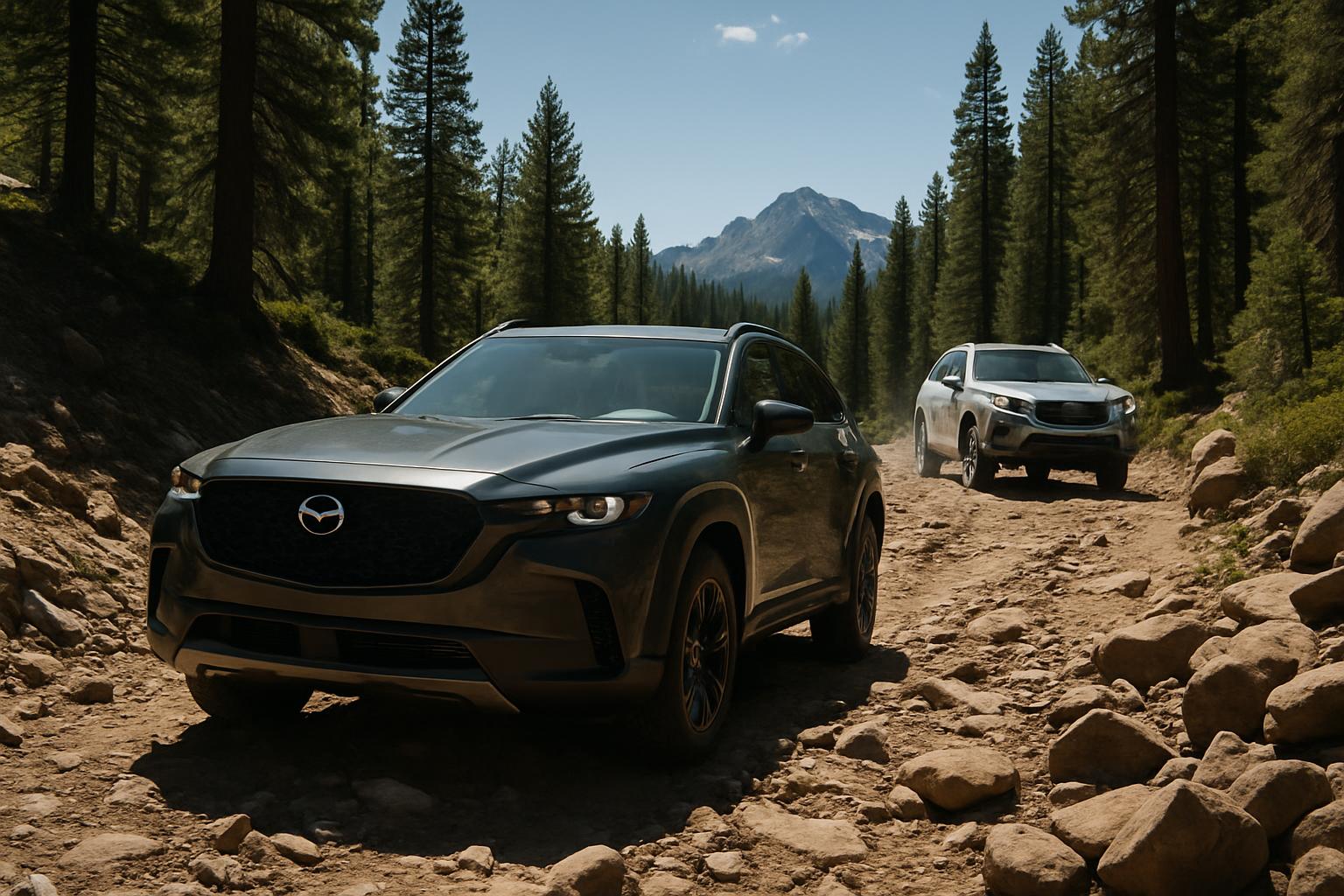
To be fair to the Forester: its off-road credentials are substantive, not cosmetic. Subaru’s Symmetrical All-Wheel Drive has a decades-long track record of consistent real-world performance in conditions that matter. X-MODE, available on upper Forester trims, adds genuine low-speed terrain control on loose or steep surfaces. The AWD calibration is tuned toward the kind of inputs you encounter on actual forest roads. For a buyer who regularly uses those roads, that calibration is worth paying attention to.
The CX-50’s i-ACTIV AWD performs without drama on snow-covered pavement, gravel, and the unimproved surfaces that constitute the realistic off-road catalog for most buyers in this segment. Push further and the distinction between the two systems starts to matter. The 0.1-inch ground clearance gap never does.
Neither vehicle belongs on anything requiring locking differentials or serious departure angle management. If that sentence applies to your use case, this particular comparison does not apply to you.
| Spec | 2026 Mazda CX-50 Turbo | 2026 Subaru Forester | Best For |
|---|---|---|---|
| Engine | 2.5L Turbo: 227 hp / 310 lb-ft | 2.5L NA: 182 hp / 178 lb-ft | CX-50 (highway composure) |
| Transmission | 6-speed automatic | Lineartronic CVT | CX-50 (powertrain feel) |
| AWD System | i-ACTIV AWD | Symmetrical Full-Time AWD | Forester (trail calibration) |
| Ground Clearance | 8.6 in | 8.7 in | Forester (marginal) |
| Rear Cargo (seats up) | 31.4 cu ft | 28.9 cu ft | CX-50 |
| EPA Highway MPG | 30 mpg (premium fuel) | 33 mpg (regular fuel) | Forester |
| Starting Price (approx.) | $29,740 (base) / $39,770 (Turbo) | $30,995 | CX-50 (base trim) |
| IIHS Rating (2025) | Top Safety Pick+ | Top Safety Pick+ | Tie |
The Forester’s Genuine Advantages
Fuel economy is real and consistent. The Forester returns approximately 33 mpg highway on regular-grade fuel. The CX-50 Turbo returns around 30 mpg on premium. Over 15,000 highway miles annually, the combination of lower consumption and cheaper fuel grade produces a cost difference worth calculating before signing. The EPA and Consumer Reports data both support the Forester’s efficiency credentials as a genuine long-term ownership advantage, not a marginal footnote.
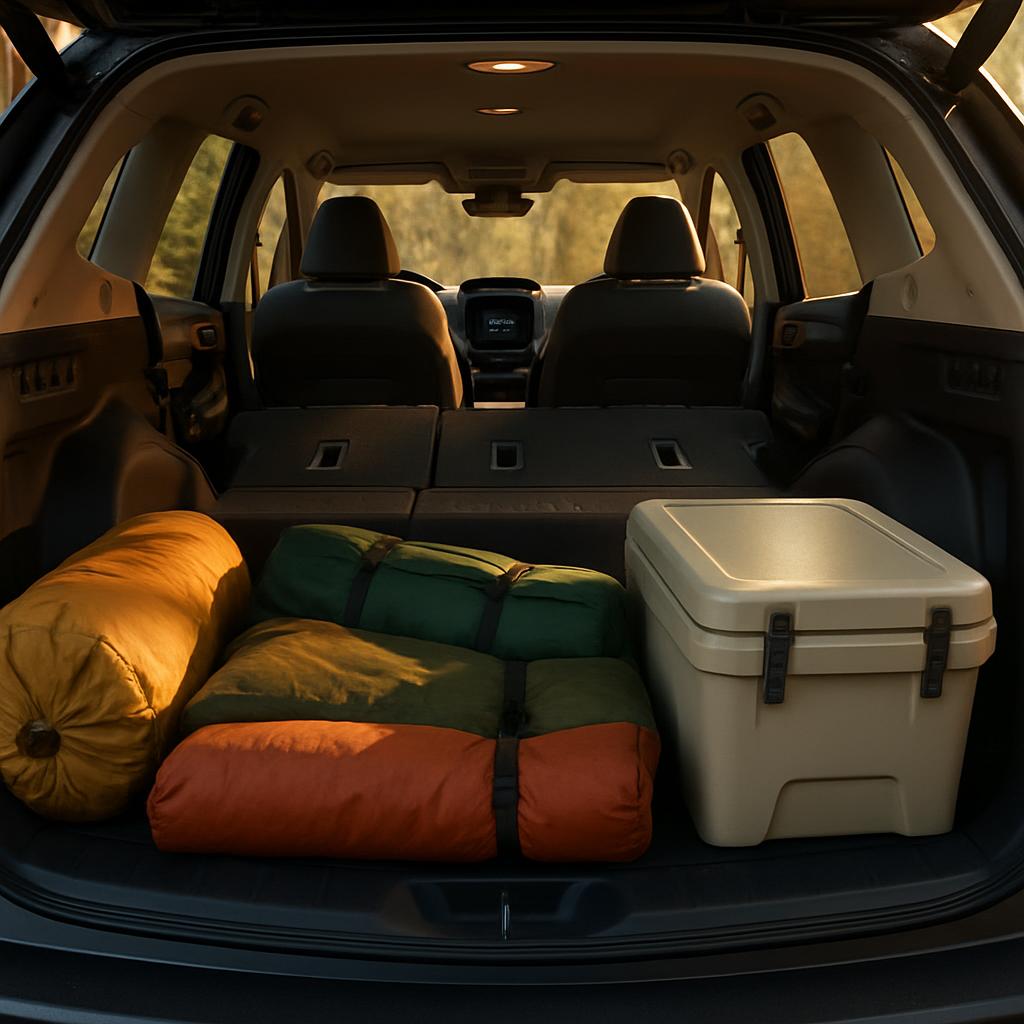
Rear space matters more on actual road trips than on test drives. The Forester’s more upright greenhouse gives the rear seat real headroom, and the cargo area behind the second row allows taller items to stand upright. These advantages are invisible on a solo 20-minute test loop. By the third hour of a family drive in August, with two adults in the back and a week of luggage behind them, they stop being invisible. The Forester also carries a stronger long-term reliability record in Consumer Reports survey data. That track record is not to be dismissed.
For buyers with fuel budgets that absorb a premium fuel penalty poorly, or for families where the rear seat regularly carries adults, the Forester’s case is serious enough to be the deciding factor.
Who Should NOT Buy This
Do not buy the CX-50 Turbo if premium fuel is a genuine household cost concern. At current pricing differentials, the premium surcharge over a five-year ownership period compounds into a figure that the powertrain enjoyment may not offset for every buyer. Do not buy it if consistent rear-seat headroom is a real requirement. The lower roofline and sloped rear greenhouse affect tall rear passengers on trips longer than an hour, and no amount of seat adjustment changes the ceiling height.
Do not buy the Forester if the majority of your driving is highway miles above 65 mph and you have never actually taken a vehicle off a paved surface intentionally. The Forester’s AWD reputation is deserved. Its highway manners are not. If your adventure driving is occasional and your commute is a freeway, you are buying trail calibration you will never use and paying for it in highway fatigue you will accumulate daily. That is a bad deal.
The Verdict
The 2026 Mazda CX-50 Turbo wins this comparison for any buyer whose real-world driving is predominantly highway miles, which is most of the buyers cross-shopping these two vehicles. The torque advantage is not a spec-sheet abstraction. You feel it every time traffic requires a decision at 70 mph, and the absence of strain in that moment has a compounding effect on how relaxed 40,000 miles of commuting feels. The cabin refinement holds up across the same logic.
The Forester is the right answer for a more specific buyer than its broad-spectrum marketing suggests: someone who uses light trails with genuine regularity, needs real rear-seat space for taller adults, or carries a fuel budget where the premium-regular differential genuinely matters over five years. Its AWD credentials are real. Its highway composure is not. Most buyers will not discover the distinction until after delivery, which is the most expensive way to find out.
Not right for: anyone who drives more than 60 highway miles daily, values powertrain refinement, and has never once thought seriously about putting a vehicle on an unpaved surface.
References
EPA Fuel Economy Data
IIHS Vehicle Safety Ratings
Consumer Reports Cars
Edmunds Homepage
Mazda USA
Subaru USA