

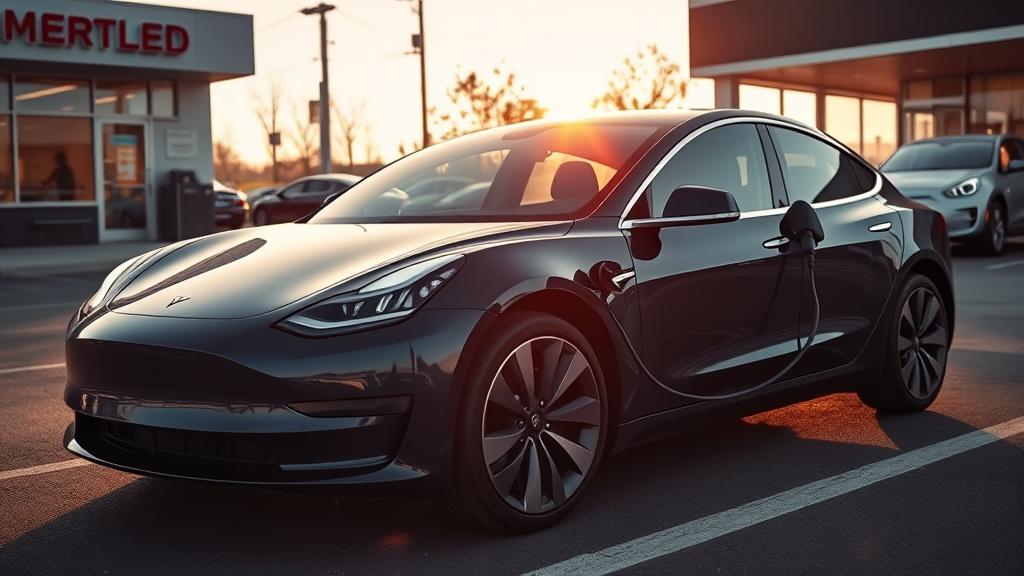
Used EVs can cost $8,000 to $15,000 less than their new equivalents, and for many buyers in 2026 that price gap is the whole argument. But the battery is a different story. It is the most expensive single component in any electric vehicle, often representing 30 to 40 percent of the car’s total manufacturing cost, and what happens to the warranty when that car changes hands is not always obvious from the window sticker.
The battery warranty picture for used EVs is more complicated than most buyers expect. By the time you finish reading, you will know which brands offer the strongest transferable coverage, what state-of-health thresholds actually mean for real-world range, and where the gaps are that dealers rarely volunteer.
What a Battery Warranty Actually Covers (and What It Doesn’t)
Federal law requires all EVs sold in the US to carry a minimum 8-year, 100,000-mile battery warranty. That is the floor, not the standard. The mandate covers only two conditions: complete battery failure and capacity degradation below 70 percent of original rated capacity.
Think of the 70 percent threshold less like a pass/fail test and more like a floor drain. It catches the catastrophic, but by the time you hit it, the car has likely already lost meaningful range. A battery that has degraded to 72 percent is not covered under the federal minimum, even if the driver has lost over 50 miles of real-world range from day one.
The practical consequence is that most used EV buyers inherit a battery in the 85 to 95 percent state-of-health range, sitting comfortably above the warranty trigger, with no coverage for any further degradation until it drops below 70 percent. On a vehicle originally rated at 300 miles of range, that can mean a real-world loss of 15 to 45 miles before any warranty protection kicks in.
Several manufacturers voluntarily set higher thresholds. Hyundai and Kia currently warrant capacity above 70 percent, matching the federal minimum, while Chevrolet’s Bolt EV and EUV have historically used the same floor. Tesla warrants capacity retention above 70 percent for its Long Range variants at 8 years or 150,000 miles. The threshold language matters. Confirm it in writing before signing anything.
How Transferability Actually Works Across Brands
Battery warranty transferability is not uniform. Some manufacturers transfer the full remaining coverage to a second or third private owner automatically. Others require registration, charge a transfer fee, or restrict coverage to Certified Pre-Owned (CPO) programs only.
The table below summarizes transferability terms for the six highest-selling used EV brands in the US market as of 2026. These details are drawn from manufacturer warranty documentation and the DOE’s alternative fuels resource data.
| Brand | Battery Warranty Term | Capacity Threshold | Transferable? | Notes |
|---|---|---|---|---|
| Tesla | 8 yr / 100k–150k mi (varies by model) | 70% retention | Yes, automatic | Long Range: 150k mi cap; Standard: 100k mi |
| Hyundai / Kia | 10 yr / 100k mi | 70% retention | Yes, automatic | Ioniq 5, EV6, EV9 covered under same terms |
| Chevrolet (Bolt) | 8 yr / 100k mi | 60% retention | Yes, via CPO or private sale | Higher degradation tolerance before trigger |
| Ford (Mustang Mach-E, F-150 Lightning) | 8 yr / 100k mi | 70% retention | Yes, automatic | |
| Nissan (Leaf) | 8 yr / 100k mi | 9 bars of 12 (approx. 66%) | Yes, automatic | Bar-based system, not percentage; check model year |
| BMW (iX, i4, i7) | 8 yr / 100k mi | 70% retention | Yes, automatic |
A few things jump out of this table. Hyundai and Kia’s 10-year coverage is a genuine differentiator in the used market, because a three-year-old Ioniq 5 still carries seven years of battery protection to its next owner. That is a meaningful risk reduction at the point of sale.
Chevrolet’s 60 percent threshold on the Bolt is actually the weakest protection in practical terms, despite looking competitive on paper. A battery at 65 percent capacity on a Bolt EV means the original 259-mile EPA range is down to roughly 168 miles. That is functional degradation that the warranty does not address until it falls another 5 percentage points.
State-of-Health Checks: How to Get the Real Number Before You Buy
Knowing the warranty terms is one thing. Knowing where the specific battery you are about to buy actually sits is another. Battery state of health is not always visible on the standard instrument cluster.
For Tesla vehicles, a third-party app called Recurrent or a scan via the OBD-II port can surface state-of-health data. Tesla’s own in-app diagnostics report capacity in miles rather than percentage, which makes cross-comparison harder than it should be. For Hyundai and Kia EVs, a licensed technician can pull state-of-health data directly from the battery management system using a manufacturer diagnostic tool. On most other platforms, independent EV inspection services can produce a report in about 30 to 45 minutes for typically $100 to $200.
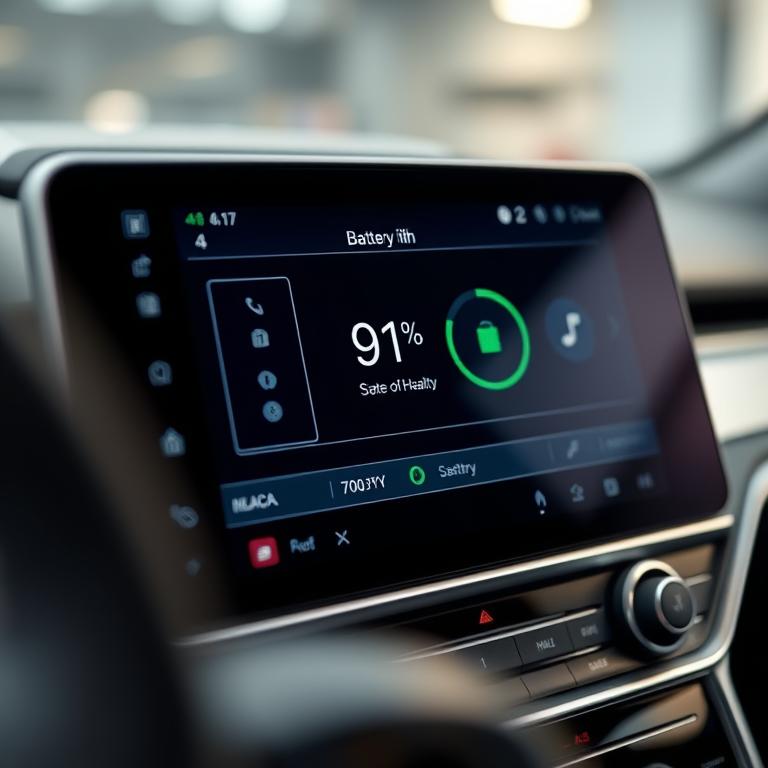
In our assessment, the $150 inspection fee is the single best money spent in a used EV transaction. You are buying a battery as much as you are buying a car.
One practical note: if the seller refuses to allow a pre-purchase inspection, that is a signal. Batteries with significant degradation are not always disclosed voluntarily. Based on the data available, there is no good reason to skip this step on any used EV purchase above $15,000.
The Federal Tax Credit and Certified Pre-Owned Status
For used EVs purchased in 2026, the federal used clean vehicle tax credit under the Inflation Reduction Act offers up to $4,000, or 30 percent of the sale price, whichever is less. The IRS clean vehicle credit page outlines the income and price eligibility caps: the vehicle must be priced at $25,000 or under, and buyer income limits apply.
This credit can meaningfully shift the calculation on a used EV purchase. A $22,000 Ioniq 5 with strong battery health and seven years of remaining warranty, combined with a $4,000 federal credit, is a fundamentally different value proposition than the sticker suggests.
The CPO route is worth understanding separately. Most EV manufacturer CPO programs include a battery inspection checklist, but the state-of-health threshold required for CPO qualification varies by brand. Ask specifically whether battery coverage is extended under CPO terms, or whether it is just the factory warranty carried forward.
What the Odometer Doesn’t Tell You About Battery Health
Here is where a lot of used EV buyers get caught out. Odometer mileage and battery degradation are correlated, but they are not the same metric. A 40,000-mile EV driven primarily on Level 1 charging with moderate climate exposure can have substantially better battery health than a 35,000-mile vehicle that spent two years fast-charging daily in Phoenix summers.
Thermal management is the key variable. Vehicles with active liquid cooling systems, including the Tesla Model 3, Hyundai Ioniq 5, Kia EV6, and Ford Mustang Mach-E, show meaningfully lower degradation at comparable mileage than air-cooled alternatives. The original Nissan Leaf, which used passive thermal management through its 2017 model year, became a cautionary data point in this regard. According to data compiled by the DOE’s Alternative Fuels Data Center, active thermal management is one of the primary factors in long-term battery retention.
If you are considering a pre-2018 Leaf, the state-of-health check is not optional. It is the purchase decision.
Where Warranty Coverage Falls Short
Even the best battery warranty has limits worth knowing. Coverage does not apply to damage from improper charging (consistently charging to 100 percent and leaving the vehicle plugged in), physical damage from collisions, or flooding events. Some manufacturers also void coverage if the vehicle has been modified with non-OEM battery components or software.
Capacity degradation from normal use is covered. Accelerated degradation from abuse is not. The line between the two is sometimes contested in warranty claims, and documentation of charging behavior can matter if a dispute arises.
Your mileage may vary significantly depending on climate. Buyers in Arizona, Florida, and Texas should factor in higher baseline degradation rates relative to the national average, independent of the warranty structure.
Conclusion
What the data confirms: The Hyundai and Kia lineup offers the strongest transferable battery protection in the used EV market right now, combining a 10-year warranty term with automatic transferability and coverage for well-documented platforms in the Ioniq 5, EV6, and EV9. For buyers prioritizing warranty depth over purchase price, these are the standout options. The federal $4,000 used EV credit can make a sub-$25,000 example financially compelling.
What remains variable: Battery state of health at point of sale is the single largest unknown, and no warranty document eliminates that variable. The threshold that triggers coverage under most warranties (70 percent capacity) still allows for real, noticeable range loss before any protection applies. A pre-purchase battery inspection from a qualified technician is not a guarantee of future health, but it is the closest thing to one available in 2026.
For practical next steps, cross-reference the DOE’s EV resource database for model-specific battery architecture data, and use the EPA’s vehicle search tool to verify the original rated range for any used EV you are evaluating so you can calculate what a given state-of-health percentage actually means in real-world miles.
References
- IRS Federal Used and New Clean Vehicle Tax Credit
- DOE Alternative Fuels Data Center: Electric Vehicles
- EPA Fuel Economy and EV Range Data
- EPA Vehicle Search Tool
- NREL: Battery Research and EV Performance Data
- Hyundai Motor Company
Disclaimer: The information provided in this article is for educational and informational purposes only. It does not constitute professional advice. Readers should conduct their own research and consult with qualified professionals before making any decisions.