

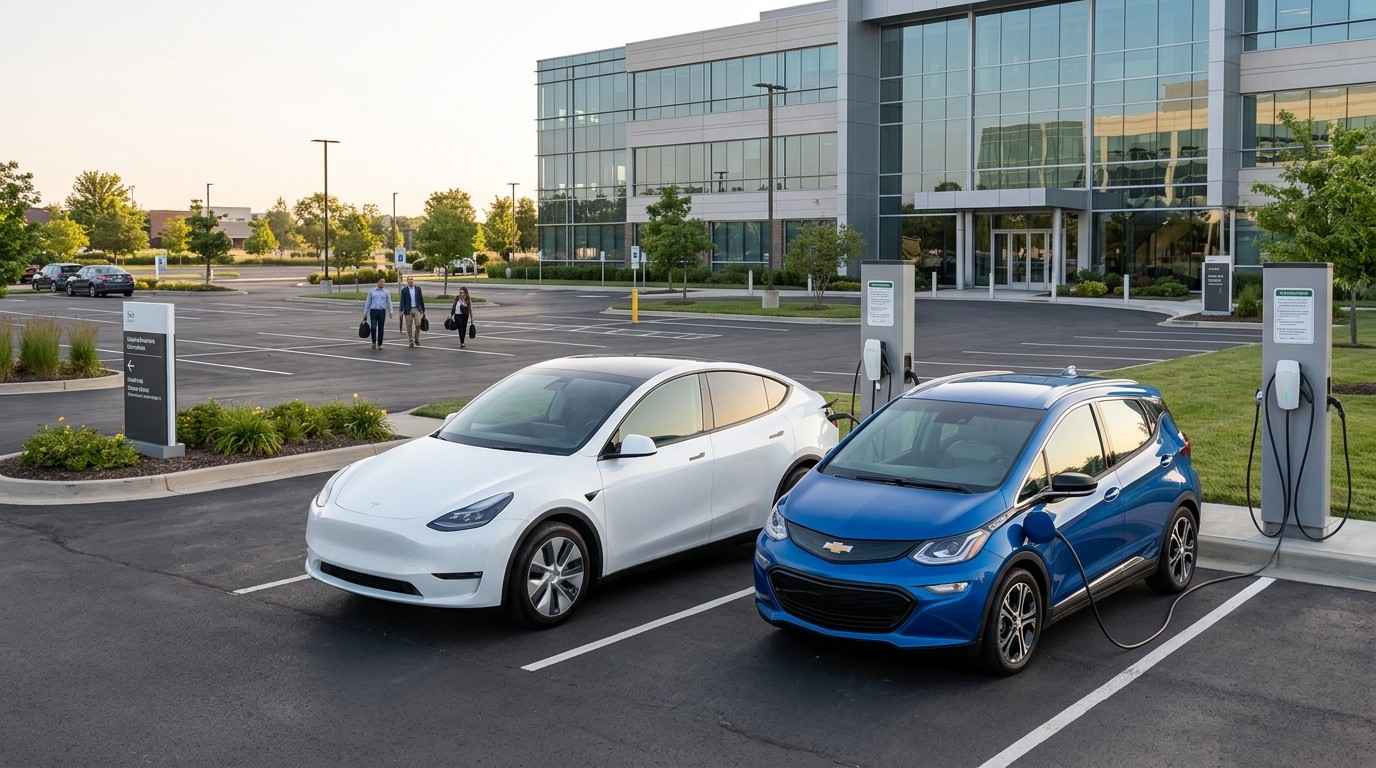
The average U.S. electric vehicle (EV) driver can save between $600 and $1,200 per year simply by utilizing workplace charging instead of residential power. This isn’t a theoretical corporate perk; it is a direct reduction in your household’s annual energy expenditure.
While many prospective buyers focus on the “convenience” of plugging in at the office, the 2026 economic landscape defined by rising residential utility rates and new federal infrastructure incentives has transformed workplace charging into a critical financial asset. Using efficiency data from the EPA and recent rate forecasts from the Department of Energy (DOE), this article breaks down exactly how much this “free fuel” is worth and how it shifts the total cost of ownership (TCO) for modern commuters.
The 2026 Baseline: Energy Consumption vs. Residential Rates
To calculate the value of free charging, we must first establish what you would otherwise pay at home. In 2026, U.S. residential electricity rates are projected to rise by an average of 4.2% nationally, with regions like Texas and the West South Central seeing spikes as high as 10% due to grid demand from data centers.
Most modern EVs consume between 25 and 35 kWh per 100 miles. For a driver covering the national average of 12,000 miles per year, that equates to roughly 3,600 kWh of total energy consumption.
Annual Charging Cost Scenarios (12,000 miles/year):
- Residential Charging (National Avg: $0.17/kWh): ~$612/year
- Residential Charging (High-Cost Regions: $0.32/kWh): ~$1,152/year
- Public Fast Charging (Avg: $0.45/kWh): ~$1,620/year
Real-world energy consumption fluctuates based on external factors like temperature and driving style, but the math is clear: if your workplace covers these 3,600 kWh, you are effectively receiving a tax-free bonus worth hundreds, if not thousands, of dollars.
Why Workplace Charging Is the “Sweet Spot” for Battery Health
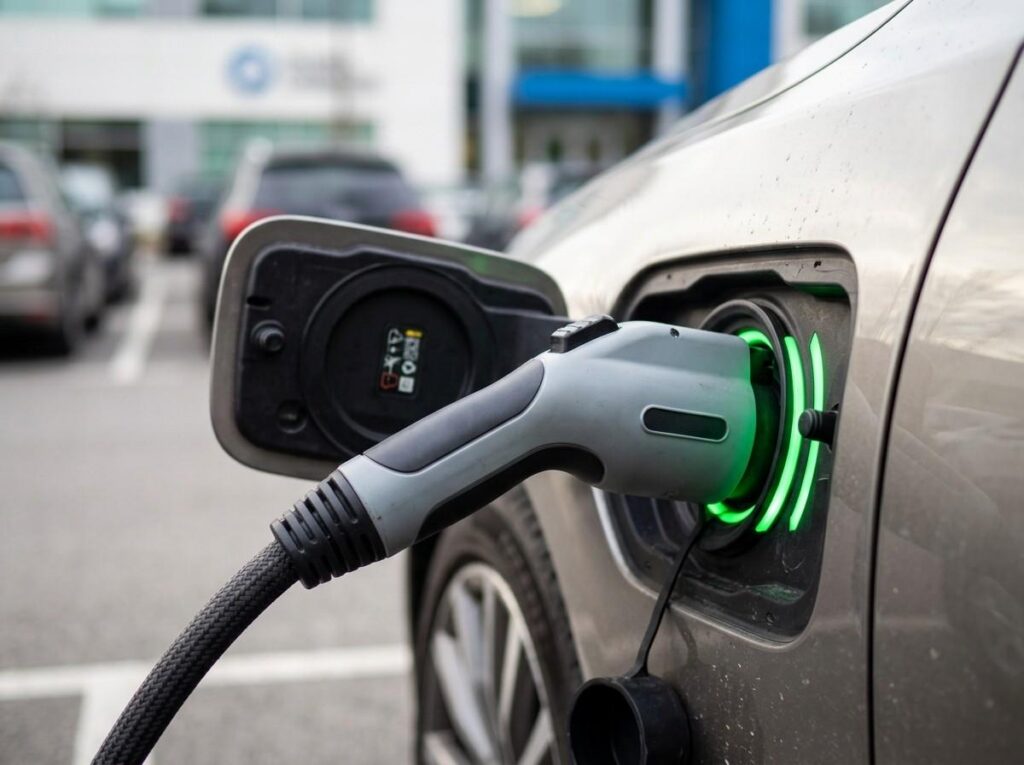
Workplace charging almost exclusively utilizes Level 2 (AC) equipment. This is significantly better for your battery’s long-term health than the DC fast charging often required by drivers who cannot charge at home.
Think of it like hydration: Level 2 charging at the office is like sipping water steadily throughout an 8-hour shift, whereas DC fast charging is like trying to drink from a firehose in 20 minutes.
According to NREL research, consistent use of slower AC charging minimizes heat-related stress on the lithium-ion cells, potentially extending the battery’s useful life by several years compared to a “fast-charge only” lifestyle. For the owner, this translates to better resale value and slower range degradation over time a hidden financial gain that isn’t reflected on a monthly utility bill but is very real at trade-in time.
Annual Savings: Breaking Down the Charging Mix
The real value of workplace charging depends on how much of your total mileage it covers. Most commuters drive approximately 42 miles round-trip per day. A standard Level 2 workplace charger delivers about 25 miles of range per hour, meaning a typical 8-hour workday can easily provide 200 miles of range far more than the average daily requirement.
2026 Annual Savings Breakdown (3,600 kWh Total Use):
| Charging Strategy | Est. Blended Cost/kWh | Total Annual Cost | Annual Savings vs. Home |
| 100% Home Charging | $0.17 | $612 | $0 (Baseline) |
| 50% Work / 50% Home | $0.085 | $306 | $306 |
| 80% Work / 20% Home | $0.034 | $122 | $490 |
| 100% Work Charging | $0.00 | $0 | $612 |
Note: In high-cost utility markets like California or Massachusetts, the “100% Work Charging” savings figure often jumps to $1,100+ per year.
The Hardware Shift: NACS vs. CCS in the Workplace
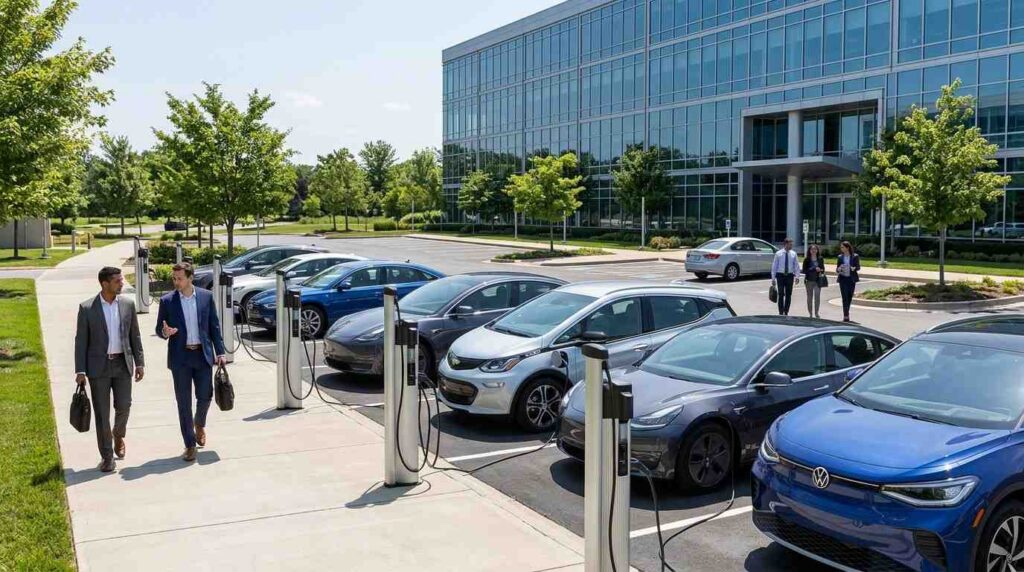
In 2026, the North American Charging Standard (NACS) has become the dominant factory-installed port for new vehicles. However, many workplace parking lots still feature J1772 or CCS1 hardware installed during the initial 2022-2024 infrastructure wave.
In my assessment, the “winner” strategy for employees is to prioritize workplaces that utilize networked chargers (e.g., ChargePoint, Flo, or Tesla Wall Connectors). Unlike simple “dumb” chargers, networked systems allow you to check occupancy via a mobile app before you even arrive at the office. There is zero financial value in a “free” charger that is always occupied or broken.
Additionally, under the Alternative Fuel Vehicle Refueling Property Credit, many businesses in eligible 2026 census tracts can receive a 30% tax credit for installing these stations. If your employer is on the fence, pointing them toward these IRS infrastructure credits can be the leverage needed to secure your free annual “fuel” budget.
Hidden Savings: The “Home Charger” Avoidance
One of the largest upfront costs of EV ownership is the installation of a dedicated Level 2 home charging station. Depending on your home’s electrical panel capacity, this can cost between $800 and $2,500.
If you have reliable, free charging at your place of employment, you can effectively bypass this expense entirely. By relying on the office for your “heavy lifting” and a standard 120V (Level 1) wall outlet at home for weekend “topping off,” you save significant capital on day one of ownership. While IRS data shows a federal credit for home installations, it only covers 30% of the cost leaving you to foot the rest of the bill for a charger you may not even need.
Conclusion
The data confirms that free workplace charging is the single most effective way for a typical commuter to reduce their total cost of ownership. By shifting your primary energy draw to the office, you save an average of $600 to $1,200 per year compared to home charging, and potentially over $2,000 per year compared to a gasoline vehicle.
What remains variable:
The reliability of the equipment and employer “squatter” policies. As more employees switch to EVs in 2026, the demand for office plugs is skyrocketing. The highest value is currently found at workplaces that implement “fair use” policies such as 4 hour limits to ensure all employees get their turn at the plug.
If you are currently evaluating a job offer or a new vehicle, do not treat workplace charging as a minor fringe benefit. In the high-rate energy environment of 2026, it is a significant, non-taxable part of your total compensation package. To run your specific numbers, I recommend checking your commute distance on fueleconomy.gov and using the Edmunds True Cost to Own calculator to see how a zero-dollar fuel budget impacts your five-year savings.
References
- DOE Alternative Fuels Data Center – EV Resources
- EPA – Fuel Economy and Efficiency Data
- DOE – Charging Station Locator and Infrastructure Trends
- NREL – Battery Longevity and Grid Research
- IRS – Alternative Fuel Refueling Property Credit (30C)
Disclaimer: The information provided in this article is for educational and informational purposes only. It does not constitute professional advice. Readers should conduct their own research and consult with qualified professionals before making any decisions.