

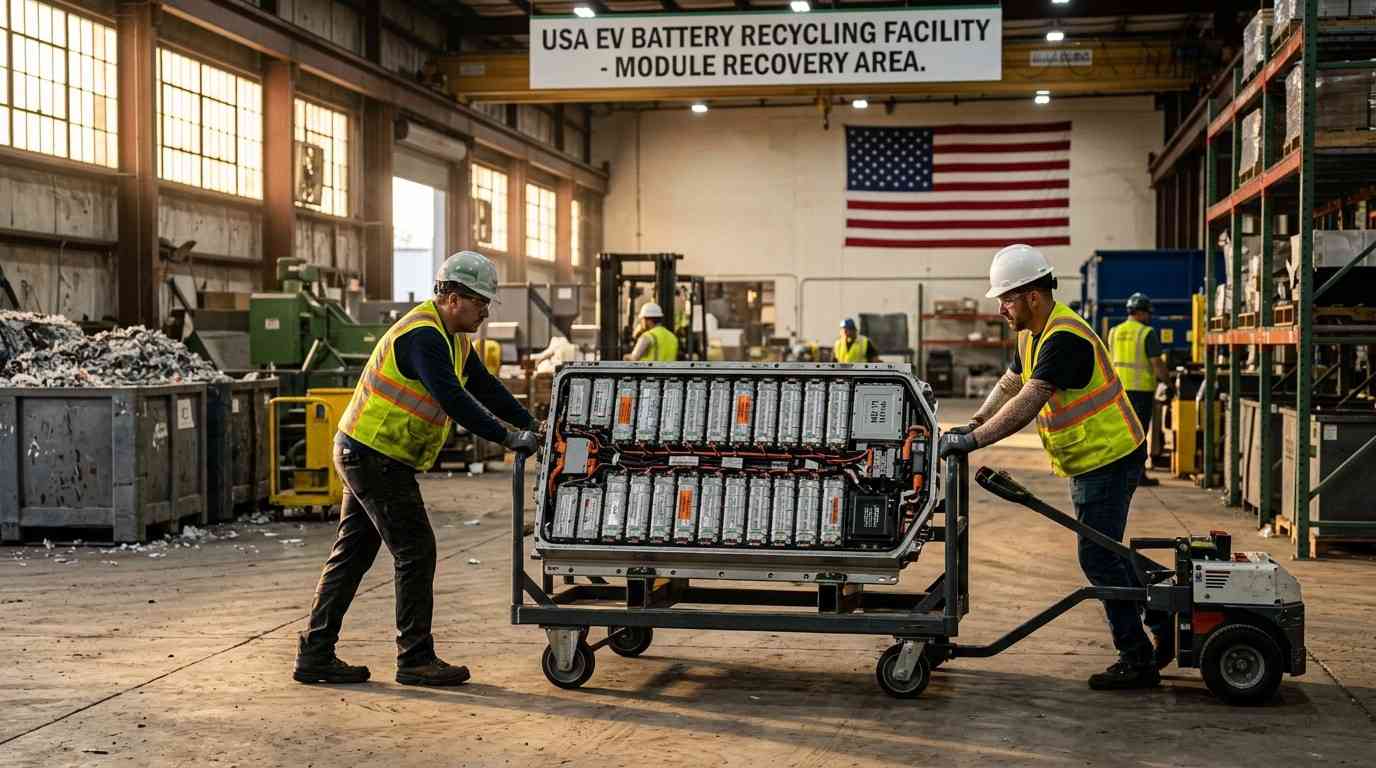
A modern EV battery can retain 70–80% of its original capacity after 8–10 years. That’s no longer a theoretical estimate—it is what real-world fleet data in 2026 is now confirming across millions of high-mileage vehicles.
Which means your battery doesn’t “die” when your car ages out. It changes jobs.
This article breaks down exactly what happens to EV batteries once they leave the vehicle: how the recycling process has evolved, where second-life storage fits into the 2026 energy grid, and what the rapidly expanding U.S. infrastructure means for you as an owner. The data here is pulled from Department of Energy (DOE) and NREL research, along with real-world program results from domestic recyclers.
EV Batteries Rarely “Fail” They Gradually Lose Capacity
Battery degradation is measurable and predictable. Most EV packs lose approximately 1–2% of their total capacity per year under typical use, according to NREL research.
Think of it like a rubber band that loses a little bit of its “snap” each time you pull it to the limit—it still holds things together, just with less tension.
Which means for most owners, the battery outlasts the car’s primary ownership period. EPA range ratings the numbers found on fueleconomy.gov assume a new battery, but even at 75% capacity, a 300-mile EV still delivers roughly 225 miles of range. That is still more than enough for daily commuting. This is why automakers now warranty batteries for a minimum of 8 years or 100,000 miles. In our assessment, battery longevity is no longer the catastrophic failure point critics assumed a decade ago; it is a managed lifecycle.
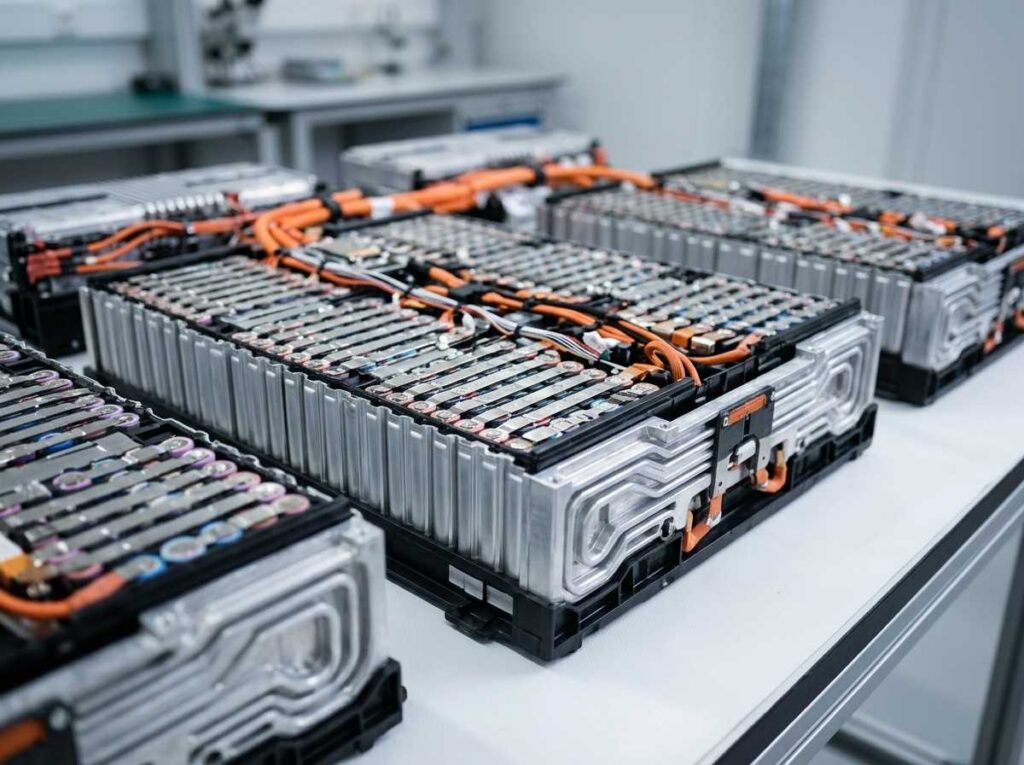
Second-Life Batteries Are Already Powering the Grid
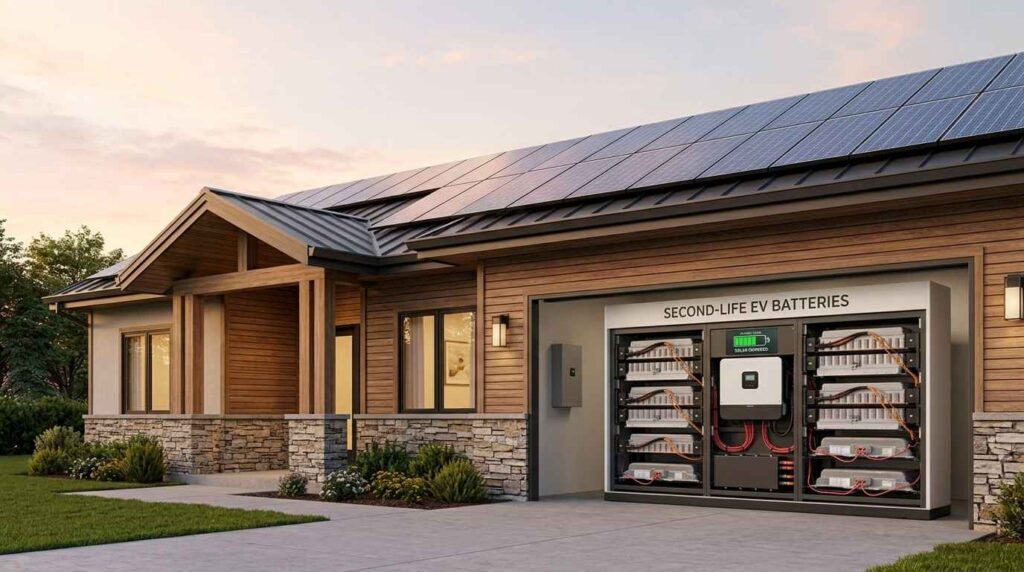
A “retired” EV battery can still store energy efficiently for stationary applications. Second-life programs typically repurpose these packs once they drop below 70% of their original vehicle capacity.
Think of it as a smartphone battery that no longer lasts a full 18-hour day of heavy use but still works perfectly as a dedicated e-reader or backup clock for another five years.
The practical consequence is a massive surge in stationary energy storage. Instead of discarding the battery, companies like Nissan, Ford, and GM are scaling programs to reuse these modules. According to DOE EV resources, these repurposed packs are being used for residential solar backup and to stabilize the grid during peak demand events.
Second-Life vs. New Battery Comparison:
| Factor | New EV Battery | Second-Life Battery |
| Capacity | 100% | 60–80% |
| Primary Use | Propulsion (EVs) | Stationary Storage (Grid/Home) |
| Relative Cost | High (Premium) | Lower (Value-tier) |
| Remaining Lifespan | 10–15 Years | 5–10 Years |
Recycling Is Recovering Up to 95% of Key Materials
Modern EV battery recycling is no longer about “disposal” it is about high-efficiency material recovery. Advanced “hydro-metallurgical” processes can now recover up to 95% of lithium, nickel, and cobalt.
Think of it less like a trash heap and more like “urban mining” harvesting the same materials again without having to dig a new hole in the ground.
This matters because these materials are energy-intensive to extract from the earth. Recycling reduces both the cost and environmental footprint of the next generation of EVs. Companies like Redwood Materials and the newly reorganized Glencore Battery Recycling (formerly Li-Cycle) have transitioned from pilot phases to industrial-scale operations in 2026.
The 2026 Recycling Process:
- Collection: Safe transport to a centralized hub.
- Disassembly: Packs are mechanically broken down into individual modules.
- Shredding: The modules are processed into “Black Mass,” a concentrated powder of valuable metals.
- Refining: Chemical extraction separates the lithium, nickel, and cobalt for new battery production.
The 2026 U.S. Infrastructure Milestone: From Pilot to Pipeline
As of 2026, the U.S. recycling infrastructure has reached a critical tipping point. Major facilities like the Ascend Elements “Apex 1” plant in Kentucky are entering full-scale production this year, capable of processing enough materials for 750,000 EVs annually.
The analogy here is the early days of the interstate highway system: the roads are built and the hubs are placed, but the “traffic” (the first massive wave of retired 2017–2018 model-year batteries) is just now starting to arrive.
The federal government is supporting this via the Bipartisan Infrastructure Law, which has funded over 50 planned or active recycling projects across North America. However, in our view, the primary bottleneck in 2026 remains logistics. Transporting large, hazardous battery packs across state lines is expensive and highly regulated. This means that if you live in the Midwest or Southeast, your recycling options are robust; if you are in a more isolated region, the “circular economy” is still catching up.
What This Means for EV Owners Today
You will likely never have to handle your battery recycling personally. Most transitions happen through manufacturer certified partners or at the dealership level during a trade-in.
However, the implications for your ownership are clear:
- Resale Value: Your vehicle’s long-term value is increasingly tied to the recoverable metal content in its battery.
- Sustainability: The environmental “break-even” point for an EV (the point where it becomes cleaner than a gas car) is reached much faster when recycled materials are used in its construction.
- Repair Costs: As the second life market matures, refurbished battery modules may become a cost-effective alternative to brand-new pack replacements for older vehicles.
Conclusion
What the data confirms:
EV batteries are not destined for landfills. With a total potential life of 15–20 years (including second-life use) and a 95% recovery rate for key minerals, the lifecycle of a modern battery is now a major environmental strength rather than a liability.
What remains variable:Regional logistics and the pace of facility openings. While hubs in Kentucky, Nevada, and New York are operational, the “last-mile” collection of retired batteries from rural areas is still being optimized.
If you are planning for long-term ownership, the 2026 landscape shows that the “end-of-life” for your battery is actually just the beginning of its next phase. For more on long-term EV costs, you can consult the Edmunds True Cost to Own calculator or check the latest IRS guidance on clean vehicle credits.
References
- DOE Alternative Fuels Data Center – Electric Vehicles
- DOE Charging Station Locator
- NREL – National Renewable Energy Laboratory
- EPA Fuel Economy Data
- IRS Clean Vehicle Credit Guidance
Disclaimer: The information provided in this article is for educational and informational purposes only. It does not constitute professional advice. Readers should conduct their own research and consult with qualified professionals before making any decisions.