

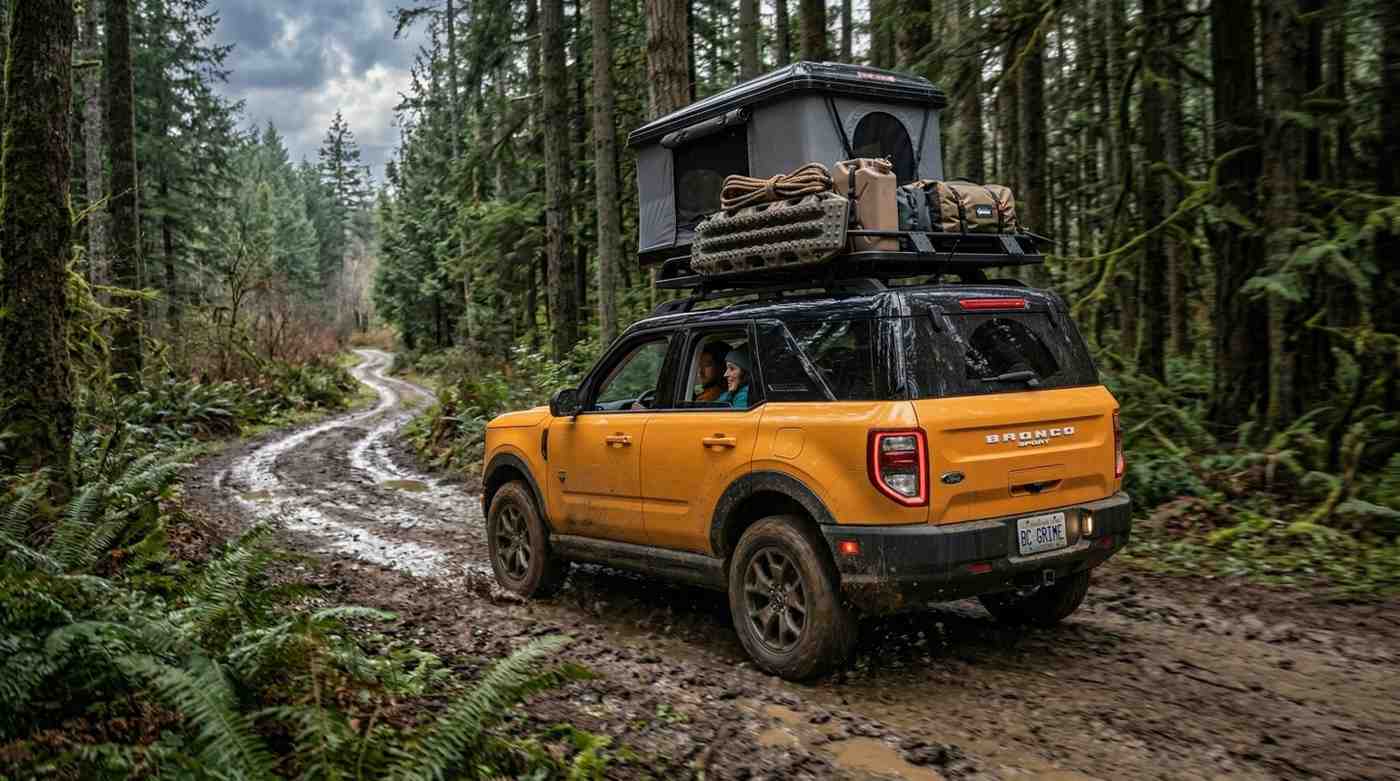
The first time you try to parallel park a lifted off-road SUV in a tight downtown spot, reality hits fast. Big tires and locking differentials sound great on a trail, but they are less fun when you’re late for work. That tension—capability versus livability—is exactly what defines the best adventure SUVs in 2026. The good ones don’t just survive dirt roads; they disappear into your weekday routine without constant compromise.
This breakdown looks at five SUVs that actually pull off both roles: the 2026 Toyota 4Runner, Subaru Outback Wilderness, Ford Bronco Sport, Jeep Grand Cherokee 4xe, and Toyota RAV4 Hybrid Woodland Edition. We’re leaning on EPA Fuel Economy Data, 2026 IIHS Safety Ratings, and real-world ownership cost tools like Edmunds’ True Cost to Own to separate marketing claims from daily reality.
What Actually Makes an SUV “Adventure-Ready”
The trick to a daily-able adventure vehicle is balance. Hardcore off-roaders can feel clumsy on pavement, while soft crossovers struggle when the road turns rocky. In our assessment, the middle ground for 2026 consists of moderate ground clearance (8–10 inches), intelligent AWD systems with terrain modes, and fuel economy above 23 mpg combined, as verified through the 2026 Fuel Economy Guide.
The Shortlist: 5 SUVs for 2026
| Model (2026) | Powertrain | MPG (EPA est.) | Ground Clearance | Notable Strength |
| Toyota 4Runner | i-FORCE MAX Hybrid | ~24 combined | ~9.2 in | True off-road hardware |
| Subaru Outback | 2.4L Turbo | 23 combined | 9.5 in | Best-in-class clearance |
| Ford Bronco Sport | 2.0L Turbo | 23 combined | 8.8 in | Compact footprint |
| Jeep Grand Cherokee | Plug-in Hybrid | 56 MPGe | 8.6 in | Luxury + PHEV efficiency |
| RAV4 Hybrid | Hybrid AWD | 37 combined | 8.1 in | Commuter-first efficiency |
Toyota 4Runner (2026): The Rugged Modernist
The redesigned 2026 4Runner finally moves to a turbocharged hybrid i-FORCE MAX powertrain. This changes the daily driving math significantly, offering a 0-60 mph sprint in 7.7 seconds and an electric motor that provides low-end torque for city driving.
A key factor is that the 4Runner remains a truck-based design. In our assessment, this excels off-road but leads to numb steering and body roll on pavement. We explicitly advise against the Trailhunter trim if your primary concern is cabin quietness; its intake snorkel amplifies turbo noises directly into the cabin, which can grow tiresome during a 40-minute commute.
Subaru Outback Wilderness: The Balanced Overachiever
The Outback Wilderness might be the most effective “one-car solution” for 2026. It offers 9.5 inches of ground clearance—beating many dedicated trucks—while maintaining a car-based suspension that absorbs city potholes with ease. According to the 2026 IIHS Safety Ratings, Subaru vehicles continue to meet rigorous updated criteria for rear-seat passenger protection.
The primary limitation is the lack of a two-speed transfer case for rock crawling. However, for 90% of adventure travelers, the X-Mode system handles deep snow and mud effectively without the weight penalty of a heavy 4WD system.
Ford Bronco Sport: The Urban Explorer
The Bronco Sport Badlands uses a twin-clutch rear drive unit that can send nearly all rear-axle torque to a single wheel. It is easier to park than a full-size SUV and feels nimble in traffic. One drawback is the interior; the materials can feel basic compared to its price point. It is a tool-first vehicle that prioritizes washability over luxury.
Jeep Grand Cherokee 4xe: The PHEV Trade-off
The Grand Cherokee 4xe offers 25 miles of electric-only range, which can cover most daily commutes without a drop of gasoline. However, the J.D. Power 2026 Vehicle Dependability Study notes that plug-in hybrids (PHEVs) currently report 281 problems per 100 vehicles (PP100), making them the most problematic powertrain type in the study.
It is also the heaviest vehicle here. While it retains “Trail Rated” capability, you will feel that extra weight in the corners during daily spirited driving.
Toyota RAV4 Hybrid Woodland: The Efficiency Expert
The RAV4 Hybrid Woodland is the smartest choice for those who spend 95% of their time on pavement. With 37 mpg combined, it has the lowest operating costs in this group. According to the 2026 AAA Driving Costs Study, compact SUVs generally operate at a significant savings over midsize or large alternatives.
Final Verdict: Which One Wins?
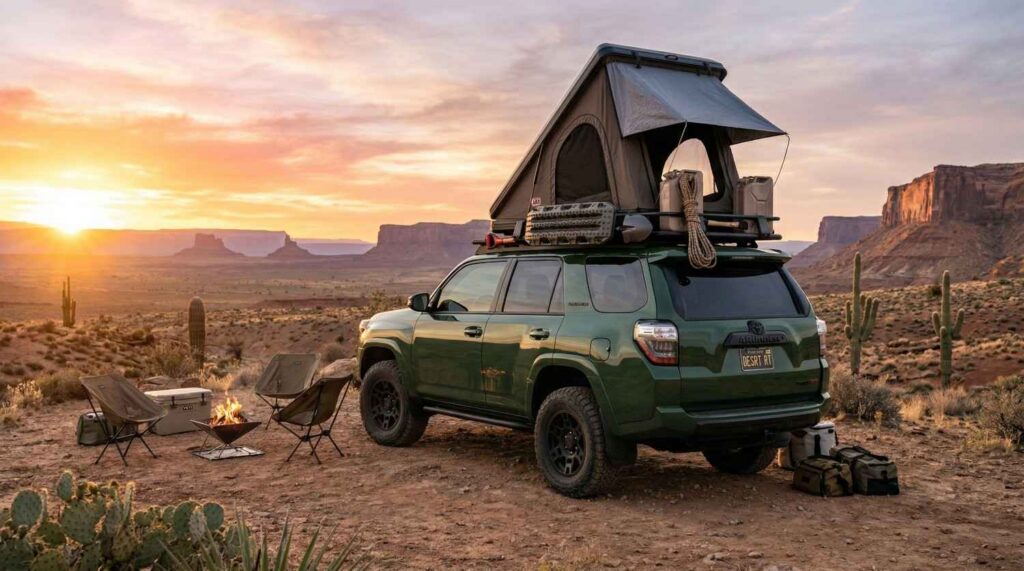
If you genuinely head into rough terrain, the 2026 Toyota 4Runner is the winner because it finally offers modern tech and better fuel economy without sacrificing its soul. For everyone else, the Subaru Outback Wilderness is the best recommendation because it does not ask you to sacrifice ride quality for trail access.
Check your expected ownership expenses through Edmunds’ True Cost to Own and verify your chosen trim’s specific ratings in the 2026 Fuel Economy Guide.
References
- 2026 Toyota 4Runner Hybrid Reviews – Edmunds
- 2026 Toyota 4Runner & Hybrid Features – Toyota
- J.D. Power 2026 Vehicle Dependability Study Results
- Hyundai Motor Group Earns 16 IIHS 2026 Top Safety Awards
- NHTSA’s 5-Star Safety Ratings 2026 Test List
- 2026 Fuel Economy Guide (DOE/EPA) – Jackson Auto
- AAA: New Vehicle Costs Drop to $11,577 (2025/2026 Analysis)
Disclaimer: The information provided in this article is for educational and informational purposes only. It does not constitute professional advice. Readers should conduct their own research and consult with qualified professionals before making any decisions.