

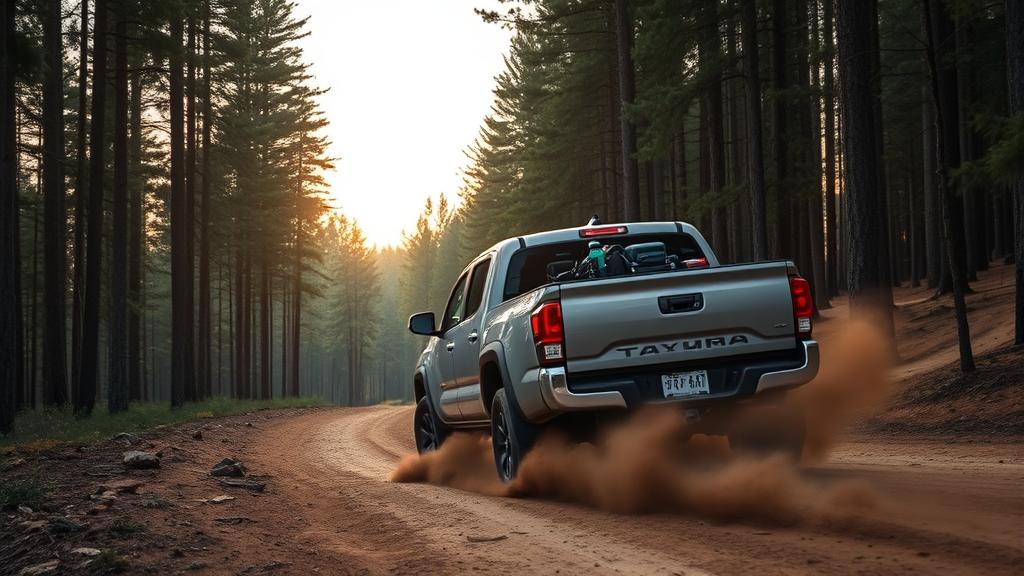
I was camped at the base of a canyon trail in southern Utah, about 12 miles down a graded dirt road, when another driver pulled up in a full-size F-150 and asked if I knew whether the next stretch was passable. I’d just come through it in a Tacoma. The F-150 turned around. The Tacoma had not been the biggest thing out there. It had just been the right size for the road.
That is the core argument for small trucks in 2026. Not that they can do everything a full-size can, but that they can do most of what most people actually need, fit into tighter spaces, and cost significantly less to run. For weekend use, light towing under 5,000 pounds, and trails where lane width matters, a smaller truck often makes more practical sense than a half-ton.
This breakdown covers five capable midsize and compact trucks available for 2026, with real towing figures, honest fuel range estimates, and a clear answer to which one fits what kind of trip.
The Toyota Tacoma: Still the Default, and Still Earning It
Pull off I-70 west of Denver toward any trailhead that sees real off-road traffic and you will notice how many of them are Tacomas. Toyota’s midsize pickup has dominated this segment for two decades, and the 2026 model continues a refresh cycle that brought a fully new platform for 2024.
The 2026 Tacoma runs a 2.4-liter turbocharged four-cylinder producing 228 horsepower. A hybrid version pairs that engine with an electric motor for a combined 326 horsepower output. Towing capacity tops out at 6,500 pounds on the SR5 and above with the proper tow package, placing it at the high end of the midsize field.
Real-world highway fuel economy for the non-hybrid Tacoma typically runs 23 to 25 mpg depending on load. On a full 21.2-gallon tank, that translates to roughly 490 to 530 miles of realistic highway range. A practical number on any road trip.
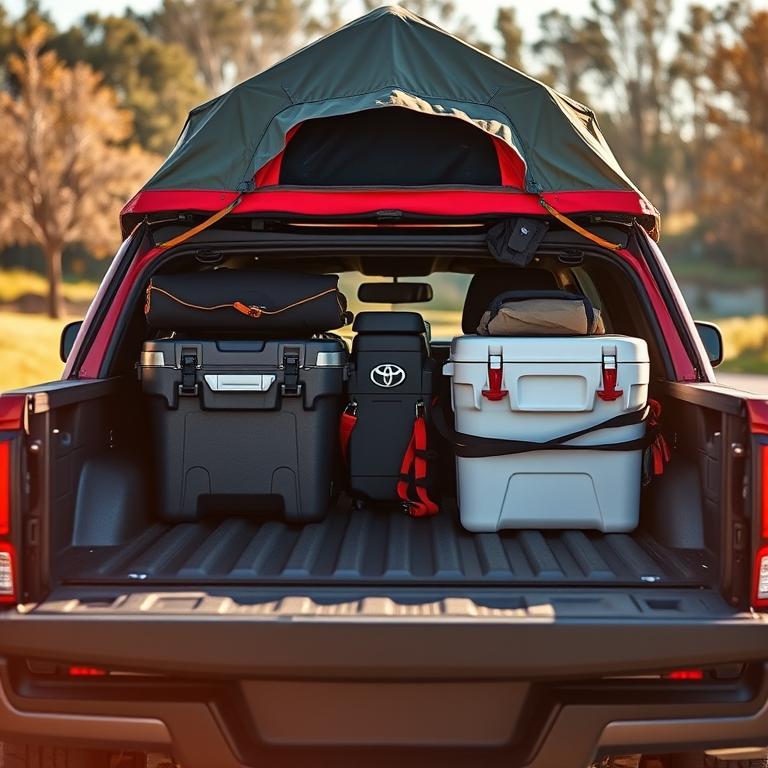
The honest limitation: the double cab Tacoma has a 5-foot bed. For carrying kayaks or lumber, that creates real constraints. I’ve loaded a pop-up camper into a double-cab Tacoma bed before. You can make it work, but you will measure twice.
The Ford Maverick: The Budget Surprise That Actually Tows
When Ford introduced the Maverick in 2022, the automotive press treated it as a grocery-getter. Buyers figured out the numbers fast, and inventory evaporated. The 2026 model remains in high demand.
The Maverick’s standard powertrain is a 2.5-liter hybrid returning an EPA-estimated 42 mpg city, making it the most fuel-efficient pickup truck sold in the United States. Highway economy drops to around 33 mpg, but on a 13.8-gallon tank, that is roughly 455 miles of range. Plan your fuel stops on remote routes.
Towing capacity on the base hybrid is rated at 2,000 pounds. The optional 2.0-liter EcoBoost four-cylinder raises that to 4,000 pounds, which covers a pop-up trailer or loaded gear trailer without stress. If you need towing capacity beyond the base, the EcoBoost is the one to configure.
The Maverick’s unibody construction limits its capability on genuinely rough terrain compared to body-on-frame competitors. For gravel forest roads and mild off-pavement driving, it handles confidently. For serious rock crawling or deep ruts, it is not the right tool.
The Chevrolet Colorado: The One That Tows the Most
The 2026 Colorado received a full redesign for 2023. Before that, it was a reasonable truck. After it, it became one of the stronger arguments for the midsize segment.
The higher-output version of the 2.7-liter turbocharged four-cylinder produces 310 horsepower with 430 lb-ft of torque, rated to tow up to 7,700 pounds with the Max Trailering package. That is the highest tow rating in the midsize truck segment for 2026.
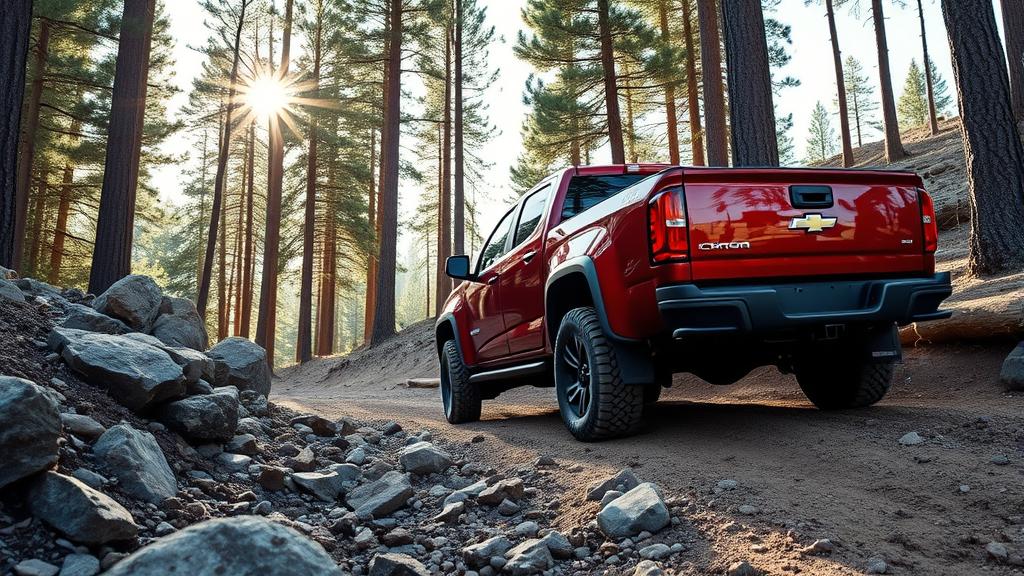
The ZR2 off-road variant deserves mention. It comes with Multimatic DSSV dampers, a 1-inch suspension lift, 33-inch Goodyear Wrangler Territory MT tires, and front and rear electronic locking differentials. For buyers who want a trail-capable small truck, the Colorado ZR2 is the most purpose-built option available. Pricing starts around $55,000, which puts it in full-size territory.
The Nissan Frontier: The Honest Pick for Value
Nobody talks about the Frontier as much as they should. It tows up to 6,720 pounds with the 3.8-liter V6 and tow package, undercuts the Tacoma and Colorado on price, and does both without any particular drama. A 2026 Frontier SV crew cab typically starts around $37,000 to $39,000 before options, roughly $3,000 to $6,000 below equivalent Tacoma and Colorado configurations.
The interior materials are a step down from either competitor, and the infotainment system is functional without being modern. The Frontier is not pretending to be something it isn’t. The 21.0-gallon tank and 22 to 24 mpg highway economy gives you roughly 462 to 504 miles of highway range per fill-up.
In my experience, the Frontier does one thing well: it does not feel fragile. It is an older-architecture truck in many ways, and that has costs in ride comfort, but it also means mechanical straightforwardness that owners of working trucks often prefer.
The Honda Ridgeline: The One People Underestimate
Ask most off-road enthusiasts about the Honda Ridgeline and you will get some eye-rolling. The Ridgeline is a unibody truck. It does not have traditional body-on-frame construction. In practice, it depends entirely on what you’re asking it to do.
The 2026 Ridgeline uses a 3.5-liter V6 producing 280 horsepower. Tow capacity is rated at 5,000 pounds. What the Ridgeline offers that no other truck in this segment can match is a lockable in-bed trunk, a dual-action tailgate, and car-like on-road ride quality because it shares its platform with the Honda Pilot.
The AWD system handles moderate off-pavement conditions confidently, but the Ridgeline is not a trail truck. If your weekend adventures involve technical terrain, it is the wrong choice. If they involve forest campgrounds, boat ramps, and gravel roads, it is one of the more livable options in this group.
Side by Side: Which Truck Fits What Trip
| Truck | Tow Capacity (max) | Highway MPG (est.) | Tank Size | Est. Highway Range | Starting MSRP (approx.) |
|---|---|---|---|---|---|
| 2026 Toyota Tacoma (2.4T) | 6,500 lbs | 23-25 mpg | 21.2 gal | ~490-530 mi | ~$33,500 |
| 2026 Ford Maverick (EcoBoost) | 4,000 lbs | 30 mpg | 13.8 gal | ~415 mi | ~$28,000 |
| 2026 Chevy Colorado (2.7T high-output) | 7,700 lbs | 22-24 mpg | 19.0 gal | ~418-456 mi | ~$33,000 |
| 2026 Nissan Frontier (V6) | 6,720 lbs | 22-24 mpg | 21.0 gal | ~462-504 mi | ~$31,500 |
| 2026 Honda Ridgeline (AWD) | 5,000 lbs | 24-26 mpg | 19.5 gal | ~468-507 mi | ~$40,000 |
The Maverick’s small tank is a real constraint in remote territory. The Colorado’s tow rating leads the segment if hauling capacity is the priority. The Ridgeline’s starting price puts it in a different conversation than the others, despite being the least capable off-road vehicle in the comparison.
What I Would Actually Recommend
For most buyers planning genuine weekend adventures with light towing in 2026, the Toyota Tacoma is still the best all-around choice. Resale value is consistently among the strongest in the segment according to Kelley Blue Book, parts availability is everywhere, and the trail network built around Tacoma ownership is real. If you’re buying a truck to keep for 8 to 10 years and use on actual terrain, start here.
If budget is the primary filter and your towing needs stay under 4,000 pounds, the Ford Maverick EcoBoost deserves serious attention at its price point. Just plan around the smaller tank. It is a limitation, not a dealbreaker, but it requires awareness on remote routes.
The Colorado ZR2 is the right answer specifically for buyers who want the most capable off-road small truck available in 2026. At around $55,000, you are paying for a purpose-built capability package that most weekend drivers will not use to its limit.
One limitation worth being direct about: manufacturer tow ratings and EPA fuel economy figures are tested under controlled conditions. Real-world performance with a loaded trailer at elevation, in summer heat, or on rough terrain can reduce both numbers meaningfully. Verify current spec sheets at each manufacturer’s website before committing to a configuration, and check owner forums for the specific powertrain you’re considering.
You don’t need the biggest truck on the trail. You need the right one for the road you’re actually going to drive.
References
- EPA Fuel Economy Data
- EPA Vehicle Search Tool
- IIHS Vehicle Safety Ratings
- Kelley Blue Book
- Toyota
- Ford
Disclaimer: The information provided in this article is for educational and informational purposes only. It does not constitute professional advice. Readers should conduct their own research and consult with qualified professionals before making any decisions.