

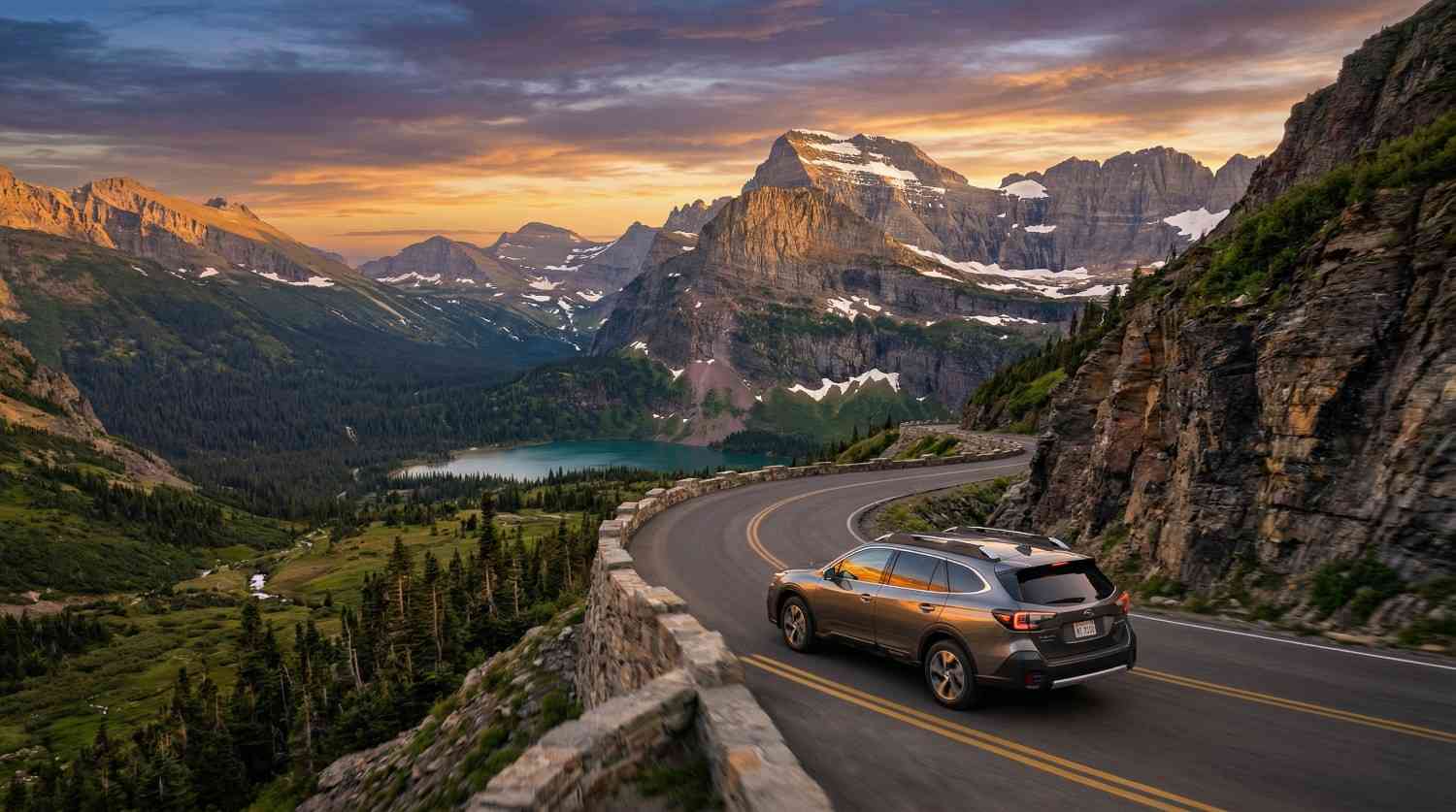
You’re somewhere outside Moab, the light going gold, and the road ahead splits—one way toward Canyonlands, the other toward Arches. You don’t pull over to Google it. You just pick a direction and drive. That’s the appeal of a national park road trip done right. The route matters as much as the parks themselves. In 2026, with park access policies shifting significantly, the “best” routes aren’t just scenic—they’re the ones that still work in the real world.
This article breaks down five of the most rewarding U.S. national park road trip routes you can actually drive in 2026. You’ll get distances, ideal vehicles, seasonal timing, and where the logistics can trip you up. Data comes from the National Park Service 2026 Guide, EPA Fuel Economy Data, and real-world routing constraints.
Utah’s Mighty 5 Loop: The Most Complete Western Drive
This loop connects Arches, Canyonlands, Capitol Reef, Bryce Canyon, and Zion in roughly 700 miles. Why it works specifically in 2026 is a major policy shift: Arches National Park officially ended its timed-entry system on February 18, 2026, allowing visitors to enter freely without advance reservations for the first time in years.
Vehicle reality
- Ideal: Midsize SUV (Subaru Outback or Toyota RAV4 Hybrid).
- Efficiency: According to 2026 Toyota RAV4 MPG Data, the RAV4 Hybrid delivers up to an EPA-estimated 43 MPG combined.
- Fuel Strategy: Fuel gaps can exceed 100 miles between Capitol Reef and Bryce. Ground clearance helps more than AWD on the washboard dirt roads of the Cathedral Valley detour.
Where it gets tricky
While Arches is open, Zion National Park still requires permits for high-traffic hikes like Angels Landing through its lottery system. In my experience, the Capitol Reef stretch gets overlooked; don’t rush it. That’s where the road feels like yours.
Pacific Coast to Redwoods: The Coastal Authority
The drive up California’s Highway 1 and 101 is the main event; the redwood groves are the punctuation marks. This route covers roughly 450 miles from San Francisco to the Oregon border.

Vehicle Choice
A smaller vehicle like a Mazda CX-5 makes tight coastal turns easier, as full-size SUVs can feel cumbersome on cliffside sections. However, California prices often run higher than the national average; as of March 2026, AAA reports California gas prices at $5.84 per gallon compared to a national average of $3.98.
Yellowstone to Glacier: Big Sky Country
Driving from Yellowstone to Glacier National Park through Montana covers roughly 500 miles. Infrastructure is a highlight this year; Yellowstone’s North Entrance Road reconstruction is entering its permanent alignment phase following the 2022 floods.
Vehicle and Fuel
Rural Montana still has EV charging gaps. If you’re driving electric, you’ll need to map stops carefully using the DOE Alternative Fuels Data Center station locator. In our assessment, this is one of the most rewarding drives in the U.S., but only if you’re comfortable with long distances and minimal backup plans.
Blue Ridge Parkway to Great Smoky Mountains: The Eastern Standard
The Blue Ridge Parkway is 469 miles of uninterrupted scenic driving connecting Shenandoah to the Great Smoky Mountains. There are no commercial trucks or billboards, only vistas.
Route Realities
- Speed: Limits stay low, often at 45 MPH.
- Vehicle: Comfort matters more than off-road capability. Think Honda CR-V or Hyundai Tucson Hybrid for their superior seat comfort and NHTSA 5-Star Safety Ratings.
- Challenge: Fall foliage season in 2026 is expected to be crowded; visibility drops fast in the high-elevation fog of the Smokies.
Grand Teton to Rocky Mountain: The Elevation Challenge
Connecting Grand Teton in Wyoming to Rocky Mountain in Colorado (roughly 550 miles) involves multiple passes above 10,000 feet. Rocky Mountain National Park maintains its timed-entry system for 2026, running from May 23 to October 13.
Mechanical Context
Turbocharged engines handle the thin air better than naturally aspirated ones. According to EPA Fuel Economy Data, real-world MPG drops significantly in mountainous terrain due to heavy climbing. Brake management on the long descents into Estes Park is critical.
2026 Route Comparison Summary
| Route | Distance | Ideal Vehicle | Best Season | Key Challenge |
| Utah Mighty 5 | ~700 miles | Hybrid SUV | Spring/Fall | Arches/Zion Heat |
| Pacific Coast | ~450 miles | Compact SUV | Fall | Fog & Fuel Costs |
| Yellowstone-Glacier | ~500 miles | Turbo SUV | Summer | Charging Gaps |
| Blue Ridge | ~469 miles | Crossover | Fall | Traffic/Fog |
| Teton-Rockies | ~550 miles | Turbo SUV | Summer | High Elevation |
Planning Around 2026 Constraints
The most significant change for 2026 is the discontinuation of timed entry at major parks. Beyond Arches, Mount Rainier has also discontinued its timed-entry system for 2026, making this a great year for spontaneous travelers. However, you must still book Rocky Mountain permits through Recreation.gov starting May 1.
Long drives increase fatigue, so we recommend prioritizing vehicles with high IIHS Safety Ratings and active driver-assist systems. According to the 2026 AAA Driving Costs Study, fuel remains the most volatile expense for 2026 road trips.
Conclusion: Choosing Your Best Path
If you want the most variety, the Utah Mighty 5 loop is the most complete experience. If driving is the point, go Pacific Coast to Redwoods. For those seeking fewer crowds, Yellowstone to Glacier stands out, while the Blue Ridge Parkway is the easiest to execute logistically.
One limitation: this article does not cover Alaska’s Denali or Hawaii’s Volcanoes, both of which require entirely different logistical levels. Before you commit, check Edmunds’ True Cost to Own to see how these routes impact your vehicle’s value. Pick a direction and go.
References
- 2026 National Parks Guide: New Fees & Timed Entry
- EPA Fuel Economy Data (2026)
- NHTSA 5-Star Safety Ratings 2026
- Wyoming/Montana Transportation Data – DOE Alternative Fuels
- AAA Fuel Price Data March 2026
- Yellowstone North Entrance Road Reconstruction – NPS Update
- Blue Ridge Parkway Trip Planner – NPS/GuideAlong
Disclaimer: The information provided in this article is for educational and informational purposes only. It does not constitute professional advice. Readers should conduct their own research and consult with qualified professionals before making any decisions.