

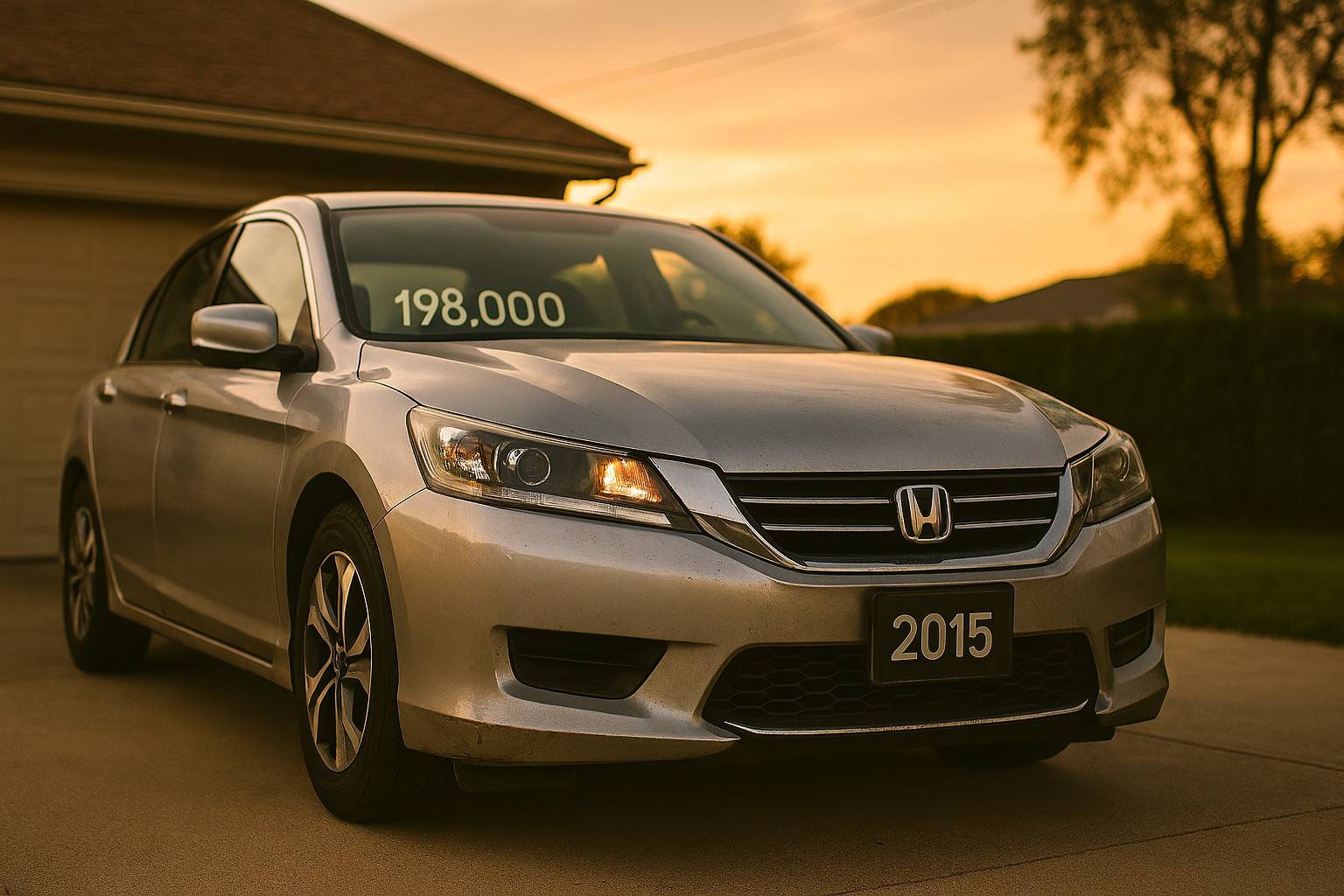
A customer once asked me if keeping his 2015 Honda Accord to 200,000 miles would “save money.” His car had 92,000 miles, and he’d just been quoted $780 for brakes, fluids, and a belt. He was thinking about trading it in to avoid further costs.
Here’s the part most people miss: the expensive years of a car’s life don’t show up all at once. They stack slowly—then hit you in clusters. By the time you’re near 200,000 miles, you’ve either stayed ahead of it or you’re paying for everything you skipped. Running a car into the ground is a financial strategy, but only if you understand the actual math behind it.
Skip maintenance early and you’ll pay double later
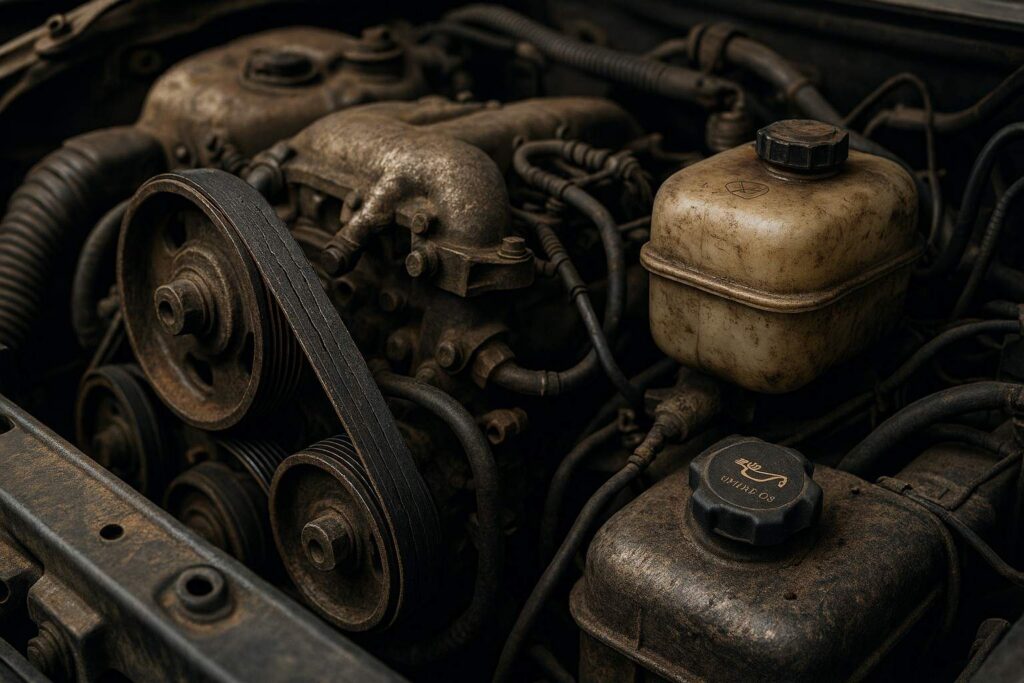
Most manufacturers recommend oil changes every 5,000–7,500 miles, transmission fluid every 60,000–100,000 miles, and coolant around 100,000 miles. These are the lines between simple maintenance and expensive repair. If you ignore these intervals, parts start failing instead of just aging.
For example, a coolant flush typically costs between $100 and $150. If you skip it and the engine overheats, a head gasket repair can run between $1,500 and $2,500. This massive cost gap shows up repeatedly across all vehicle systems. If a car comes into my bay with 120,000 miles and no service records, I have to assume the worst; I’ve seen engines sludge up at 80,000 miles just from stretched oil intervals.
According to AAA’s 2026 Your Driving Costs report, maintenance and repair costs for a new car average about $0.09 to $0.11 per mile. Over a 200,000-mile lifespan, that totals roughly $20,000—assuming you don’t neglect anything. Miss those services, and that number climbs rapidly as secondary damage occurs.
Fuel becomes the biggest long-term expense
While repair bills feel like the biggest hit, fuel is where most of the money actually goes. Even a reasonably efficient car—burning 30 mpg combined—uses about 6,667 gallons over 200,000 miles. At an average fuel cost of $3.50 per gallon, that’s roughly $23,334.
Buyers often obsess over saving $1,500 on the purchase price but ignore a 10 mpg difference that can swing lifetime fuel costs by over $10,000. In my experience, focusing on the purchase price while ignoring the long-term pump costs is a mistake that eventually drains your wallet. You can check your specific vehicle’s data using the EPA Fuel Economy Data to see how your model stacks up.
IMAGE 3 — CONTEXTUAL / LIFESTYLE
- Placement: Mid-article, after first 4 paragraphs
- Alt text: silver midsize sedan like Honda Accord driving on US highway during long commute with visible fuel gauge
- AI Image Prompt: silver midsize sedan like Honda Accord driving on US highway during long commute, dashboard fuel gauge partially visible, bright daylight, realistic traffic, photorealistic, natural lighting, editorial style, wide angle, –ar 16:9
The expensive repairs hit between 120k and 180k miles
This is the stretch where ownership gets real. Not everything fails, but enough components reach the end of their service life that you will likely face significant bills. Here is a typical list of wear items for cars pushing past 150,000 miles:
- Suspension components (struts, control arms): $800–$1,500
- Water pump and timing components: $600–$1,200
- Alternator or starter: $400–$900
- AC system repairs: $800–$2,000
These aren’t surprises; they are expected wear items. However, they rarely fail one at a time. I’ve seen cars come in needing three of these at once—a $2,500 visit for a car that might only be worth $5,000. According to Consumer Reports 2026 car reliability rankings, models like the Toyota Camry and Honda Accord tend to hit high mileage with fewer major failures, but even they are not immune to the effects of aging rubber and worn bearings.
Depreciation stops hurting, but upkeep takes over
By the time a car hits 150,000 miles, most of its value is gone, which is actually a financial advantage. According to Kelley Blue Book 2026 car depreciation rates, a new car can lose 55% of its value in the first five years. After that, the curve flattens significantly. Your 10-year-old car isn’t losing much value anymore.
The trade-off is that instead of losing value to the market, you are paying for parts. In our assessment, long-term ownership makes sense as long as annual repair costs stay under $1,500–$2,000. If you consistently exceed that, the math flips, and a newer vehicle may be more cost-effective.
What 200,000 miles actually costs
Let’s put the real numbers together. This assumes a midsize sedan, average fuel economy, and consistent maintenance with no major neglect.
| Cost Category | Estimated Cost (200,000 miles) | Average Cost Per Mile |
| Fuel | $23,334 | $0.117 |
| Maintenance | $14,500 | $0.073 |
| Repairs | $10,000 | $0.050 |
| Insurance | $15,000 | $0.075 |
| Registration/Fees | $3,000 | $0.015 |
| Total | $65,834 | $0.329 |
Note: Figures are based on 2026 national averages and assume a 10-year ownership period.
Not every car is built to make it that far
Some engines and transmissions simply do not age well. According to the JD Power 2026 US Vehicle Dependability Study, brands like Lexus and Toyota consistently rank at the top for long-term reliability. While I’ve seen Toyota Camrys hit 250,000 miles with original drivetrains, I’ve also seen smaller turbocharged engines struggle before 120,000 miles due to heat and oil stress. Modern engines designed for efficiency over durability often have less predictable long-term lifespans.
Conclusion: Who should run a car to 200,000 miles?
If you drive a reliable model, stay consistent on maintenance, and can handle occasional $1,500 repair years, keeping a car to 200,000 miles is usually the clear financial win. However, if you drive a model with a weaker reliability record or tend to delay maintenance, the math shifts. You will likely spend more in unpredictable, large chunks.
Before you decide, run your own numbers. Check your car’s reliability history and use a “True Cost to Own” calculator. Getting to 200,000 miles isn’t cheap, but if you do it right, it is often cheaper than the alternatives.
References
- AAA’s Your Driving Costs 2026
- Consumer Reports: 10 Most Reliable Car Brands in 2026
- J.D. Power: 2026 U.S. Vehicle Dependability Study (VDS)
- EPA: 2025 Automotive Trends Report
- Kelley Blue Book: 2026 Best Resale Value Awards
- Kelley Blue Book: Car Depreciation Calculator
Disclaimer: The information provided in this article is for educational and informational purposes only. It does not constitute professional advice. Readers should conduct their own research and consult with qualified professionals before making any decisions.