

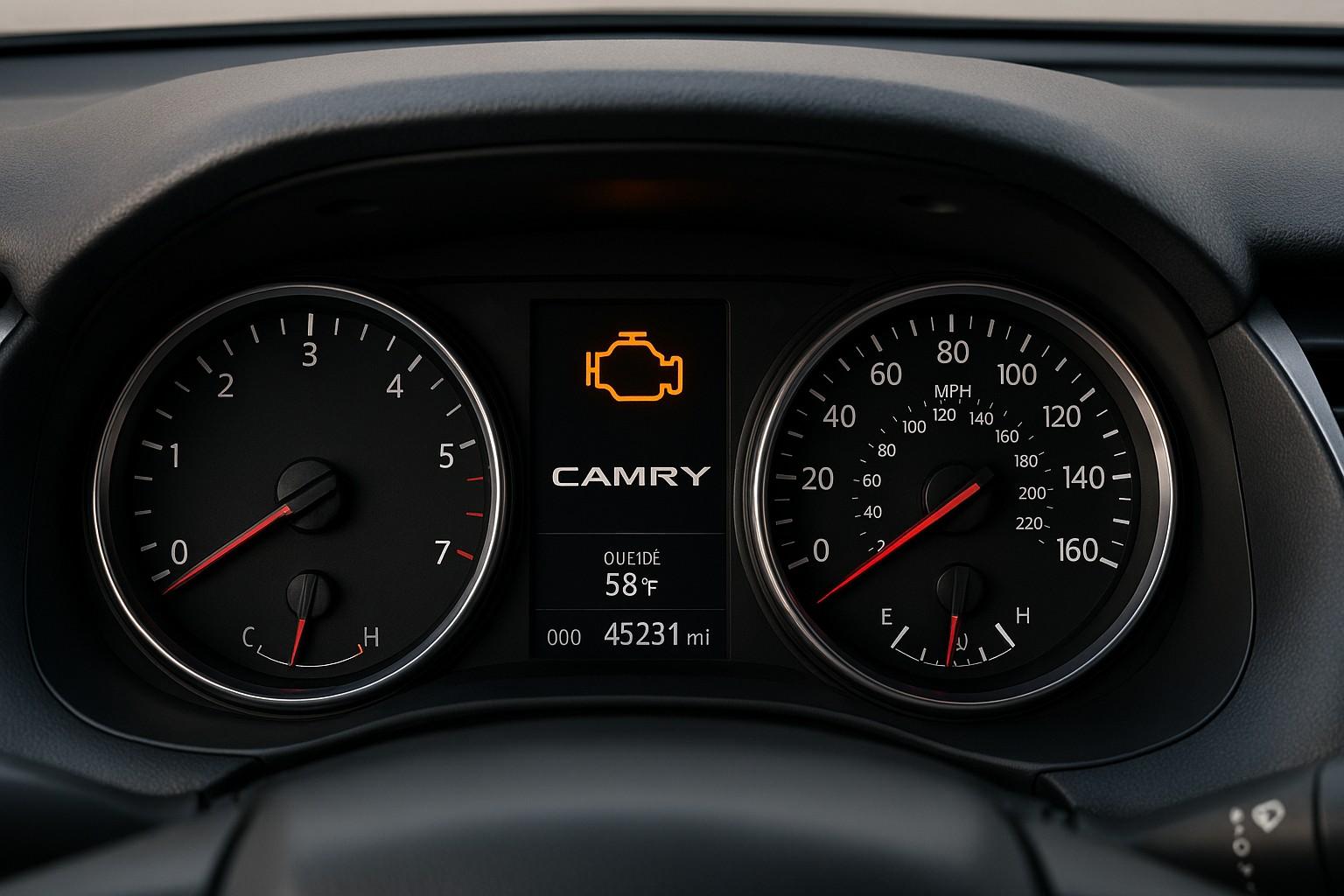
You’re merging onto the highway, everything feels normal, and then that little amber icon pops on. No noise. No smoke. Just a light. And now you’re guessing.
Here’s the part most owners get wrong: a check engine light doesn’t mean one thing. It can point to something as minor as a loose gas cap or as expensive as a failing catalytic converter. According to the CarMD 2026 Vehicle Health Index, the most common check engine repairs in the U.S. still cluster around emissions systems—and the cost spread between them is massive.
By the end of this, you’ll know how to read the light’s behavior, what’s likely behind it, what it usually costs, and exactly when you should pull over instead of “just driving it for a few days.”
Ignore it long enough and you’ll turn a $20 fix into a $2,000 repair
The check engine light is tied to your car’s OBD-II system—onboard diagnostics that monitors engine performance, emissions, and sensors. When something falls out of spec, it stores a trouble code and turns the light on.
Simple enough. The problem is what you do next.
A loose gas cap can trigger an EVAP system code. That’s a $0 fix if you tighten it. Ignore it, and you’ll keep driving blind to new issues because the light is already on. Now stack that against a failing catalytic converter. That’s usually $1,200–$2,500 depending on the vehicle.
In our assessment, those expensive converters often get “cooked” because an owner ignored a simple misfire for weeks. If this came into my bay with a fresh light and no symptoms, the first thing I’d check is stored codes and fuel trim data. That data tells me whether we’re dealing with a minor leak or something actively damaging the engine.
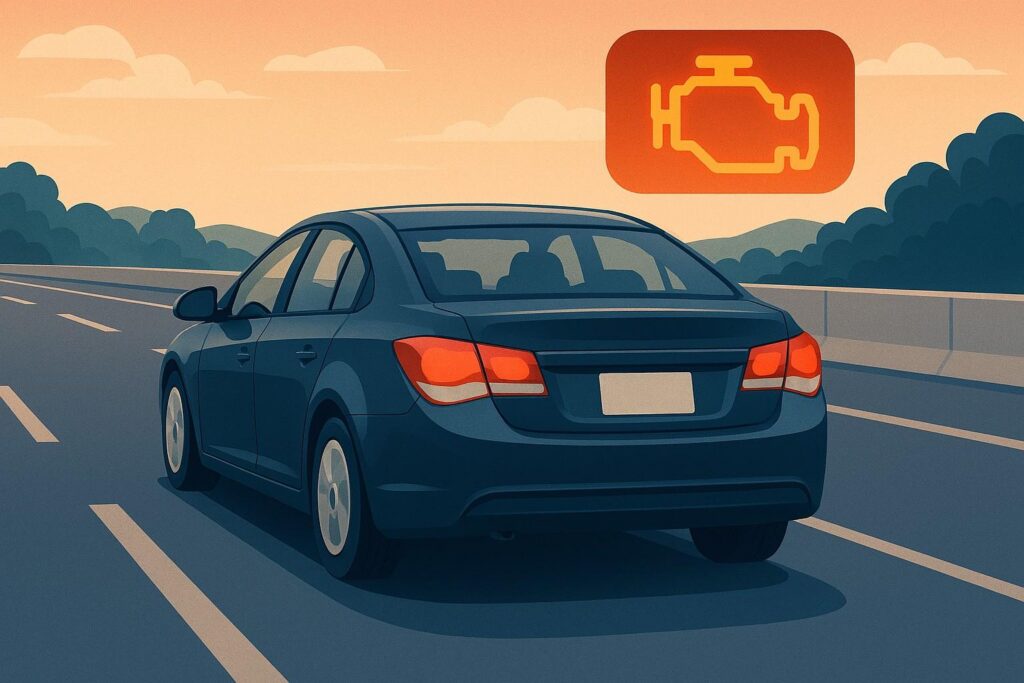
Flashing light means stop driving — steady light buys you time
Not all check engine lights behave the same. And this is where most people guess wrong. A steady light usually means the issue isn’t immediately destructive. You can typically keep driving short distances, but you should get it checked within a few days.
A flashing light is different. That’s the car telling you there’s an active misfire. Fuel isn’t burning correctly, and raw fuel may be dumping into the catalytic converter. That is how you destroy a $2,000 part in under an hour.
Don’t drive it. If a car comes into the shop with a flashing light, I wouldn’t even pull it inside right away. I’d shut it down, scan it, and check ignition components—coils, plugs, and injectors—before anything else. That is where the damage starts.
Most common causes and what they usually cost
Based on 2026 CarMD data and typical U.S. shop rates, these are the issues seen most often tied to a check engine light:
| Problem | Typical Cause | Symptoms | Average Repair Cost |
| Loose/faulty gas cap | EVAP leak | None | $0–$50 |
| Oxygen sensor failure | Worn sensor | Slight MPG drop | $150–$400 |
| Catalytic converter failure | Long-term misfire, age | Power loss, smell | $1,200–$2,500 |
| Ignition coil failure | Electrical breakdown | Rough idle, misfire | $200–$600 |
| Mass airflow sensor (MAF) | Dirty or failed sensor | Hesitation, stalling | $200–$500 |
| Spark plug wear | Missed maintenance | Rough running | $150–$300 |
According to Consumer Reports’ 2026 reliability data, ignition system issues and emissions components are among the most frequent causes of check engine lights across high-mileage vehicles. Small maintenance items ignored early tend to show up later as expensive emissions failures. That’s not coincidence.
Some problems feel minor — until they aren’t
You won’t always feel a difference when the light comes on. That’s what makes this tricky. A failing oxygen sensor might just cost you fuel economy—maybe a 10–15% drop. You’ll notice it at the pump before anything else. A small EVAP leak? You won’t notice anything at all.
But a misfire starts subtle. Slight hesitation. Maybe a rough idle at stoplights. Ignore that long enough and you’re looking at catalytic converter damage. I’ve seen this fail at 60,000 miles on perfectly good engines because the owner waited a month. That’s not rare.
The J.D. Power 2026 Vehicle Dependability Study shows that powertrain and emissions issues still rank among the most reported problems in vehicles past the 3-year mark. These parts don’t usually fail suddenly; they fail because they get ignored early.
When you should actually pull over and stop
This is the line most people want, so here it is.
Stop driving immediately if:
- The check engine light is flashing.
- The engine is shaking or misfiring.
- You smell fuel or sulfur (rotten eggs).
- Power drops sharply under acceleration.
Those symptoms usually point to active combustion problems. Keep driving, and you’re stacking damage.
Keep driving (short-term) if:
- The light is steady.
- There are no performance issues.
- There are no unusual noises or smells.
But even then, don’t stretch it past a week. If you want a quick read before going to a shop, most parts stores will scan codes for free. You can also use a basic OBD-II scanner—usually $25–$60—and look up codes yourself. You can cross-check repair costs using tools like Edmunds’ True Cost to Own calculator or get a ballpark from AAA repair estimates. It won’t diagnose the issue, but it keeps you from walking in blind.
Not every code means you should panic — but guessing gets expensive
Here’s the uncomfortable truth: the check engine light is vague by design. It tells you where the problem is, not what exactly failed. A code might point to an oxygen sensor, but the real issue could be a vacuum leak upstream.
That’s why people replace parts and still have the light on. If you’ve already swapped parts based on a code alone, a technician will often have to start over with proper diagnostics—smoke testing for leaks, checking voltage signals, and verifying fuel trims.
In our assessment, paying a shop $100–$180 for a proper diagnostic is usually cheaper than throwing parts at the problem. Especially once you get into expensive emissions systems.
Conclusion: Know the difference between inconvenience and damage
If the light is steady and the car feels normal, you’re dealing with something that can wait a few days—but not weeks. Most of those fixes land in the $150–$500 range if caught early. If it’s flashing or rough, shut it down. That’s the difference between a $300 ignition repair and a $2,000 emissions system failure.
There’s a limit to how precise this advice can be without seeing the actual trouble code. A P0171 (lean condition) and a P0302 (cylinder 2 misfire) lead you down very different paths. You’ll need a scan to know which one you’re dealing with. Next step is simple: get the code read. Then decide.
References
Disclaimer
The information provided in this article is for educational and informational purposes only. It does not constitute professional advice. Readers should conduct their own research and consult with qualified professionals before making any decisions.