


You’re staring at a $2,800 repair estimate on a car worth maybe $6,000. The service advisor says it’s “common at this mileage.” You’re already thinking about replacing it. That’s the moment this decision actually matters.
Most owners don’t lose money on cars because they bought the wrong one. They lose money because they replace a fixable car too early—or keep a failing one too long. By the end of this, you’ll know the dollar threshold where repairs still make sense, how reliability data shifts that line, and which repairs are worth doing versus walking away from.
If the Repair Costs Less Than Half the Car’s Value, You’re Usually Still Ahead
Skip this rule and you’ll overpay for replacement every time. Here’s why it works.
A simple benchmark I’ve used for years: if the repair is under 50% of the car’s current market value, fixing it usually makes more financial sense. Kelley Blue Book values and Edmunds pricing tools give you a quick number to work from.
A $2,000 repair on a $6,000 car? Fix it. A $4,500 repair on that same car? Now we’re talking. This isn’t about emotion. It’s math.
According to AAA’s latest ownership cost data, the average new vehicle costs over $10,000 per year when you factor in depreciation, insurance, fuel, and maintenance. That’s the hidden cost people forget when they jump to “I’ll just replace it.”
I’ve had cars come into my bay needing $1,500 in suspension work—control arms, bushings, maybe shocks. Owners hesitate. Then they go buy a newer car and take on $400/month payments. That’s $4,800 a year to avoid a one-time repair. That’s expensive avoidance.
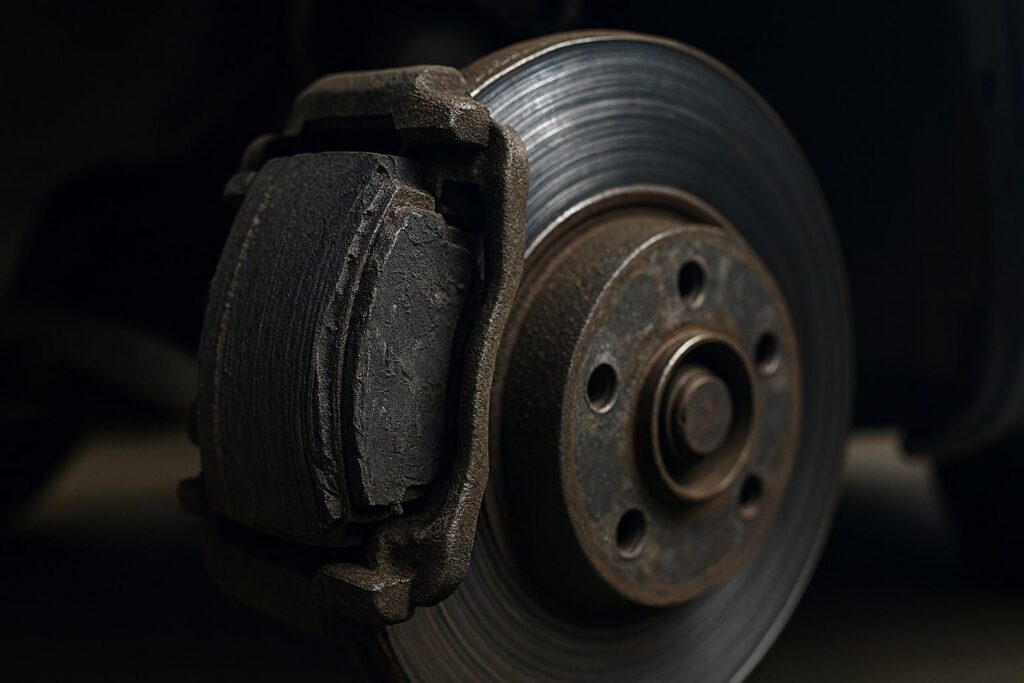
Big Repairs Don’t Always Mean It’s Time to Walk Away
An engine or transmission repair scares people into replacement. Sometimes that’s justified. Sometimes it’s not. Here’s where context matters: what kind of car, and how it’s aged.
According to Consumer Reports reliability data and J.D. Power’s 2025 Vehicle Dependability Study, brands like Toyota and Honda tend to hold reliability longer past 100,000 miles. That changes the math.
A $3,500 transmission rebuild on a well-maintained 2014 Toyota Camry with 130,000 miles can still buy you another 3–5 years of use. Replace that car, and you’re likely stepping into $20,000+ territory even for a used model.
But the same repair on a vehicle with known drivetrain issues—think certain Ford Focus or Nissan CVT-equipped models—is a different story. Those failures often repeat. If that car came into my bay with a slipping transmission and a known history of repeat failures, I’d tell the owner straight: fix it only if you plan to sell it immediately. Otherwise, you’re doubling down on a weak system.
Depreciation Is the Cost Nobody Sees Coming
Buy a newer car, and the biggest expense isn’t the payment. It’s what the car loses in value. A typical new vehicle can lose 20–30% of its value in the first year alone, according to Edmunds depreciation data. Over five years, that number often crosses 50%.
Repairs don’t work that way. You can spend $1,200 on brakes, tires, and fluids, and your car’s value doesn’t drop because of it. In fact, it may hold steady longer. That’s the part most people miss.
I’ve seen owners replace cars over a $900 repair—then take a $5,000 depreciation hit within the next year. No one notices it because it’s invisible. It just shows up when you try to sell. Use Edmunds’ True Cost to Own calculator and you’ll see it laid out clearly. Depreciation dominates everything else.
The Repairs That Usually Make Sense (And the Ones That Don’t)
Not all repairs are equal. Some extend the life of the car. Others are just delaying the inevitable. Here’s a breakdown that holds up in real-world ownership:
| Repair Type | Typical Cost | Usually Worth It? | Why |
| Brake job (pads + rotors) | $300–$800 | Yes | Normal wear item, restores safety |
| Suspension rebuild | $800–$2,000 | Yes | Extends drivability significantly |
| Timing belt service | $600–$1,200 | Yes | Prevents catastrophic engine failure |
| Transmission rebuild | $2,500–$4,500 | Depends | Worth it on reliable models |
| Engine replacement | $4,000–$8,000 | Rarely | Often exceeds vehicle value |
| Electrical system issues | $500–$2,000+ | Risky | Hard to diagnose, can snowball |
If this came into my bay with multiple electrical faults—random warning lights, intermittent no-start—I’d be cautious. Those problems can eat money fast without a clean fix. Mechanical wear is predictable. Electrical gremlins aren’t.
Mileage Matters Less Than Maintenance History
People fixate on mileage like it’s a countdown timer. It isn’t. I’ve worked on 180,000-mile cars that drove better than neglected 90,000-mile ones. Maintenance history is the real indicator.
Regular oil changes, coolant flushes every 50,000–60,000 miles, and transmission fluid service every 60,000–100,000 miles keep major components alive longer. Skip those, and the failure curve comes early.
CarMD’s 2025 Vehicle Health Index shows that neglected maintenance is still one of the top drivers of major repair costs in older vehicles. Not age. Not mileage. Neglect. So if your car has a clean service record, repairs are usually a safer bet. If it’s been ignored for years, you’re catching up on missed work. That adds up quickly.
When Replacement Actually Makes More Financial Sense
There’s a point where repairs stop being rational. You’ll feel it in the estimates. If total upcoming repairs within the next year exceed the car’s value, it’s time to stop. Not one repair—the pattern.
Rust is another hard stop. Structural corrosion doesn’t fix cheaply. And then there’s reliability stacking. When multiple systems start failing—transmission, suspension, electronics—you’re entering the phase where costs accelerate.
This is where I draw a hard line: if the repair estimate is over 60–70% of the car’s value, and the car has a history of repeat issues, walk away. Not maybe. Walk. That money is better used as a down payment on something more stable. This rule bends a little for rare or specialty vehicles where replacement cost is significantly higher than book value. But for typical daily drivers, it holds.
The Real-World Decision: Repair vs Replace Side-by-Side
Here’s how the numbers usually play out for a typical mid-size sedan:
| Scenario | Keep & Repair | Replace Vehicle |
| Immediate cost | $2,500 repair | $5,000 down payment |
| Monthly cost | $0 | ~$400/month loan |
| Annual depreciation | Minimal | ~$3,000–$5,000 |
| 3-year total cost | ~$2,500–$4,000 | ~$15,000+ |
| Risk | Repair failure possible | Lower short-term risk |
In my assessment, most people underestimate how expensive replacement actually is over time. But I’ll say this clearly: if your car leaves you stranded twice in a month, reliability becomes the deciding factor. Numbers matter, but so does getting to work. Your situation might shift the math. Long commutes, limited access to repair shops, or safety concerns can justify replacing earlier than the numbers suggest.
The Line Where You Stop Fixing and Move On
If your car is reliable, structurally sound, and the repair is under half its value, fixing it is almost always the smarter financial move. That’s the clear answer.
If the car has multiple major issues stacking up, repair costs creeping past 60% of its value, or a track record of repeat failures, replacing it starts to make sense—not because repairs are expensive, but because they’re no longer predictable.
I’ll be honest about one limitation here. This isn’t factoring in emotional value or niche use cases—classic cars, project builds, or vehicles with sentimental attachment. Those follow different rules. For most daily drivers, the math is consistent.
Before you decide, run your numbers. Check your car’s value on Kelley Blue Book, estimate ownership costs using Edmunds’ True Cost to Own, and look up reliability trends through Consumer Reports. Then compare one repair bill to three years of payments. That’s where the real answer shows up.
References
- AAA Your Driving Costs 2024/2025
- Edmunds True Cost to Own
- Kelley Blue Book Car Values
- Consumer Reports Cars
- J.D. Power 2025 Vehicle Dependability Study
- CarMD 2025 Vehicle Health Index
Disclaimer: The information provided in this article is for educational and informational purposes only. It does not constitute professional advice. Readers should conduct their own research and consult with qualified professionals before making any decisions.