

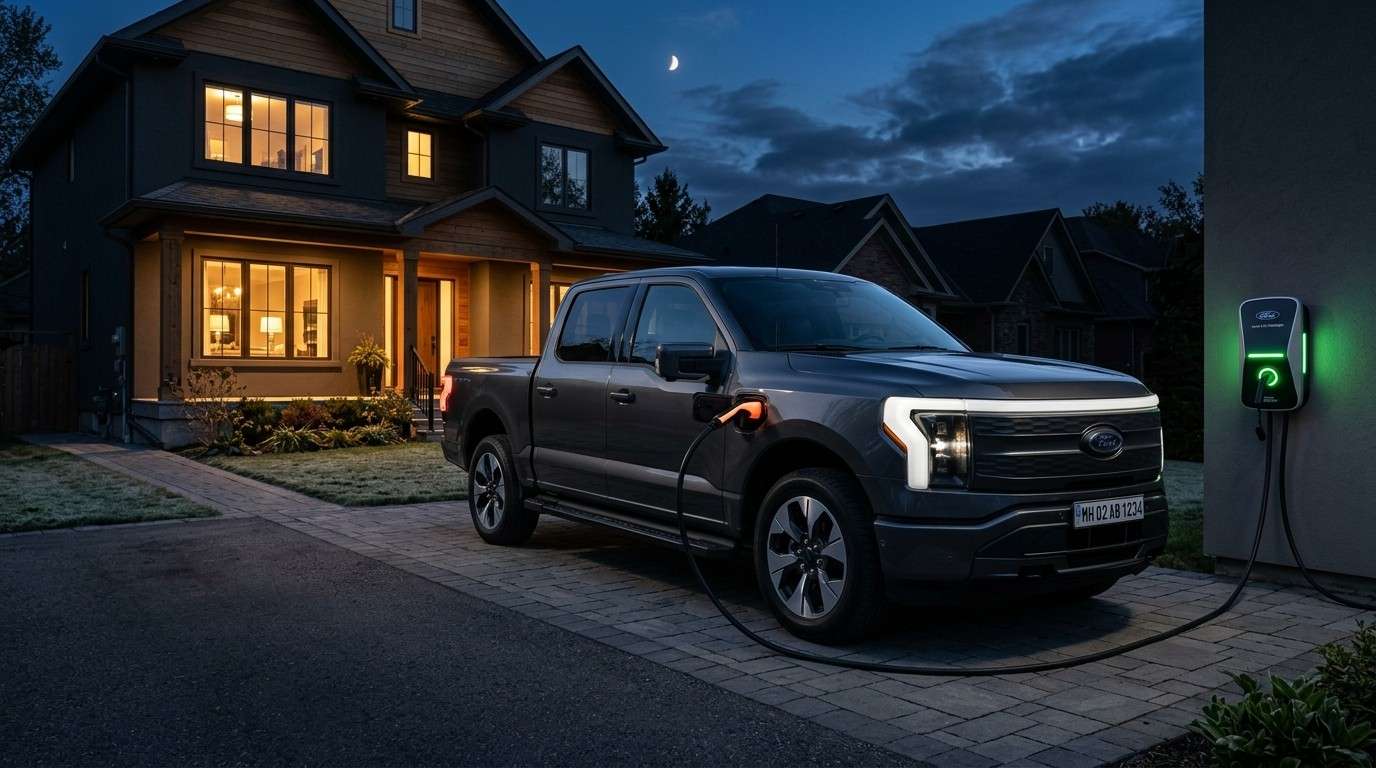
A fully charged Ford F-150 Lightning can power a typical U.S. home for two to three days during a total grid failure. This performance is based on the average American household electricity consumption of 29 kWh per day, as reported in early 2026. While the prospect of using an electric vehicle (EV) as a massive backup generator is no longer theoretical, the transition from “car” to “home power plant” requires specific hardware, compatible vehicle software, and a significant upfront investment in electrical infrastructure.
This guide details the mechanics of bidirectional charging, the current landscape of compatible vehicles in the United States, and the real-world costs of integrating Vehicle-to-Home (V2H) technology into your residence.
The Mechanics of Bidirectional Power: DC to AC
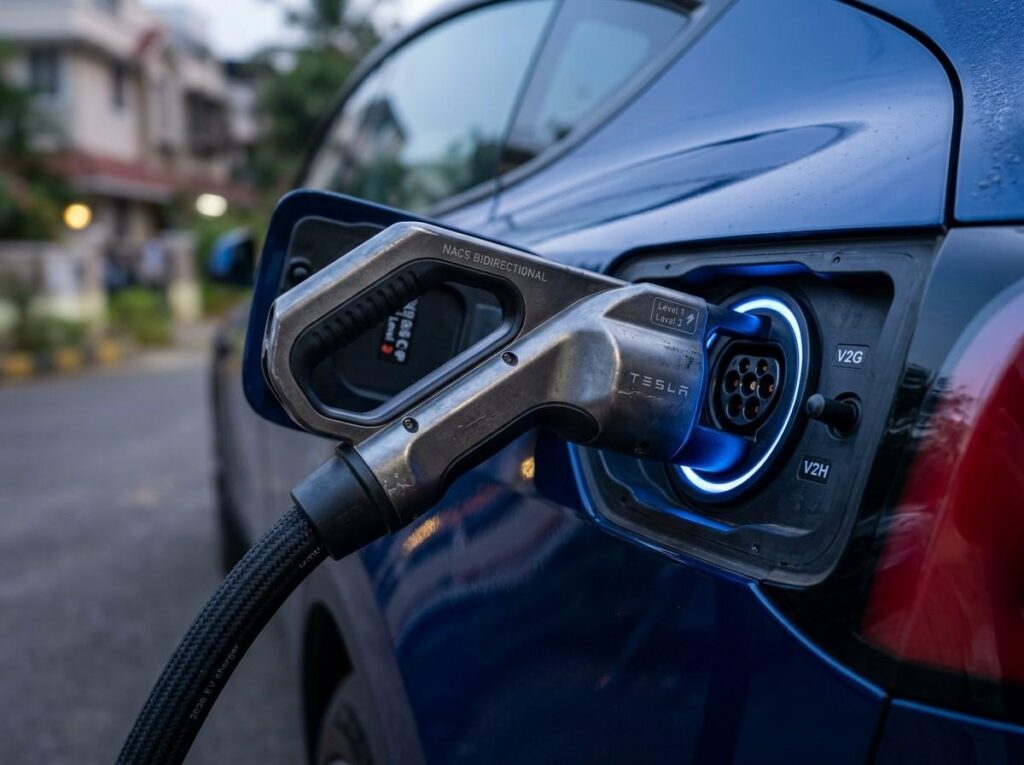
Standard EV charging is a one-way street: alternating current (AC) from the grid is converted into direct current (DC) by the car’s onboard charger and stored in the battery. V2H depends on bidirectional charging, which allows this process to move in reverse. Because your home runs on AC and your car stores DC, a high-capacity inverter must sit between the two systems to convert that energy back into a usable form for your appliances.
According to technical briefs from the National Renewable Energy Laboratory (NREL), the inverter is the most expensive component of a V2H system and is typically housed within the wall-mounted charging station rather than the vehicle itself. This hardware must also include an automatic transfer switch. This safety device “islands” your home from the utility grid during an outage, preventing the dangerous backfeeding of electricity onto power lines where utility crews may be working.
Real-World Backup: What a 100 kWh Battery Actually Supports
The duration of your home backup depends entirely on your battery’s usable capacity and your household’s “load shedding” discipline. While a 100 kWh battery sounds inexhaustible, running central air conditioning or an electric clothes dryer will deplete it rapidly.
Data from the 2026 DOE Alternative Fuels Data Center suggests that most V2H users should categorize their home loads into “Critical” and “Luxury” to maximize duration.
| Usage Scenario | Estimated Daily Consumption | Backup Duration (131 kWh Battery) |
| Emergency Essentials (Fridge, Wi-Fi, LED lights, Phone charging) | 10–12 kWh | 10–12 Days |
| Standard Moderate Use (Essentials + TV, Microwave, Dishwasher) | 25–30 kWh | 4–5 Days |
| Full Household Load (Essentials + Central HVAC, Electric Oven) | 45–60 kWh | 2 Days |
The Infrastructure Cost: Equipment and Installation
The vehicle is only half of the equation. To enable V2H, a homeowner must install a compatible “Power Management” system. For example, the Ford Intelligent Backup Power system requires the Ford Charge Station Pro and a Home Integration System, which acts as the gateway between the truck and the home’s electrical panel.
Current market data for 2026 indicates that equipment and professional installation for a full V2H setup typically range from $4,000 to $10,000.
- Bidirectional Hardware: $3,500 – $5,000
- Electrical Labor & Permitting: $1,500 – $3,500
- Panel Upgrades (if needed): $1,000 – $2,500
While these costs are high, the IRS Section 30C Alternative Fuel Infrastructure Tax Credit provides a potential offset. Through June 30, 2026, eligible residents in non-urban or low-income census tracts can claim 30% of the cost of hardware and labor, capped at $1,000. You can verify your specific address using the DOE 30C Eligibility Locator.
Compatible Vehicles: The 2026 U.S. Market Landscape
Despite the popularity of the concept, only a small subset of EVs currently sold in the U.S. support true V2H (powering the whole home through the panel). Many other models offer “Vehicle-to-Load” (V2L), which provides 120V outlets for individual appliances but cannot back-power a house.
| Vehicle Model (2026) | V2H Support Status | Max Export Power | Notes |
| Ford F-150 Lightning | Fully Supported | 9.6 kW | Only with Ford Home Integration System |
| Tesla Cybertruck | Fully Supported | 11.5 kW | Requires Tesla “Powershare” hardware |
| Kia EV9 | Supported | 5.0 kW | Requires Wallbox Quasar 2 hardware |
| GM Silverado EV | Supported | 10.2 kW | Part of “GM Energy” home ecosystem |
| Hyundai Ioniq 5 / 6 | V2L Only | 1.9 kW | Exterior outlet only; no whole-home support |
A notable absence in the native V2H market is the Tesla Model 3 and Model Y. While Tesla has indicated that its newer drive units are hardware-capable of bidirectional flow, the software and home integration kits for these specific models have not been widely enabled for residential backup as of early 2026.
Beyond Emergencies: Cost Savings and Arbitrage
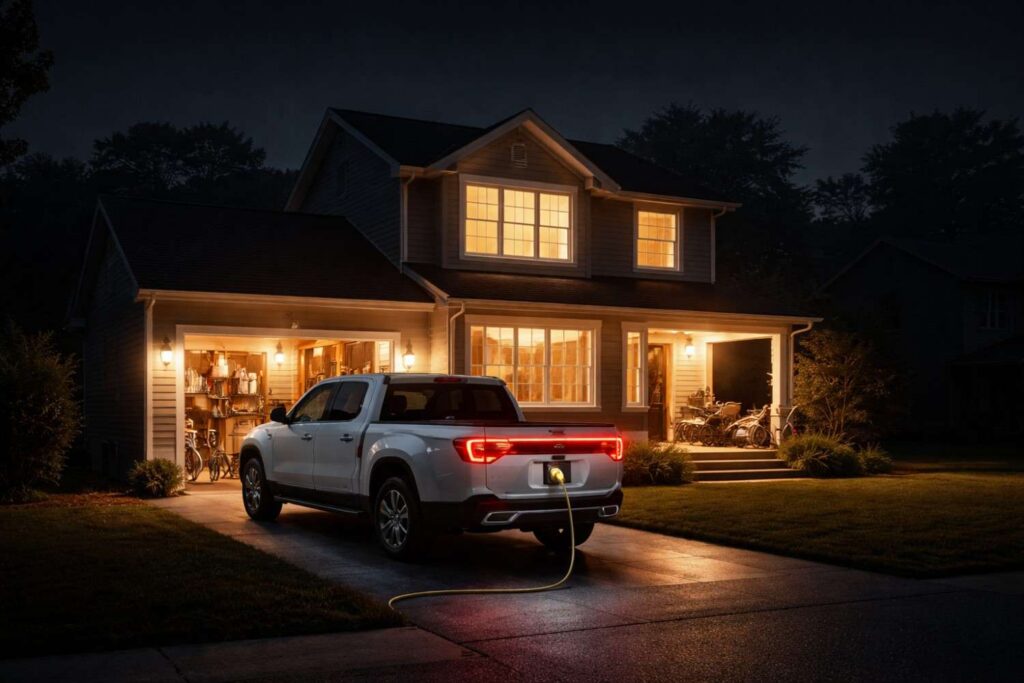
While backup power is the primary draw, V2H technology also enables “Time-of-Use Arbitrage.” This involves charging your vehicle at night when electricity rates are at their lowest—often under 12 cents per kWh in many regions and then discharging that energy to power your home during the “peak” evening hours when rates can spike above 30 cents per kWh.
For homeowners with solar arrays, V2H acts as a massive “buffer.” Instead of selling excess solar energy back to the utility for a low credit, you can store it in your EV during the day and use it to run your home at night. This “self-consumption” model can reduce an annual electric bill by an additional 20% to 40% compared to standard solar setups.
Conclusion: Is V2H Right for Your Home?
Vehicle-to-Home technology is a transformative tool for residents in areas prone to grid instability or those looking to maximize the return on their solar investments. For U.S. buyers, the Ford F-150 Lightning and Tesla Cybertruck currently offer the most mature ecosystems for full home integration.
However, the high cost of bidirectional inverters and specialized installation means the financial “payback” for V2H is longer than that of a standard Level 2 charger. If your primary goal is simply to have a reliable way to charge your vehicle, a standard $500–$800 charger is sufficient. But if you view your vehicle as a 100 kWh energy asset, the investment in a V2H gateway provides a level of energy independence that a traditional generator cannot match.
Before proceeding, consult with a certified electrician to perform a load calculation on your existing service. For further research on model-specific discharge rates and efficiency, visit fueleconomy.gov to compare the energy metrics of the latest 2026 EV models.
References
- DOE Alternative Fuels Data Center: EV Infrastructure 2026
- IRS Section 30C Refueling Property Credit Guidelines
- NREL: Bidirectional Charging for Residential Resilience Study
- Pearl Score: 2026 Report on Average Home Energy Use
- EPA Fuel Economy Data: 2026 EV Efficiency Benchmarks
- Rewiring America: 30C Tax Credit Homeowner Guide
Disclaimer The information provided in this article is for educational and informational purposes only. It does not constitute professional electrical, financial, or tax advice. Bidirectional charging involves high-voltage electrical work that must be performed by a licensed professional. Always verify local permitting and utility interconnection requirements before installing V2H equipment.