

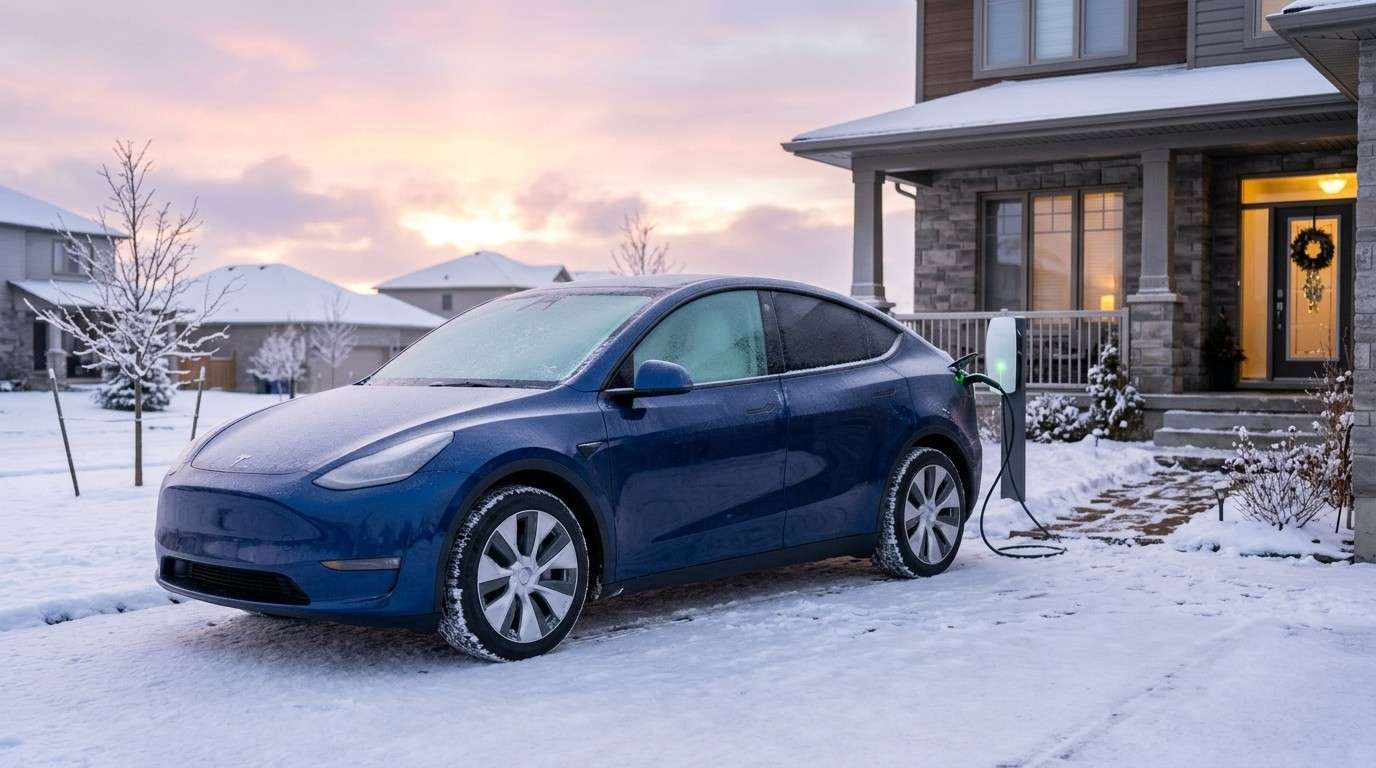
You leave home with 250 miles of range showing on your dashboard, but 30 minutes into a cold morning drive, that number has dropped faster than your actual mileage. This phenomenon is not a malfunction; it is a predictable physical response of lithium-ion technology to low temperatures. According to the 2026 DOE Alternative Fuels Data Center report, the average electric vehicle (EV) loses approximately 20–30% of its range when temperatures hover around 32°F (0°C).
This range reduction is driven by two primary factors: slower battery chemistry and the high energy demand of cabin heating. While the loss can feel significant, it is entirely temporary. As the battery warms up or the ambient temperature rises, the full capacity of the vehicle returns. Understanding the “why” behind this loss is the first step toward managing it effectively.
The Science of the “Cold Battery”
The battery in your EV relies on the movement of lithium ions through a liquid electrolyte. As temperatures drop, this liquid becomes more viscous—similar to how honey thickens in a refrigerator. This increased resistance makes it harder for ions to move, which reduces the amount of power the battery can discharge and accept. According to NREL technical analysis, internal resistance can rise significantly at 14°F (-10°C), leading to a temporary “masking” of available energy.
In practical terms, your car’s Battery Management System (BMS) may restrict performance or regenerative braking when the cells are too cold. This is a protective measure to prevent long-term degradation. You have not “lost” the energy; rather, the car is limiting access to it until the thermal management system can bring the battery back to its ideal operating temperature, typically between 60°F and 80°F.
Cabin Heating: The Invisible Energy Drain
In a gasoline vehicle, the engine generates an immense amount of waste heat, which is diverted to warm the cabin for “free.” EVs are so efficient that they generate almost no waste heat. Consequently, they must use battery energy to create warmth. According to the 2026 DOE Fuel Economy Guide, cabin heating is the single largest contributor to winter range loss, often accounting for two-thirds of the extra energy consumed in cold weather.
Older EV models utilized resistive heaters, which function like a giant hair dryer and are extremely energy-intensive. Most 2026 models now utilize heat pumps. According to the 2026 Recurrent Winter Study, which analyzed data from 30,000 real-world vehicles, EVs equipped with heat pumps retain about 83% of their range at freezing, compared to just 75% for those with resistive heaters. This 8% efficiency gain can mean the difference between making it to your destination or needing an extra charging stop.
Real-World Winter Range: Model Expectations
Range loss varies by vehicle based on its thermal management system and heater type. The following table provides a comparison of popular 2026 models under freezing conditions (32°F) compared to their EPA baseline.
| Vehicle (2026 Model Year) | EPA Rated Range | 32°F Expected Range | % Retained |
| Tesla Model Y Long Range | 310 miles | 242 miles | 78% |
| Hyundai Ioniq 5 AWD | 260 miles | 203 miles | 78% |
| Ford Mustang Mach-E AWD | 300 miles | 222 miles | 74% |
| Chevrolet Equinox EV | 315 miles | 236 miles | 75% |
Data is derived from 2026 EPA Fuel Economy ratings and 2026 Recurrent real-world fleet data. In our assessment, while these numbers show a decline, they remain more than sufficient for the average American daily commute of 37 miles. The primary challenge arises during long-distance highway travel where charging stops must be planned more frequently.
Why Charging Slows Down in the Cold
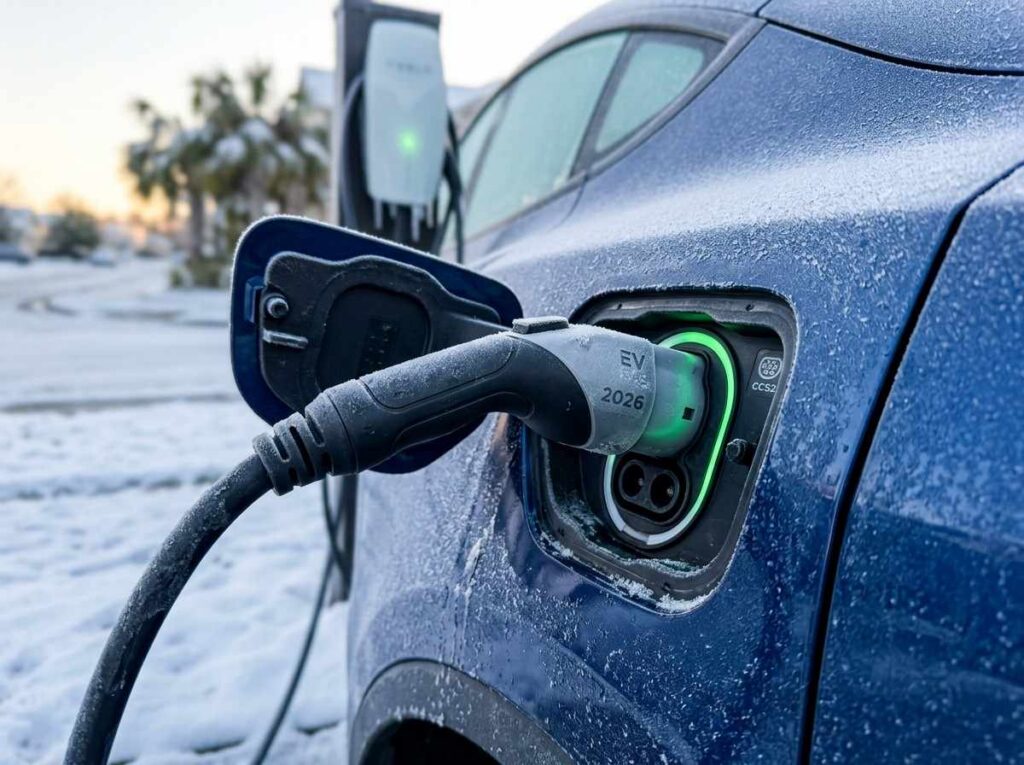
It is not just the driving range that takes a hit; charging speed is also affected. To protect the battery from “plating”—a condition where lithium deposits form on the anode—the BMS will throttle charging speeds if the battery is cold. According to the 2026 NREL Charging Infrastructure Report, a DC fast-charging session that normally takes 25 minutes can stretch to 45 minutes if the battery has not been warmed up.
Most modern EVs solve this through “preconditioning.” When you enter a fast charger into the vehicle’s native navigation system, the car uses its thermal management system to heat the battery while you are en route. In our assessment, using this feature is the most critical step an EV owner can take during winter road trips, as it can save 10–15 minutes per charging stop.
4 Actionable Strategies to Claw Back Your Range
While you cannot change physics, you can mitigate its effects. Based on 2026 DOE recommendations, these four steps offer the highest “return on energy” for winter driving:
- Precondition While Plugged In: Use your vehicle’s app to warm the cabin and battery 20 minutes before departure. Since the car is plugged into your home charger, this energy comes from the grid rather than your battery.
- Rely on Heated Seats and Steering Wheels: Heating the air in a cabin is inefficient. Heating the surfaces in direct contact with your body uses significantly less energy. Lowering the cabin thermostat by 5 degrees and using the seat heater can save 3–5% of your total range.
- Monitor Tire Pressure: Air density changes with temperature. For every 10-degree drop in temperature, tires can lose 1–2 PSI. Under-inflated tires increase rolling resistance and further reduce efficiency.
- Use “Eco” Mode: Most 2026 EVs have a winter or eco mode that optimizes the climate control and limits the torque sent to the motors, which helps prevent wheel spin on slick roads while conserving energy.
Infrastructure Context: The 2026 Reality
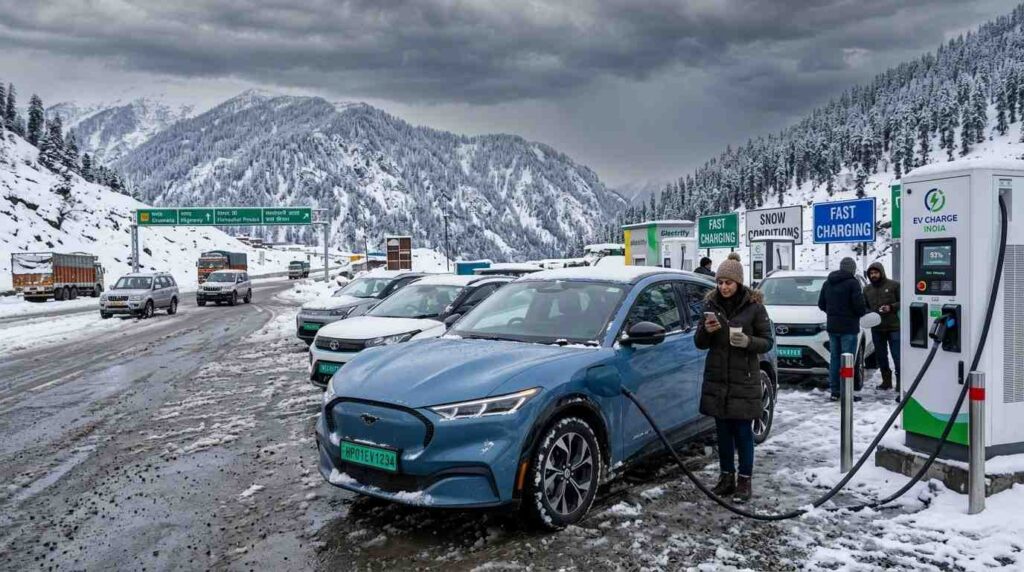
In 2026, the U.S. has reached over 200,000 public charging ports, but geography still plays a role in winter stress. According to the 2026 Vaisala Xweather EV Range Report, drivers in northern states like Maine and North Dakota see an annual median range nearly 20% lower than those in the Sun Belt.
This regional disparity means that while an EV is a “set and forget” vehicle in California, it requires a “thermal strategy” in the Midwest. In our assessment, the technology has reached a point where the car is capable of handling the cold, but the driver must be aware of the infrastructure spacing. If your winter range is 200 miles, you should ideally look for chargers every 140–150 miles to maintain a safe buffer for unexpected delays or detours.
Conclusion: Managing Expectations vs. Reality
EV range loss in cold weather is a manageable technical constraint, not a total barrier to ownership. For the vast majority of daily use cases, the 20–30% drop is negligible. However, for highway travel and those without home charging, it requires a shift in how you interact with the vehicle’s navigation and climate systems.
In our assessment, the 2026 generation of EVs—with standardized heat pumps and improved preconditioning software—has made winter driving far more predictable than it was just three years ago. By understanding the data and using the tools provided by the manufacturer, you can ensure that the cold never leaves you stranded. To see how your specific model compares, you can use the DOE Alternative Fuels Data Center calculator or check the latest EPA Fuel Economy ratings.
References
- 2026 DOE Alternative Fuels Data Center: Cold Weather Efficiency
- EPA Fuel Economy Guide: 2026 Model Year Database
- 2026 Recurrent Winter Range Study: 30,000 Vehicle Analysis
- NREL 2026 EV Infrastructure and Thermal Management Report
- 2026 Vaisala Xweather EV Range Report
- IRS Clean Vehicle Credit and Section 30C Home Charger Guidance (2026)
Disclaimer The information provided in this article is for educational and informational purposes only and does not constitute professional automotive or financial advice. Range performance and charging speeds vary based on individual driving habits, vehicle condition, and local weather. Readers should consult their vehicle owner’s manual and local utility for specific guidance