

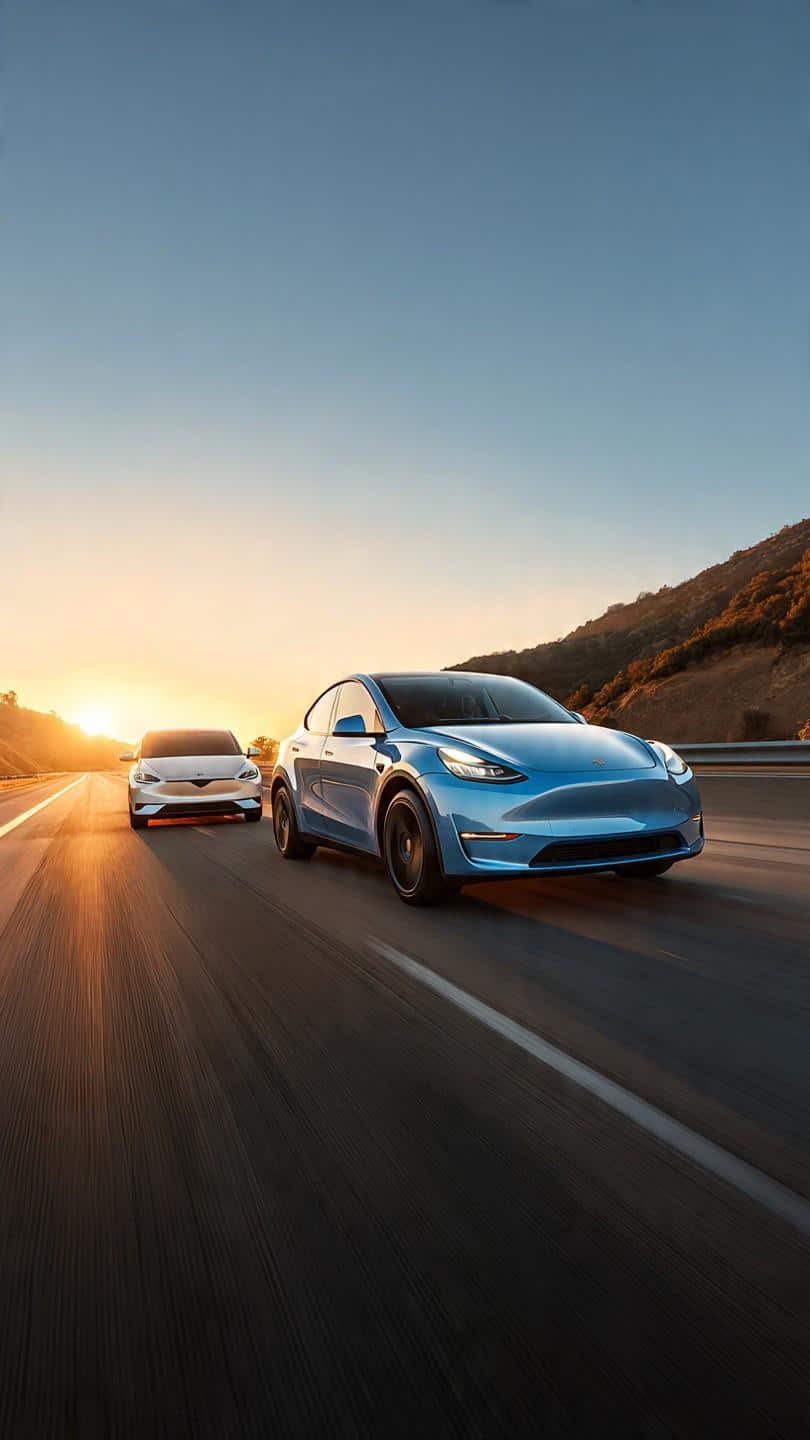
The 2025 Tesla Model Y Long Range is rated at 310 miles by the EPA. In independent highway testing, many drivers see closer to 260–280 miles. That gap isn’t a defect. It’s the system working exactly as designed.
EPA range is a controlled laboratory estimate, not a promise of what you’ll get on your commute, your road trip, or your winter morning drive. By the end of this, you’ll know exactly why that gap exists, how big it tends to be across popular EVs, and what actually moves the needle in your day-to-day driving.
The EPA Test Is Real — Just Not Your Reality
You’re not driving in a lab. That’s the short version. The EPA uses a standardized test cycle with controlled speeds, moderate acceleration, and temperatures around 68–86°F. According to the EPA’s 2026 Testing Methodology Guide, the combined cycle averages about 48 mph with limited high-speed driving.
Think of it like a treadmill test for a runner: consistent pace, no wind, no hills. It is incredibly useful for comparing two different cars side-by-side, but it is not an accurate map of how anyone actually runs outside in the elements.
So what does that mean for you? If your daily driving includes 75 mph highway stretches, stop-and-go traffic, or climate control blasting in extreme weather, you’ve already stepped outside the conditions that produced that EPA number. The faster you deviate from those lab conditions, the faster your range drops.
Highway Speed Is the Biggest Range Killer
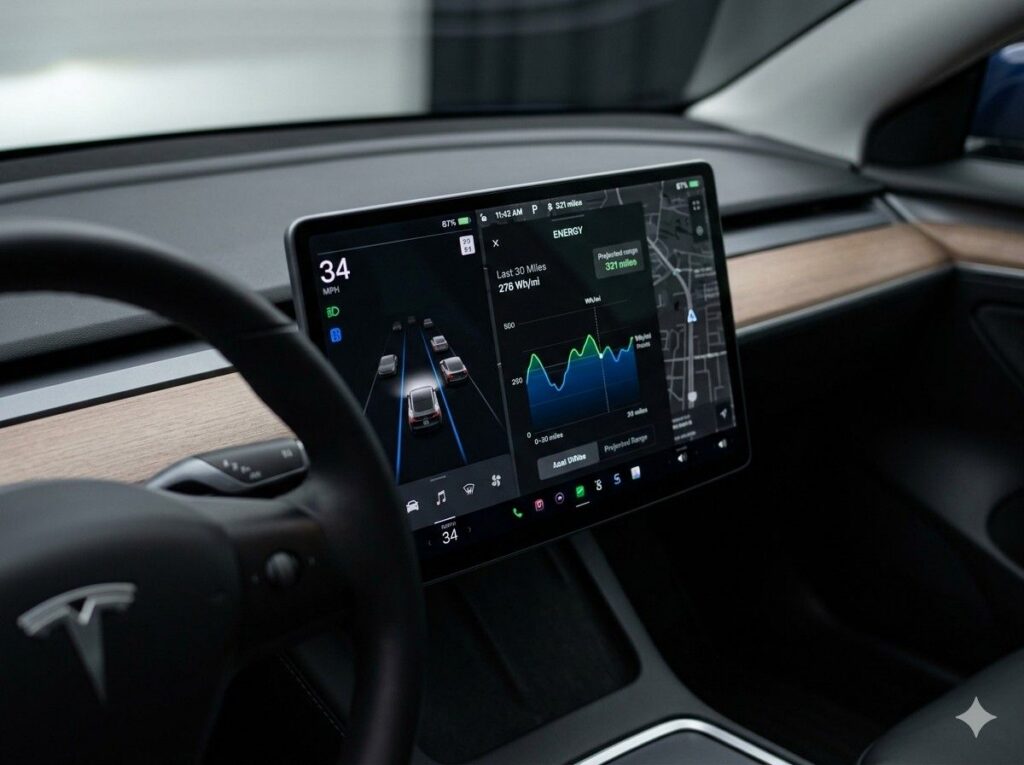
Drive 80 mph instead of 60 mph, and your range can drop by 15–25%. Easily. This is physics, not brand-specific behavior. Aerodynamic drag increases with the square of speed, meaning small increases in speed require disproportionately more energy to maintain.
One analogy here: pushing air at higher speeds is like running into a stronger and stronger headwind that you created yourself. In our assessment, speed is the single most underestimated factor in range loss. People often blame the car’s battery health when the culprit is actually their own right foot.
Here’s what that looks like in practice across a few popular 2025 and 2026 EV models based on 2026 Edmunds Real-World Testing:
| Vehicle (2025/2026) | EPA Range (miles) | Real-World Highway Range (~75 mph) | Efficiency Drop |
| Tesla Model Y Long Range | 310 | ~270 | ~13% |
| Hyundai Ioniq 5 AWD | 266 | ~220–230 | ~15–18% |
| Ford Mustang Mach-E AWD | 290 | ~240–250 | ~14–17% |
| Chevrolet Bolt EUV | 247 | ~210–220 | ~12–15% |
These real-world figures align with independent testing and 2026 DOE-backed efficiency expectations. While some manufacturers use more conservative internal testing for their EPA submissions, highway speeds remain the great equalizer for all electric powertrains.
Cold Weather Doesn’t Just Hurt — It Compounds
Winter range loss isn’t subtle; it can hit 20–40% depending on the severity of the climate. Batteries operate best in moderate temperatures. According to the 2026 U.S. Department of Energy Winter Driving Report, cold weather reduces battery efficiency and increases energy use for heating.
Unlike gas cars, EVs don’t have massive amounts of waste heat from an internal combustion engine to warm the cabin. They must generate that heat directly from the battery pack, which is a significant energy draw. Think of it like using your smartphone in freezing weather: the battery drains faster and the processor may even throttle performance.
Now stack that with other physical factors. Cold air is denser than warm air, which increases aerodynamic drag on the car’s body. Furthermore, tire pressure drops in the cold, increasing rolling resistance. Regenerative braking also becomes less effective until the battery warms up.
So your range isn’t just reduced by one factor; it’s being hit from multiple angles at once. And while heat matters too, it is far less dramatic. Running AC in a 95°F summer typically reduces range by only 5–10%, which is a much smaller penalty than winter heating.
Wheel Size and Tire Rolling Resistance
One factor often overlooked by buyers is the choice of wheels. A Tesla Model 3 with 18-inch wheels will consistently outrange the same car equipped with 20-inch wheels. Larger wheels are often heavier and less aerodynamic, and the low-profile tires that usually come with them offer higher rolling resistance.
According to data from the 2026 NREL EV Efficiency Study, upgrading to a larger, more “sporty” wheel package can reduce total range by 5–10% before you even leave the driveway. If you prioritize maximum range over aesthetics, the smallest available wheel size is almost always the better technical choice.
Furthermore, the type of tire matters. Dedicated “EV tires” are designed with specialized compounds to minimize rolling resistance. Replacing these with standard high-performance tires can lead to a noticeable “range tax” that many owners don’t expect when they visit the tire shop for the first time.
Elevation and Terrain Quietly Matter
Climbing hills consumes a massive amount of energy. Descending gives some back through regenerative braking, but physics ensures you never get it all back. The recovery rate is typically around 60–70% according to 2026 NREL engineering data, with the rest lost as heat and mechanical friction.
So if your commute includes sustained elevation gain—even if you come back down the same hill later—your net energy use is higher than flat-ground driving. This is one of those factors people rarely consider until they move to a more mountainous region or change their daily route.
Charging Speed Claims Also Live in Ideal Conditions
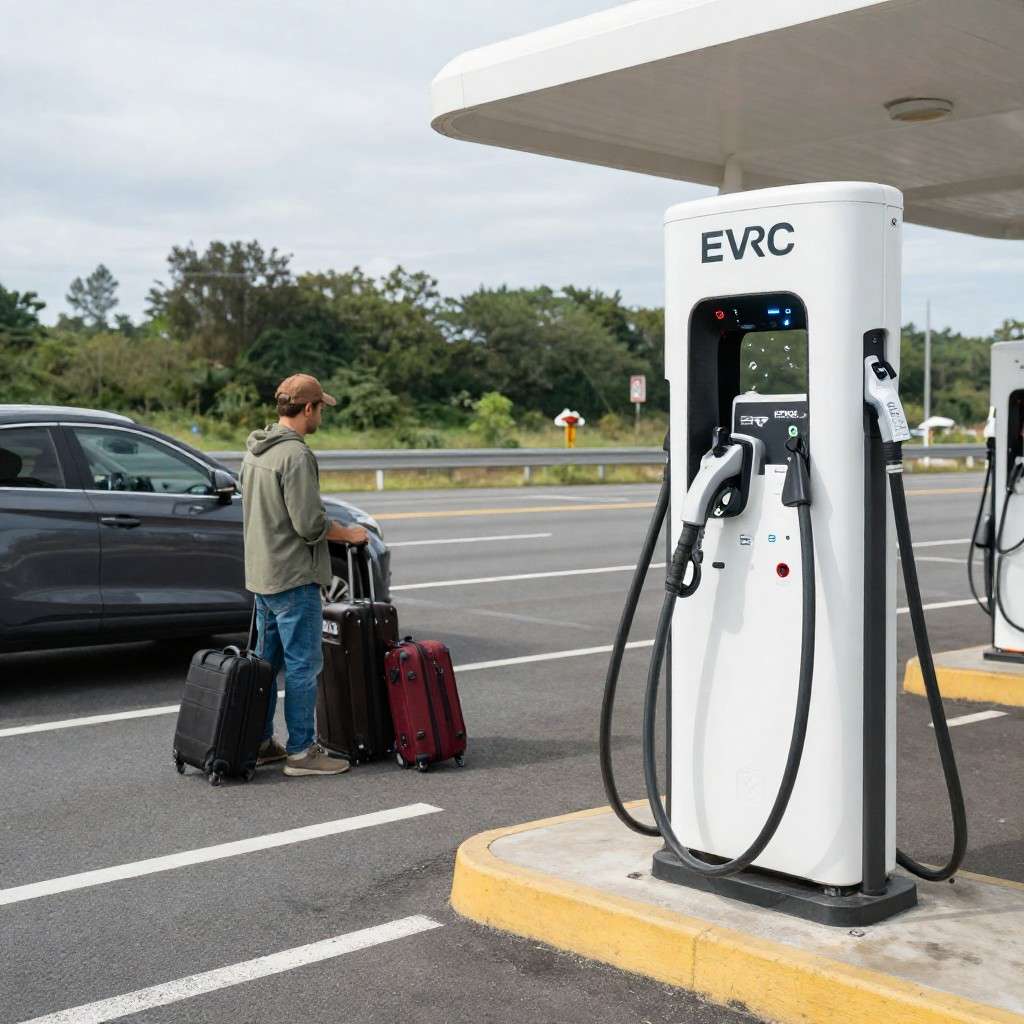
That “10–80% in 18 minutes” figure you’ve seen on vehicles like the Hyundai Ioniq 5 is technically real. However, it assumes a perfectly preconditioned battery, a high-power DC fast charger (often 250–350 kW), and optimal temperature conditions.
According to the 2026 DOE Charging Infrastructure Locator, most public fast chargers in the U.S. today still cluster in the 50–150 kW range. Even if your car is capable of taking 230 kW, if the station only provides 50 kW, you will be sitting there much longer than the brochure promised.
In our assessment, this is where consumer expectations and infrastructure reality diverge the most. The car might be a thoroughbred, but the “fuel” pump is often a bottleneck. One limitation of current data is that charging station reliability varies wildly by network, which can impact your travel time just as much as the car’s range.
What You Can Actually Control
You can’t change physics, but you can manage your outcomes. Small adjustments to your driving habits and vehicle maintenance add up quickly to preserve those precious kilowatt-hours.
- Drive 65–70 mph instead of 80 mph on long highway trips to minimize drag.
- Precondition the battery while the car is still plugged in at home to save energy for the road.
- Use seat heaters instead of the full cabin HVAC system when possible to reduce the heating load.
- Check real-world data on fueleconomy.gov before purchasing to set realistic expectations.
- Plan charging stops based on actual DOE station availability, not just peak theoretical speeds.
If you drive aggressively in cold climates and rely heavily on older public charging infrastructure, your real-world range will consistently undershoot EPA numbers. That’s not a flaw of the technology, but a mismatch between marketing and usage.
A Quick Reality Check Before You Buy
If you’re choosing between EVs, don’t compare EPA numbers in isolation. Use tools like the 2026 Edmunds True Cost to Own calculator to understand how efficiency differences play out over five years of ownership. Cross-check range and MPGe data on fueleconomy.gov for specific model years.
Be realistic about your driving pattern. If you mostly drive in a warm city at moderate speeds, you’ll get close to the EPA estimate, and sometimes even exceed it. If your life involves 80-mile highway commutes and snowy winters, expect 25% less range as your baseline.
Conclusion: Who Should Trust EPA Range?
If your driving is mostly urban or suburban with moderate speeds and mild weather, the EPA range is a solid baseline. In those conditions, many EVs deliver within 5–10% of their ratings. It remains the best tool we have for comparative shopping between brands.
But if you’re a highway commuter or live in a state with real winters, treat that EPA range as an upper bound, not a planning number for trips. Based on the data here, subtracting 20% gives you a far more realistic expectation for daily stress-free use. In our assessment, buyers who plan around real-world conditions end up far more satisfied with their EV ownership experience.
References
- EPA Fuel Economy Data (2026 Edition)
- DOE EV Resources and Winter Driving Study (2026)
- DOE Charging Station Locator
- NREL EV Efficiency and Grid Integration Study (2026)
- Edmunds True Cost to Own and Real-World Range Testing
Disclaimer
The information provided in this article is for educational and informational purposes only. It does not constitute professional engineering or financial advice. Readers should conduct their own research and consult with qualified professionals before making any vehicle purchase