

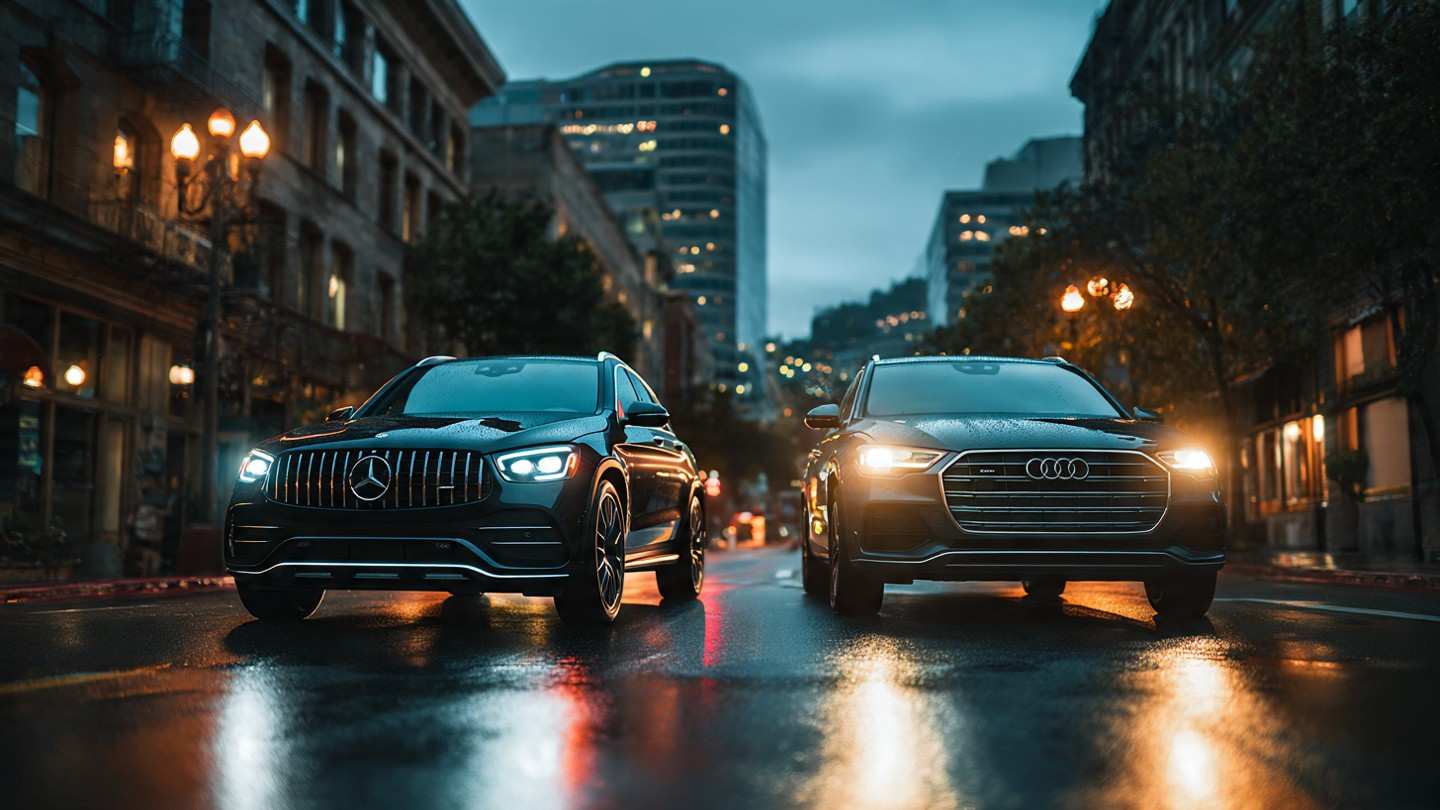
Pull onto a tight on-ramp at highway speed and the difference between these two vehicles announces itself immediately. The 2026 Audi Q5’s steering loads up with a precision that feels almost surgical you know exactly where the front wheels are tracking. The Mercedes GLC 300 responds with more ease, more compliance, more willingness to absorb whatever the road sends back. Either approach is acceptable. They represent two genuinely different philosophies about what a luxury compact SUV should feel like, and choosing between them requires knowing which one matches the way you actually drive.
Both vehicles start around $48,000 for the base trim and top out in the low $70s once you’ve worked through the options sheets. In terms of raw numbers, the two vehicles are nearly identical. The experience behind the wheel, though, sits further apart than the sticker prices suggest. This comparison covers the 2026 GLC 300 and the 2026 Q5 45 TFSI across ride quality, interior execution, technology, practicality, and safety pulling from EPA fuel economy data, IIHS ratings, and NHTSA crash results to put the numbers in context.
The Driving Experience: Where Philosophy Diverges
The GLC 300’s ride is the first thing you’ll notice —and probably remember. Mercedes tunes it toward absorption. Expansion joints disappear. Road texture blurs into a smooth, distant hum. The body moves with a kind of deliberate softness that makes long highway runs genuinely effortless. Push into a corner and the GLC tracks competently without ever feeling athletic.
The Q5 offers a different contract. Audi’s standard suspension is noticeably firmer the road communicates more, the body moves less. On smooth pavement, it reads as sporty and precise. On rougher interstates, it can feel like the vehicle is working harder than it needs to. The optional Sport Suspension package tightens things further, which is impressive on track but borderline punishing on potholed city streets.
Both vehicles run turbocharged 2.0-liter four-cylinders. The GLC 300 produces 258 horsepower; the Q5 45 TFSI makes 261. Those numbers are close enough to call a tie in daily driving. Where they separate is in delivery — the GLC’s throttle response feels more linear and relaxed, the Audi’s more eager and immediate. The Q5 drives like a driver’s car that happens to seat five. The GLC offers a premium transport experience, which is unusual for a car.
Interior Quality: Two Definitions of Luxury
Mercedes redesigned the GLC’s interior around its new MBUX system, and the result is legitimately impressive. The central display runs a portrait-oriented 11.9-inch screen that handles navigation, climate, and media with a responsiveness that feels closer to a tablet than an in-car system. Physical buttons for climate control remain — a choice that becomes easy to love on cold mornings when you don’t want to wake the touchscreen just to raise the temperature.
To be fair, Audi’s MMI system is no embarrassment. The Q5’s 10.1-inch infotainment screen is crisp, logically organized, and quick. But the haptic touch controls for HVAC Audi replaced physical knobs with touch-sensitive slabs require you to look down to use them. In a vehicle at this price point, that’s a genuine usability regression. It’s a small thing until the fourth time you accidentally change the fan speed while adjusting the temperature.
Material quality in both cabins is excellent but differently expressed. The GLC feels rounder, warmer soft leather, wood, and chrome that reads as traditionally luxurious. The Audi interior has a more angular, architectural quality: sharper lines, aluminum trim options, and a layout that feels engineered rather than crafted. In our assessment, neither is objectively superior they speak different aesthetic dialects, and the right answer depends entirely on which design language you find more livable.
2026 GLC vs. Q5: Key Specs at a Glance
| Category | 2026 Mercedes GLC 300 | 2026 Audi Q5 45 TFSI | Verdict |
|---|---|---|---|
| Base MSRP | ~$48,100 | ~$46,900 | Q5 edges lower |
| Engine | 2.0L turbo, 258 hp | 2.0L turbo, 261 hp | Virtual tie |
| EPA Combined MPG | 27 mpg | 25 mpg | GLC advantage |
| Cargo Volume (rear seats up) | 22.7 cu ft | 25.1 cu ft | Q5 wins |
| Rear Legroom | 37.9 in | 37.8 in | Even |
| IIHS Safety Rating | Top Safety Pick+ | Top Safety Pick+ | Tie |
| Infotainment Screen Size | 11.9 in (portrait) | 10.1 in | GLC larger |
| Standard AWD | Optional (4MATIC) | Standard (Quattro) | Q5 advantage |
| Best For | Long-distance comfort | Driver engagement | — |
MSRP figures approximate; verify current pricing at Mercedes-Benz and Audi dealer sites. Fuel economy data from EPA fueleconomy.gov.
Practicality and Cargo: The Q5’s Quiet Advantage
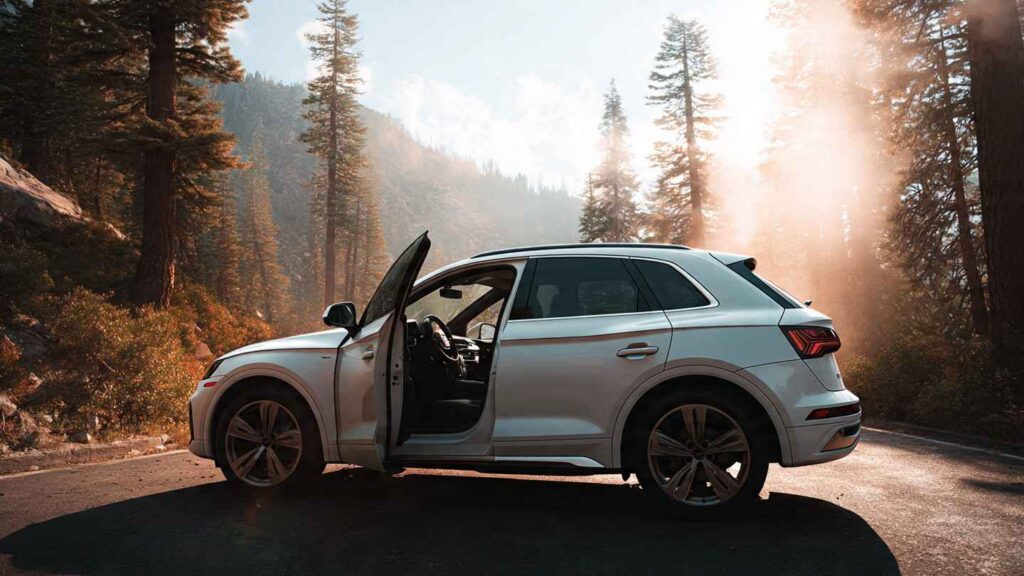
Open either cargo door with a full weekend load and the Q5’s extra room makes an immediate argument. The Audi clearly wins the loading game with 25.1 cubic feet of space behind the rear seats, compared to the GLC’s 22.7 cubic feet. That gap matters more than it sounds when you’re loading a weekend’s worth of gear or a stroller and a week of groceries. Fold the rear seats and the Q5 extends to 53.5 cubic feet; the GLC reaches 56.5, which flips the advantage for maximum cargo runs.
Backseat space is essentially identical roughly 37.9 inches of rear legroom in both, enough for four adults on any trip under four hours. Fuel economy is where the GLC pulls clearly ahead: 23 mpg city and 31 mpg highway versus the Q5’s 22 city and 29 highway, per EPA data on fueleconomy.gov. Over 15,000 annual miles, that gap adds up to roughly $150–$200 in fuel savings per year. For daily driving, the GLC wins this dimension.
Safety Ratings: A Genuine Tie
Both vehicles earned IIHS Top Safety Pick+ status for 2026, according to IIHS vehicle ratings, and both carry 5-star overall NHTSA ratings. Based on the safety data, this is the segment’s most straightforward tie. Standard active safety features in both include automatic emergency braking, lane-keeping assist, and adaptive cruise control. The GLC adds a mild-hybrid 48V system that contributes to its better fuel economy and smoother stop-start behavior a real-world advantage on congested commutes.
Who Should NOT Buy This
The GLC is not the right vehicle for buyers who want a genuinely sporty driving experience. Its ride tuning prioritizes comfort over feedback, and if you’re the kind of driver who wants to feel the road, the GLC will feel a little disconnected. The Q5’s driving character is sharper, more communicative, and more rewarding for anyone who pays attention to chassis dynamics.
The Q5, meanwhile, is the wrong vehicle for buyers who prioritize long-haul comfort above everything else. A five-hour interstate run in the Audi will leave you more fatigued than the same trip in the GLC the firmer ride accumulates over distance in ways that matter when you’re running from Dallas to Houston or New York to Boston. The GLC’s HVAC touch controls are also genuinely superior for daily usability, a real-world advantage the Audi’s haptic panel can’t match.
Neither vehicle makes sense for buyers who need maximum third-row space or towing capacity above 4,400 pounds. Those buyers should look at the Mercedes GLE or Audi Q7 instead.
The Verdict
The 2026 Mercedes GLC 300 wins this comparison for most buyers specifically, anyone who prioritizes daily comfort, fuel efficiency, and interior usability over driving dynamics. The MBUX system is genuinely better to live with, the ride quality is more pleasant over real-world roads, and the fuel economy advantage is consistent.
Based on the driving data here, the Audi Q5 45 TFSI is the better choice for buyers who drive with genuine enthusiasm if corner feel, chassis feedback, and a sharper throttle response matter to you, the Q5 delivers those things at a slightly lower base price. Add in its larger base cargo volume and standard Quattro AWD, and it makes a compelling case for families who want practicality and a bit more engagement.
One thing this comparison can’t fully capture: long-term reliability data for these specific 2026 model years remains limited. Before purchasing either vehicle, check current owner reliability reports and confirm trim-level availability in your region through Edmunds or your local dealer.
References
- IIHS Vehicle Safety Ratings
- NHTSA Safety Ratings
- EPA Fuel Economy Data
- Mercedes-Benz USA
- Audi USA
- Edmunds
Disclaimer: The information provided in this article is for educational and informational purposes only. It does not constitute professional advice. Readers should conduct their own research and consult with qualified professionals before making any decisions.