

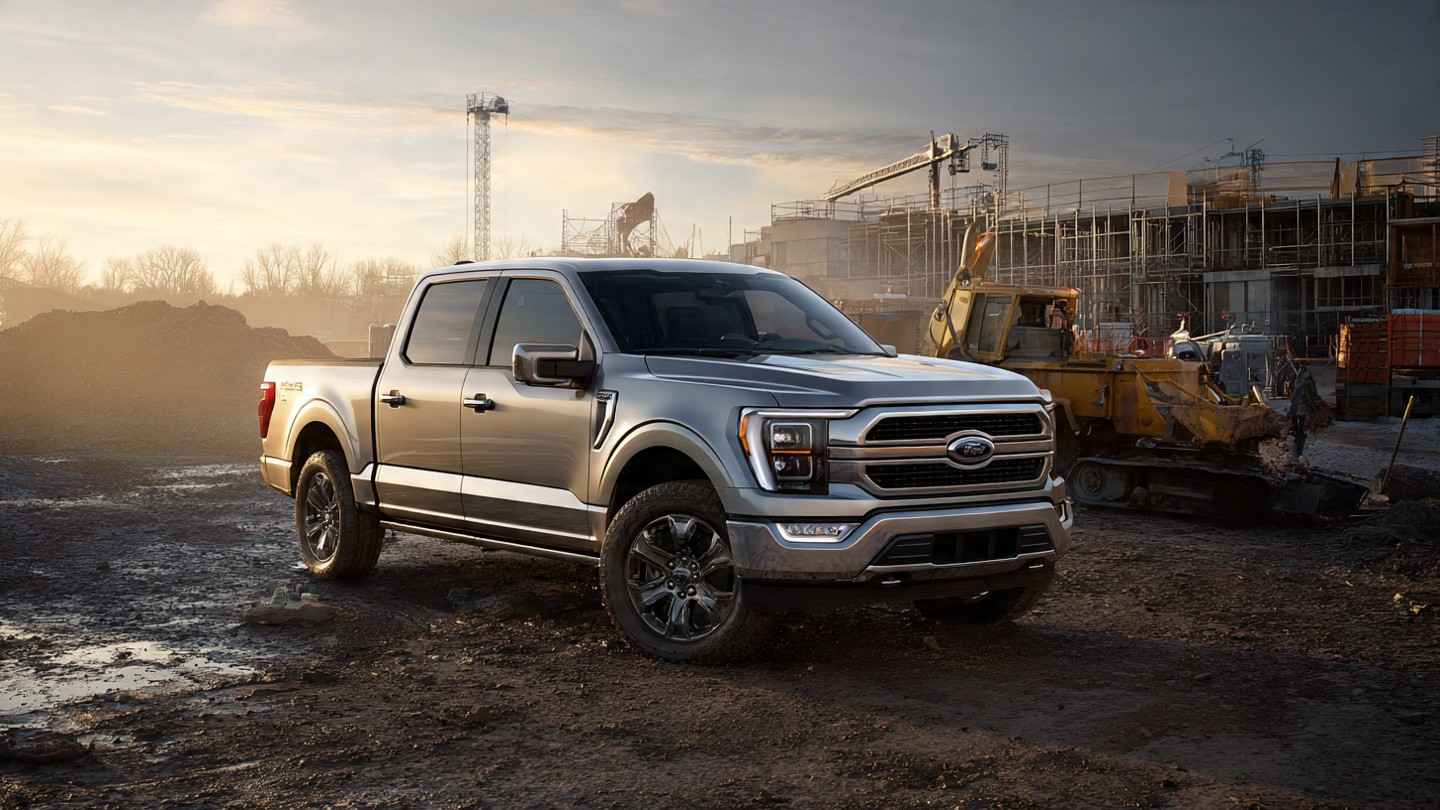
The 2026 F-150’s optional 3.5-liter PowerBoost hybrid powertrain produces 430 horsepower and 570 lb-ft of torque —numbers that would have seemed unreasonable in a half-ton work truck ten years ago. Press the accelerator on a freeway on-ramp and the electric motor fills the gap before the turbos fully spool, and the result is a surge of acceleration that doesn’t feel like a 5,000-pound vehicle. It’s quick, and the smoothness of it is slightly startling the first time you experience it.
America buys the F-150 in enormous numbers. Ford sold over 750,000 F-Series trucks in 2025, according to Ford’s annual sales data, and the 2026 model arrives with updated interior options, revised powertrain calibrations, and expanded Pro Power Onboard generator capabilities. The question worth asking is whether those updates actually move the needle, or whether the F-150 is simply coasting on habit and brand loyalty.
This review covers the 2026 F-150 across trims from the XL to the Limited, with IIHS and NHTSA safety data, EPA fuel economy figures, and Edmunds pricing to frame the real ownership picture.
What It Communicates From the Driver’s Seat
Climb into an F-150 XLT and the first thing you register is the height. The step-up into the cab — particularly with the optional 35-inch tires on FX4-equipped trims — requires a deliberate motion, and first-time truck owners occasionally misjudge it. Once seated, the driving position is commanding in a way that genuinely differs from any SUV: you sit above traffic, and the long hood stretches out ahead of you like a runway. The steering wheel has a thick, padded rim, and the resistance through it is heavier than you’d find in a car or crossover, which communicates mass and stability in corners.
The 3.5L EcoBoost V6 is still the sweet spot of the powertrain lineup, with 400 horsepower in standard tune. Floor it from a stop and the twin turbos spool quickly — there’s a subtle lag before the torque arrives, but it’s short, and at highway speeds the engine has a flat, effortless power delivery that makes passing easy and relaxed. The base 2.7L EcoBoost is genuinely capable for most buyers; only those regularly towing above 8,000 pounds need to step up.
The PowerBoost hybrid’s electric motor contribution is most noticeable below 30 mph, where it fills in the low-end torque the internal combustion engine hasn’t fully developed yet. The ride quality on the standard independent front and solid rear axle combination is compliant over highway expansion joints — you feel them as a soft, rounded thud rather than a sharp impact — and the cab is genuinely quiet at 70 mph, noticeably more so than the previous generation.
In my assessment, the base XLT drives more like a large sedan than the trucks buyers might remember from fifteen years ago — and that’s exactly the point.
Capability, Work-Ready Features, and the Pro Power Onboard Question
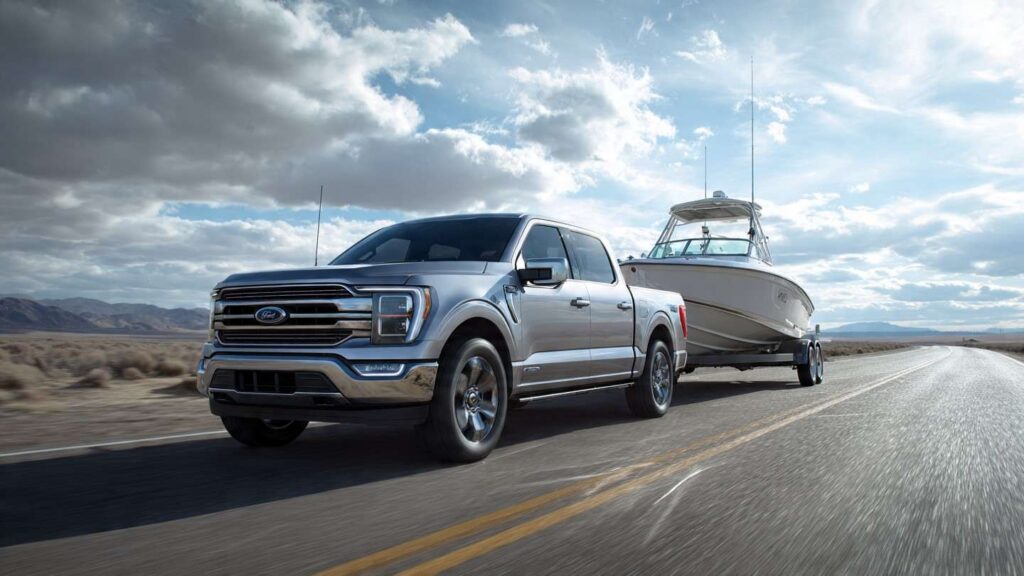
To be fair, the F-150’s capability numbers require some context. The maximum 14,000-lb tow rating applies to the Max Trailer Tow package on specific powertrain and cab configurations — most buyers won’t be near that figure, and the average real-world towing scenario for an F-150 owner is a boat, a camper, or a car hauler in the 7,000–10,000 lb range. In that range, the 3.5L EcoBoost handles the load with minimal drama, maintaining speed on grades that would force a downshift in a half-ton from a decade ago.
The Pro Power Onboard generator — available in 2.0 kW, 2.4 kW, and 7.2 kW configurations — is a genuinely useful feature for contractors and tailgaters alike. The 7.2 kW version, available on the PowerBoost hybrid, can run standard 120V and 240V outlets from the bed. In practical terms, that’s enough to power a table saw, an air compressor, or keep a job site running while the generator truck stays parked.
Payload capacity on the 2026 F-150 ranges from roughly 1,500 to 2,300 lbs depending on configuration, according to Ford’s specifications. The aluminum body, introduced in 2015, keeps the truck’s curb weight competitive and continues to hold up well in long-term ownership data — corrosion and denting concerns from early skeptics have mostly faded.
Trim Lineup, Pricing, and Where the Real Value Lives
The F-150 lineup runs from the work-spec XL at roughly $37,000 to the fully loaded Limited at over $80,000. The spread is wide enough that “buying an F-150” can mean almost anything. For most buyers, the XLT and Lariat trims represent the real market — enough comfort to live with daily, enough capability to work with occasionally.
| Trim | Starting MSRP | Key Powertrain | Max Tow (Properly Equipped) | Best For |
|---|---|---|---|---|
| XL | ~$37,000 | 2.7L EcoBoost V6 | 8,200 lbs | Fleet/commercial use |
| XLT | ~$42,000 | 2.7L EcoBoost V6 | 8,200 lbs | Best everyday value |
| Lariat | ~$52,000 | 3.5L EcoBoost V6 | 13,000 lbs | Most buyers’ sweet spot |
| Platinum | ~$63,000 | 3.5L EcoBoost V6 | 13,000 lbs | Luxury daily driver |
| PowerBoost Hybrid | +~$4,000 to any trim | 3.5L PowerBoost | 12,700 lbs | High-mileage + work power |
| Limited | ~$80,000+ | 3.5L EcoBoost V6 | 13,000 lbs | Status/luxury play |
Pricing based on Edmunds data for the 2026 F-150; figures are approximate and vary by region and dealer.
On fuel economy, the 2.7L EcoBoost returns approximately 20 mpg city / 26 mpg highway in 4×2 configuration, per EPA estimates at fueleconomy.gov. The PowerBoost hybrid improves that to roughly 25 mpg city / 26 mpg highway — a meaningful difference for high-mileage buyers, though the hybrid premium takes time to recoup.
Safety ratings put the 2026 F-150 in solid but not exceptional territory. The IIHS awarded it Good ratings in most crash categories, according to IIHS ratings data, though side and front small overlap results vary by cab configuration and model year specifics. NHTSA gave the 2026 F-150 a 5-star overall rating. Based on the safety data here, neither Ford nor Ram holds a definitive advantage in this area — it’s a wash for most real-world scenarios.
Who Should NOT Buy This
The F-150 is a genuinely excellent truck, but it is not the right vehicle for everyone who walks into a Ford dealership.
If you use a truck primarily as a daily commuter and never haul or tow anything larger than a bicycle — and you live in a city with tight parking garages — the F-150’s size will create real daily friction. The SuperCrew cab in particular requires a long parking space. A Ford Maverick, which starts under $25,000, handles urban life with less stress and gets nearly twice the fuel economy.
If you want the best-in-class towing numbers, the F-150 is competitive but no longer dominant. The Ram 1500 TRX and certain Ram configurations match or exceed the F-150 in specific tow ratings. If maximum towing is your single criterion, shop the full half-ton segment before committing.
And if you primarily care about off-road capability rather than towing, the Raptor is a different product with a different price point — and the standard F-150 FX4 package, while capable on light trails, is not a dedicated off-road vehicle.
The Verdict
The 2026 F-150 still earns its top-seller status, and the Lariat trim with the 3.5L EcoBoost represents the clearest value proposition in the half-ton truck segment. It hauls, it tows, it commutes, and it does all three without demanding significant compromises. The PowerBoost hybrid is worth the premium for anyone putting on 20,000 miles or more per year.
Don’t buy the F-150 if your honest assessment is that you need a smaller, more efficient vehicle for daily use and rarely use the bed. The numbers don’t lie: it’s a capable truck, but capability you never use is money you’ve spent on ego rather than function. The Maverick or even a RAV4 with a roof rack handles most real-world “truck needs” at lower cost.
For everyone else — contractors, towers, families who genuinely load the bed — the 2026 F-150 remains the standard by which other half-ton trucks are measured, and there’s a reason it’s stayed there.
References
- IIHS Vehicle Safety Ratings
- NHTSA Safety Ratings
- EPA Fuel Economy Data
- Ford Official Site
- Edmunds — 2026 Ford F-150
Disclaimer: The information provided in this article is for educational and informational purposes only. It does not constitute professional advice. Readers should conduct their own research and consult with qualified professionals before making any decisions.