

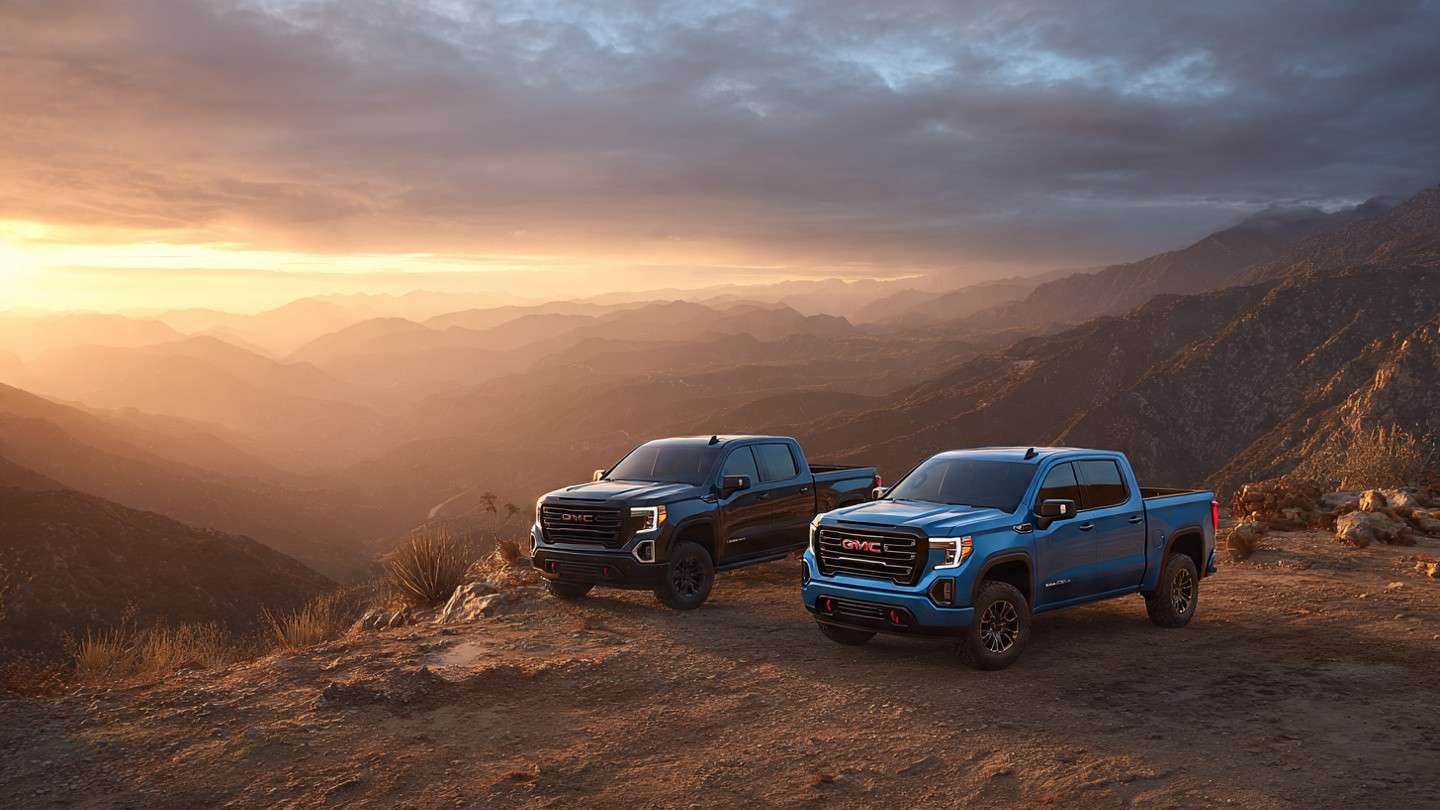
You drop the tailgate on the 2026 GMC Sierra 1500 AT4 and the motion is precisely weighted assisted, damped, controlled right to the end of its travel. It’s the kind of detail that costs money to engineer and that most buyers notice without being able to name. Then you do the same thing on the Ram 1500, and the difference is immediate: the Ram’s tailgate is heavier, slower, more deliberate in its arc but somehow that weight makes it feel more substantial, not cheaper.
Two trucks. Two different ideas about what “premium” means. Both are legitimate competitors for America’s best-selling vehicle segment. In 2026, the Sierra and Ram 1500 are more closely matched on core capability than they’ve ever been which makes the experience differences between them more important to understand, not less.
This comparison uses EPA fuel economy data, IIHS and NHTSA safety ratings, manufacturer-rated tow capacity, and extended time in both trucks.
The Cab and Cockpit: Comfort as a Work Tool
The Ram 1500’s cabin is, frankly, the best interior in the full-size truck segment. The quilted leather on upper trims feels deliberately luxurious not just for a truck, but by any standard. The Uconnect 5 infotainment system, running on a 12-inch portrait-oriented screen, is one of the most responsive and logically organized interfaces in any American vehicle. The seats are wide and deeply bolstered, and the multi-function center console which folds flat into a massive work surface is one of those features that owners cite for years after purchase.
The Sierra AT4’s interior is good. Really good, actually. The 13.4-inch infotainment display in the AT4 and higher trims is large and sharp, the seating is supportive, and GMC’s ergonomics are thoughtful. But it doesn’t quite reach the Ram’s interior ambiance. The materials are a step behind in softness and finish not dramatically, but perceptibly in a side-by-side comparison.
Where the Sierra fights back is in driver ergonomics for actual work. The instrument cluster is cleaner and more focused for hauling and towing data. The trailering camera integration and trailer assist systems are among the best in the segment. The Sierra’s instrumentation is more functional than the Ram’s for buyers who use the truck as a tool and need accessible and clear towing features.
In pure interior quality, the Ram wins. In towing ergonomics and instrumentation, the Sierra wins. The tie goes to whichever defines “cabin” for you.
Capability: Payload, Towing, and What the Numbers Mean
The 2026 GMC Sierra 1500 with the 6.2-liter V8 and max tow package is rated at up to 13,200 pounds one of the highest ratings in the half-ton class. The 5.3L V8 is rated at up to 11,200 pounds. Maximum payload tops out at approximately 2,340 pounds depending on configuration.
The 2026 Ram 1500 with the 5.7-liter HEMI V8 and max tow package is rated at up to 12,750 pounds. The eTorque mild hybrid version of the same engine is rated similarly. Maximum payload on Ram tops out around 2,300 pounds.
The real-world gap between these trucks in actual towing behavior is narrower than the numbers suggest. Both trucks are smooth and stable, pulling 8,000–10,000 pounds on highway grades. Above that weight, the Sierra’s electronic trailer control and camera system give it a slight edge in confidence. The Ram’s air suspension standard on Laramie and above does an excellent job of self-leveling under load, keeping the ride height consistent and the handling composed.
Neither truck disappoints as a work vehicle. The decision between them is about what you’re towing, how often, and how far.
Head-to-Head: 2026 Sierra 1500 vs. Ram 1500
| Metric | 2026 GMC Sierra AT4 | 2026 Ram 1500 Laramie | Best For / Verdict |
|---|---|---|---|
| Starting MSRP (trim) | ~$54,300 | ~$55,900 | Sierra — slightly lower entry |
| Max Tow Rating | 13,200 lbs (6.2L V8) | 12,750 lbs (5.7L HEMI) | Sierra — marginally higher |
| Max Payload | ~2,340 lbs | ~2,300 lbs | Tie |
| EPA Combined MPG (V8) | 18 mpg | 17 mpg | Sierra — 1 mpg edge |
| Infotainment Screen | 13.4-inch | 12-inch | Sierra — larger display |
| Interior Quality | Very Good | Excellent | Ram — best-in-class cabin |
| Air Suspension | Optional | Standard (Laramie+) | Ram — standard on more trims |
| IIHS Safety Rating | Top Safety Pick | Top Safety Pick | Tie |
| NHTSA Overall | 5-star | 5-star | Tie |
The fuel economy numbers come from EPA data and represent V8 configurations in 4WD. Both trucks are within one combined mpg of each other close enough that fuel cost will not be a meaningful differentiator over normal ownership periods.
On the Road: Ride, Handling, and That Intangible Feel
The Ram 1500’s coil-spring rear suspension a feature it pioneered in this class gives it a significant ride quality advantage over most half-ton competitors. It absorbs sharp impacts with a suppleness that feels out of place for a truck this size. On rough rural roads, the Ram rides like a well-sorted crossover SUV. The air suspension adds another layer of adaptability raising for off-road clearance, lowering for highway efficiency.
The Sierra AT4’s independent front suspension and leaf-spring rear does its job competently. Loaded, the Sierra feels more composed the leaf springs resist squat under payload better. Unloaded, it doesn’t match the Ram’s ride quality. Highway cruising in the Sierra is comfortable but not particularly refined.
Steering feel is similar both trucks have light, speed-sensitive power steering tuned for ease rather than feedback. Neither rewards spirited driving. But the Ram’s steering centers more naturally at highway speeds, while the Sierra requires slightly more micro-correction on long straight stretches.
In our assessment, the Ram 1500 is the more pleasant vehicle to spend eight hours in. The Sierra is the more capable work partner when the numbers on the trailer tongue exceed 10,000 pounds.
Safety: Solid Across the Board
Both the 2026 GMC Sierra 1500 and 2026 Ram 1500 hold Top Safety Pick ratings from the IIHS, and both received 5-star overall ratings in NHTSA testing. Forward collision warning, automatic emergency braking, lane keep assist, and blind-spot monitoring are standard or available on mainstream trim levels of both trucks.
The Sierra’s trailering camera system, which provides up to nine different camera angles while towing, is a genuine safety advantage for anyone pulling a trailer regularly. Based on firsthand time using this system while backing a 24-foot trailer, it reduces stress in ways that feel immediately useful not just impressive on paper.
Who Should NOT Buy This
The Sierra 1500 is not the right truck for buyers who prioritize ride comfort over everything else. Unloaded, on rough pavement, the Ram is simply more comfortable the coil-spring rear is not a gimmick, it’s a meaningful upgrade. The Sierra is also not the truck for buyers who will spend significant time in the cab on long highway runs without cargo the Ram’s interior is a better place to spend that time.
The Ram 1500 is not the right truck for buyers who consistently push maximum tow limits. Its 12,750-pound rating is excellent, but the Sierra’s 13,200-pound ceiling and superior towing instrumentation give it a real edge at the top of the range. The Ram is also not the best choice for buyers who require top-notch towing features, such as the Sierra’s multi-camera trailer integration on base trim levels.
The Verdict
The 2026 Ram 1500 wins this comparison for most buyers and the interior and ride quality margin is decisive. For daily driving, family use, and long commutes, the Ram’s cabin refinement and coil-spring ride are genuinely class-leading. The air suspension on the Laramie and above makes it even harder to argue against.
The 2026 GMC Sierra 1500 is the right choice for buyers who regularly tow near or at the truck’s rated maximum, prioritize trailer camera integration, or find the Sierra’s slightly lower entry price meaningful at the trim level they’re considering.
One gap in this comparison: we didn’t evaluate the Sierra’s turbodiesel or the Ram’s EcoDiesel for long-haul towing efficiency those configurations deserve their own direct comparison. Check current inventory and trim pricing on Edmunds for the most accurate regional picture before visiting a dealer.
Do not buy the Sierra if ride quality is your primary concern. Do not buy the Ram if you’re regularly pulling more than 12,000 pounds.
References
Disclaimer: The information provided in this article is for educational and informational purposes only. It does not constitute professional advice. Readers should conduct their own research and consult with qualified professionals before making any decisions.