

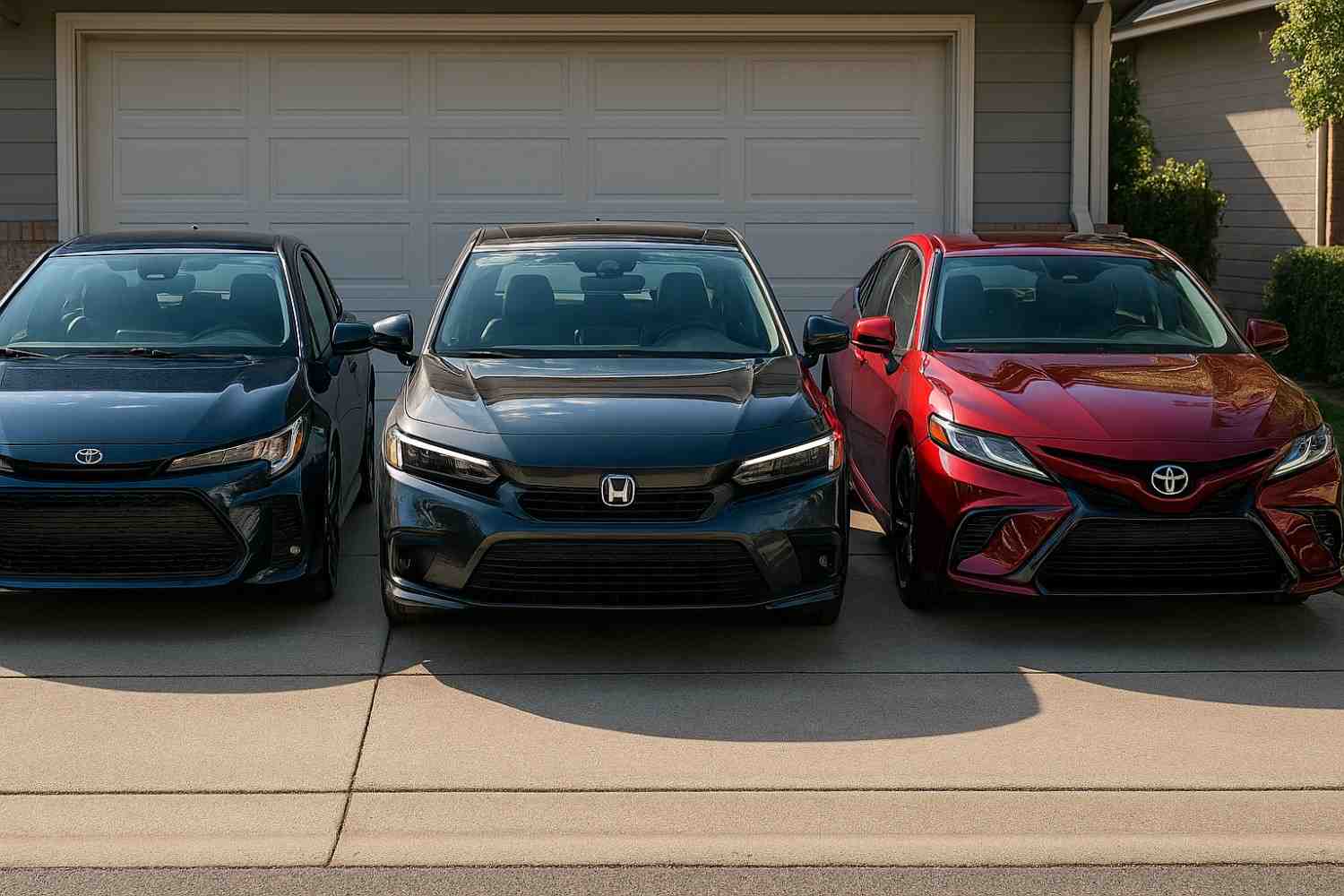
A 2025 Toyota Corolla typically runs about $1,500–$2,000 total in maintenance over its first five years. I’ve seen heavy-duty trucks burn through that exact amount in a single year once they hit the 80,000-mile mark. That gap in ownership cost is the whole story for savvy buyers who want their vehicle to be an asset, not a liability.
Some cars are simply easier on parts, fluids, and labor. They feature fewer turbochargers, simpler transmissions, and proven engines that don’t require specialized diagnostic software for every minor adjustment. Others start stacking repair bills the moment the manufacturer’s warranty fades into the rearview mirror.
This guide breaks down what you can expect to spend over five years on the lowest-maintenance cars in the U.S. market for 2026. These figures are based on aggregated data from the J.D. Power 2026 Vehicle Dependability Study, Consumer Reports reliability scores, and the latest AAA 2025-2026 Your Driving Costs report.
The Cars That Actually Stay Cheap to Maintain
There is a distinct difference between a “reliable” car and a “low-maintenance” car. Some vehicles rarely break down, but when they do, the parts must be shipped from overseas and installed by a specialist charging $250 an hour. A truly low-maintenance vehicle is one that stays out of the shop and remains inexpensive to service when it finally goes in for routine care.
The models below represent the intersection of mechanical simplicity and mass-market parts availability. They avoid the “luxury tax” often found in service bays.
| Vehicle (2025–2026 models) | 5-Year Maint. Cost (Est.) | Key Mechanical Reason |
| Toyota Corolla (2.0L) | $1,580–$2,050 | Naturally aspirated, port injection |
| Toyota Camry (Hybrid) | $1,820–$2,350 | Lower brake wear, proven eCVT |
| Honda Civic (2.0L) | $1,740–$2,280 | High parts availability, simple layout |
| Toyota Prius | $1,650–$2,100 | Regenerative braking, durable battery |
| Mazda3 (2.5L S) | $1,890–$2,450 | Traditional 6-speed auto, no turbo |
| Hyundai Elantra | $1,950–$2,550 | 10-year powertrain warranty coverage |
These numbers align with long-term trends from the J.D. Power 2026 Vehicle Dependability Study and Consumer Reports’ latest owner-reported data. You will notice a recurring pattern here: naturally aspirated engines and conventional or planetary gear transmissions.
Why These Cars Stay Cheap (And Others Don’t)
It isn’t luck that keeps a Corolla cheap while a similar-sized European luxury sedan racks up four-figure bills. It comes down to basic mechanical realities that I see every day on the lift.
No Turbocharger Means Less Heat Stress
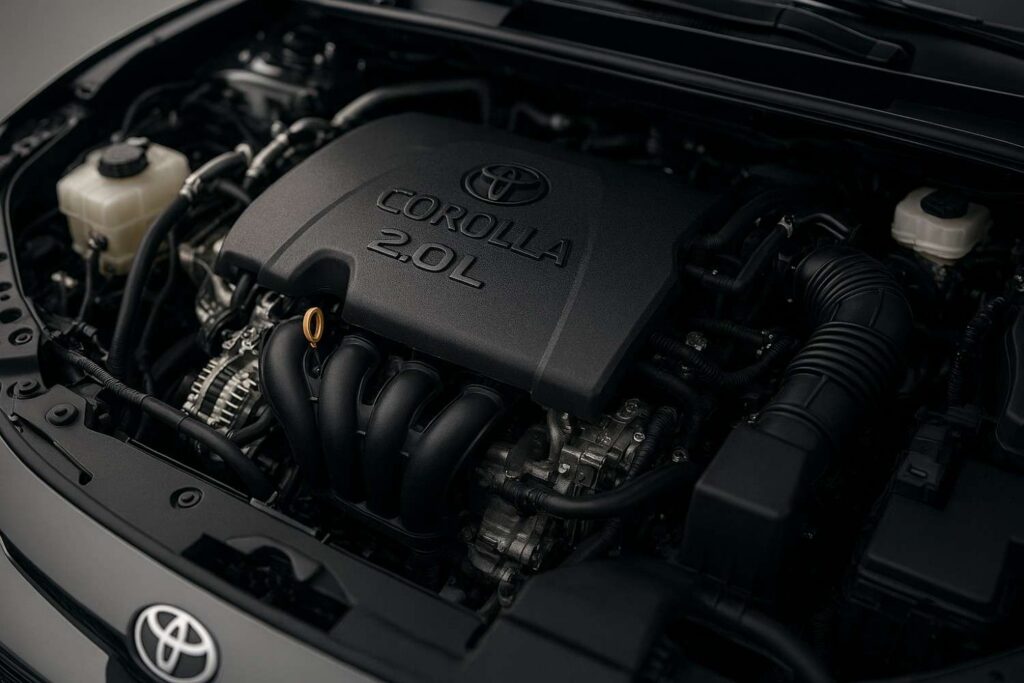
A turbocharger can spin at over 200,000 RPM and generates massive amounts of heat. This heat eventually cooks plastic vacuum lines, rubber seals, and engine oil. Cars like the base Corolla or Mazda3 (2.5L S) use naturally aspirated engines that breathe at atmospheric pressure. This creates a cooler environment under the hood, preserving the life of every gasket and hose.
Simpler Fuel Systems
Many modern cars use “Direct Injection,” which can lead to carbon buildup on the intake valves over 60,000 miles. Cleaning that carbon often requires a $500–$800 service involving crushed walnut shells. Many Toyota models now use “D-4S” dual-injection, which includes port injectors that spray fuel over the valves to keep them clean.
Transmission Choice
In my assessment, dual-clutch transmissions (DCTs) found in some sporty or European models are a maintenance trap for the average commuter. They provide crisp shifts but can be jerky in traffic and expensive to service. The planetary gear eCVTs in Toyota hybrids or the traditional 6-speed automatic in the Mazda3 are built for smooth, long-term durability.
Bridging the Gap: Why Hybrids Are the Modern Maintenance Kings
While mechanical simplicity is the traditional route to low costs, modern engineering has created a second path: the hybrid powertrain. Many buyers initially worry that adding an electric motor and a battery pack increases complexity. However, in practice, these systems actually reduce the workload on the parts that wear out most frequently.
The biggest “win” for hybrid owners is regenerative braking. When you step on the pedal, the electric motor reverses to slow the car down and charge the battery. This means the mechanical brake pads and rotors are barely used in daily city driving. I have seen Prius models come into the bay with 90,000 miles on the original factory brake pads.
The hybrid battery is the only major concern for some, but data from fueleconomy.gov and long-term Consumer Reports testing shows these packs often last 150,000 to 200,000 miles. By the time a battery might need replacement, the owner has usually saved several thousand dollars in fuel and brake jobs.
The “Trap” Cars: Low Price, High Overhead
Some cars look like a bargain on the window sticker but become a liability in the service department. Small-displacement engines (like a 1.2L or 1.5L) that rely heavily on a turbocharger to move a heavy vehicle are a common culprit. These engines work harder every second they are running, which accelerates oil breakdown.
I also caution buyers against entry-level luxury models like the BMW 2 Series or Audi A3. Even if the car shares some DNA with a cheaper brand, the labor rates at the dealership are often 40% higher.
Specific “traps” I often see involve “captive” parts. For example, replacing a simple battery on a modern BMW often requires a “battery registration” via specialized software—a task a DIY owner or a general shop might struggle with without the right tools. This turns a $150 job into a $450 dealership visit.
What Actually Drives Your Maintenance Costs
The car is the baseline, but the owner provides the variables. Two people can drive identical 2026 Honda Civics and end up with maintenance bills that are $1,500 apart over five years.
- The “Short Trip” Penalty: If your commute is only three miles, your engine oil never reaches operating temperature. This leads to moisture buildup and fuel dilution. These cars need oil changes every 5,000 miles, not the 10,000 miles often advertised.
- Regional Labor Rates: A brake job in San Francisco or New York City will cost twice as much as the same job in rural Ohio.
- The Neglect Spiral: This is the most common mistake. A driver ignores a $200 transmission fluid service at 60,000 miles. By 90,000 miles, the transmission is slipping. Now, they are looking at a $4,000 replacement.
Real-World 5-Year Cost Comparison by Powertrain
To give a clearer picture, I have categorized these costs by the “complexity level” of the powertrain. This helps show why certain choices pay off long-term.
| Powertrain Type | Avg 5-Year Maintenance | Why the Cost Differs |
| Naturally Aspirated Gas | $1,500–$2,500 | Simplest mechanical design |
| Hybrid (Toyota/Honda) | $1,600–$2,400 | Brake savings offset battery checks |
| Turbocharged Gas | $2,600–$4,200 | Heat stress and high-pressure fuel |
| Battery Electric (EV) | $1,200–$2,200 | No oil, but very high tire wear |
| Euro Luxury (Turbo) | $3,800–$6,500 | Premium parts and high labor rates |
You can see that a turbocharged engine can nearly double your maintenance budget. While they are fun to drive, you are paying for that performance every time you visit the shop. Electric vehicles (EVs) have the lowest mechanical costs, but they often require specialized tires that cost more and wear out faster due to the vehicle’s weight.
The Mechanic’s Final Verdict
If you want to spend the absolute minimum on your car over the next five years, the 2026 Toyota Corolla with the 2.0L engine is the undisputed champion. It is the closest thing to a “bulletproof” machine left on the market. The Honda Civic and Mazda3 are excellent runners-up, offering a bit more style while staying within a reasonable budget.
If you do a lot of city driving, the Toyota Prius is the smarter financial play. The reduction in brake wear and the extreme durability of the hybrid transaxle make it a tank for urban environments.
Before you buy, I recommend checking the Edmunds True Cost to Own tool for your specific zip code. A car that is cheap to maintain in Florida might be more expensive in Alaska due to the toll that extreme cold and road salt take on the suspension and undercarriage.
References
- J.D. Power 2026 Vehicle Dependability Study
- AAA Your Driving Costs 2025-2026 Report
- Consumer Reports Auto Reliability Survey
- EPA Fuel Economy and Environment Data
- Edmunds True Cost to Own Analysis
Disclaimer: The information provided in this article is for educational and informational purposes only. It does not constitute professional advice. Readers should conduct their own research and consult with qualified professionals before making any decisions.