

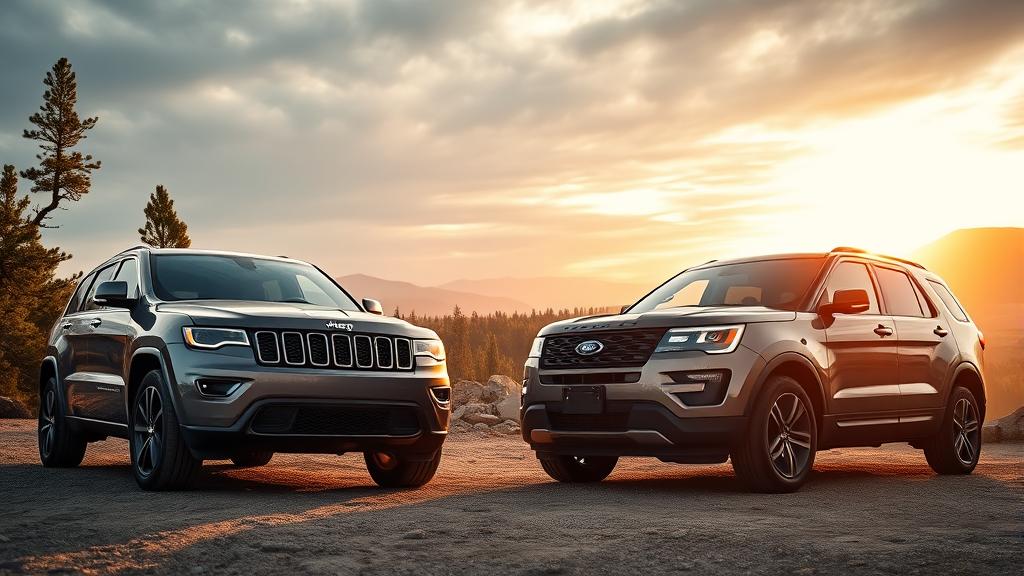
Somewhere on a wet highway onramp, hauling a loaded cargo trailer with three kids and two dogs in the back, the 2026 Jeep Grand Cherokee’s Quadra-Lift air suspension settles into a composed, confident stance. It was designed for exactly this. The 2026 Ford Explorer, loaded to comparable capacity on the same stretch of road, handles the situation with smoother manners and a quieter cabin but noticeably less mechanical authority under the trailer hitch.
That distinction runs through the entire comparison. Both are genuinely capable, well-equipped family vehicles. Where they diverge matters a great deal depending on how your family actually uses an SUV.
This comparison draws from EPA fuel economy data, IIHS safety ratings, and driving impressions across both vehicles to tell you which one earns the driveway.
The Cabin: Where Families Actually Live
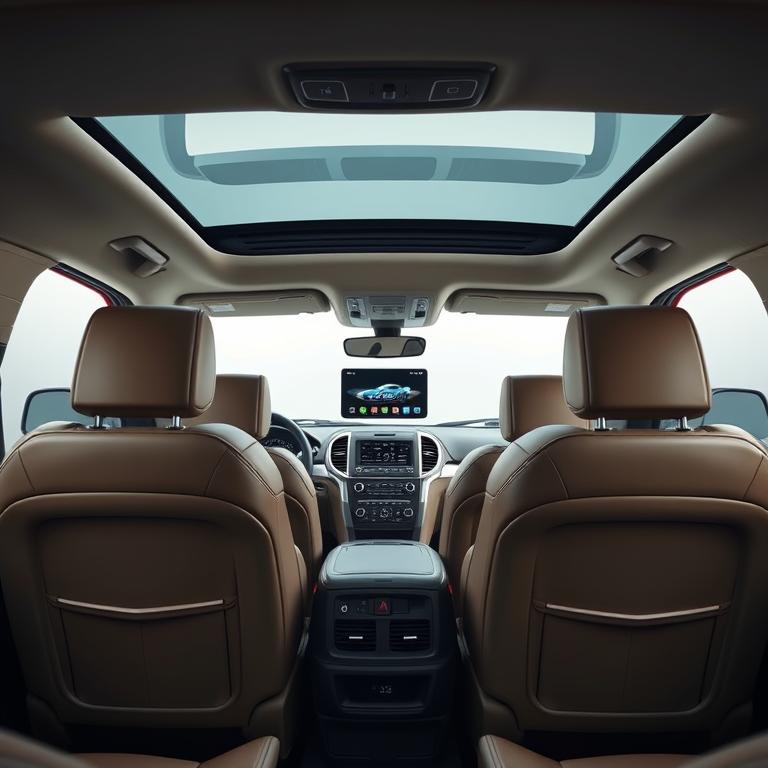
The Explorer makes its strongest argument in the cabin. Ford’s interior team has clearly spent time thinking about how families actually use this space. The second-row captain’s chairs in XLT and higher trims slide independently and fold flat with a single hand, which sounds minor until you’re loading groceries around a rear-facing car seat. The third row folds electrically in Platinum trim. These are the details that compound over years of ownership.
The Grand Cherokee’s interior argues differently. Upper trims, particularly the Summit Reserve, have a materials quality that feels genuinely luxury-adjacent: real leather, soft-touch panels where you actually touch them, and a Uconnect 5 system on a 10.1-inch display that is logically laid out and responsive. The front seats are bolstered and supportive in a way that rewards longer drives. The Grand Cherokee feels like a finer product than the Explorer in isolation.
The three-row question, though, is where the comparison shifts. The standard Grand Cherokee is a two-row vehicle. Families needing three rows must step up to the Grand Cherokee L, which starts closer to $46,000 in comparable trim content and adds significant length. The Explorer offers three rows across most of its lineup starting at roughly $39,365 for the base trim, per manufacturer pricing. For families who genuinely use a third row, that’s a different buying decision entirely.
Cargo space with all rows up is tight in both vehicles. Behind the Explorer’s third row, cargo volume drops to 21.0 cubic feet. The Grand Cherokee in two-row form offers around 70.8 cubic feet with rear seats folded. Plan accordingly if your family regularly runs at full passenger capacity.
The Explorer is the more practical family cabin. The Grand Cherokee is the more refined one. For daily life with kids, refinement is often less useful than practicality.
Capability: Where the Jeep Changes the Conversation
This is where the Grand Cherokee earns its reputation and its price premium. The standard 3.6-liter Pentastar V6 produces 285 horsepower and handles up to 6,200 pounds of trailer towing with the available tow group, per Jeep’s published specifications. The Explorer’s 2.3-liter EcoBoost four-cylinder makes 300 horsepower and manages up to 5,600 pounds. That 600-pound towing differential is meaningful for jet ski owners, pop-up camper haulers, and anyone who regularly moves a utility trailer.
The Grand Cherokee’s four-wheel-drive systems, particularly the available Quadra-Drive II with electronic limited-slip rear differential, represent genuine capability the Explorer’s terrain management system does not fully replicate. The ground clearance difference in the table below makes that plain.
The Grand Cherokee 4xe is a plug-in hybrid producing 375 combined horsepower, rated at 56 MPGe on electricity per EPA estimates, and still rated for up to 6,000 pounds of towing. There is no PHEV Explorer in the 2026 lineup. For buyers who commute short distances during the week and need towing or trail capability on weekends, the 4xe is a genuinely useful pairing.
To be fair, the Explorer ST Performance Package upgrades the powertrain to 400 horsepower. Not for towing, but it makes highway driving brisk. If off-road relevance is not in your plans, the ST makes the Explorer a more compelling performance argument.
Head-to-Head: The Numbers at the Midpoint
| Spec | 2026 Jeep Grand Cherokee V6 | 2026 Ford Explorer 2.3L | Best For / Verdict |
|---|---|---|---|
| Starting MSRP | ~$43,195 (Laredo) | ~$39,365 (Base) | Explorer: lower entry cost |
| Engine / Power | 3.6L V6 / 285 hp | 2.3L EcoBoost / 300 hp | Explorer: marginally more power |
| Towing Capacity | 6,200 lbs | 5,600 lbs | Grand Cherokee: 600-lb advantage |
| EPA City / Hwy MPG | 18 / 25 mpg | 21 / 28 mpg | Explorer: better fuel economy |
| Three-Row Option | Grand Cherokee L only | Standard across most trims | Explorer: three rows more accessible |
| IIHS Rating | Good / Acceptable (varies by trim) | Top Safety Pick | Explorer: stronger documented safety |
| Four-Wheel Drive | Quadra-Drive II (available) | Terrain Management System | Grand Cherokee: more capable |
| Ground Clearance | Up to 10.9 in. (air suspension) | 8.1 in. | Grand Cherokee: meaningful off-road edge |
| PHEV Option | Yes (4xe, 375 hp / 56 MPGe) | No | Grand Cherokee: unique powertrain |
| NHTSA Overall | 5-star | 5-star | Tie |
Pricing based on manufacturer-published figures for the 2026 model year; estimates are approximate.
The IIHS numbers in that table deserve real attention. The 2026 Ford Explorer earned a Top Safety Pick designation per the IIHS safety ratings database. The Grand Cherokee’s headlight performance has historically been a weak point in IIHS testing, with certain trim and lighting configurations scoring Acceptable rather than Good. For families who spend meaningful time on unlit rural roads or country highways, this distinction is a real-world consideration, not a footnote on a chart.
On the Road: Comfort vs. Character
The Explorer drives like a vehicle optimized for highway miles and school pickup. The 2.3-liter EcoBoost is smooth and almost inaudible at cruise, and Active Noise Cancellation in upper trims manages wind intrusion well. Ride quality over highway expansion joints is notably composed. It is a comfortable machine tuned for the kind of driving most families do most of the time.
The Grand Cherokee asks more of you. The steering is heavier, the suspension has more personality over rough pavement, and the vehicle’s larger footprint makes urban parking require more attention. In exchange, it delivers a sense of physical solidity the Explorer never quite matches. Push both down a gravel forest road and the Grand Cherokee’s composure comes from a fundamentally different place: it absorbs terrain as part of its design brief.
Where the Grand Cherokee loses points in everyday use is low-speed ride quality over broken city pavement. At 18 mpg city, the V6’s fuel penalty also compounds at the pump in a way buyers should model before choosing it over the Explorer on price alone.
In my assessment, the Explorer is the right vehicle for the family that logs most of its miles on pavement and wants to arrive relaxed. The Grand Cherokee is right for the family that also tows, uses real four-wheel drive seasonally, or wants the 4xe’s efficiency on short commutes.
Safety: A Real Difference Worth Examining
The 2026 Ford Explorer earned Top Safety Pick from IIHS, per the IIHS safety ratings database. NHTSA assigned the Explorer a 5-star overall rating. The Grand Cherokee’s IIHS headlight performance varies by trim, with some configurations scoring Acceptable rather than Good. NHTSA gives the Grand Cherokee a 5-star overall rating as well.
Both vehicles offer strong standard driver assistance in 2026: automatic emergency braking, lane-keeping assist, and adaptive cruise control are standard across most configurations. The practical safety gap sits specifically in headlight performance. For families who drive unlit rural roads regularly, that is a real consideration. Check your specific Grand Cherokee trim’s headlight rating at the IIHS before committing.
On safety documentation, the Explorer has the cleaner record. Its headlight consistency across trims is a genuine edge that matters at night.
Who Should NOT Buy This
The Grand Cherokee is not the right vehicle if three rows are a firm requirement on a moderate budget. The three-row Grand Cherokee L adds cost and length. For families that regularly seat seven or eight passengers and want to stay in a reasonable budget range, the Explorer’s three-row layout across most of its lineup is simply more accessible.
The Grand Cherokee is also not the right choice for buyers who prioritize fuel economy. At 18 city and 25 highway on the V6, it trails most competitors at this price point. The 4xe PHEV’s 56 MPGe is compelling, but only if you have home charging access and the commute pattern to use it.
The Explorer is not the right vehicle if real off-road capability is in your plans. The terrain management system handles highway and light gravel competently. Anything beyond that, deep ruts, significant hill descents, or towing off unimproved surfaces, belongs to the Grand Cherokee. Its 8.1-inch ground clearance tells the honest story about where the Explorer was designed to go.
The Verdict
For most American families in 2026, the Ford Explorer is the stronger practical choice. In our assessment, it satisfies more of the needs most families actually have: three rows in more accessible trim levels, a higher and more consistent IIHS safety rating, better fuel economy in both city and highway use, and a lower entry price. Based on how the typical American family actually uses a midsize SUV, the Explorer is the cleaner call.
The 2026 Jeep Grand Cherokee is the right vehicle for a specific buyer: someone who tows a boat or trailer with real frequency, wants four-wheel-drive capability beyond the decorative, or finds genuine value in the 4xe PHEV’s commuting efficiency paired with weekend capability. For that buyer, the Explorer’s ceiling is a real limitation and the Grand Cherokee’s higher price is a fair exchange.
One honest limitation of this comparison: off-road capability is difficult to convey in a written comparison without firsthand trail time in both vehicles. Buyers planning regular off-road use should verify their expected terrain against Jeep’s trail-rated specs and check the IIHS ratings for the specific Grand Cherokee trim and headlight package they are considering before purchase.
References
- EPA Fuel Economy Data
- IIHS Vehicle Safety Ratings
- NHTSA Safety Ratings
- Jeep Official Site
- Ford Official Site
- Edmunds
Disclaimer: The information provided in this article is for educational and informational purposes only. It does not constitute professional advice. Readers should conduct their own research and consult with qualified professionals before making any decisions.