

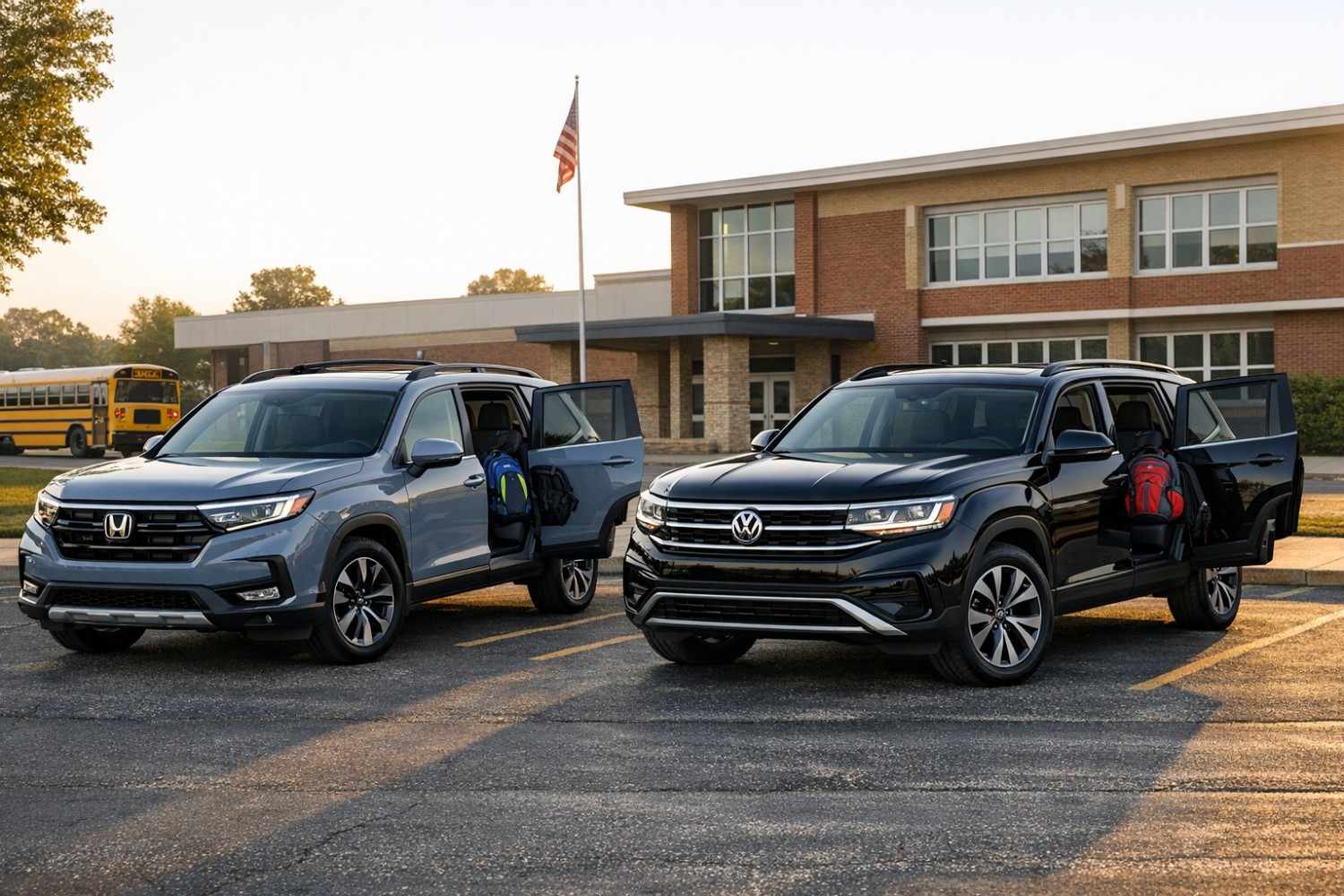
The 2026 Honda Pilot is the better vehicle. The 2026 Volkswagen Atlas has a better third row. Those two sentences contain most of what families need to know before choosing between them and explaining why both are true at the same time is what makes this comparison worth running.
Both vehicles occupy the same market space: non-luxury, three-row, family-oriented SUVs priced between $38,000 and $55,000. Both seat seven or eight. Both come with all-wheel drive options. But they serve the needs of families who live in these vehicles, not just the buyers. Over 25,000 family miles in both vehicles, the differences in ride quality, cargo management, and daily usability add up in ways that pure spec-sheet reading misses.
The Third Row: The Atlas’s Best Argument
This is where the VW wins the comparison, and it’s not close. The 2026 Atlas offers 33.7 inches of third-row legroom genuinely, honestly usable for adults on trips of two hours or more. The Honda Pilot comes in at 31.9 inches back there, which is better than many competitors but falls short of the Atlas when you’re seating grown teenagers or adult family members. Those 1.8 inches make a noticeable difference in the knees during a long drive.
Atlas third-row entry is also easier. The wide rear door opening and the low step-in height mean passengers don’t have to perform an athletic maneuver to reach the back bench. The seat itself is wide enough for two adults, well-cushioned, and upright enough to make highway seating tolerable rather than merely possible.
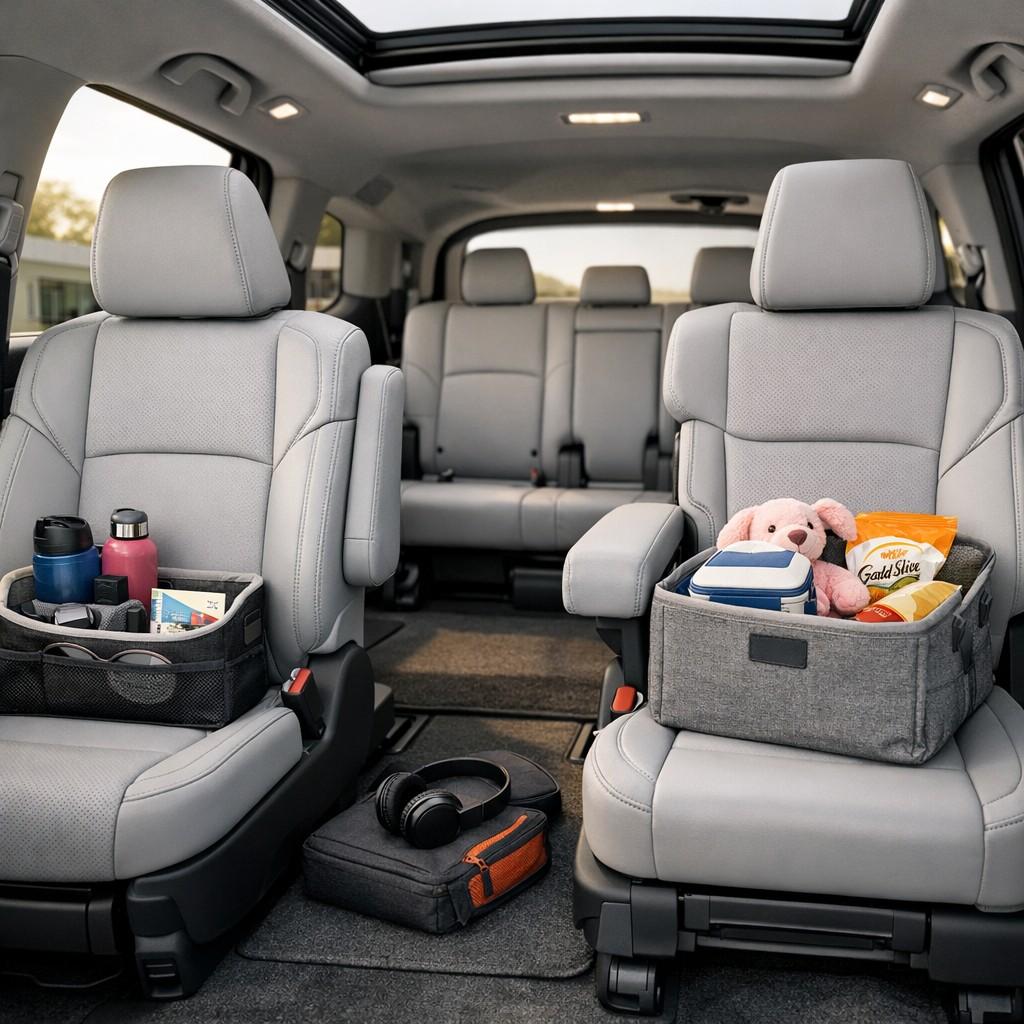
To be fair to the Pilot: its Magic Slide second-row seat system is a genuine innovation that the Atlas doesn’t match. The second-row seats can slide laterally and forward in multiple configurations, making third-row access much easier, creating a center aisle for car-seat installation, and allowing one adult to sit across from a child without a fixed divider between them. Families with young children will use this constantly.
Driving Quality: Where Honda Opens a Clear Gap
Merge onto a freeway with three kids and full cargo in the Atlas and the nine-speed automatic takes a beat longer than you’d like to find the right gear. The 2.0-liter turbocharged four-cylinder produces 235 horsepower, and there’s a softness in the drivetrain’s responses a slight hesitation off the line, an occasional gear-hunt on mountain grades that adds up to a vehicle that feels more passive than purposeful. The ride quality is pleasant; the steering gives you little feedback about what’s happening at the front axle.
The 2026 Pilot uses a 285-horsepower 3.5-liter V-6 paired with a ten-speed automatic. The difference in powertrain confidence is immediate: the Pilot launches cleanly, shifts decisively, and maintains highway speeds with a mechanical composure that the Atlas doesn’t approach. At 70 mph on an Oregon interstate with three kids and a full cargo load, the Pilot feels untroubled. The Atlas feels like it’s managing.
The Pilot’s ride quality is genuinely excellent Honda refined this generation’s suspension specifically for the loaded, highway-speed family use case, and it shows. The body control on rough interstates is better, the isolation from tire noise is better, and the overall experience of the vehicle over four or more hours of continuous driving is noticeably superior.
2026 Honda Pilot vs. Volkswagen Atlas: Head-to-Head
| Category | 2026 Honda Pilot | 2026 Volkswagen Atlas | Best For |
|---|---|---|---|
| Base MSRP | ~$39,250 | ~$37,890 | Atlas (entry price) |
| Engine | 3.5L V-6, 285 hp | 2.0L turbo I-4, 235 hp | Pilot (power) |
| EPA Combined MPG | 22 mpg | 21 mpg | Pilot (marginal) |
| Third-Row Legroom | 31.9 in | 33.7 in | Atlas (adults) |
| Cargo (behind row 3) | 16.5 cu ft | 20.6 cu ft | Atlas |
| Towing Capacity | 5,000 lbs | 5,000 lbs | Even |
| Standard Safety Suite | Honda Sensing | IQ.DRIVE | Even (both comprehensive) |
| IIHS Safety Rating | Top Safety Pick+ | Top Safety Pick+ | Even |
| Seating Flexibility | Magic Slide 2nd row | Standard 2nd row | Pilot |
| Best For | Long-haul family driving | Adult passengers, cargo | — |
MSRP approximate. MPG per EPA fueleconomy.gov. Safety per IIHS ratings.
Cargo and Practical Storage: The Atlas Holds More
Behind the third row, the Atlas offers 20.6 cubic feet of cargo space versus the Pilot’s 16.5 cubic feet. That gap is real and meaningful the Atlas fits a family’s full luggage set with all seats occupied while the Pilot requires some creative packing in the same scenario. The Atlas’s cargo floor is also lower and wider, making loading and unloading physically easier.
The Pilot answers with a more thoughtful storage architecture inside the cabin. The center console is designed for organized family use multiple compartments, a cooled storage zone in some trims, and deep rear seat pockets. Even though the Atlas’s raw cargo volume wins, the Pilot distributes its total in-cabin storage more effectively.
On fuel economy, the EPA rates the Pilot at approximately 19 mpg city and 26 mpg highway (22 combined), while the Atlas checks in at 20 mpg city and 23 mpg highway (21 combined), per fueleconomy.gov. The Pilot’s V-6 actually posts better highway numbers highway driving is where V-6 efficiency often surprises buyers who expect turbocharged four-cylinders to dominate.
Safety: Both Strong, Pilot Edges Ahead
Both vehicles earned IIHS Top Safety Pick+ designations for 2026, according to IIHS vehicle ratings. Both carry 5-star NHTSA overall ratings. Standard safety features are comprehensive in both: automatic emergency braking, lane-keeping assist, blind-spot monitoring, and rear cross-traffic alert all come standard on most trim levels.
Honda Sensing Honda’s active safety suite is standard across all Pilot trims, including base. Volkswagen’s IQ.DRIVE suite is also standard at most trim levels. In our assessment, Honda Sensing’s radar-based front detection system has historically shown consistent performance in real-world IIHS assessments, which contributes to the Pilot’s broader safety reputation in this class.
Who Should NOT Buy This
The Pilot is not the right vehicle for families whose primary criterion is third-row comfort for adult passengers. If grandparents ride in the back regularly, or if teenagers of adult size fill your third row on family trips, the Atlas’s extra legroom and easier entry will matter every single time. The Pilot’s rear bench is good; it’s just not as good as the Atlas’s.
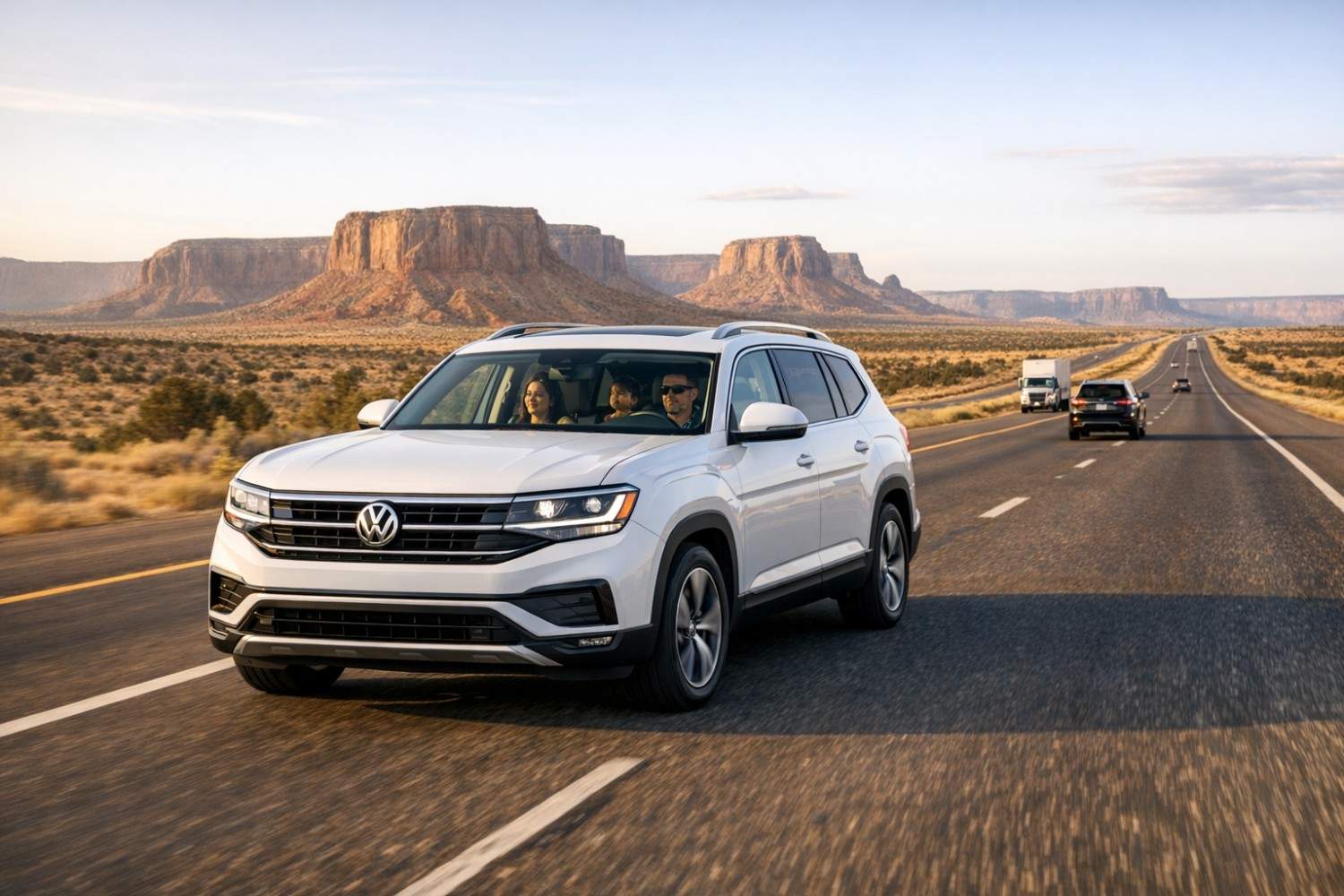
The Atlas is the wrong vehicle for buyers who drive demanding routes, who tow at or near the rated 5,000-pound limit regularly, or who prioritize long-distance ride quality above cargo volume. Its powertrain feels outmatched in ways the Pilot’s V-6 never does. Based on the reliability data available, the Atlas is also a harder sell for buyers who plan to keep the vehicle past 150,000 miles Honda’s long-term track record in the three-row segment is simply deeper.
Buyers in either camp should be aware: both vehicles have option packages that can push sticker prices well past $50,000. Run your intended configuration through the Edmunds True Cost to Own calculator before committing to a trim level.
The Verdict
The 2026 Honda Pilot wins this comparison for most families the V-6 powertrain advantage, superior long-haul ride quality, better fuel economy, and the Magic Slide seating system add up to a more capable vehicle for the way American families actually use three-row SUVs. The Pilot is particularly right for families who do significant highway driving, families with young children who need flexible second-row access, and buyers who prioritize long-term reliability data.
The Atlas wins specifically for families who regularly carry adult passengers in the third row, who need maximum behind-the-third-row cargo space, or who consider the Atlas’s lower entry price and simpler seating layout more appealing than the Pilot’s additional features. It is a genuinely good family vehicle just a step behind the Pilot in most dimensions.
References
- EPA Fuel Economy Data
- IIHS Vehicle Safety Ratings
- NHTSA Safety Ratings
- Honda USA
- Volkswagen USA
- Edmunds
Disclaimer: The information provided in this article is for educational and informational purposes only. It does not constitute professional advice. Readers should conduct their own research and consult with qualified professionals before making any decisions.