

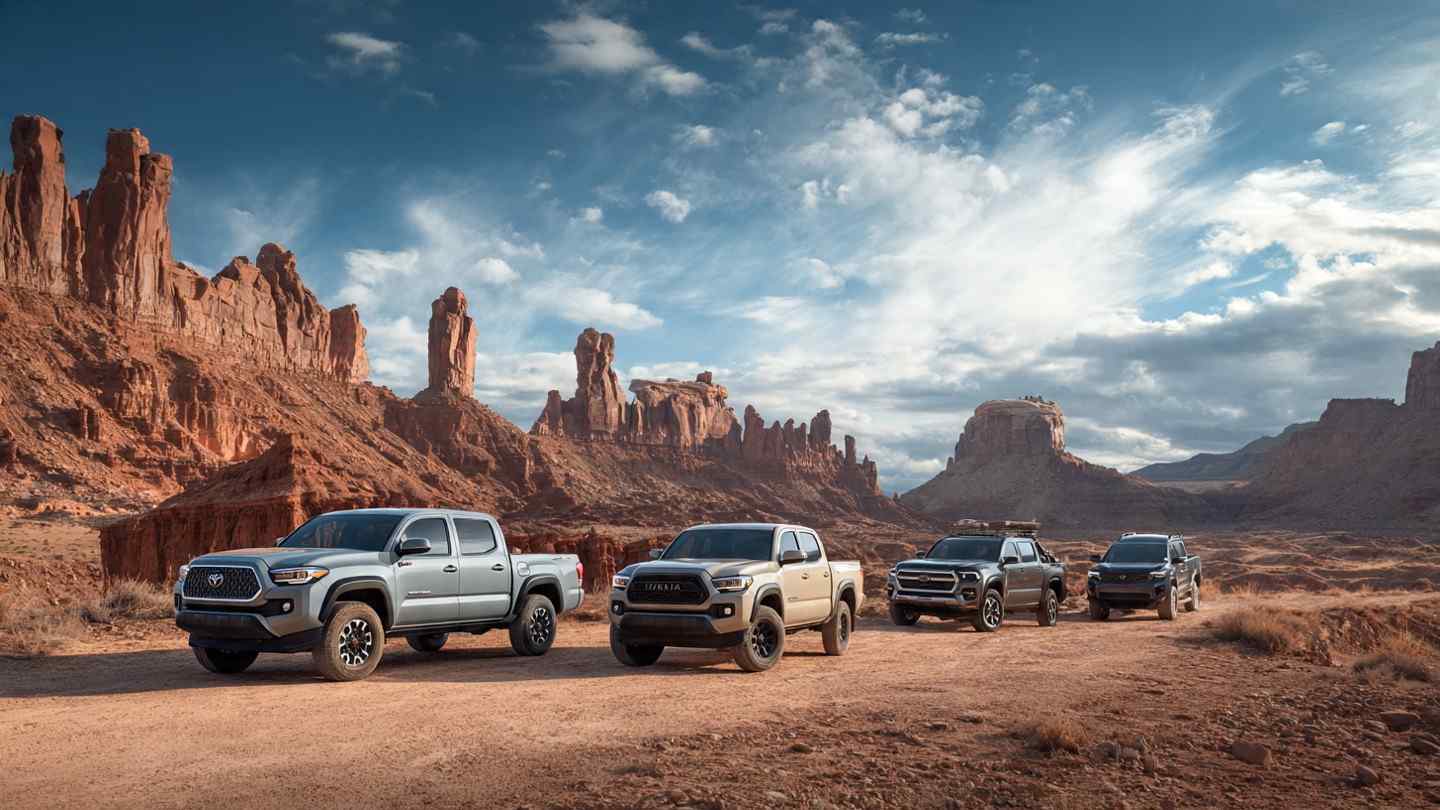
Four trucks, one segment, and more genuine differences than any other vehicle class in this price range. The 2026 midsize truck market has become a genuinely interesting place to shop Toyota’s Tacoma received a full redesign for its third generation, Chevrolet’s Colorado continues to build on its 2023 platform refresh, Ford’s Ranger arrived in redesigned form with a turbocharged four-cylinder, and Honda’s Ridgeline remains the truck that truck people love to dismiss and crossover people love to own.
This comparison ranks all four across off-road capability, towing capacity, ride quality, interior refinement, and daily usability. The ranking is based on real-world priorities, not spec-sheet performance in categories that most buyers never encounter.
By the end, you’ll have a clear rank order and a clear answer on who each truck is actually built for with EPA fuel economy from fueleconomy.gov, safety ratings from IIHS and NHTSA, and pricing based on Edmunds data throughout.
Off-Road Capability: The Category That Separates Them Most
The new third-generation Tacoma is a different truck off-road than its predecessor, and the difference registers immediately on loose terrain. The Multi-Terrain Select system on the TRD Pro allows driver-adjustable surface modes, and the crawl control which modulates throttle and braking on low-traction surfaces removes a significant amount of mental load on technical descents. On a rutted dirt road, the Tacoma’s suspension articulates with a smooth, deliberate travel that keeps tires in contact with irregular surfaces; you feel the seat tipping and recovering as each wheel finds its footing.
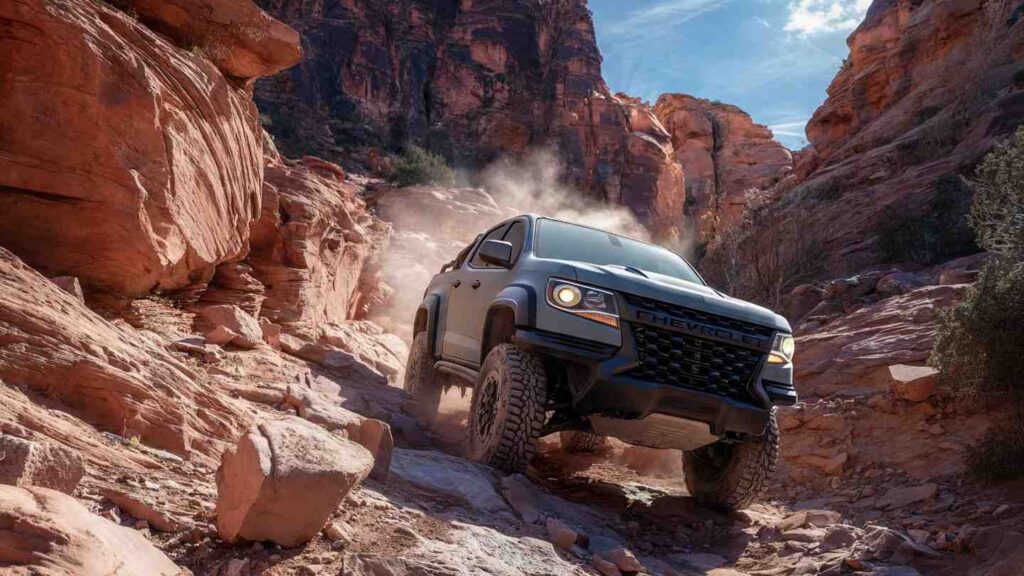
The Colorado ZR2 is the segment’s most capable off-road truck in absolute terms. It offers Multimatic DSSV dampers a suspension technology borrowed from stadium racing and the result is a ride over rocks and washboard that’s controlled in a way the Tacoma can’t match. The ZR2 is genuinely specialized hardware in a pickup body, and for buyers who spend real time on technical trails, it’s the clear choice.
The Ranger Tremor provides a more road-biased off-road package its suspension tuning prioritizes comfort on gravel and light dirt over aggressive rock crawling. The Fox-branded shocks on Tremor trim deliver noticeable improvement over the standard Ranger setup, and on mixed terrain the Ranger feels the most composed of the non-ZR2 options.
The Ridgeline is an honest 20-minute drive from off-road capability. Its unibody construction and independent rear suspension give it the best on-road manners in the segment by a significant margin, but that same setup limits ground clearance and articulation. Honda’s AWD system handles rain-slicked streets and light gravel effectively. Actual trails with meaningful obstacles are a different story.
The ZR2 wins off-road. The Tacoma TRD Pro is the best all-rounder. The Ranger Tremor is the most accessible entry. The Ridgeline is not in this conversation.
Towing, Payload, and Work Capability
To be fair, the Ridgeline recovers some ground in the practical work-truck category. Its 5,000-lb tow rating is the lowest in this comparison, but its in-bed trunk a lockable, drained storage compartment in the bed floor — is genuinely useful for tools, wet gear, or valuables that need security. The Ridgeline can also carry a 1,500-lb payload with surprisingly composed handling, and its bed manages 4×8 lumber flat without issue.
The Tacoma’s tow capacity tops out at 6,500 lbs on properly equipped trims, according to Toyota’s published specifications. The Ranger tows up to 7,500 lbs in appropriate configuration the best in the segment for standard builds and its turbocharged 2.3-liter four-cylinder engine delivers the torque for that rating with less strain than you might expect from a four-pot. The Colorado’s tow capacity reaches 7,700 lbs on the diesel-equipped trims.
Payload figures across the segment range from the Ridgeline’s 1,500 lbs to the Ranger’s 1,805 lbs and the Tacoma’s 1,440 to 1,675 lbs depending on configuration. The Colorado matches the Ranger closely. These are not half-ton payload numbers buyers expecting full-size truck utility from a midsize will consistently bump against those limits.
Daily Driving, Ride Quality, and the Hours You’re Not Off-Road
Most midsize truck owners spend the overwhelming majority of their time on paved roads. This is where the rankings shift considerably.
| Truck | Starting MSRP | Max Tow | EPA Combined (approx.) | Off-Road Trim | Best For |
|---|---|---|---|---|---|
| Toyota Tacoma | ~$34,500 | 6,500 lbs | 21 mpg | TRD Pro / Trailhunter | Trail + daily balance |
| Chevrolet Colorado | ~$33,800 | 7,700 lbs (diesel) | 22 mpg | ZR2 | Serious off-road |
| Ford Ranger | ~$34,000 | 7,500 lbs | 23 mpg | Tremor | Towing + road manners |
| Honda Ridgeline | ~$39,300 | 5,000 lbs | 21 mpg | AWD Sport (no trail trim) | Urban/suburban comfort |
Pricing based on Edmunds data for the 2026 model year; figures approximate. EPA figures per fueleconomy.gov.
The Ridgeline’s road manners are in a class by themselves. Its independent rear suspension the only one in the segment absorbs pavement imperfections with a smoothness that makes the body-on-frame alternatives feel coarser by comparison. Driving a Ridgeline on the highway doesn’t feel like driving a truck; it feels like driving a tall, confident Honda Pilot. That’s a compliment or a criticism depending on who you ask.
The Ranger’s ride quality on paved roads has improved significantly with the current generation. The cabin noise at highway speed is genuinely low for a body-on-frame truck, and the front independent suspension combined with revised rear leaf spring tuning makes the standard Ranger one of the most pleasant-driving traditional trucks in the segment.
The Tacoma’s on-road ride is stiffer than the Ranger’s, particularly on the TRD-spec trucks with their sport-tuned suspension. You feel road texture through the seat on rougher pavement a physical reminder that this chassis was prioritized for off-road use. In my experience driving TRD-equipped Tacomas back-to-back with standard Rangers on the same highway stretch, the refinement gap is genuinely noticeable and not flattering to Toyota. Safety across the segment is strong. The Tacoma and Ranger both carry IIHS Top Safety Pick+ status for 2026, per IIHS ratings. The Colorado and Ridgeline received Top Safety Pick. NHTSA awarded 5-star overall ratings to all four trucks.
Who Should NOT Buy This
Don’t buy the Tacoma if interior refinement is your priority. Toyota has improved the cabin meaningfully with the redesign, but the Ridgeline and Ranger both offer noticeably more upscale interiors at comparable price points. The Tacoma’s cabin is functional and well-organized; it is not particularly plush.
Don’t buy the Ridgeline if off-road capability matters to you, or if you’ll regularly carry heavy payloads. Its 5,000-lb tow ceiling and unibody construction genuinely limit its utility compared to the body-on-frame alternatives. The Honda is the right choice for buyers who want the utility image of a truck with the comfort of a crossover and there’s no shame in that but know what you’re getting.
The Colorado ZR2 is a specialized vehicle at a non-entry price. If you don’t regularly use its off-road capability, you’re paying for hardware that stays dormant. The standard Colorado is a better value for buyers who just want a capable, efficient truck for daily use.
The Verdict
Ranked: Ranger first, Tacoma second, Colorado third, Ridgeline fourth with the understanding that these rankings shift depending on your specific use case.
The 2026 Ford Ranger is the most well-rounded truck in the segment for the majority of buyers. Its towing capacity leads the non-diesel comparison, its ride quality is the best among body-on-frame options, its fuel economy is competitive, and its cabin is the most comfortable for daily driving. In my assessment, it’s the clearest recommendation for buyers who want a truck that does everything well without a specialization trade-off.
The Tacoma belongs in second because its long-term reliability track record and off-road capability at accessible trim levels make it the right choice for buyers who genuinely use trails and want a truck that holds its resale value. The Colorado ZR2 is the correct answer only for committed off-road buyers. And the Ridgeline is the right choice for buyers who are honest with themselves that they want a comfortable urban-capable vehicle and will never venture beyond gravel.
References
- IIHS Vehicle Safety Ratings
- NHTSA Safety Ratings
- EPA Fuel Economy Data
- Toyota Official Site
- Ford Official Site
- Edmunds — Midsize Truck Comparisons
Disclaimer: The information provided in this article is for educational and informational purposes only. It does not constitute professional advice. Readers should conduct their own research and consult with qualified professionals before making any decisions.