

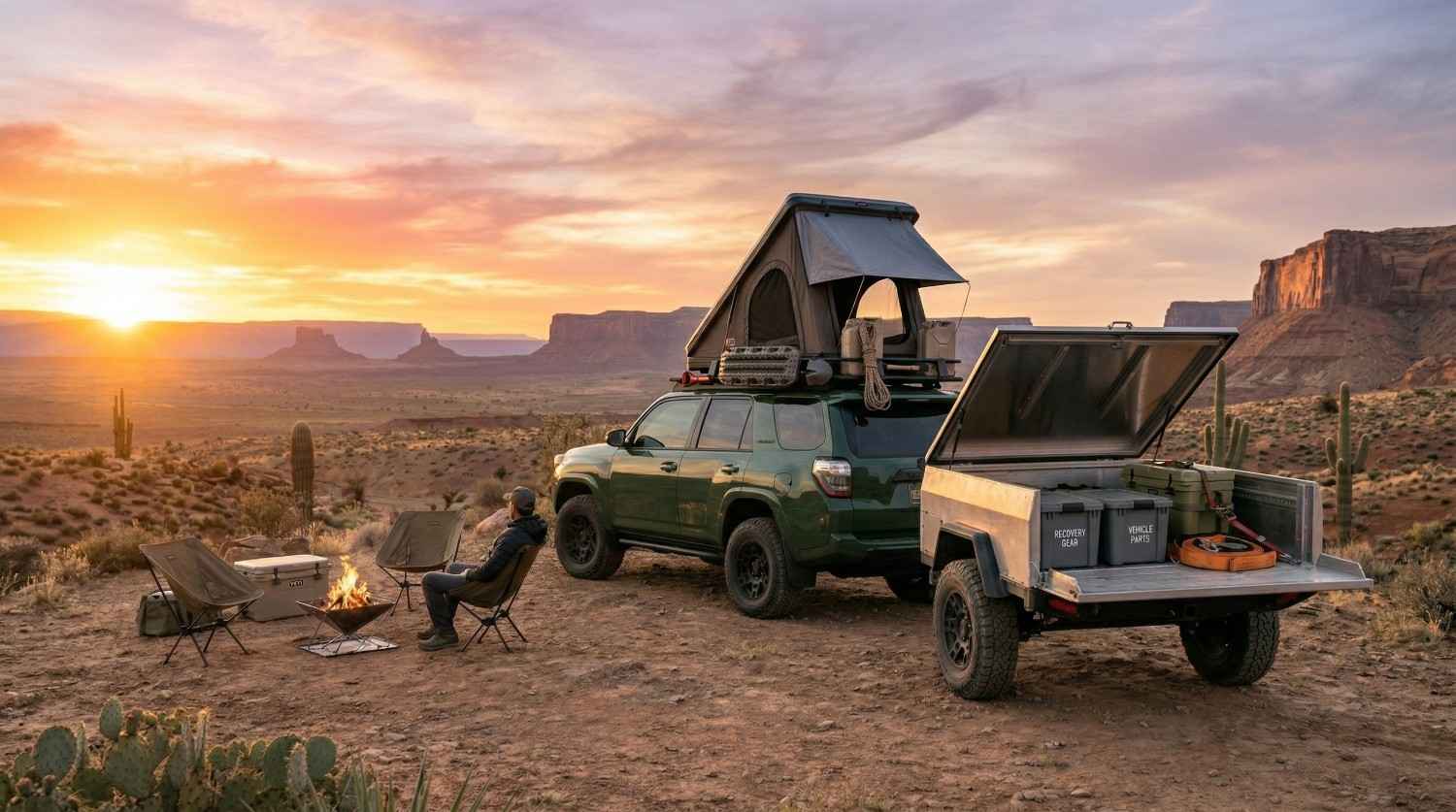
You’re at camp, it’s getting dark, and the one thing you need—your headlamp—is buried somewhere under a cooler, a duffel, and a folding chair that seemed like a good idea at the time. I’ve been there. More than once. Packing a truck bed isn’t about cramming gear until it fits; it’s about access, balance, and knowing what you’ll actually reach for when you’re tired, cold, or halfway through cooking dinner in the wind.
Get it right, and your truck becomes a mobile basecamp. Get it wrong, and every stop turns into a 15-minute unpacking exercise. Here’s how to set it up so your gear works for you, including real payload limits, layout strategies, and where people tend to mess it up. We’ll pull from manufacturer specs, NHTSA Safety Guidance, and Edmunds’ True Cost to Own to keep this grounded in data.
Start With Payload — Not Packing Cubes
Most people skip this step, and it matters more than any storage system. A 2026 Ford F-150 can carry between 1,405 and 2,440 pounds depending on its cab and engine configuration. For example, the 3.5L EcoBoost V6 maxes out at a 2,440-pound payload, while the 3.5L PowerBoost Hybrid drops that to 1,740 pounds due to the added weight of its battery system.
2026 Truck Payload Reference
| Truck Model (2026) | Max Payload (lbs) | Bed Length Options |
| Ford F-150 | 1,405–2,440 | 5.5 ft / 6.5 ft / 8 ft |
| Ram 1500 | 1,490–2,360 | 5.7 ft / 6.4 ft |
| Toyota Tacoma | 1,150–1,705 | 5 ft / 6 ft |
| Chevrolet Silverado 1500 | 1,440–2,260 | 5.8 ft / 6.6 ft / 8 ft |
These peak figures apply only to specific, properly equipped configurations. Heavy items add up fast; water weighs 8.3 pounds per gallon, and a full 10-gallon tank adds 83 pounds before you’ve packed a single tool. Exceeding your payload can increase braking distance and negatively affect handling, a risk emphasized in NHTSA safety guidance regarding light-duty vehicles.
Heavy Gear Belongs Low and Forward
If your truck feels “floaty” or bouncy on the highway, it is likely due to poor weight distribution. Heavy gear, such as water, tools, and spare parts, belongs low in the bed and as close to the cab as possible. Lighter, bulky items like sleeping bags and chairs should go toward the tailgate.
Think of your bed in three zones:
- Front (Against Cab): Heaviest items (water tanks, tools, recovery gear) to maintain a forward center of gravity for better steering control.
- Middle: Moderately heavy gear like coolers, food storage, and your camp kitchen.
- Rear (Tailgate): Light items you need first, like tents or chairs.
The Role of 2026 Technology in Packing
Newer 2026 trucks often feature onboard power systems, such as Ford’s Pro Power Onboard. This changes your packing layout significantly because you must maintain clear access to the bed-mounted outlets for running your stove or charging batteries. In our assessment, blocking these outlets with heavy storage bins is a common beginner mistake that leads to unnecessary unpacking at camp.
Access Beats Aesthetics Every Time
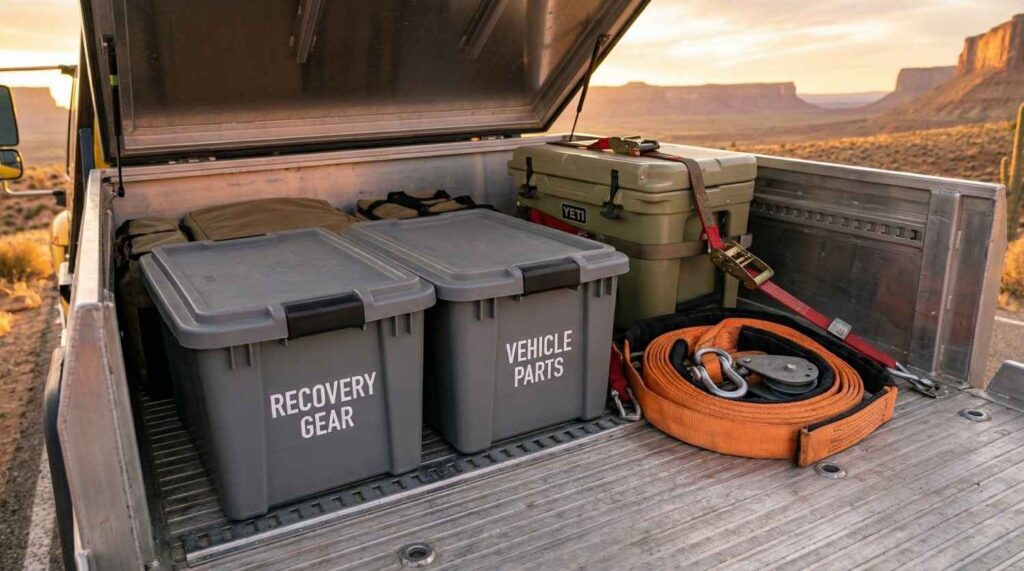
A perfectly symmetrical setup looks great on social media, but it rarely works in real life. You need quick access to three specific things: food, water, and daily-use gear.
| Setup Type | Pros | Cons | Best For |
| Open Bed + Bins | Easy access, flexible | Exposed to weather | Dry climates, short trips |
| Tonneau Cover | Weather protection | Limited vertical space | Weekend camping |
| Drawer System | Excellent organization | Heavy, reduced payload | Long-term overlanding |
| Bed Rack | Frees up bed space | High center of gravity | Extended expeditions |
In our assessment, a quality tonneau cover combined with stackable bins hits the sweet spot for most travelers. We explicitly advise against using cheap “hardware store” plastic bins for overland travel; they often lack dust-proof gaskets and are prone to cracking under the sustained vibration of washboard roads.
Weather and Environment Testing
Rain, dust, and temperature swings can ruin gear faster than rough terrain. In wetter regions like the Pacific Northwest, a hard tonneau cover or a camper shell is vital. In the Southwest, dust is the primary enemy—it permeates everything. AAA travel guidance notes that environmental exposure can lead to mechanical or equipment failures during long road trips. Pack as if you expect the worst possible conditions.
Don’t Forget the “Annoyance Factor”
It is the small frustrations that ruin a trip—digging for a headlamp or realizing your stove fuel is buried under a spare tire. Build your packing strategy around frequency of use:
- Daily Layer: Snacks, headlamps, and water bottles—on top, within easy reach.
- Camp Layer: Tents and stoves—accessible but not in the way during a lunch stop.
- Emergency Layer: First aid and recovery straps—reachable but protected.
What People Overpack (And Regret Later)
Based on J.D. Power 2026 dependability studies, modern trucks are more complex than ever, but they are also more capable. However, overpacking remains a primary cause of strain. People consistently overpack multiple cooking systems, redundant clothing, and large hard-sided coolers when a smaller version would suffice.
Added weight also impacts your long-term ownership costs. Heavier loads decrease fuel economy and accelerate wear on brakes and tires. You can use the Edmunds’ True Cost to Own calculator to estimate how your heavy packing habits will affect your wallet over five years of ownership.
Conclusion: Build for the Journey
If you’re heading out for a weekend, keep it simple with organized bins and a secure cover. For long-haul overlanding, consider more integrated storage, but always keep an eye on your payload limits. The one constant? Pack for how you actually use your gear, not how it looks in a gear catalog.
Before your next trip, weigh your gear, check your specific truck’s door jamb sticker for its payload rating, and perform a test pack in your driveway. If the setup feels frustrating at home, it will be significantly worse in the middle of a national forest.
References
- 2026 Ford F-150 Towing & Payload Guide
- 2026 Toyota Tacoma Towing & Payload Charts
- 2026 Ram 1500 Payload Capacity by Configuration
- 2026 Chevy Silverado 1500 Payload & Towing Guide
- NHTSA Light-Duty Vehicle Safety Proposed Rulemaking (2024-2026)
- AAA Roadside Assistance and Membership Benefits (2026)
- Edmunds’ 2026 True Cost to Own Data
- J.D. Power 2026 Vehicle Dependability Study Results
Disclaimer: The information provided in this article is for educational and informational purposes only. It does not constitute professional advice. Readers should conduct their own research and consult with qualified professionals before making any decisions.