

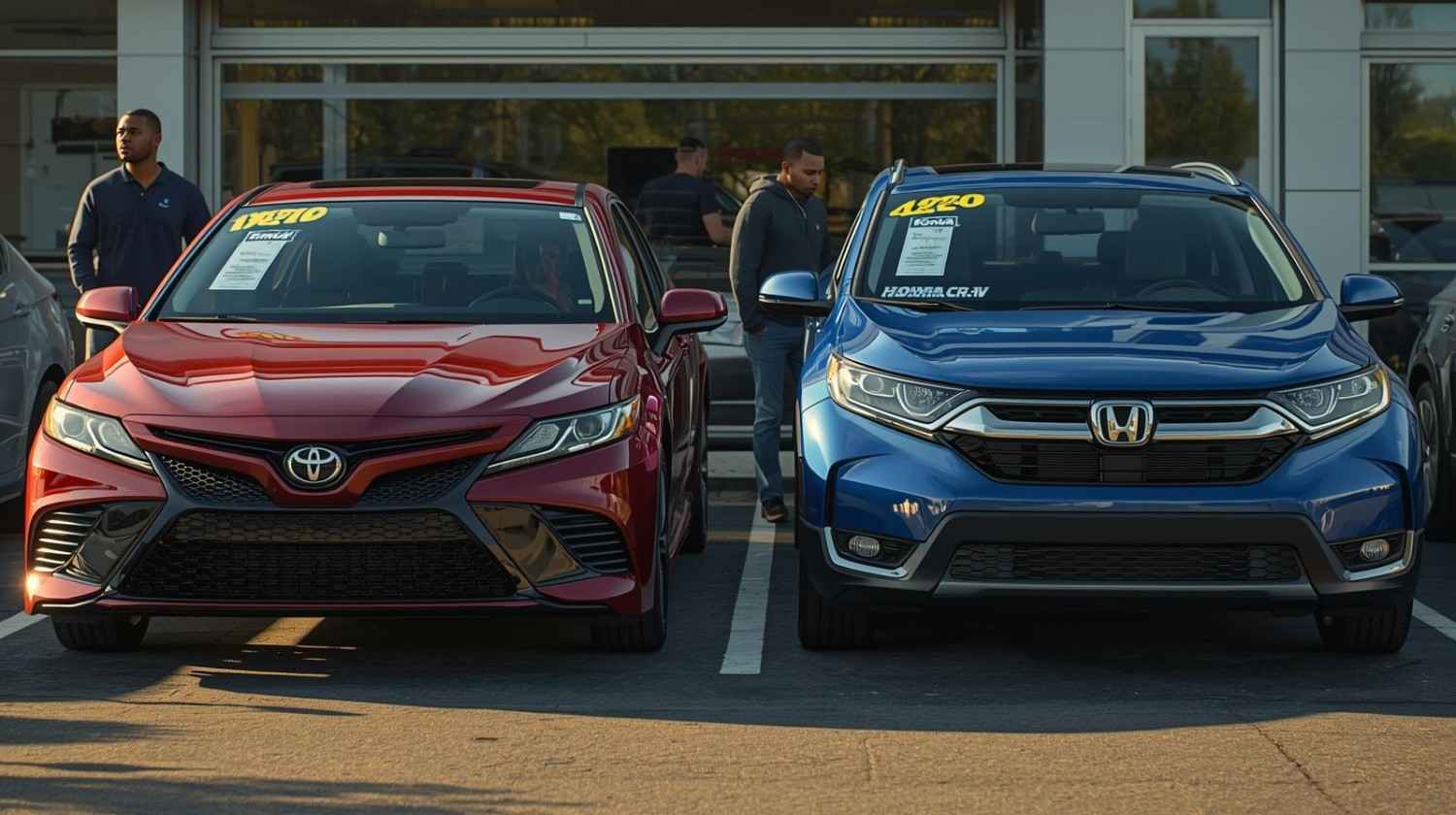
The difference between a vehicle’s MSRP and what buyers actually pay often ranges from $1,500 to $3,500 on a typical $35,000 car. This spread represents a significant negotiation zone that most consumers overlook because they focus on the sticker price rather than the underlying market data. When you walk onto a dealership lot, you see a single number, but the dealer is looking at three: the MSRP, the invoice price, and the holdback margin.
This breakdown explains what those figures actually mean using real 2025 models and historical pricing trends. By understanding how dealers profit behind the scenes, you can identify where a fair purchase price lands based on data from Kelley Blue Book, TrueCar, and Edmunds. Navigating these numbers carefully allows you to move beyond the “suggested” price and find the real market floor.
MSRP Is the Anchor — and It’s Often $2,000+ Higher Than Market Reality
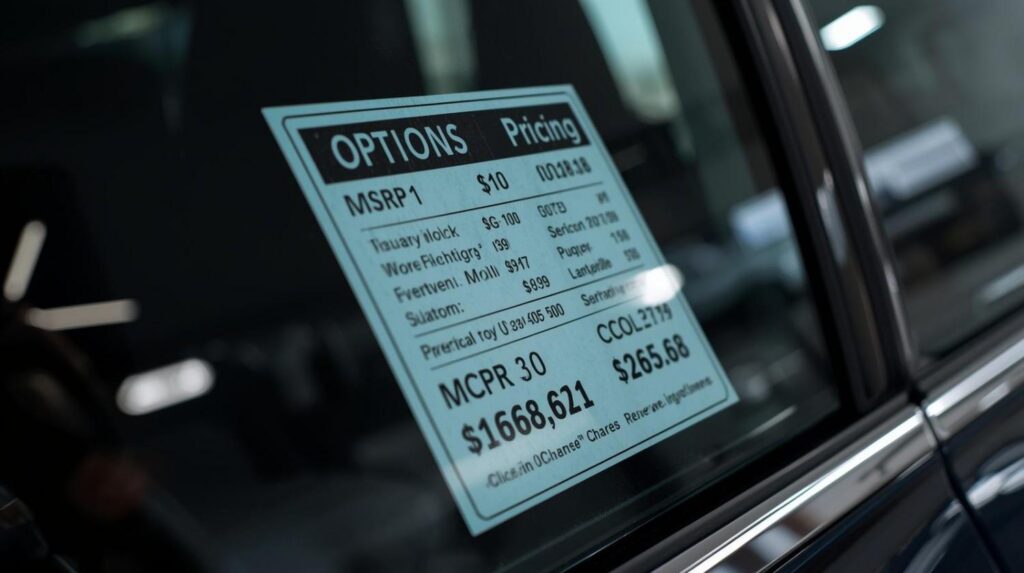
Every new car features a Monroney sticker showing the MSRP, or Manufacturer’s Suggested Retail Price. It is important to remember that the key word is “suggested,” as this number is set by the automaker, not the dealer, and includes a built-in profit margin. For 2025 models, these anchors are clearly defined:
- 2025 Toyota Camry LE MSRP: $28,700 (approx.)
- 2025 Honda CR-V EX MSRP: $31,500 (approx.)
According to Kelley Blue Book, most mainstream vehicles sell between 2% and 6% below their MSRP in a stable market. On a $30,000 vehicle, that represents $600 to $1,800 in potential savings that stay in your pocket. While the MSRP also includes destination charges—usually $1,000 to $1,400—those fees are generally non-negotiable, leaving the rest of the sticker price open to discussion.
Invoice Price: The Myth of the Dealer’s Floor
The invoice price is technically what the dealer is billed by the manufacturer for the vehicle. While many buyers assume this is the dealer’s “break-even” point, it rarely represents their true cost. On a 2025 Honda CR-V EX with an MSRP of $31,500, the invoice price typically sits around $29,800. This $1,700 gap looks like the dealer’s only profit, but several hidden factors lower their actual cost even further.
Dealers often receive a “holdback,” which is typically 2% to 3% of the MSRP—amounting to roughly $600 to $900 in the CR-V example. Additionally, they may earn volume bonuses and manufacturer incentives tied to specific sales targets. Consequently, the true dealer cost may be $1,000 or more below the invoice price. Using the invoice price as a reference point rather than a hard bottom line provides a more accurate starting position for your negotiation.
Real Transaction Prices: What People Actually Pay
Comparing MSRP, invoice, and actual transaction prices reveals a consistent pattern in the 2025 market. While the sticker price is the ceiling, the average transaction price usually lands slightly above the invoice price and well below the MSRP.
| Vehicle (2025) | MSRP | Invoice Price | Avg. Transaction Price |
| Toyota Camry LE | $28,700 | $27,200 | $27,000–$27,800 |
| Honda CR-V EX | $31,500 | $29,800 | $30,200–$31,000 |
| Ford F-150 XLT | $46,000 | $43,800 | $44,500–$45,800 |
| Hyundai Tucson SEL | $29,500 | $28,000 | $28,200–$29,000 |
Data based on 2025 pricing trends from TrueCar and KBB.
This table highlights that paying the full MSRP is rarely necessary unless inventory is extremely tight, such as with certain high-demand hybrids or specialized trucks. In our assessment, identifying this “spread” is the most effective way to determine your target price before you speak to a salesperson.
Targeting a Fair Price: The 1% to 3% Rule
In most standard market conditions, a fair deal typically lands between 1% and 3% above the invoice price. This margin allows the dealer to remain profitable while ensuring your costs stay grounded in market reality. If a vehicle has an invoice price of $29,800, a reasonable target price would range from $30,100 to $30,700.
Small upfront gaps in the purchase price can have a large impact over the life of a loan. According to Edmunds’ True Cost to Own data, a $1,500 difference in the initial purchase price can translate to an extra $1,800 to $2,200 over five years once interest is factored in. Focusing purely on the monthly payment often blinds buyers to these long-term costs.
Why Monthly Payments Can Be Deceptive
Dealerships frequently steer the conversation toward monthly payments because it is easy to hide the total cost of the vehicle within a longer loan term. Stretching a loan from 60 to 72 months can mask $2,000 or more in extra costs while keeping the monthly payment nearly identical.
| Loan Term | Loan Amount | Interest Rate | Monthly Payment | Total Interest Paid |
| 60 months | $30,000 | 6.5% | $587 | $5,220 |
| 72 months | $30,000 | 6.5% | $506 | $6,450 |
| 84 months | $30,000 | 6.5% | $448 | $7,630 |
Data courtesy of the Consumer Financial Protection Bureau (CFPB).
That “affordable” $448 payment actually adds over $2,400 in interest compared to a shorter term. In our assessment, buyers must insist on negotiating the total out-of-the-door price first. This prevents payment manipulation and keeps the deal focused on the actual value of the car.

A Step-by-Step Strategy for Your Next Purchase
You do not need to be a master negotiator to get a fair price; you simply need to follow a structured sequence. This approach prioritizes data over emotion and keeps the dealer’s “math” transparent throughout the process.
- Check Market Pricing: Use tools like Kelley Blue Book or TrueCar to find the average transaction range for your specific trim.
- Identify Invoice Pricing: Use public data to estimate the invoice price, which is usually within $1,000 of the true dealer bill.
- Set Your Target: Aim for 1% to 3% above invoice, adjusting upward only if the specific model is in extremely high demand.
- Lock the Price First: Finalize the vehicle’s selling price before discussing any financing or trade-in details.
- Calculate Total Cost: Use the Edmunds True Cost to Own calculator to see the real impact over five years.
Limitations of the Strategy
While the math is consistent, certain factors can shift the negotiation. High-demand hybrids, limited-production models, or brand-new redesigns may still transact at or above MSRP due to supply constraints. If you are trading in a vehicle, the dealer might offer a lower selling price but offset it by giving you a weaker trade-in value.
Additionally, regional inventory swings can move pricing by several hundred dollars. We recommend checking live market data for your specific zip code to account for these local variations.
Conclusion: The Smart Move Is Above the Invoice
If you are purchasing a mainstream vehicle under $40,000, the most effective strategy is to target a price near the invoice plus 1% to 3%. This represents where the real market settles, not the artificial ceiling of the MSRP. This approach can save you $1,000 to $2,500 upfront and significantly more over the life of your loan.
Buyers who prioritize the total price over the monthly payment consistently achieve better financial outcomes. Before you visit a dealership, look up your vehicle on KBB or TrueCar, find the transaction range, and run the numbers through a total cost calculator. That is where the real price of the car is revealed.
References
- Kelley Blue Book — 2025 Car Prices
- TrueCar — Actual Transaction Prices
- Edmunds — True Cost to Own Calculator
- CFPB — Understanding Auto Loan Costs
- Federal Reserve — Consumer Credit Trends
Disclaimer
The information provided in this article is for educational and informational purposes only. It does not constitute professional financial or legal advice. Readers should conduct their own research and consult with qualified professionals before making any automotive purchase or financing decisions.