

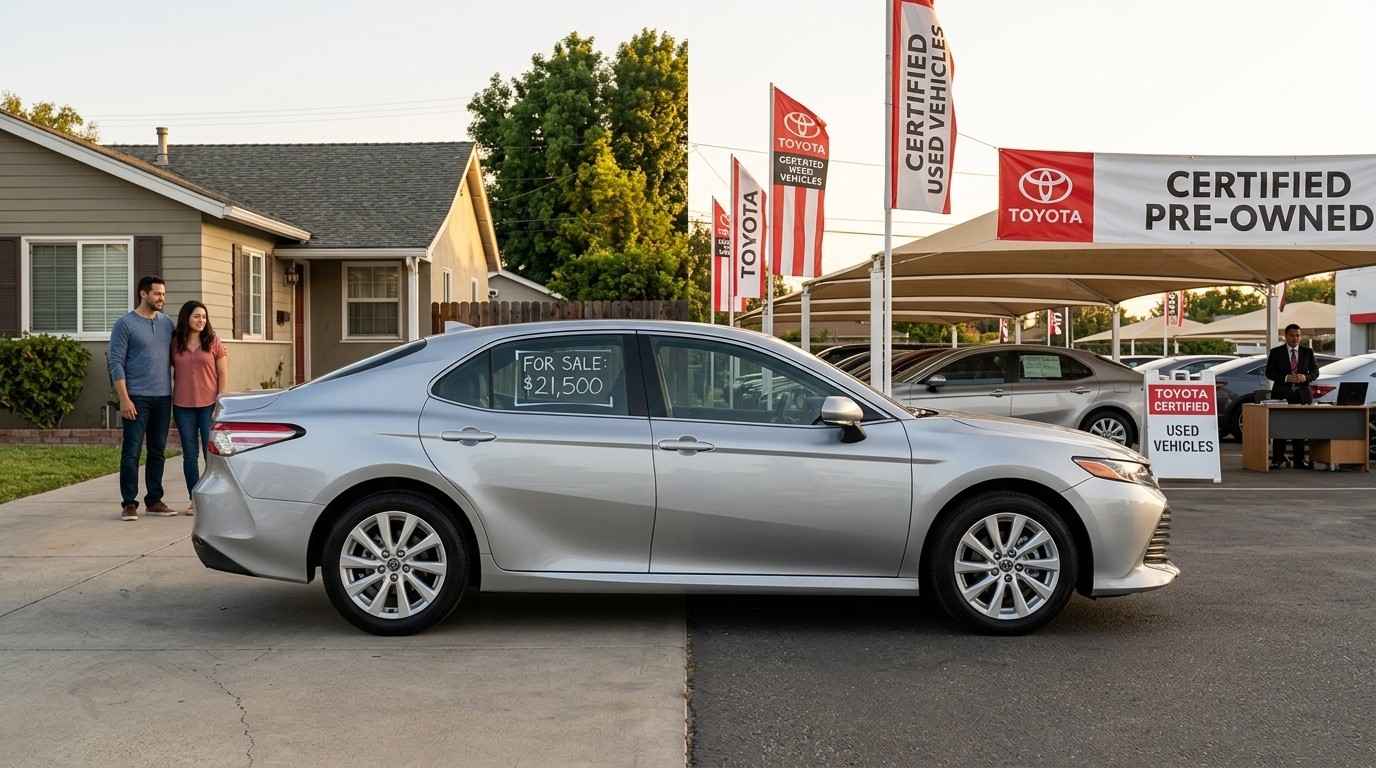
You can save $2,000 to $4,000 buying from a private seller. That is the headline number most buyers hear. Here is what that actually means for your wallet: you are trading upfront savings for higher risk, fewer protections, and often limited financing options. Depending on how the deal goes, those savings can disappear faster than you expect.
This breakdown walks through where the money really shifts between private sellers and dealerships — pricing, fees, financing, taxes, and long-term costs. The numbers come from sources like Edmunds True Cost to Own, Kelley Blue Book, and Federal Reserve consumer credit data. By the end, you will know which route makes sense for your specific situation, not just which one sounds cheaper.
The Price Gap Is Real — But Not the Whole Story
Private sellers usually list cars 10% to 20% below dealership prices, according to Kelley Blue Book data. Take a 2021 Honda CR-V EX as a baseline example. While the private party value might sit around $23,500, a dealership will likely list that same vehicle for closer to $26,500.
| Seller Type | Typical Price (2025) | Difference |
| Private Seller | ~$23,500 | — |
| Dealership | ~$26,500 | +$3,000 |
That is meaningful money, but dealerships include reconditioning costs that private sellers often skip. Edmunds data suggests dealers may spend $1,200 to $1,800 getting a used car ready for sale. You do not see that line item, but you are paying for the peace of mind it provides.
In our assessment, the cheaper car is not always the cheaper outcome. If that private sale car needs brakes, tires, and a battery within six months, you are looking at another $1,000 to $2,000 out of pocket. Suddenly, that $3,000 gap narrows to almost nothing once you factor in your own time and labor.
Fees vs. Hidden Costs
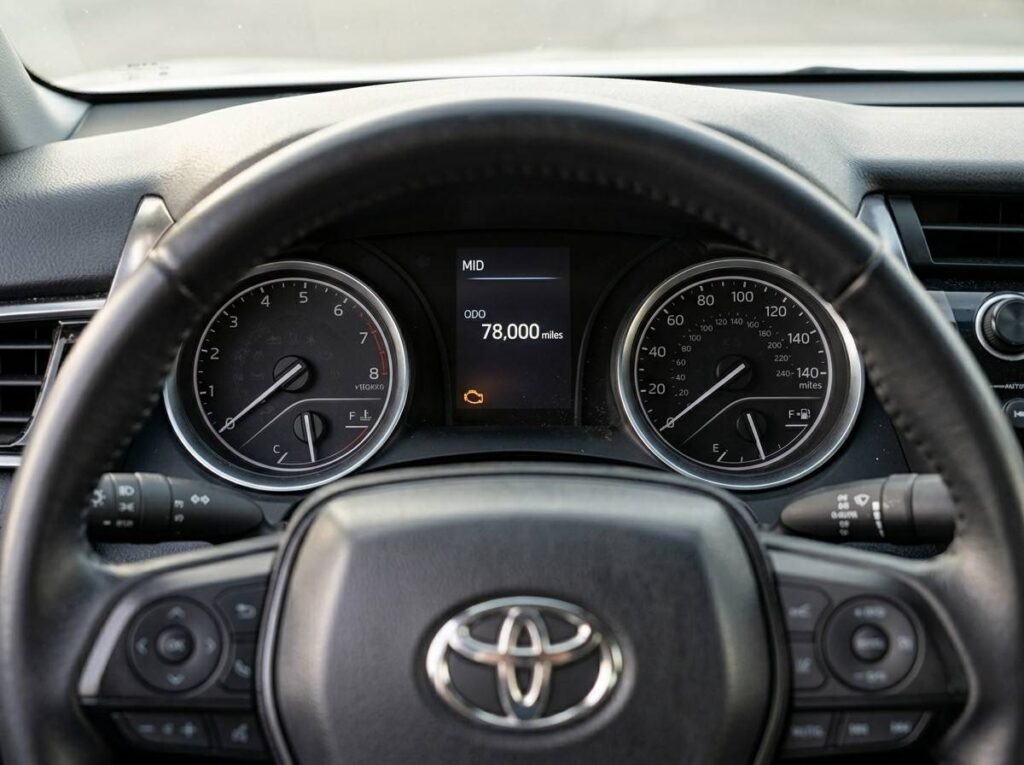
Dealerships get criticized for fees, and often for good reason. Documentation fees can run $200 to $800 depending on your state, which feels like a steep price for paperwork. The Consumer Financial Protection Bureau (CFPB) notes that buyers often underestimate these add-ons when comparing deals.
Private sellers typically have no documentation fees and may offer lower tax exposure depending on local rules. However, the hidden costs show up differently. Private sales are almost always “as-is,” meaning there is no warranty, no return policy, and no accountability if the engine fails ten miles down the road.
This is where I have seen buyers lose money—not on the purchase price, but on the mechanical surprises that show up later. One failed transmission can cost $3,500 to $5,000, which effectively ends the “great deal” you thought you secured. The monthly payment might look fine, but the five-year cost will not.
Financing Changes the Math Fast
How much does financing availability actually cost you? Dealerships win this category significantly because they can connect you to multiple lenders on the spot. According to the Federal Reserve’s 2025 consumer credit data, average used car loan rates hover around 8% to 11% depending on credit.
Private sellers generally require cash or a personal loan. Personal loans typically carry higher rates—often 10% to 14%—because they are unsecured. On a $25,000 loan over five years, that rate difference can mean $1,500 to $3,000 more in interest payments.
So yes, you saved $3,000 upfront at the curb. But you may give it right back to the bank in financing costs over the life of the loan. Based on the data here, buyers who need financing usually come out ahead at a dealership.
Protection Has a Dollar Value
Dealerships sell regulated products, which matters more than most buyers realize. Many states require basic warranties or implied guarantees of roadworthiness. Certified Pre-Owned (CPO) vehicles go further, often including 12-month coverage backed by the manufacturer.
The Insurance Institute for Highway Safety (IIHS) regularly highlights how vehicle condition affects safety outcomes. A worn suspension or neglected brakes is not just a cost issue; it is a risk multiplier. With a private seller, once the title is signed, every safety defect becomes your personal responsibility.
To be fair, not every dealership car is perfect. I have seen poorly reconditioned inventory make it to the lot, particularly at “buy-here-pay-here” establishments. But the legal recourse and accountability are different when a business is involved.
Total Cost Over Five Years
Using Edmunds True Cost to Own estimates, here is a simplified five-year outlook for a typical compact SUV like a Toyota RAV4. This table helps visualize how the upfront savings are eroded by secondary expenses.
| Cost Category | Private Seller Purchase | Dealership Purchase |
| Purchase Price | $24,000 | $27,000 |
| Repairs (5 yrs) | $4,500 | $2,800 |
| Financing Interest | $3,500 | $2,200 |
| Fees & Taxes | $1,800 | $3,200 |
| Total 5-Year Cost | ~$33,800 | ~$35,200 |
The private seller still comes out ahead, but by about $1,400 rather than the initial $3,000. If you encounter one major out-of-warranty repair, that gap disappears. This is the part buyers rarely see coming when they are staring at a shiny car in a driveway.
The Inspection Gap and Negotiation
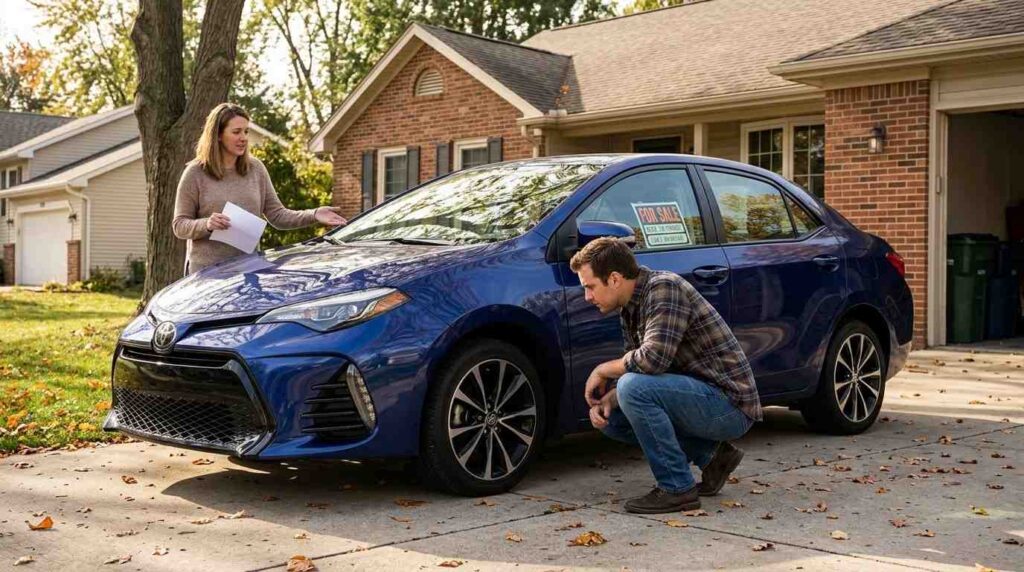
One major criticism of the private market is the lack of transparency. When you buy from an individual, you are responsible for the “Discovery” phase. This requires a pre-purchase inspection (PPI), which usually costs $100–$200. Without it, you are flying blind.
In my experience, buyers who treat private sales like a dealership transaction—inspections, paperwork, and patience—tend to do well. However, if you are in a situation where you cannot afford a mechanical inspection or do not have the time to vet multiple sellers, the private route becomes a liability rather than an asset.
When Private Sellers Actually Make Sense
If you are paying cash and can evaluate a car properly, private sellers are a strong option. This is especially true for older, high-mileage vehicles where dealership margins make the sticker price unreasonable. You want to see maintenance records and a clear title before any money changes hands.
When Dealerships Are the Smarter Move
If you need financing, want lower risk, or do not want to play detective, dealerships are the cleaner path. You pay more upfront, but you get easier loan access and legal protections. For most first-time buyers, the predictability of a dealership outweighs the potential savings of a private sale.
The Real Trade-Off: Risk vs. Control
Private sellers give you price control, while dealerships give you process control. One saves money if everything goes right, while the other limits how badly things can go wrong. In the end, the decision is not just about price—it is about risk versus predictability.
Conclusion: Who Should Choose What
If you are paying cash and comfortable inspecting vehicles, private sellers can save you real money. But for those financing or buying their first car, dealerships are the safer financial decision. The higher upfront price often buys you lower risk and fewer surprise expenses later.
Your mileage may vary, but the data suggests that most people benefit from the professional vetting a dealership provides. Next step? Run your specific vehicle through the Edmunds True Cost to Own calculator and check safety ratings from IIHS before committing.
References
- Edmunds True Cost to Own
- Kelley Blue Book Used Car Values
- CFPB Auto Loan Guide
- Federal Reserve Consumer Credit Report 2025
- IIHS Vehicle Safety Ratings
Disclaimer
Disclaimer: The information provided in this article is for educational and informational purposes only. It does not constitute professional advice. Readers should conduct their own research and consult with qualified professionals before making any decisions.