

You sign for a $38,000 new car. Five years later, you have likely spent closer to $52,000 to $60,000 all-in. That gap catches people off guard because the sticker price feels like the only number that matters. In reality, the true cost builds quietly through financing, depreciation, insurance, and the add-ons that get bundled into a monthly payment.
This breakdown walks through where that extra $15,000–$20,000 comes from in the 2026 market. We are using data from Edmunds’ True Cost to Own, Federal Reserve auto loan trends, and current insurance and fuel estimates. By the end, you will know what actually drives your total cost and where buyers tend to overpay without realizing it.
The $38,000 Car That Costs $55,000
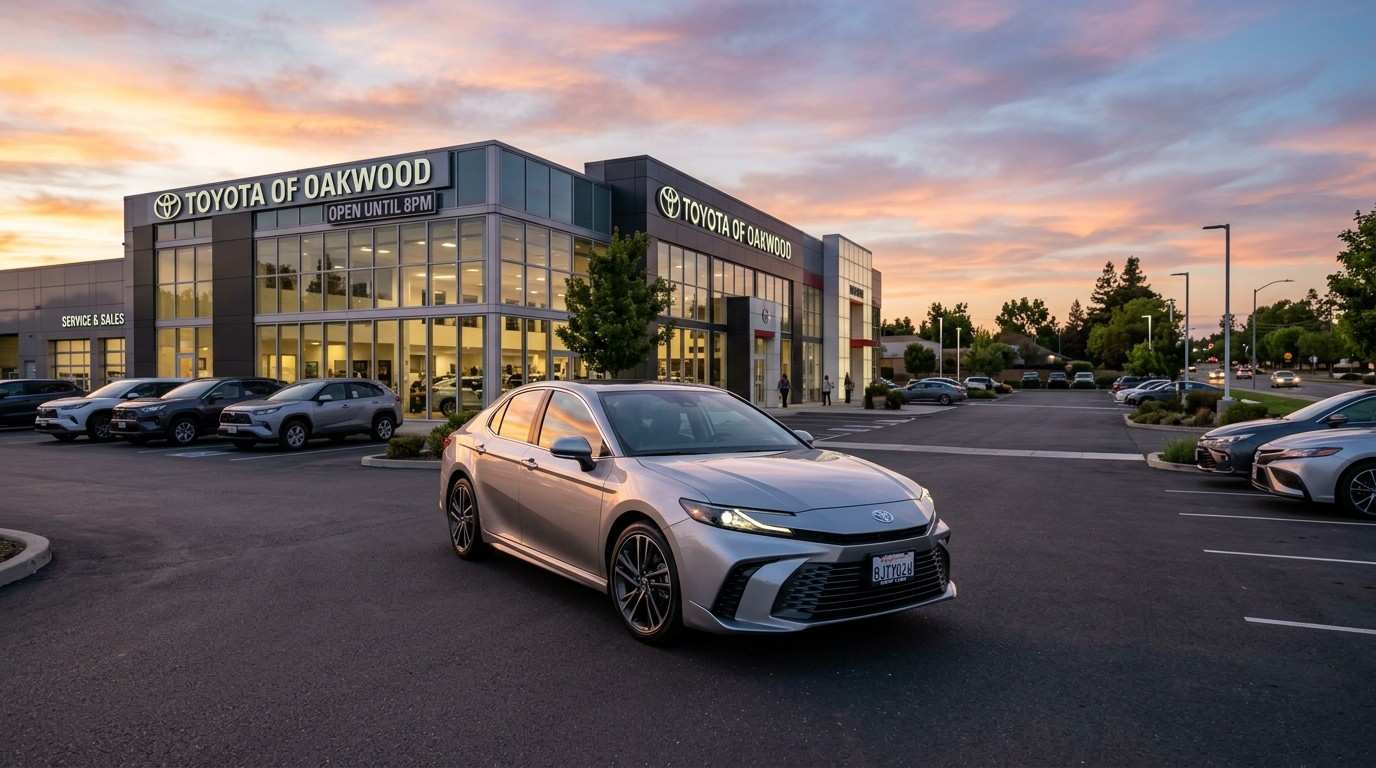
Start with a real example. A 2026 Toyota Camry LE with an MSRP around $28,700 often lands closer to $32,000 after destination fees and typical options, according to Kelley Blue Book. When you layer in the operational costs over five years, the “cheap” commuter car becomes a major capital expense.
The following table compares the projected five-year ownership costs for two popular 2026 segments: a midsize sedan and a compact SUV.
| Cost Category | 2026 Midsize Sedan (e.g., Camry) | 2026 Compact SUV (e.g., RAV4) |
| MSRP / Purchase Price | $32,000 | $36,500 |
| Depreciation (5-Year) | $14,500 | $15,800 |
| Financing Interest (7%) | $7,300 | $8,400 |
| Insurance | $8,500 | $9,200 |
| Fuel / Energy | $6,500 | $7,800 |
| Maintenance & Repairs | $3,500 | $4,100 |
| Taxes & Registration | $2,800 | $3,200 |
| Total 5-Year Cost | $75,100 | $85,000 |
Depreciation alone can wipe out nearly half the vehicle’s value over five years. According to Edmunds data, most new cars lose 45%–55% of their value in that window, depending on brand and segment. While the monthly payment looks manageable, the long-term wealth erosion is significant.

Financing: The Quiet $7,000 Add-On
Most buyers focus on the monthly number, a habit dealerships often encourage. As of early 2026, average new car loan rates sit around 6.5% to 7.5% for well-qualified buyers, based on Federal Reserve consumer credit data. When stretched over 72 months, interest adds up with surprising speed.
For a $32,000 loan at a 7% rate over 72 months, the total interest paid is roughly $7,300. This means you are effectively paying for the equivalent of a second used car engine just to finance the first one. The Consumer Financial Protection Bureau (CFPB) has highlighted that 72- and 84-month loans are becoming the standard, which increases both total interest and the risk of negative equity.
In our assessment on the dealership floor, buyers rarely push back on loan length. They push for a lower payment, which is exactly how the total cost creeps up. Extending a loan to drop a payment by $50 can cost thousands in the long run.
Depreciation: The $15,000 Loss You Do Not Feel
This is the largest expense of car ownership, and it is also the easiest to ignore because it does not require a monthly check. Drive a new car off the lot, and it can lose 8%–10% of its value almost immediately, according to industry estimates reflected in KBB data. After three years, many vehicles are worth only 60% of their original purchase price.
Some brands hold value better than others. Toyota and Honda models typically perform well in resale value rankings. Conversely, luxury brands often drop faster—especially German sedans once their factory warranties expire and repair costs become the owner’s responsibility.
The smartest buyers win by choosing models with high residual values. This strategy allows you to offset thousands in ownership costs without changing anything about your daily driving habits. However, this loss remains invisible until the day you trade the vehicle in and realize your payoff is higher than the car’s market value.
Insurance, Fuel, and Maintenance: The Background Drain
These costs feel smaller because they are dispersed, but they are not. Insurance alone averages about $1,700 per year for a new vehicle in the U.S., though that can climb past $2,200 depending on your zip code and driver profile. Over five years, that is a $10,000 commitment.
Fuel is the next steady drain. Using data from fueleconomy.gov, a midsize sedan averaging 32 mpg with 12,000 miles per year and gas at $3.50/gallon costs roughly $1,300 annually. Over a five-year period, that totals $6,500. Maintenance is where newer cars look cheaper at first because they are under warranty for the first 36,000 miles. However, tires, brakes, and scheduled fluid services still add up to roughly $3,500–$4,000 for mainstream vehicles.

Dealer Add-Ons and Taxes
This is the portion of the bill where another $2,000 to $5,000 typically slips in. Extended warranties, paint protection, and gap insurance are frequently rolled into the financed amount. While GAP insurance can be vital if you are putting very little money down, paint protection packages are usually overpriced at the dealership level.
Taxes and fees are the final, non-negotiable layer. Sales tax ranges from 4% to over 10% depending on your state. On a $35,000 purchase, that is $1,400 to $3,500 due immediately. Documentation fees, which can range from $200 to $800, and registration fees add several hundred more. Because these are usually financed, you also pay interest on your taxes for the next six years.
Conclusion: Who Should Buy New?
If you plan to keep a car for 8–10 years, buying new can be a sound financial decision. You spread the steepest depreciation over a much longer period, and the reliability of a new vehicle is strongest in those early years. If you trade every 3–4 years, the math is much harder to justify, as you are absorbing the heaviest depreciation window repeatedly.
Exact costs vary widely by location and driving habits. A buyer in California will see significantly different insurance and tax numbers than someone in Ohio. Before you walk into a dealership, run your specific numbers through the Edmunds TCO calculator and check fuel costs on fueleconomy.gov. Having this baseline changes the conversation at the dealership and helps keep more money in your pocket.
References
- Edmunds True Cost to Own (TCO)
- EPA Fuel Economy Data
- Kelley Blue Book (KBB) Price Advisor
- CFPB Auto Loan Trends
- Federal Reserve Consumer Credit – G.19
Disclaimer: The information provided in this article is for educational and informational purposes only. It does not constitute professional financial or legal advice. Readers should conduct their own research and consult with qualified professionals before making any financial decisions.