

You pull out of the rental lot, glance in the side mirror, and realize the van is wider than the lane feels. That moment—not the Instagram-ready campsite—is where most first-time camper van trips actually begin. Driving a camper van isn’t hard; it’s just different enough from a car to trip you up if you’re not thinking ahead.
By the end of this, you’ll know how these vans handle on real roads, what they cost to run, where beginners misjudge size and clearance, and how to plan stops without turning your trip into a parking puzzle. We’ll also compare popular van types so you can match the vehicle to the trip you’re actually taking. We will pull from manufacturer specs, the 2026 AAA Driving Costs Study, and 2026 IIHS Safety Ratings to keep this grounded in data.
The Size Feels Bigger Than the Specs Suggest
A typical camper van like a Ford Transit or Ram ProMaster runs about 20–22 feet long. While that doesn’t sound overwhelming on paper, it feels massive from the driver’s seat. Most camper vans sit between 9 and 11 feet tall. While this clears highway overpasses, it will not clear every parking garage, drive-thru, or gas station canopy.
Turning radius is another frequent surprise. These vans require more space to swing wide, especially in tight campground loops. We explicitly advise against using standard car GPS apps for high-roof vans; these apps do not account for height restrictions and can lead you toward low-clearance bridges or tunnels that can cause catastrophic roof damage.
Not All Camper Vans Drive the Same
A compact camper van based on a minivan chassis behaves very differently from a high-roof cargo conversion. That difference shows up in fuel costs and handling. According to EPA Fuel Economy Data, a 5 mpg difference over a 3,000-mile trip can mean several hundred dollars in additional fuel costs.
2026 Camper Van Type Comparison
| Van Type | Example Models | Length | MPG (EPA est.) | Best Use Case |
| Class B (Full-size) | Ford Transit, Sprinter | 20–22 ft | 14–18 mpg | Long trips, full amenities |
| Compact Camper | Transit Connect, NV200 | 16–18 ft | 20–25 mpg | Urban-friendly, short trips |
| Pop-top Camper | VW-based conversions | 16–18 ft | 18–22 mpg | Mixed city/camping use |
In our assessment, most first-timers overestimate how much space they need and underestimate how much easier a smaller van is to live with on the road.
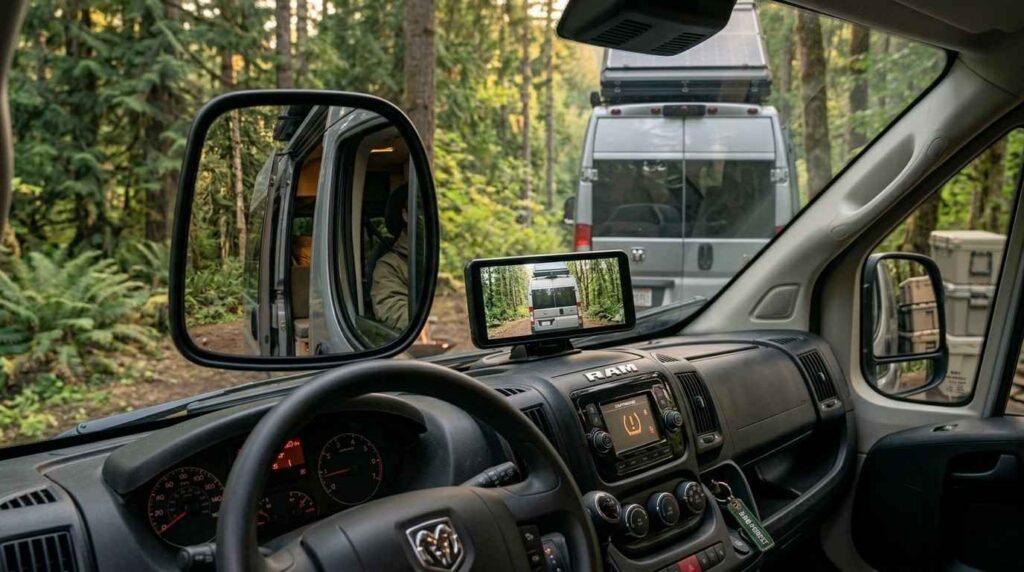
Blind Spots and Maneuvering
Most camper vans rely heavily on side mirrors because rear visibility is blocked by cabinetry or beds. According to 2026 IIHS Safety Ratings, larger vehicles carry higher risks in low-speed maneuvering if drivers rely too much on cameras alone.
A key factor is adjusting your mirrors wider than you would in a car and taking extra time when reversing. If you are in a crowded campground, always have a “spotter” stand outside the vehicle to guide you into tight spots.
Fuel, Weight, and 2026 Operating Costs
A loaded camper van is heavy, often weighing between 8,000 and 10,000 pounds. You will feel this weight when braking and climbing hills. According to the 2026 AAA Driving Costs Study, fuel remains one of the largest trip expenses for larger vehicles, especially those returning under 18 mpg.
In 2026, AAA reports California gas prices at $5.84 per gallon, making fuel planning a critical part of your budget. We recommend never letting your tank drop below a quarter-full when crossing remote stretches in Nevada or Utah.
Handling Crosswinds in Modern Vans
High-roof vans like the Mercedes Sprinter or Ford Transit are essentially large sails. In our assessment, one of the most stressful experiences for a new driver is a sudden crosswind on an open highway. Many 2026 models include electronic “Crosswind Assist” as part of their stability control systems, but these are reactive, not proactive. You must keep both hands on the wheel and be prepared to make small steering corrections when passing semi-trucks or exiting tunnels.
The Real Cost of the Trip
The daily rental fee is just the starting point. Using Edmunds’ True Cost to Own data, we can see that operating a heavy vehicle involves higher long-term maintenance and insurance premiums.
Estimated 2026 Trip Costs (Per Day)
- Rental Fee: $120–$275
- Fuel: $45–$90 (based on 2026 coastal prices)
- Campground Fees: $25–$70
- Insurance: $20–$40
In our assessment, if you are only doing one trip a year, renting is the smarter financial move. Ownership involves significant depreciation and storage costs that rarely pencil out for occasional use.
Setup and Breakdown Rhythm
Pulling into a campsite doesn’t mean the day is over. Leveling the van and setting up the interior can take 30 minutes for a beginner. However, by day three, most drivers develop a rhythm. The 2026 J.D. Power Vehicle Dependability Study suggests that while mechanical reliability is high, the “human interface” of complex camper systems is where most frustrations occur.
Conclusion: Patience Over Perfection
First-time camper van drivers who prioritize patience over speed have the best experiences. Whether you choose a Class B van for its amenities or a compact camper for its urban ease, the vehicle demands your full attention.
Before you hit the road, check your vehicle’s specific height, run your route through EPA Fuel Economy Data to estimate costs, and verify your safety margin through 2026 IIHS Safety Ratings. A little planning makes the difference between a stressful drive and a trip that actually feels like freedom.
References
- 2026 AAA Driving Costs Study & Regional Trends
- EPA Fuel Economy Data & Trip Calculator (2026)
- 2026 IIHS Safety Rankings & Ratings
- J.D. Power 2026 Vehicle Dependability Study Results
- Edmunds’ 2026 True Cost to Own Data
- AAA Membership Benefit Chart 2026
Disclaimer: The information provided in this article is for educational and informational purposes only. It does not constitute professional advice. Readers should conduct their own research and consult with qualified professionals before making any decisions.
