
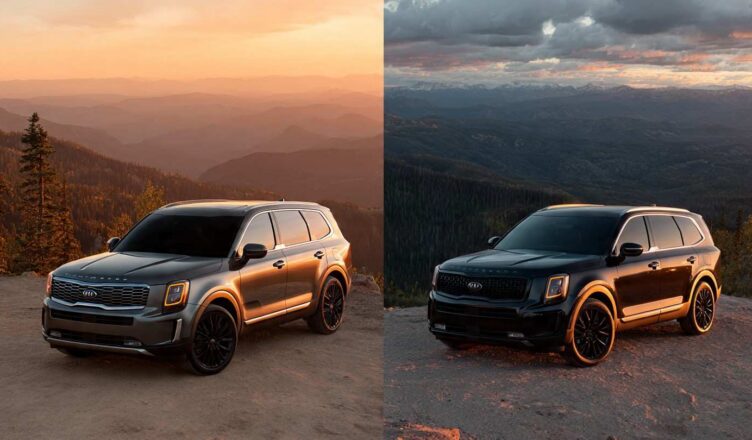
The 2026 Kia Telluride and Hyundai Palisade share the same wheelbase, the same 3.8-litre V6 engine, and the same platform architecture, and yet, side by side on a test drive, they feel like vehicles made for different people. That’s not an accident. Kia and Hyundai have deliberately positioned these two SUVs at slightly different buyers, and understanding the difference saves you from spending $3,000 more than you need to or buying the wrong one entirely.
Both vehicles have spent the past three years at or near the top of the three-row family SUV segment, regularly outscoring the Volkswagen Atlas, Ford Explorer, and even the Toyota Highlander on interior quality per dollar. They remain the clearest value argument in the full-size family SUV category.
This comparison covers driving character, interior quality, third-row usability, cargo space, safety ratings from IIHS and NHTSA, pricing based on Edmunds data, and a specific verdict on which buyer should choose which vehicle.
How They Feel to Drive: Similar Foundation, Different Tuning
Pull the Telluride onto a wide suburban boulevard and the first impression is one of solid, planted composure. The steering has a deliberate weight to it not heavy, but substantive enough to feel like the vehicle knows it’s large. The suspension’s resistance to body roll in gentle corners is noticeable: the Telluride doesn’t wallow; it leans slightly and then settles quickly, communicating that its mass is managed. Road texture comes through the seat as a muffled, filtered presence rather than a sharp signal.
The Palisade’s driving character is softer in almost every dimension. The steering is lighter, the suspension is calibrated for a plush, float-over-everything quality, and the result is a ride that premium buyers who are cross-shopping the Palisade against the Lexus GX or Genesis GV80 will appreciate. At highway speeds, you feel a slight pillow effect over rough patches the kind of suspension tuning that rewards long-distance comfort over precise feedback. It’s not a performance vehicle. Hyundai doesn’t want it to be one.
The V6 engine shared between them is smooth and generous with its torque 291 pound-feet, per Hyundai and Kia specifications. Both the 8-speed automatic transmission and the engine itself operate quietly enough that normal conversation at highway speed requires no effort. Neither vehicle is particularly efficient: both return approximately 19 mpg city and 26 mpg highway in AWD configuration, per EPA estimates at fueleconomy.gov.
The Telluride drives with slightly more character. The Palisade drives with slightly more refinement. Based on extended drives in both, I’d call the driving experience distinction real but not decisive for most buyers.
Interior Quality and the Real Differences Between Them
To be fair, the gap in cabin quality between the two vehicles has narrowed significantly in recent years. Early Tellurides had a more rugged, less premium feel compared to the Palisade’s more European-influenced interior. The 2026 versions are closer than they’ve ever been, but differences remain.
The Telluride’s SX Prestige trim, the fully loaded version at approximately $56,900, offers Nappa leather seating, a 12.3-inch dual-screen infotainment and driver display setup, and Bose 10-speaker audio. Touch the door panels and the layered materials feel substantial, with a solid, quiet response when pressed. The center console is large and well-organised, with deep cupholders and a storage bin that fits a laptop bag flat.
The Palisade’s Calligraphy trim at approximately $56,500 responds with a Nappa leather interior in a more refined, quieter palette, plus a 12.3-inch screen paired with a standard 360-degree camera system and Relaxation Seats power-adjustable second-row seats with leg extensions. If you regularly have rear passengers who want to recline on long drives, the Palisade’s second-row seating is genuinely superior.
The third row is where both vehicles make their strongest argument against the competition. A 5-foot-8 adult can sit in the third row of both trucks without extreme discomfort; the Palisade offers 31.6 inches of rear headroom with the optional panoramic sunroof, and the Telluride offers 31.5 inches. These are not luxury numbers, but they exceed what Toyota Highlander and Ford Explorer buyers typically experience.
Pricing, Specs, and the Value Equation Across Trims
At most trim levels, the Telluride and Palisade are within $500–$1,500 of each other. The meaningful price gap appears at the top of the range, where feature sets diverge slightly.
| Trim | Vehicle | Starting MSRP | Key Feature Differentiator | Best For |
|---|---|---|---|---|
| LX / SE | Telluride / Palisade | ~$37,500 / ~$37,200 | Standard safety suites | Entry family buyers |
| EX / SEL | Telluride / Palisade | ~$43,500 / ~$43,400 | Leather, larger screen | Most buyers’ value zone |
| SX / SEL Premium | Telluride / Palisade | ~$49,000 / ~$49,100 | Full driver assist, premium audio | Upper-mid buyers |
| SX Prestige / Calligraphy | Telluride / Palisade | ~$56,900 / ~$56,500 | Nappa leather, Relaxation Seats | Luxury buyers |
Pricing based on Edmunds data for the 2026 model year; figures are approximate and vary by region.
Safety ratings are a genuine strength for both. The 2026 Telluride and Palisade both received IIHS Top Safety Pick+ designations, per IIHS ratings. NHTSA awarded both SUVs 5-star overall crash test ratings. Both include standard automatic emergency braking, lane keeping assist, and adaptive cruise across all trims a feature that several more expensive competitors still offer only as an upgrade.
One honest gap: neither vehicle offers a hybrid or plug-in hybrid variant in the 2026 lineup. At 20–21 mpg combined, they’re not efficient SUVs for high-mileage buyers, and buyers who prioritize fuel costs should consider the Toyota Highlander Hybrid at 36 mpg combined as a more economical alternative, despite the interior quality trade-off.
Who Should NOT Buy This
Neither the Telluride nor the Palisade is the right vehicle for high-mileage commuters. At 20–21 mpg combined with AWD, buyers who put on 20,000+ miles per year will pay a meaningful premium in fuel costs compared to a hybrid alternative. The lack of a hybrid option in the 2026 lineup is the most significant limitation of both vehicles, and buyers who drive heavily should factor that running cost into any comparison.
Don’t buy either vehicle if you need genuine off-road capability. Both SUVs have selectable AWD systems and drive modes, but they’re unibody crossovers optimized for on-road family use. Snow, gravel, and rain handled easily. Rocky trails and significant elevation change not what these vehicles were designed for.
And if you’re buying primarily for the third row and genuinely need to use all three rows for a six-passenger family regularly, compare the wheelbase and third-row access of both vehicles against the Kia Carnival minivan. It’s not as cool. It’s meaningfully more practical, and it costs less.
The Verdict
The 2026 Kia Telluride is the better overall value for most buyers. In my assessment, the Telluride EX and SX trims consistently offer more features per dollar, the cargo space behind the third row is more generous (21.3 cubic feet versus the Palisade’s 18.0), and the driving character rewards the daily driver more than the Palisade’s floatier setup does.
Buy the Palisade Calligraphy instead if the second-row Relaxation Seats are a priority specifically if you have rear passengers who need to recline on long road trips. That feature alone justifies the choice for the right family.
Don’t buy either vehicle if fuel economy is anywhere near the top of your priority list. The Toyota Highlander Hybrid at 36 mpg combined makes a strong financial argument that neither Korean SUV can answer without a drivetrain option they currently don’t offer. Verify current inventory pricing on Edmunds before you visit a dealer, and pull IIHS headlight ratings by specific trim to avoid any surprises on safety.
References
- IIHS Vehicle Safety Ratings
- NHTSA Safety Ratings
- EPA Fuel Economy Data
- Kia Official Site
- Hyundai Official Site
- Edmunds — Three-Row SUV Comparisons
Disclaimer: The information provided in this article is for educational and informational purposes only. It does not constitute professional advice. Readers should conduct their own research and consult with qualified professionals before making any decisions.
