
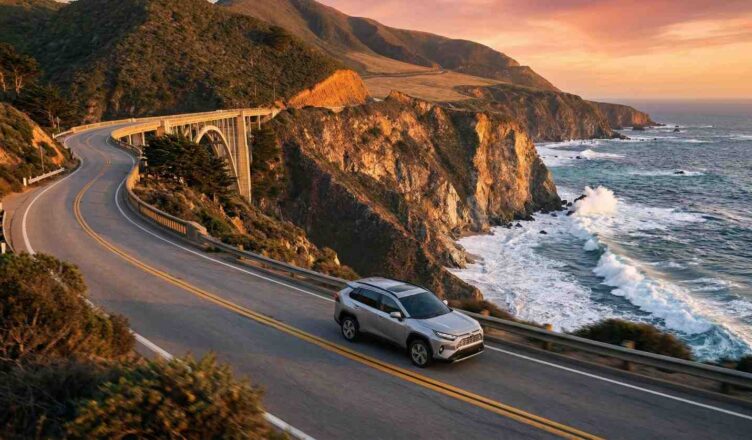
You’re somewhere south of Big Sur, the fog finally lifting, and you realize you’ve been driving for two hours without touching your phone. That’s the Pacific Coast Highway at its best—quiet, technical, and completely absorbing. But getting that version of the trip takes planning.
In 2026, California’s Highway 1 is more accessible than in previous years, but it still requires a precise strategy. Fuel prices remain volatile, and traffic bottlenecks near major cities can eat entire afternoons. This guide walks you through route strategy, vehicle choice, and real-world costs using data from EPA Fuel Economy Data and the 2026 AAA regional travel trends.
The Route Isn’t Complicated. The Timing Is.
Most people drive the Pacific Coast Highway from San Francisco to Los Angeles, a stretch of roughly 450 miles. While it sounds simple, the difference between a rushed two-day drive and a five-day trip is massive. In our assessment, anything under three days turns into a checklist rather than an experience.
Recommended 2026 Itinerary (North to South)
| Day | Route Segment | Distance | Key Stops |
| Day 1 | San Francisco → Monterey | ~120 miles | Half Moon Bay, Santa Cruz |
| Day 2 | Monterey → Big Sur → Cambria | ~140 miles | Bixby Bridge, McWay Falls |
| Day 3 | Cambria → Santa Barbara | ~110 miles | Morro Bay, Pismo Beach |
| Day 4 | Santa Barbara → Malibu | ~95 miles | Ventura coastline |
| Day 5 | Malibu → Los Angeles | ~30 miles | Pacific Palisades |
According to the 2026 AAA Southern California travel forecast, record-breaking travel volumes mean that peak congestion windows now stretch into the early evening. A key factor for 2026 is the successful reopening of Highway 1 at Regent’s Slide as of February 20, 2026, which restored full through-access for the first time in nearly a year.
What You Drive Shapes the Trip
Fuel range, seat comfort, and handling show up quickly on this route, especially in Big Sur where elevation changes are constant.
2026 Vehicle Comparison for PCH
| Vehicle (2026) | EPA MPG (Combined) | Range (Approx.) | Starting MSRP |
| Toyota RAV4 Hybrid | 43 mpg | ~600 miles | ~$33,500 |
| Subaru Outback | 28 mpg | ~520 miles | ~$30,500 |
| Ford Mustang EcoBoost | 26 mpg | ~400 miles | ~$32,000 |
| Tesla Model Y | 122 MPGe | ~310 miles | ~$45,000 |
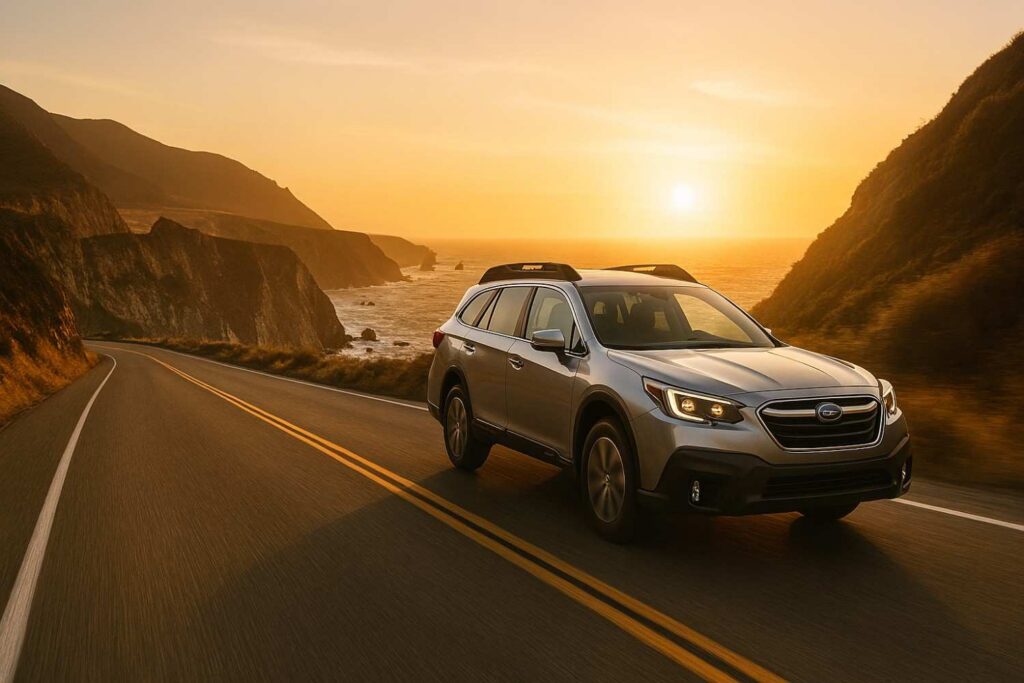
In our assessment, the Toyota RAV4 Hybrid hits the absolute sweet spot for 2026. It offers superior fuel efficiency and enough cargo space for a multi-day trip. We explicitly advise against using low-slung sports cars for the full 5-day duration; while fun for an hour, the stiff suspension and limited visibility become a physical burden over 400 miles of technical driving.
Fuel, Charging, and Real 2026 Costs
Fuel prices along the California coast are rarely average. According to AAA’s March 2026 regional data, gas in coastal California is averaging $5.84 per gallon, significantly higher than the national average.
If you’re driving electric, the DOE Alternative Fuels Data Center shows that while charger density is improving, fast-charging options in the actual Big Sur corridor remain limited. If you choose an EV, you must charge to 100% in Monterey or Carmel before heading south.
Big Sur: Testing Your Patience and Hardware
The stretch between Carmel and San Simeon defines this drive, but it is also where mechanical issues become major problems. 2026 NHTSA Safety Ratings emphasize that vehicle performance in high-workload environments like mountain roads depends heavily on brake and tire health.
You will rarely average more than 35 mph through Big Sur. Build this into your schedule or you will find yourself driving technical cliffs in the dark, which we strongly advise against. Morning fog can roll in within minutes, reducing visibility to near zero.
Logistics: Lodging and Reservations
Accommodation in 2026 is tracking higher than 2025 due to record demand. A basic coastal hotel in Big Sur or Cambria can easily run $300–$450 per night. If you’re camping, Pfeiffer Big Sur State Park reservations for 2026 are often snapped up six months in advance.
Before you commit, run your vehicle’s long-term budget through Edmunds’ 2026 True Cost to Own. For example, the 2026 Nissan Pathfinder has earned high safety marks but carries different long-term maintenance profiles than a hybrid.
Conclusion: The Best Way to Drive the Coast
The most successful 2026 PCH trip is a 4–5 day itinerary in a fuel-efficient SUV like the RAV4 Hybrid. This combination provides the best balance of range, safety, and comfort.
Next steps: Verify your vehicle’s safety margin through 2026 IIHS Safety Ratings and map your fuel stops using EPA Fuel Economy Data. Check Big Sur Highway 1 Conditions the day before you leave to ensure no new landslides have occurred.
References
- 2026 National Parks & Road Trip Guide – EcoFlow
- Highway 1 Conditions & Regent’s Slide Reopening 2026
- AAA: Record Number of Californians to Travel (2026 Forecast)
- EPA Fuel Economy Data & Trends (2026)
- 2026 IIHS Safety Rankings & Ratings
- DOE Alternative Fuels Data Center: Charging Station Locator
- AAA Fuel Price Data March 2026
- Edmunds’ 2026 True Cost to Own Data
- 2026 NHTSA Safety Ratings & Test List
Disclaimer: The information provided in this article is for educational and informational purposes only. It does not constitute professional advice. Readers should conduct their own research and consult with qualified professionals before making any decisions.
