
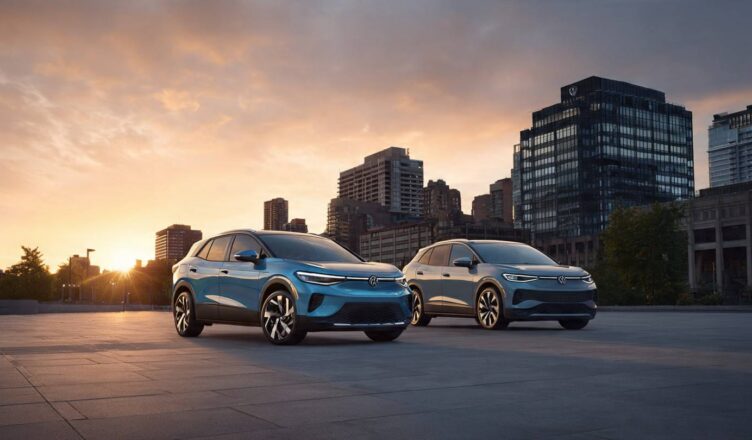
You’re sitting at a public DC fast charger, watching the kilowatts tick up, and you’re wondering whether you picked the right car. Not because either of these SUVs is bad but because at roughly the same starting price, they are genuinely different machines with different personalities, different strengths, and different failure points.
The 2026 Chevrolet Equinox EV and the 2026 Volkswagen ID.4 are two of the most compelling options in the under-$45,000 electric SUV segment right now. Both offer meaningful range, usable cargo space, and enough everyday competence to replace a gas vehicle without drama. But spend a week in each, and you’ll feel the gap.
This comparison pulls from EPA fuel economy data, IIHS and NHTSA safety ratings, and real-world driving impressions to tell you which one earns the money and which buyer should walk away from each.
The Cabin: One Feels Like a Deal, the Other Feels Like an Investment
Step into the Equinox EV’s LT trim and the first thing you notice is how good the screen looks relative to the price. The 17.7-inch infotainment display dominates the dash it’s large, responsive, and sharp. Google Built-In means the native navigation is actually competent, not an afterthought. The physical controls for climate are a row of haptic sliders directly below the screen, and they require zero eyes-off-road attention once you learn their position.
The ID.4’s interior tells a different story. VW’s cabin is more refined in material quality the soft-touch surfaces feel more deliberate, and the layout has a restrained European calm to it. But the 12-inch infotainment system is smaller and, frankly, less intuitive to use. The touch-sensitive sliders for volume and temperature still frustrate owners who prefer tactile feedback.
In the Equinox, the driving position is upright and commanding, with enough headroom for six-footers even in the rear. The ID.4 offers similar packaging, though rear legroom is slightly tighter. Neither cockpit is luxurious, but the Equinox feels like a better value proposition per dollar spent.
The Equinox EV’s interior punches above its price bracket. The ID.4’s cabin is more polished, but the gap doesn’t justify the cost difference for most buyers.
Range and Charging: Where the Numbers Diverge
The 2026 Equinox EV 2LT with the standard range battery is EPA-rated at 319 miles on a single charge, according to EPA fuel economy data. The extended-range version pushes that figure higher. The ID.4 Pro S with the 82 kWh battery is rated at 291 miles EPA-estimated. That’s a meaningful 28-mile gap in everyday use.
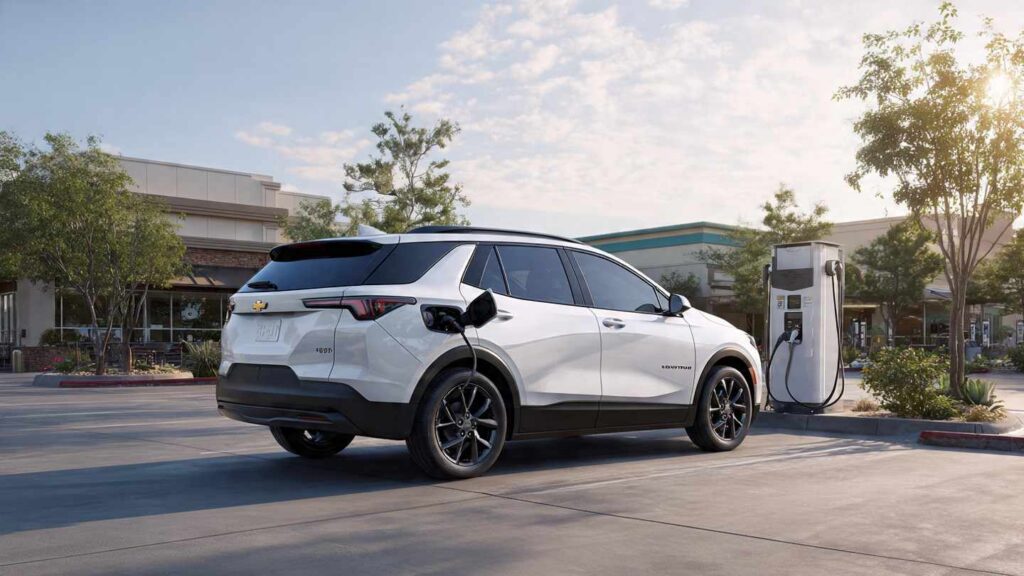
Charging speed matters as much as range, and here the Equinox wins again. The 2026 Equinox EV accepts up to 150 kW DC fast charging. The ID.4 tops out at 135 kW. Real-world top-off sessions are similar in practice, but the Equinox’s higher ceiling helps on longer road trips where every minute at a charger counts.
Both vehicles now include access to the Tesla Supercharger network via NACS adapter a major practical advantage for long-haul driving that neither EV offered just two years ago. Neither driver should feel range-stranded in 2026 the way early adopters once did.
To be fair, the ID.4 holds one edge here: its charging curve stays flatter and more consistent from 20% to 80%. The Equinox can taper more aggressively at the upper end of its charge window, which isn’t a dealbreaker but is good to know before a road trip.
Head-to-Head Specs: The Numbers Side by Side
| Category | 2026 Equinox EV LT | 2026 VW ID.4 Pro S | Best For / Verdict |
|---|---|---|---|
| Starting MSRP | ~$34,995 | ~$43,995 | Equinox EV — significant value gap |
| EPA Range (est.) | 319 miles | 291 miles | Equinox EV — 28-mile advantage |
| Max DC Fast Charge | 150 kW | 135 kW | Equinox EV — marginally faster ceiling |
| Cargo Volume (cu. ft.) | 57.3 (seats up) | 64.2 (seats up) | ID.4 — more usable hauling room |
| NHTSA Overall Rating | 5-star (preliminary) | 5-star | Tie |
| Infotainment Screen | 17.7-inch | 12-inch | Equinox EV — larger, more modern |
| Rear Legroom | 39.9 in. | 38.4 in. | Equinox EV — more generous |
| Towing Capacity | 1,000 lbs | 2,700 lbs | ID.4 — substantial advantage |
One number in that table demands attention: the ID.4 pulls 2,700 pounds. The Equinox EV’s 1,000-pound limit rules out small trailers, boat hitches, and loaded cargo carriers. If towing is any part of your life, that shifts the entire conversation.
The cargo volume gap is also real. The ID.4’s 64.2 cubic feet with seats folded beats the Equinox by a significant margin something families packing for a weekend trip will notice quickly.
On the Road: How Each One Actually Drives
The Equinox EV’s steering weights up at highway speeds not heavy, but with enough resistance to feel settled. Around town, the one-pedal driving mode is well-calibrated; the car slows predictably without the lurch that some EVs produce at low speeds. The ride quality over broken pavement is absorbent without being floaty, which is genuinely impressive at this price.
The ID.4 drives with more heft. The steering is more deliberate, the suspension tuning firmer, and the overall sensation is of a heavier, more planted machine. That’s not universally better buyers who want a light, easy-to-maneuver urban SUV may find the ID.4’s feel slightly laborious in tight parking situations. But on an open highway, the ID.4’s composure and weight feel a tier above what its price suggests.
Both vehicles suppress road noise well at highway speeds. The ID.4’s cabin is quieter by a detectable margin it has the kind of insulated silence you associate with more expensive vehicles. The Equinox is no slouch, but wind noise above 75 mph is more present.
In our assessment, the Equinox EV is the more engaging daily commuter, while the ID.4 is the better long-haul companion. Based on seat time in both vehicles, the driving experience gap is real but narrower than the price gap.
Safety: Both Get High Marks, With Caveats
The IIHS awarded the 2026 Volkswagen ID.4 a Top Safety Pick+ rating. The 2026 Equinox EV earned Top Safety Pick. The one-tier difference comes down to headlights the Equinox EV’s standard headlights score Acceptable, while the ID.4’s LED matrix headlights in higher trims earn Good ratings, per the IIHS safety ratings database.
NHTSA’s preliminary ratings give both vehicles 5 stars overall. Neither is a safety concern. But for buyers who drive unlit rural highways regularly, the ID.4’s headlight advantage in upper trims is a practical consideration worth factoring in.
Both vehicles meet the safety bar. The ID.4 clears it more cleanly in headlight performance.
Who Should NOT Buy This
The Equinox EV is not the right choice if you tow anything. Even a small utility trailer or a loaded hitch-mounted cargo carrier can push against or exceed its 1,000-pound limit. It’s also not the vehicle for buyers who prioritize cargo volume the ID.4 simply carries more. And if European driving refinement is your measuring stick, the Equinox’s interior materials and road manners won’t satisfy you.
The ID.4 is not for budget-conscious buyers. At nearly $44,000 for the Pro S trim, you’re paying a $9,000 premium over a comparably equipped Equinox EV. That premium buys real things more cargo space, better towing, a quieter highway ride but not $9,000 worth of things for the average commuter. The ID.4 also doesn’t make sense for buyers who prioritize screen size or modern infotainment layout.
The Verdict
The 2026 Chevrolet Equinox EV wins this comparison for the majority of American buyers. At roughly $35,000 to start, it offers more EPA-rated range, a substantially larger infotainment screen, more rear legroom, and a driving experience that genuinely exceeds its price point. For buyers who drive in urban and suburban environments, commute under 200 miles daily, and have no towing needs, the Equinox EV is the smarter practical choice.
The 2026 VW ID.4 earns its place for a narrower buyer: someone who needs that 2,700-pound tow rating, values cargo volume, or genuinely prefers a quieter and more composed highway experience and is willing to pay for it.
One honest limitation of this comparison: long-term reliability data on the 2026 Equinox EV is limited by its relative newness. The ID.4 has more years of real-world ownership data behind it. Buyers who weight reliability history over current feature sets should check recent owner reports on Edmunds before committing.
Do not buy the Equinox EV if you need to tow anything heavier than a small cargo carrier.
References
Disclaimer: The information provided in this article is for educational and informational purposes only. It does not constitute professional advice. Readers should conduct their own research and consult with qualified professionals before making any decisions.
