
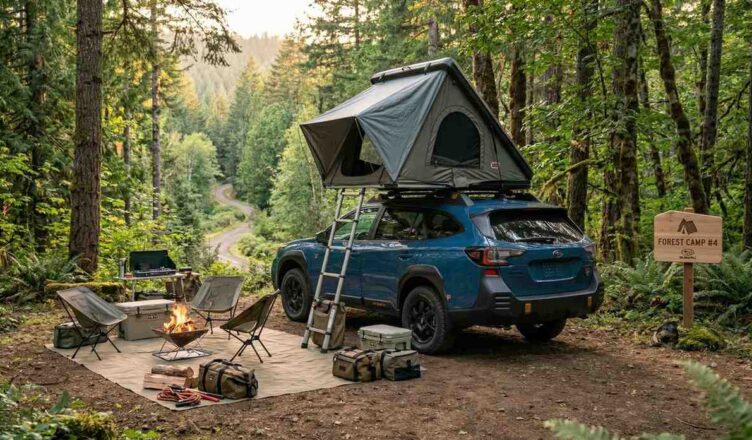
The first time you climb into a rooftop tent at 10 p.m., wind rocking the vehicle just enough to remind you you’re sleeping on top of it, you stop caring about Instagram aesthetics. Stability matters. Roof ratings matter. And suddenly, that “adventure-ready” crossover you almost bought looks like a bad decision. Most vehicles can technically carry a rooftop tent, but fewer do it well.
This guide breaks down what actually holds up in real-world use for 2026: which vehicles support the weight, stay composed overnight, and don’t turn highway driving into a chore. We’re pulling from manufacturer specs, 2026 IIHS Safety Ratings, and real ownership data through Edmunds’ True Cost to Own.
The Numbers That Actually Matter
You’ll see “roof rack compatible” all over spec sheets, but that is not the same as being rooftop tent-ready. You must distinguish between two types of load limits:
- Dynamic Load Rating: What the roof can handle while the vehicle is in motion.
- Static Load Rating: What the roof can hold when parked, including the tent, gear, and occupants.
Most brands advertise dynamic ratings (usually 150–220 lbs), while a tent with two adults easily exceeds 500 lbs. In our assessment, vehicles with body-on-frame construction handle these static loads more confidently over time. Unibody crossovers can work, but you will feel their structural limits faster in high winds or on uneven terrain.
The Shortlist: 2026 Vehicles That Deliver
| Vehicle (2026) | Roof Type | Dynamic Load (lbs) | EPA MPG (Est.) | Notable Strength |
| Toyota 4Runner | Body-on-frame | ~165 lbs | ~24 combined | Extreme durability |
| Ford Bronco | Body-on-frame | ~150 lbs | ~20 combined | Off-road geometry |
| Subaru Outback | Unibody | ~220 lbs | 27 combined | Best-in-class rack |
| Jeep Wrangler | Body-on-frame | ~150 lbs | ~22 combined | Trail capability |
| Toyota Tacoma | Truck Bed Rack | ~150+ lbs | ~23 combined | Stability & access |
Why the Toyota 4Runner (2026) Still Sets the Baseline
The redesigned 2026 Toyota 4Runner moves to a turbocharged hybrid i-FORCE MAX setup, but it retains the rugged body-on-frame layout that overlanders prize. This platform resists the flex that causes “creaking” during the night when you move inside the tent.
According to the 2026 J.D. Power Vehicle Dependability Study, Toyota continues to lead in long-term reliability for trucks and SUVs, which is critical when your sleeping quarters are bolted to your roof. However, a key factor is the 2026 4Runner’s increased height; in our assessment, this makes the climb into a rooftop tent significantly more demanding than it is on a lower wagon like the Outback.
The Bronco and Wrangler: Capable but Wind-Sensitive
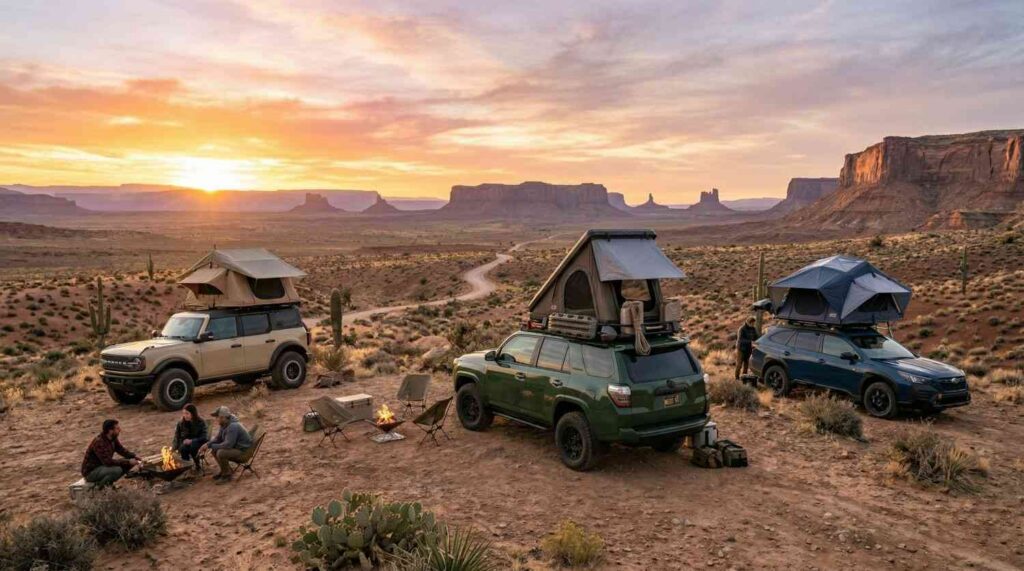
The Ford Bronco and Jeep Wrangler are iconic, but they introduce unique challenges for tenting. Their boxy shapes and removable roof panels mean that wind noise is amplified significantly once a tent is mounted. According to the 2026 AAA Winter Driving and Prep Guide, high-profile vehicles are more susceptible to stability issues in crosswinds, a risk that a rooftop tent only increases.
The Surprise Pick: Subaru Outback Wilderness
The Outback Wilderness is the outlier in this group. It features a 220-pound dynamic roof rating, which is unusually high for a unibody crossover. Because it sits lower to the ground than a 4Runner, it offers a lower center of gravity, which helps it feel more planted on the highway even with a heavy tent on top.
According to 2026 IIHS Safety Rankings, Subaru maintains high marks for roof strength in rollover tests, providing an added layer of technical confidence for static loads.
[IMAGE 3 — CONTEXTUAL / LIFESTYLE]
Placement: Mid-article, after the Subaru section
Alt text: A 2026 Subaru Outback Wilderness with a rooftop tent deployed at a forest campsite with a family setup.
The Truck Advantage: Toyota Tacoma (2026)
A rooftop tent doesn’t have to go on the roof. By using a bed rack on a truck like the 2026 Toyota Tacoma, you can mount the tent lower, often flush with the cab. This dramatically reduces wind drag and makes the tent much easier to set up and enter.
According to Edmunds’ 2026 True Cost to Own data, midsize trucks like the Tacoma hold their resale value better than almost any other vehicle class, helping to offset the initial cost of a high-end tent setup.
What the Brochures Won’t Tell You
Marketing often ignores the impact a tent has on your daily drive. According to EPA Fuel Economy Data, adding a rooftop tent can drop your highway fuel economy by 2–5 MPG due to the “sail effect.” We explicitly advise against using “no-name” generic roof crossbars for any rooftop tent; most factory rails are rated for luggage, not the 600+ pound static load of two adults in a tent. Using inadequate bars can lead to rail failure or permanent roof deformation.
Conclusion: Matching Your Vehicle to Your Sleep
If you want a setup that feels bulletproof, the 2026 Toyota 4Runner remains the best overall choice for long-term tenting. If you prioritize highway efficiency and ease of entry, the Subaru Outback Wilderness is the smartest recommendation for lighter setups.
Before you buy, verify your specific trim’s roof load rating in the 2026 Fuel Economy Guide and run your long-term budget through Edmunds’ True Cost to Own.
References
- 2026 Toyota 4Runner Hybrid Reviews & Specs – Edmunds
- J.D. Power 2026 U.S. Vehicle Dependability Study Results
- 2026 IIHS Safety Rankings: Nissan Pathfinder & Industry Leaders
- 2026 Fuel Economy Guide (DOE/EPA) – Jackson Auto
- 2026 Toyota Tacoma i-FORCE Hybrid MPG – McGee Toyota
- 2026 AAA Winter Driving & Prep Guide
- Edmunds’ 2026 True Cost to Own Data
Disclaimer: The information provided in this article is for educational and informational purposes only. It does not constitute professional advice. Readers should conduct their own research and consult with qualified professionals before making any decisions.
