
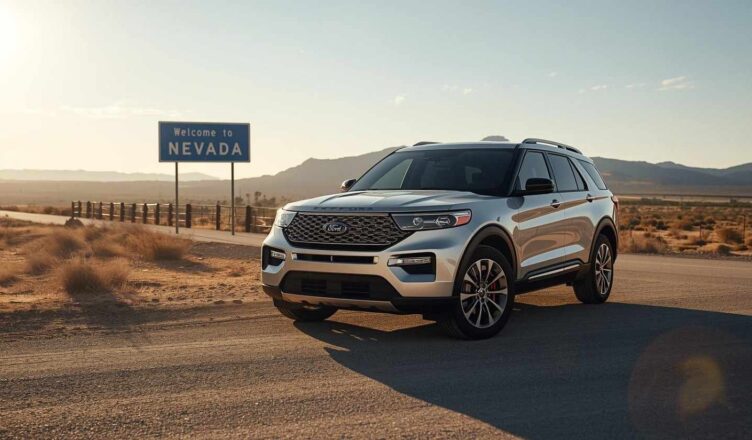
A $2,000 price gap between a local SUV and one a few states away can disappear quickly once transport, temporary permits, and your home state’s tax bill come into play. Many buyers assume purchasing in a no-tax state like Oregon or New Hampshire eliminates sales tax. In practice, your home DMV will usually collect that 5% to 10% tax when you register the vehicle.
This guide breaks down how cross-border car buying actually works in 2026, from tax reciprocity rules to the logistics of getting a 4,000-pound vehicle home. Based on recent data from the Federal Reserve and the Consumer Financial Protection Bureau (CFPB), most friction shows up in financing, tax timing, and paperwork—not the purchase itself. By the end, you should be able to calculate whether an out-of-state deal is a real saving or just a complicated detour.
The Sales Tax Mirage and Reciprocity Rules
Sales tax on a $35,000 vehicle in a 7% state can come out to roughly $2,400–$2,500, based on standard state tax calculations. Buying in a state without sales tax does not eliminate that cost—it usually delays it. Most states follow reciprocity rules, meaning either the dealer collects your home state’s tax or your DMV requires payment before issuing plates.
If the dealership tells you they do not handle out-of-state taxes, that affects your cash flow. Instead of rolling the tax into your loan, you may need to pay several thousand dollars out of pocket within 30 days at registration.
That timing matters. According to the Federal Reserve’s 2025 G.19 Consumer Credit report, average new car payments have hovered around $700–$730 per month. A few hundred dollars in upfront savings can feel significant, but once travel costs and delayed taxes are added, the math often tightens.
A simple question helps frame the decision: how much is your time worth compared to the savings? If you save $500 but spend 10–12 hours traveling and a few hundred dollars on flights and fuel, the advantage may shrink quickly.
Logistics: The Hidden Costs of Delivery
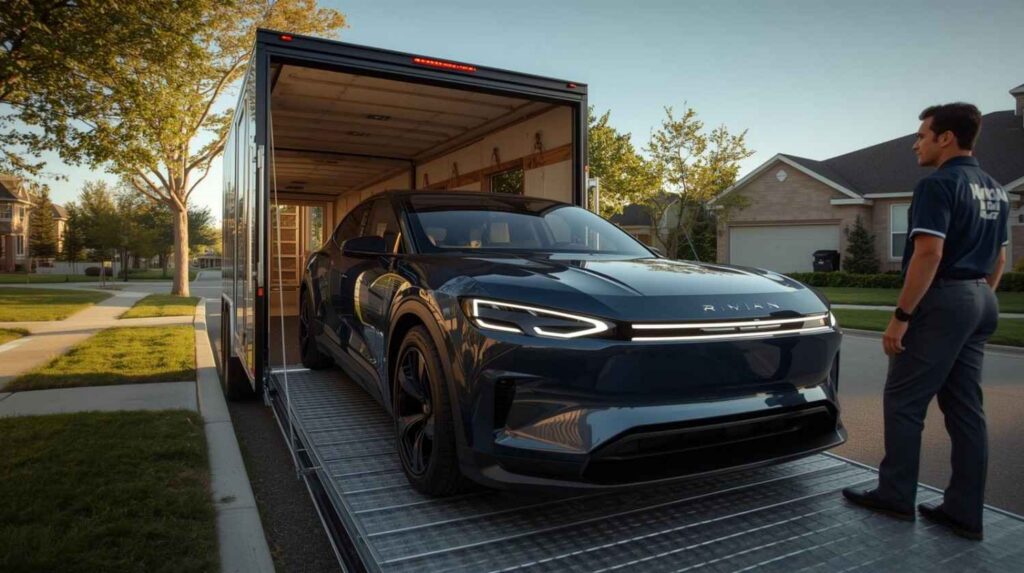
Shipping a vehicle involves more variables than most buyers expect. Open carriers are the most common and cost-effective option, but they expose the car to road debris. Enclosed transport offers more protection at a higher price.
For a 500-mile trip, open transport typically ranges from about $600 to $1,200, depending on fuel prices and route demand, based on 2025 transport industry averages. Flying out and driving back can sometimes cost less, but it introduces time and risk variables.
Before committing, a few steps can prevent expensive mistakes:
- Request a bill of sale and a full copy of the title before sending money.
- Check whether your home state requires a VIN inspection for out-of-state vehicles.
- Confirm your insurance policy covers newly acquired vehicles outside your primary location.
- Verify the dealer can issue a temporary transit tag valid for your return trip.
The numbers below illustrate how quickly a price advantage can narrow.
| Expense Category | Local Purchase | Out-of-State (Shipped) | Out-of-State (Fly & Drive) |
|---|---|---|---|
| Purchase Price | $30,000 | $28,500 | $28,500 |
| Sales Tax (7% Home State) | $2,100 | $2,100 | $2,100 |
| Documentation Fees | $400 | $600 | $600 |
| Shipping/Travel Cost | $0 | $950 | $450 |
| Total Out-of-Pocket | $32,500 | $32,150 | $31,650 |
In this example, a $1,500 discount turns into a real-world saving of $350 to $850 depending on the method. In our assessment, if the final difference stays under about $1,000, the added complexity may outweigh the benefit for most buyers.
Title Traps and the Notary Problem
Paperwork is where many out-of-state deals break down. Some states require notarized signatures for title transfers, while others do not. If documents are completed incorrectly, registration can stall.
For example, if your home state requires notarization but the selling dealer did not complete the paperwork properly, you may not be able to register the vehicle until corrections are made. That delay can leave you with an expired temporary tag.
Another common issue is “title in transit.” Dealers sometimes sell vehicles before receiving the physical title from the previous lender. Locally, this can be a minor delay. Out of state, it can prevent registration entirely.
Without a valid title, your DMV will not issue permanent plates. That risk grows with distance, since resolving paperwork errors often requires coordination between multiple parties.
There is also a legal tradeoff. Lemon Law protections usually apply in the state where the car was purchased. If you buy in one state and live in another, you may need to handle disputes under the selling state’s laws, which can vary in strength.
Financing: Why Local Lending Still Wins
Financing can become more complicated when crossing state lines. Dealers often prefer local lending partners because the process is predictable. With out-of-state buyers, lenders may adjust rates slightly to account for administrative work.
According to the CFPB’s 2025 auto loan guidance, indirect dealer financing can include rate markups that vary by lender and deal structure. Even a 0.5% increase in interest can offset a portion of your upfront savings over time.
A practical approach is to secure pre-approval from a local credit union or bank before contacting an out-of-state dealer. This gives you a baseline rate and reduces reliance on dealer-arranged financing.
A few working rules can simplify the decision:
- The 10% Rule: If the price is not at least 10% lower than your local market, the advantage may be minimal.
- The Inspection Gap: A third-party pre-purchase inspection can reveal issues a listing does not show.
- The Paperwork Delay: Out-of-state registrations often take longer due to processing priorities.
There are exceptions. If you are searching for a rare configuration or a limited-production model, expanding your search radius may be the only option. In those cases, the logistical tradeoffs can make more sense.
Conclusion: When the Math Works—and When It Doesn’t
Out-of-state car buying tends to work best for specific scenarios: rare vehicles, limited trims, or situations where regional pricing differences are significant. For common models, the savings often narrow once taxes, fees, and logistics are included.
Based on the data reviewed here, if the total difference lands under $800–$1,000, buying locally often provides a smoother experience with similar long-term costs. Local dealers may also be more flexible with service support after the sale.
If your situation involves a unique vehicle or a large price gap, the equation changes. In those cases, careful planning around taxes, paperwork, and transport can make the deal worthwhile.
Your next step should be to call your local DMV and ask exactly what is required to register an out-of-state purchase. From there, comparing total costs—not just the sticker price—can give you a clearer answer.
References:
- Edmunds True Cost to Own
- Kelley Blue Book
- Consumer Financial Protection Bureau (Auto Loans)
- Federal Reserve G.19 Consumer Credit Report
- Consumer Reports Cars
Disclaimer: The information provided in this article is for educational and informational purposes only. It does not constitute professional advice. Readers should conduct their own research and consult with qualified professionals before making any decisions.
