I replaced the tires on a friend’s Kia EV6 GT last spring. The bill came to $1,400 and the old set had barely lasted 24,000 miles. He’d bought the car partly because the “no more gas station” math looked so compelling, and it was. He’s still saving over $1,200 a year on energy. But nobody warned him about the rubber.
That’s the story of EV ownership in 2026, and it keeps repeating in different forms: insurance bills that run 20% higher than expected, public chargers that cost nearly as much per mile as premium gasoline, and repair invoices that arrive rarely but hit hard. The savings are real. So are the surprises. This piece unpacks the four biggest ones insurance, charging, tires, and repairs with the kind of specific numbers I wish someone had handed me before I started advising people on whether to make the switch.
What Nobody Tells You About EV Insurance
Ask any EV owner what caught them off guard and insurance comes up within the first thirty seconds. Premiums for electric vehicles run roughly 15% to 25% above comparable gas models in 2026, and the gap hasn’t been shrinking the way many analysts predicted.
The Highway Loss Data Institute (HLDI) data explains a big piece of this: battery damage. Even a minor dent to the pack housing during a fender-bender can trigger a manufacturer-recommended full replacement. That’s a $15,000 to $20,000 line item on a repair estimate, and insurers aren’t absorbing that risk for free. They’re spreading it across every policyholder who drives the same model.
Then there’s the weight problem. A 2026 Ford F-150 Lightning carries so much more mass than the gas V8 version that it changes the physics of every collision it’s involved in more kinetic energy, more damage to the other vehicle, higher liability exposure for the underwriter. Your driving record could be spotless. The premium still reflects what that 6,500-pound truck does when things go wrong.
Home Charging Is Cheap. Everything Else Isn’t.
The “cheap” public charging window has mostly closed. Rely exclusively on DC fast chargers Tesla Superchargers, Electrify America, the various network-of-the-month startups and your per-mile cost creeps uncomfortably close to what a Toyota Prius driver pays at the gas pump. I ran the math for a colleague in Atlanta last month: at 52 cents per kWh on Electrify America, her Ioniq 5 was costing the equivalent of about $4.80 per gallon.
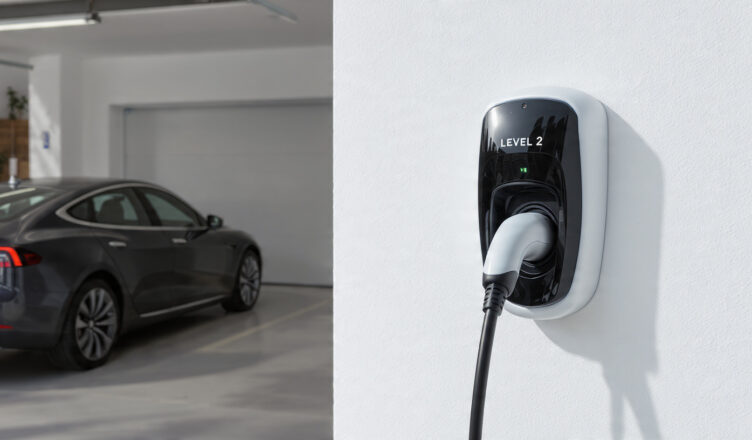
Plug in at home, though, and the picture flips. U.S. residential electricity averages around 17 cents per kWh right now. For a car pulling 3 miles from each kWh, that’s 5.6 cents per mile roughly a third of what gasoline costs in most states. The catch is that you need a Level 2 charger installed in your garage to get there, and you need to be strategic about when you charge. Plenty of utilities now offer Time of Use (TOU) rate plans that drop your per-kWh cost dramatically if you shift your charging to the middle of the night. Federal fuel economy resources list rate comparisons by region if you want to check your local numbers.
Without home charging access, the financial case for an EV gets shaky fast. That’s not an opinion it’s arithmetic.
Why Your EV Eats Tires
This one blindsides people. Tires on a high-torque electric like a Rivian R1S or Kia EV6 GT routinely need replacing at 25,000 miles. A comparable gas sedan? You’d expect 40,000 to 50,000 from a set of decent all-seasons.
Two forces are working against you. First, instant torque. Every launch from a stoplight sends the full force of the motor through the contact patch with zero ramp-up, shearing the tread in a way that a gas engine’s gradual power delivery simply doesn’t. Second, sheer mass. The battery pack adds 1,000 to 1,500 pounds compared to an equivalent ICE car, and the tires bear that load every mile of every day.
Michelin and Goodyear both sell EV-specific tires now lower rolling resistance, reinforced sidewalls, noise-dampening foam inserts. They’re good. They’re also $300 to $400 per tire, versus $150 to $250 for mainstream all-seasons on a gas car. Annualized, the difference works out to roughly $250 more per year if you’re driving 12,000 miles. Not a dealbreaker on its own, but it chips away at the fuel savings that attracted you in the first place.
| Expense Category | 2026 EV Average (Annual) | 2026 ICE Average (Annual) | Cost Difference |
|---|---|---|---|
| Fuel / Energy | $650 (Home Charging) | $1,850 (Regular Gas) | -$1,200 (EV) |
| Insurance | $2,400 | $1,950 | +$450 (EV) |
| Maintenance | $400 | $900 | -$500 (EV) |
| Tires | $700 (Pro-rated) | $450 (Pro-rated) | +$250 (EV) |
| Total Est. | $4,150 | $5,150 | -$1,000 (EV) |
Note: Estimates based on 12,000 miles per year. Fuel/energy figures derived from EIA national average electricity rates and AAA gas price data. Insurance estimates reflect HLDI loss data averages. Individual results vary based on location and driving habits.

Repairs Are Rare — Until They Aren’t
The “zero maintenance” sales pitch is an exaggeration, but only a slight one. No oil changes. No spark plugs. No serpentine belts. J.D. Power’s 2024 Vehicle Dependability Study pegged routine service costs for EV owners at about 40% below gas car owners over the first three years. Brakes barely wear at all thanks to regenerative braking some owners report original pads lasting past 100,000 miles, which would be unthinkable on a gas car.
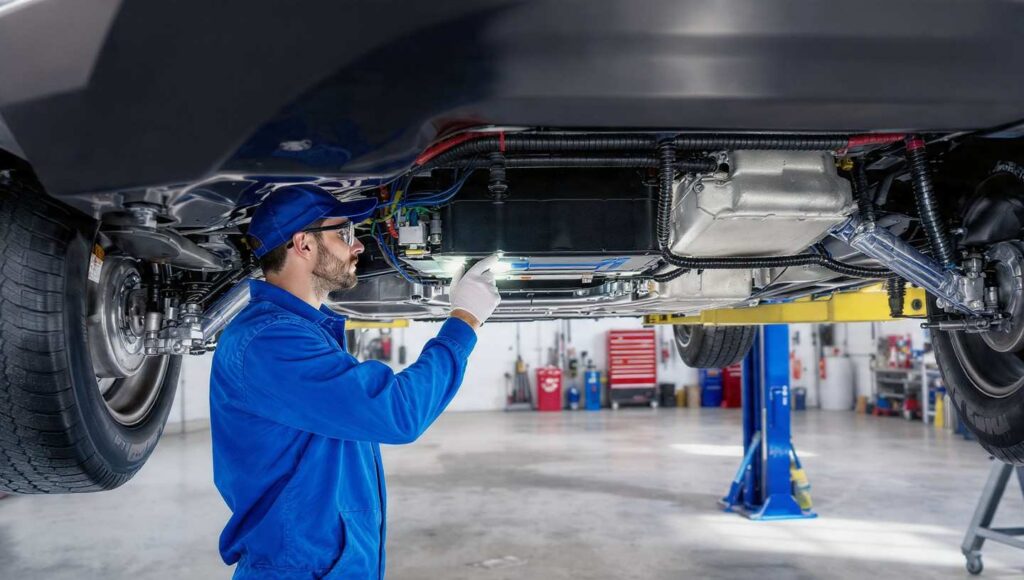
Where the narrative breaks down is on the rare, expensive stuff. EV thermal management systems are genuinely complex. The same cooling loop might handle the battery pack, the drive motors, and the cabin climate system. A single leak in that circuit isn’t a “top off the coolant” situation it’s a potential critical failure that can strand the car and cost thousands to diagnose and repair.
Most 2026 EV service visits, honestly, involve a software update or a sensor recalibration. You drive in, a technician plugs in a laptop, and you leave. Boring. Cheap. But when something physical fails in the drivetrain or thermal system, the bill tends to be memorable. Budget for the average and you’ll be fine; just don’t assume the average means the maximum is zero.
Depreciation’s Ripple Effect on Insurance and Repairs
This doesn’t fit neatly into one of the four pillars above, but it touches two of them directly, so it’s worth a detour.
EV resale values have calmed down since the wild swings of 2022–2023, but they still sag faster than comparably priced hybrids or trucks. The culprit is battery anxiety. Buyers worry about degradation, and that worry suppresses used prices even when the pack is perfectly healthy. Most 2026 EVs carry an 8-year/100,000-mile battery warranty, but warranties don’t fully erase the uncertainty they just cap the downside.
Here’s why this matters for your operating costs: insurers factor depreciation into their total-loss calculations. A car that loses value quickly crosses the “it’s cheaper to total it than fix it” threshold sooner, which raises the insurer’s risk on every policy they write. That elevated risk feeds directly into your premium. On the repair side, owners facing a $6,000 coolant system fix on a car that’s only worth $18,000 often decide to sell rather than repair and that decision, multiplied across thousands of owners, pushes resale values down further. It’s a feedback loop.
Add the “tech-obsolescence” factor faster charging, better inverters, longer range on newer models and a three-year-old EV can feel dated in a way that a three-year-old Camry never does. That perception is a real cost, even if it never appears on a bill.
Infrastructure Shapes the Equation More Than You’d Think
Where you live determines whether EV ownership is convenient or frustrating, and frustration has a price even when it doesn’t have a dollar sign. Spending 45 minutes at a congested charging station on a road trip isn’t free it’s time you’re not spending on anything else.
Public networks have gotten better in 2026. NACS (North American Charging Standard) plugs are becoming the norm, and cross-brand compatibility has improved. But demand is climbing too, especially as electric trucks hit the road and pull from the same stations. Holiday weekends now bring “peak pricing” at popular corridors charging that might cost 35 cents per kWh on a Tuesday can spike to 55 or 60 cents on the Saturday before Thanksgiving.
Three Models, Three Very Different Cost Profiles
The table above represents averages, but nobody owns an average car. Here’s how the math shifts depending on what you’re driving.
The Commuter: 2026 Chevrolet Equinox EV. Common tire sizes. Conservative power delivery. Insurance costs that hew close to the gas Equinox. This is the model that most closely matches the $1,000 annual savings in the table, and it’s the easiest case to make financially.
The Performance Pick: 2026 Tesla Model 3 Performance. Staggered tires and sticky rear rubber mean you might be buying new rears every 15,000 miles if you enjoy the acceleration you paid for. Tesla’s closed repair ecosystem keeps insurance rates stubbornly high. The car is brilliant to drive. It’s also more expensive to own than the spreadsheet suggests.
The Family Hauler: 2026 Kia EV9. Three rows, 5,500+ pounds, and a suite of ADAS features (the cameras, radar, and software that handle lane-keeping and emergency braking) that cost a fortune to recalibrate after even a parking-lot tap. Insurance premiums on the EV9 reflect all of this. It’s a fantastic road-trip vehicle if you have home charging. Without it, the per-mile energy cost on public chargers gets uncomfortable.
Does the Math Actually Work?
For the typical driver putting 12,000 miles on the odometer each year and plugging in at home every night, yes. The EV comes out $800 to $1,200 ahead annually in total operating costs. The fuel savings and reduced maintenance outweigh the insurance and tire premiums, and it’s not particularly close.
But that scenario has load-bearing assumptions. Home charging access. Reasonable local insurance rates. A tolerance for the occasional surprise repair bill. Remove any one of those and the advantage thins out; remove two and the traditional hybrid likely wins on pure dollars.
If you’re seriously weighing the switch, the most useful thing you can do before anything else is get an insurance quote for the specific model and trim you’re considering, and have an electrician confirm your panel can support a Level 2 charger. Those two data points will tell you more about your personal cost picture than any article including this one ever could.
References
- EPA: Fuel Economy Guide and Charging Calculator
- Edmunds: True Cost to Own (TCO) Calculator
- IIHS-HLDI: Insurance Loss Data by Vehicle Class
- J.D. Power: 2024 U.S. Vehicle Dependability Study
- Consumer Reports: EV Ownership and Maintenance Costs
- NHTSA: Electric Vehicle Safety and Repair Standards
Disclaimer: The information provided in this article is for educational and informational purposes only. It does not constitute professional advice. Readers should conduct their own research and consult with qualified professionals before making any decisions.
Last Updated on March 18, 2026 by Kamakashi Singh
