
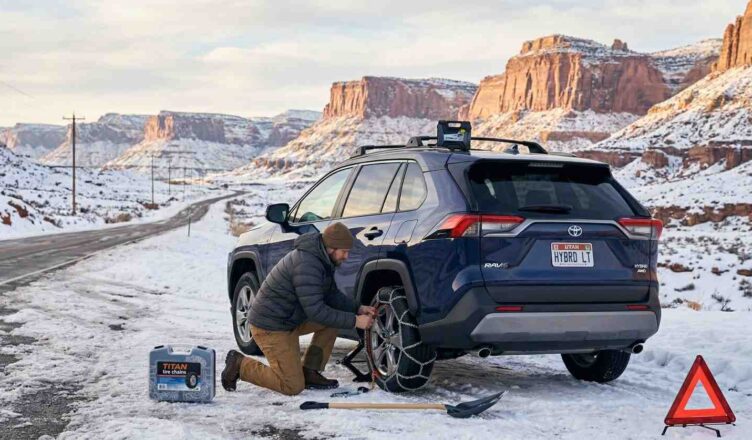
You’re halfway up a snow-covered pass in Colorado, the temperature hovering at 12°F, and your windshield washer fluid freezes mid-spray. Visibility drops fast. The next turnout is three miles away. That’s the moment winter road trips stop being romantic and start being real. This guide is built around that reality. You’ll get three proven winter routes across the U.S., what your vehicle actually needs before you leave, and a packing list that goes beyond the usual blanket-and-snacks advice.
Data for this 2026 update comes from EPA Fuel Economy Data, the 2026 AAA Winter Driving Guide, and 2026 NHTSA Safety Ratings.
Routes That Actually Work in Winter
Some roads look great on a summer map, but in January, they are a gamble.
- California’s Highway 395 (Eastern Sierra): This route stays lower than the high Sierra passes, offering views of Mount Whitney with fewer closures. However, Caltrans may require chains with little warning.
- Utah’s National Parks Loop: Zion and Bryce Canyon are quieter in winter, but Bryce sits above 8,000 feet. In our assessment, this loop works best if you plan shorter driving days to account for early sunsets and icy park roads.
- Blue Ridge Parkway (Select Sections): According to the NPS 2026 Winter Access Guide, higher elevations close frequently due to ice. Stick to lower-elevation stretches near Asheville for the best balance of views and safety.
What Your Vehicle Needs Before You Leave
A winter road trip doesn’t demand a new SUV, but it does demand technical preparation. According to Consumer Reports 2026 Tire Testing, all-season tires lose significant grip below 45°F as their rubber compounds stiffen. Dedicated winter tires stay pliable and improve braking distances on ice by up to 30%.
The 2026 Winter Battery Crisis
Cold weather is brutal on batteries. At freezing temperatures, a fully charged battery delivers only about two-thirds of its rated capacity. According to the 2026 AAA Winter Driving Guide, service calls for battery failures jumped 24% in early 2026. If your battery is over three years old, have it load-tested before leaving.
Fuel Range and Efficiency Trade-offs
Fuel economy can drop by 15–25% in cold conditions, a fact you can verify using EPA Fuel Economy Data. For electric vehicles, the 2026 Vaisala Xweather EV Range Report reveals that range can drop even more significantly due to cabin heating and battery thermal management.
Winter-Ready Vehicle Comparison (2026 Models)
| Vehicle (2026) | Drivetrain | EPA Combined MPG | Ground Clearance |
| Subaru Outback | AWD | 28 mpg | 8.7 in |
| Toyota RAV4 Hybrid | AWD | 43 mpg | 8.1 in |
| Ford Bronco Sport | AWD | 27 mpg | 8.8 in |
| Nissan Pathfinder | Intelligent AWD | 23 mpg | 7.1 in |
In our assessment, the 2026 Nissan Pathfinder is a strong winter contender, having earned a Top Safety Pick+ rating from the IIHS. However, we explicitly advise against using standard summer-grade windshield washer fluid; if it freezes in your reservoir, you will be driving blind until the engine heat thaws the lines.
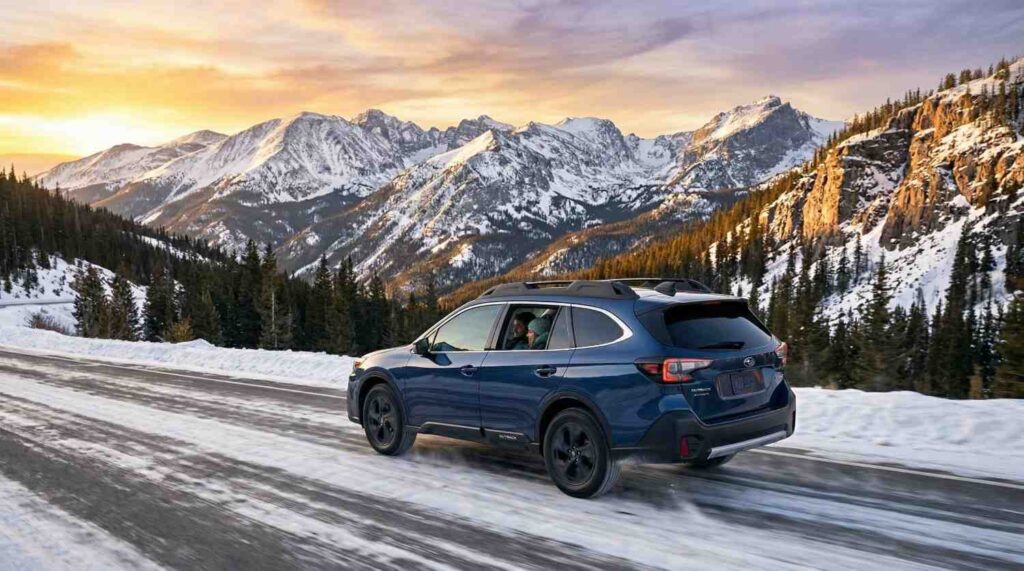
What to Carry: The 2026 Survival Kit
You need gear that manages failure points, not just convenience.
- Traction: Tire chains or traction boards—required in many mountain states.
- Power: A portable lithium-ion jump starter. These work even when no other vehicles are nearby.
- Visibility: NHTSA Winter Driving Tips recommend a snow brush and an ice scraper as mandatory daily tools.
- Recovery: A small shovel and abrasive material like sand or kitty litter.
Planning Around the Storm
The 2026 J.D. Power Vehicle Dependability Study notes that modern infotainment and driver-assist sensors are increasingly prone to failure in extreme weather. Snow and ice can “blind” radar sensors, disabling features like automatic emergency braking. A key factor is manually clearing these sensors before every leg of your trip.
Managing Your Itinerary
Winter driving rewards flexibility. We recommend capping driving days at 300 miles. According to the 2026 AAA Winter Driving Guide, increasing your following distance to 8–10 seconds is vital for avoiding crashes on slick surfaces.
Conclusion: Control Over Speed
If you are planning a winter trip through the Rockies or the Northeast, your priority must be control, not efficiency. Routes like California’s Highway 395 reward those who carry proper gear and maintain their vehicle’s battery and tires. We recommend a vehicle with at least 8 inches of ground clearance, such as the 2026 Toyota RAV4 Hybrid, for most plowed routes.
Before you leave, check 2026 IIHS Safety Ratings for your vehicle and run your expected costs through Edmunds’ True Cost to Own. Pack more than you think you need, and never jump-start a frozen battery.
References
- 2026 AAA Winter Driving & Vehicle Prep Guide
- 2026 Toyota RAV4 MPG & Drivetrain Guide
- EPA Automotive Trends and Fuel Economy Data
- 2026 IIHS Safety Rankings: Nissan Pathfinder
- J.D. Power 2026 Vehicle Dependability Study Results
- NHTSA Winter Driving Tips & Safety Guide
- 2026 Winter Road Trip Guide – EcoFlow
Disclaimer: The information provided in this article is for educational and informational purposes only. It does not constitute professional advice. Readers should conduct their own research and consult with qualified professionals before making any decisions.
