Modern synthetic oils can often last 7,500 to 10,000 miles, yet many quick-lube shops still push the “3,000-mile myth” to keep their bays full. Following your car’s actual maintenance schedule isn’t just about avoiding a breakdown; it’s about protecting what is likely your second-largest investment from premature depreciation.
This breakdown covers the essential service intervals for the average driver, the specific components that require your attention, and how to balance the manufacturer’s “Normal” vs. “Severe” driving recommendations. You will walk away knowing exactly what to ask for at the mechanic and how to use tools like the Edmunds True Cost to own calculator to see how maintenance impacts your bottom line.
The Shift from Miles to Sensors
Back in the 1990s, maintenance was easy to track because it was strictly linear. You changed the oil every 3,000 miles, the spark plugs every 30,000, and hoped the timing belt didn’t snap in between. Things are different now.
Most vehicles produced in the last decade utilize an Oil Life Monitoring (OLM) system. According to AAA, these systems use algorithms to track engine revolutions, operating temperatures, and idle time to determine when the oil is actually spent.
But sensors don’t see everything. They won’t tell you if your serpentine belt is fraying or if your tires are wearing unevenly because of a bad alignment. That is why a manual schedule still matters. Reliance on a dashboard light is a reactive strategy; true maintenance is proactive.
The Essential Maintenance Intervals
While every car has a specific manual in the glovebox, most follow a predictable rhythm. Missing these milestones is often the difference between a car that hits 200,000 miles and one that ends up in a scrap yard at 110,000.
Short-Term Checkups (Every 3,000 to 5,000 Miles)
This is your “safety net” interval. Even if your synthetic oil is rated for 10,000 miles, you should be under the hood every few months. Check your oil level manually; some modern turbocharged engines are known to consume a quart of oil between changes, and running low is a recipe for catastrophic friction.
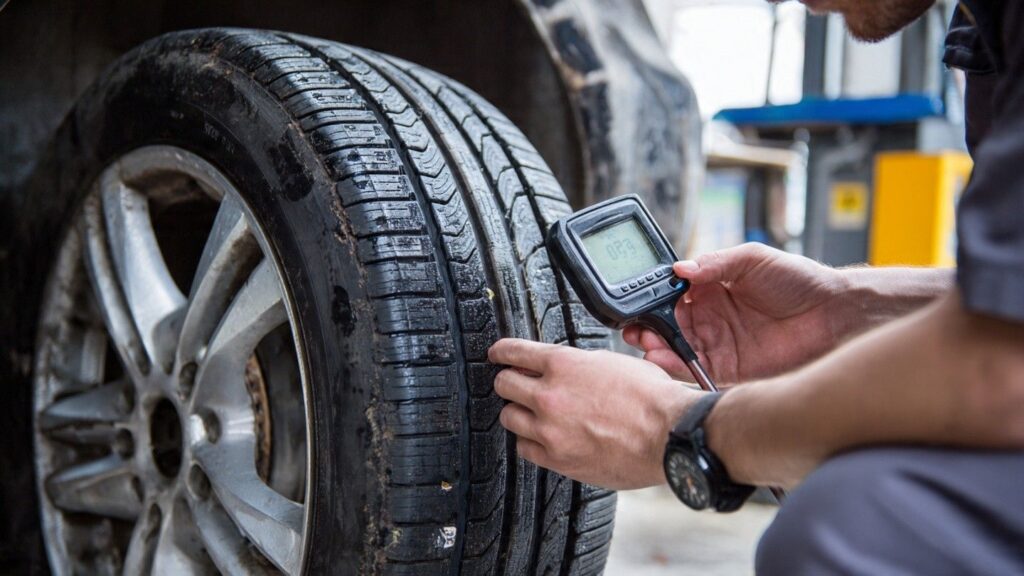
You should also rotate your tires at this stage. Front-wheel-drive cars place immense stress on the leading tires, which handle steering, most of the braking, and all of the power. Rotating them ensures they wear out at the same rate, saving you from buying pairs prematurely. This is also the time to check your wiper blades—if they are streaking or “chattering,” they are already a safety hazard.
Mid-Range Service (Every 15,000 to 30,000 Miles)
This is where the “filters and fluids” phase begins. Your engine air filter and cabin air filter are usually due for replacement here. A clogged engine filter can drop your fuel economy, while a dirty cabin filter can put an unnecessary strain on your HVAC blower motor and lead to musty odors.
We also recommend a brake fluid flush around the two-year mark. Brake fluid is hygroscopic, meaning it absorbs moisture from the air. Over time, this water content can lower the fluid’s boiling point and cause internal corrosion in your ABS module. This is a maintenance item often omitted from “free maintenance” packages offered by OEMs, but it is vital for long-term braking performance.
Long-Term Milestones (60,000 to 100,000 Miles)
This is the “big one” for your wallet. Many manufacturers schedule spark plug replacements and coolant flushes here. If your car has a timing belt—common in many Honda and Toyota V6 engines—this is the critical window for replacement.
Comparative Maintenance Requirements by Interval
The following table outlines the standard expectations for a modern internal combustion vehicle. Keep in mind that “Severe” driving—short trips, extreme heat, or towing—may require shortening these gaps by roughly 30%.
| Interval | Component | Action Required | Expected Value |
| 5,000 Miles | Engine Oil & Filter | Replace (Standard/Synthetic Blend) | Preserves internal seals |
| 5,000 Miles | Tires | Rotate and check pressures | Extends tread life by 20% |
| 15,000 Miles | Engine Air Filter | Inspect and replace if dirty | Maintains optimal MPG |
| 20,000 Miles | Cabin Air Filter | Replace for HVAC health | Prevents blower motor wear |
| 30,000 Miles | Brake Fluid | Flush and replace (Time-based: 2 years) | Prevents ABS corrosion |
| 60,000 Miles | Transmission Fluid | Drain and fill (Check manual) | Avoids $4k rebuilds |
| 100,000 Miles | Spark Plugs | Replace for optimal combustion | Prevents engine misfires |
| 100,000 Miles | Coolant | Flush and replace | Prevents head gasket failure |
The “Severe Service” Trap
If you read the fine print in your owner’s manual, you’ll likely find two schedules: Normal and Severe. Most people assume they are “Normal” drivers. In reality, according to data from various OEM service guides, about 80% of us fall into the “Severe” category.
Do you live in a city with stop-and-go traffic? That’s severe. Do you live in a climate where it gets above 90°F or below freezing? Severe. Do you take frequent short trips under five miles? Also severe.
Short trips are particularly brutal because the engine never reaches its full operating temperature. This allows water vapor to collect in the oil, which eventually turns into “sludge”—a jelly-like substance that blocks oil passages and kills engines. If this sounds like your commute, stick to a 5,000-mile oil change interval regardless of what the sensor says.
Tires: The Most Overlooked Safety Item
Your tires are the only part of the car that actually touches the road. Yet, most owners wait until they fail an inspection to think about them. Beyond just tread depth, you need to watch for “dry rot” or sidewall cracking, which typically occurs after five or six years, regardless of mileage.
Check your tire pressures monthly. Modern TPMS (Tire Pressure Monitoring Systems) are great, but they often don’t trigger until a tire is 25% under-inflated. Running on low tires increases rolling resistance, which kills your MPG and causes the tire to overheat. This heat can lead to a blowout at highway speeds.
The New Frontier: Hybrid and EV Maintenance
If you have transitioned to an electric vehicle, your “maintenance schedule” looks very different, but it isn’t non-existent. You can skip the oil changes, but you cannot skip the thermal management system. EVs use coolant loops to keep their batteries at a stable temperature.
According to the EPA’s maintenance summaries, EVs often require cabin filter changes and brake fluid flushes just like gas cars. Interestingly, EV owners must pay more attention to tire rotations. The high, instant torque of electric motors and the heavy weight of battery packs can chew through tires 30% faster than a comparable gas car.
Fluids: More Than Just Oil
While oil gets the glory, other fluids do the heavy lifting. Transmission fluid is a prime example. Many manufacturers now claim “lifetime” transmission fluid, but most mechanics (and JD Power reliability data) suggest that “lifetime” usually means “until the warranty expires.”
If you plan on keeping your car past 100,000 miles, changing that fluid at 60,000 miles is cheap insurance against a $4,000 transmission rebuild. The same applies to your differential and transfer case if you drive an AWD or 4WD vehicle.
Coolant is another silent killer. Over time, coolant becomes acidic. Once it loses its pH balance, it begins to eat away at your head gasket and radiator from the inside out. A simple $100 flush every few years can prevent a $2,000 repair.
Navigating the Service Drive
The “Service Drive” at a dealership is designed to be a profit center. You will often be presented with “dealer-recommended” services that are not in your owner’s manual. These might include “induction cleanings” or “fuel system services” that can cost hundreds of dollars.
Be blunt. Ask the service advisor to show you where that service is listed in the manufacturer’s maintenance schedule. If it isn’t there, it’s likely an unnecessary upsell. Your manual is the final authority.
Managing Costs and Records
Maintenance can feel like a series of unexpected bills, but it’s actually quite predictable. You can run your own numbers on the Edmunds True Cost to Own calculator to see how much you should be budgeting annually for your specific model.
Keep a folder of every receipt. When it comes time to sell your car, a “binder of receipts” is worth its weight in gold. According to Kelley Blue Book (KBB) valuations, a vehicle with a documented service history can command a significantly higher resale price than a “mystery” car with no records. It shows the next buyer that you didn’t just drive the car—you cared for it. This transparency builds trust and often leads to a faster sale.
Why Proactive Care Matters
It’s easy to skip a $150 service when things seem to be running fine. But cars don’t usually give you a “warning shot” before a major failure. A snapped timing belt happens in a fraction of a second, and in an “interference engine,” it usually results in the pistons smashing the valves. That is a total engine loss. All because of a belt that should have been changed at 90,000 miles.
Think of maintenance as a subscription service for your car’s health. You pay a little bit every few months to avoid a massive, unmanageable bill later. It is the most effective way to lower your total cost of ownership.
Summary of Best Practices
Maintaining a car isn’t about being a mechanical genius; it’s about being disciplined. If you follow the manual, listen to your sensors, and do a visual “walk-around” once a month, you are ahead of the curve. Don’t let the dealership upsell you on items your car doesn’t need. Stick to the basics: clean oil, fresh filters, healthy tires, and verified fluids. Your car—and your bank account—will thank you ten years down the road.
References
- NHTSA: Tire Safety and Maintenance
- AAA: Understanding Oil Change Intervals
- IIHS: Maintenance and Vehicle Safety
- EPA: EV Maintenance and Efficiency
- Edmunds: True Cost to Own Calculator
- J.D. Power: Vehicle Dependability Study
Disclaimer: The information provided in this article is for educational and informational purposes only. It does not constitute professional advice. Readers should conduct their own research and consult with qualified professionals before making any decisions.
Last Updated on March 18, 2026 by Kamakashi Singh
