
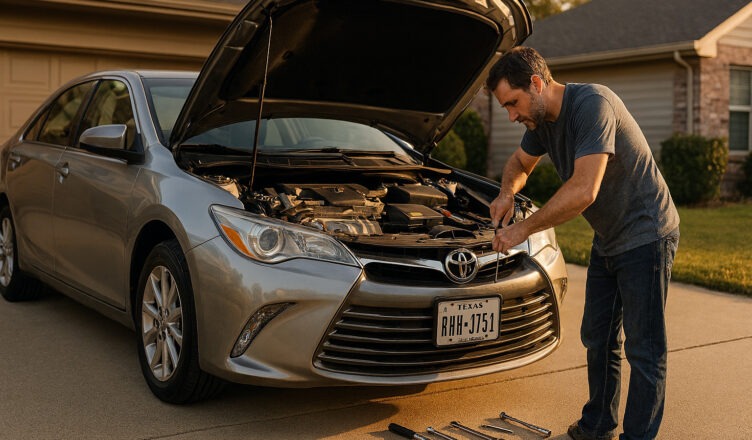
You likely paid over $120 for an oil change recently. If that service took 25 minutes in the bay, you paid a labor rate that rivals some specialized legal consultants. That gap between time and cost is where your potential savings live. While major engine overhauls require professional shops, routine maintenance often carries the highest labor markups relative to the difficulty of the task.
Run the numbers across a year of ownership, and a handful of simple services can keep $400–$700 in your pocket. This calculation is not based on abstract theory. These are the same jobs that professional technicians perform daily, often charging full hourly labor rates for tasks that require fewer than ten minutes of actual work.
This guide breaks down six services you can handle in a driveway, what shops typically charge in the current market, and where the savings originate, using data from AAA and CarMD repair trends.
1. Synthetic Oil and Filter Changes
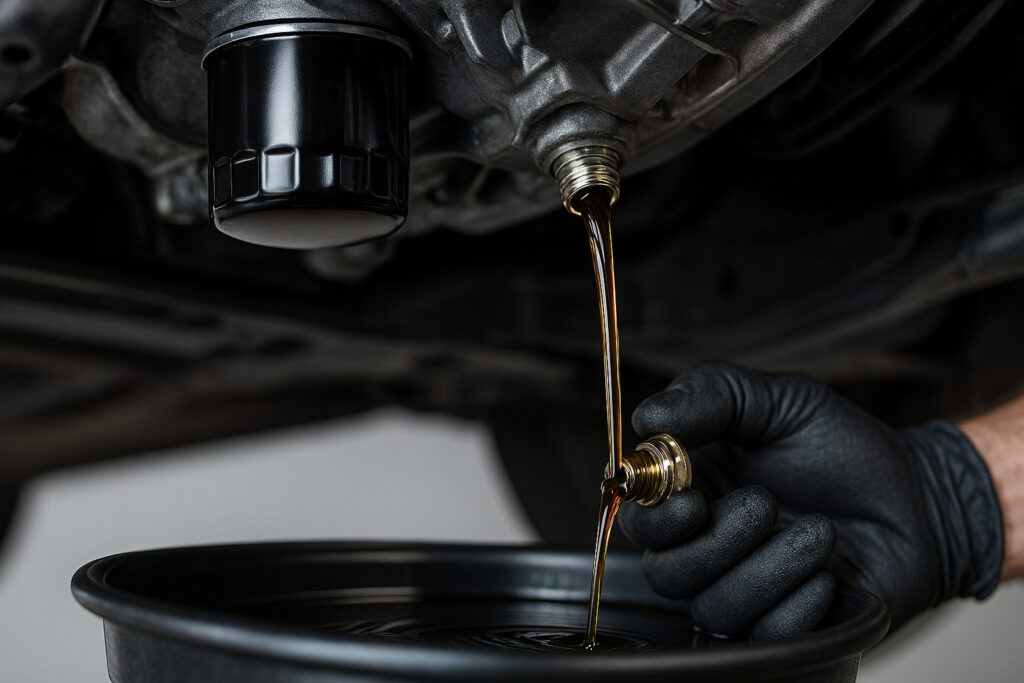
Skip oil changes long enough and the engine will eventually suffer from thermal breakdown and sludge. Performing this yourself eliminates the significant markup on both the lubricant and the technician’s time. Oil is a commodity; professional labor is a premium service.
Most manufacturers currently call for oil changes every 5,000 to 7,500 miles for conventional or synthetic blends. Full synthetic often stretches to 10,000 miles, depending on the engine design and driving conditions, according to 2026 OEM service schedules for major brands like Toyota and Ford.
- Professional Shop Cost: $80–$130 for full synthetic.
- DIY Cost: $35–$55 for high-grade synthetic oil and an OEM-spec filter.
- Net Savings: $50–$75 per service.
Most drivers perform this service twice a year. When a vehicle enters a professional bay with heavy sludge buildup, the cause is almost always an inconsistent maintenance schedule. Handling the job at home makes it easier to stay on schedule without waiting for a shop appointment.
2. Engine Air Filter Replacement
Neglecting engine air filters can lead to a measurable drop in fuel economy. Replacing one typically takes five minutes and requires no specialized mechanical training. A clogged air filter restricts airflow to the intake manifold; less air results in less efficient combustion, which increases fuel consumption over time.
Most manufacturers recommend a replacement every 15,000 to 30,000 miles. However, if you drive in dusty environments or heavy city traffic, this interval may shorten.
- Professional Shop Cost: $40–$80.
- DIY Cost: $12–$25.
- Net Savings: $28–$55.
On the majority of modern internal combustion vehicles, no tools are required. You simply pop the retaining clips, lift the housing, and swap the filter. EPA data suggests that a severely restricted filter can reduce fuel efficiency, meaning this small job pays for itself at the pump.
3. Cabin Air Filter Swap
Cabin air filters are frequently ignored until the HVAC system produces a musty odor. This service is accessible to almost any vehicle owner, as the filter is usually located behind the glove box rather than under the hood.
The standard replacement interval sits around 15,000–20,000 miles, though urban driving or high-pollen areas can clog them faster.
- Professional Shop Cost: $50–$120.
- DIY Cost: $15–$30.
- Net Savings: $35–$90.
If your vents show weak airflow, check the filter before assuming the blower motor has failed. In most cases, a debris-filled filter is the culprit. Replacing it yourself avoids the $70+ labor fee many dealerships tack on for a 90-second swap.
4. Tire Rotations
Delaying tire rotations will result in premature tire failure. Rotating them yourself costs nothing but your time and effectively extends the life of a very expensive asset. Front tires wear quicker on most vehicles because they handle the majority of steering and braking loads.
The manufacturer-recommended interval is typically every 5,000–7,500 miles, often paired with each oil change.
- Professional Shop Cost: $25–$60 per rotation.
- DIY Cost: $0 (assuming you own a jack and stands).
- Net Savings: $50–$120 annually.
The real financial gain is in the lifespan of the rubber. AAA estimates a full set of tires for a modern sedan or SUV costs between $600 and $1,200. Stretching that lifespan by even 20% by preventing “feathered” edges or uneven tread wear delays a major four-figure expense.
5. Windshield Wiper Blade Replacement
Worn wiper blades ruin visibility during heavy rain or snow. Because they are a “wear item,” shops often charge triple the MSRP for the parts plus a small installation fee. Wipers are simple components that click into place on a J-hook or pin-style arm.
The replacement interval is usually every 6–12 months, depending on your local climate and sun exposure.
- Professional Shop Cost: $30–$60 installed.
- DIY Cost: $15–$25 for a high-quality set.
- Net Savings: $15–$35.
This is the lowest-effort savings on this list. Paying dealership prices for a part that can be swapped in an auto-parts store parking lot in under two minutes is an unnecessary drain on your maintenance budget.
6. Battery Testing and Replacement
A failing battery often catches owners off guard during the first cold snap of the season. Testing and replacing it yourself avoids the significant retail markup found at repair shops. Car batteries typically last 3–5 years, according to 2026 data from AAA.
- Professional Shop Cost: $180–$300 installed.
- DIY Cost: $120–$180.
- Net Savings: $60–$120.
Many local auto parts retailers provide free battery testing. If your car struggles to start and the battery is over four years old, the battery is the most likely culprit—not the starter or the alternator. Replacing it requires only a basic socket set to loosen the terminals.
Comparative Annual Savings Analysis
The following table demonstrates the potential cost difference for a driver covering 15,000 miles per year.
| Service Item | Professional Shop (Annual) | DIY Cost (Annual) | Estimated Savings |
| Oil Changes (2x) | $160–$260 | $70–$110 | $90–$150 |
| Engine Air Filter | $40–$80 | $12–$25 | $28–$55 |
| Cabin Air Filter | $50–$120 | $15–$30 | $35–$90 |
| Tire Rotations (2x) | $50–$120 | $0 | $50–$120 |
| Wiper Blades | $30–$60 | $15–$25 | $15–$35 |
| Battery (Annualized) | $60–$100* | $40–$60* | $20–$40 |
| TOTALS | $410–$740 | $152–$250 | $238–$545 |
*Note: Battery costs are annualized based on a 3–5 year lifespan.
If you drive more than the national average, these figures will climb. The 2025 Vehicle Health Index from CarMD suggests that neglected maintenance is the primary driver of high-cost repairs later in a vehicle’s life.
Determining When to Hire a Professional
While the six services above represent the “sweet spot” for savings, some jobs carry higher risks. Brake pads, coolant flushes, and transmission services sit in a gray area. They are possible for a motivated owner to perform in a driveway, but errors in these systems can lead to expensive damage or safety concerns.
In our assessment, the six services highlighted here are the clear cutoff for most owners. They require minimal tools and carry low risk. If you reside in an apartment without dedicated parking or lack basic hand tools, the math may shift in favor of a shop, but for those with a driveway and a spare hour, the DIY route is the most efficient way to reduce ownership costs.
Conclusion: Is DIY Right for You?
If you own a vehicle that is no longer under a factory-included maintenance plan, these six tasks are the most effective way to lower your cost per mile. Based on the data here, focusing on oil, filters, tires, wipers, and the battery can keep roughly $300–$500 a year in your pocket without the need to touch complex electronic or mechanical systems.
Every car has unique quirks—some have components buried behind plastic panels that may break if handled roughly. Check your owner’s manual for specific service intervals and compare the local part prices against your last shop invoice to see exactly where your money is going.
References
- AAA 2026 Driving Costs Study
- CarMD 2025 Vehicle Health Index
- EPA Fuel Economy Maintenance Data
- Consumer Reports: Car Maintenance Guide
- J.D. Power: Average Cost of Ownership 2026
Disclaimer: The information provided in this article is for educational and informational purposes only. It does not constitute professional mechanical advice. Readers should conduct their own research and consult with qualified professionals before making any decisions regarding vehicle repair.
