

A set of tires should last 50,000 to 70,000 miles. I’ve seen them destroyed in under 20,000. This isn’t usually due to a manufacturing defect; it happens because basic maintenance was ignored. You don’t need to be a certified mechanic to protect your investment, but you must recognize which small tasks are frequently neglected and the high-dollar consequences they trigger. We are looking at uneven wear, blown sidewalls, and suspension damage that far exceeds the cost of a routine service.
This guide breaks down what actually gets missed, the specific costs associated with those lapses, and the clear line between driveway DIY and professional shop requirements.
Skip Tire Rotations and You Buy Tires Twice as Often
If you neglect rotations, your front tires will often wear down to the cords while the rears still look nearly new. This isn’t a fluke; it’s basic physics. Most manufacturers suggest rotating tires every 5,000–7,500 miles, typically timed with your oil changes. Because front tires handle the brunt of steering and braking forces, they naturally wear at a faster rate.
Once a wear pattern becomes severely uneven, a simple rotation can no longer “fix” the tire. In my shop, if a car arrives with bald front tires and healthy rears, I won’t suggest a rotation; I’ll tell you that you’re already shopping for a new pair. While a rotation costs between $20 and $50, a full set of mid-range tires can run $600 to $900 installed. Consistently skipping this service can effectively cut your tire life in half.
Data from Consumer Reports (2026) confirms that uneven wear remains a primary cause for premature tire failure, far outpacing road hazards like punctures.
Ignore Tire Pressure and You Burn Fuel — and the Tire
Underinflated tires do more than just look low; they flex excessively, generate internal heat, and rapidly wear out the outer edges of the tread. This neglect hits your wallet every time you fill up. The U.S. Department of Energy estimates that underinflated tires can reduce fuel economy by roughly 0.2% for every 1 psi drop across all four tires.
Heat is the ultimate silent killer for rubber. I have witnessed numerous sidewall failures on highways because a driver ran 8–10 psi low for several months. By the time the Tire Pressure Monitoring System (TPMS) light stays on, the structural integrity of the tire may already be compromised.
Checking your pressure takes five minutes and should be done once a month. A high-quality digital gauge costs between $10 and $20. Compare that to a single tire replacement after a heat-related blowout, which typically runs $150–$300. The AAA 2026 Driving Cost Analysis notes that these quiet inefficiencies significantly raise annual vehicle operating costs.
Skip Alignments and the Tires Wear Crooked
Alignment issues are deceptive because the car may still feel relatively stable. You might notice the steering wheel is slightly off-center or a very faint pull to one side, which is easy to dismiss. However, your tires are essentially scrubbing against the pavement at an incorrect angle. This is usually “toe” or “camber” misalignment—meaning the tire is not sitting flat as intended.
If you bring a car with this issue to my bay, I can feel the damage before I even see it: one edge of the tread will be sharp while the other is smooth. This is permanent wear. A standard alignment costs roughly $90 to $150. If ignored, you will replace tires thousands of miles early and potentially stress suspension components like tie rods and ball joints, pushing repair bills into the $400–$1,000 range. The CarMD 2026 Vehicle Health Index shows a rising trend in suspension repairs directly linked to neglected wheel alignments.
Forget Balancing and You Get Vibration
You will usually feel an imbalance before you see the physical damage. At highway speeds (60–70 mph), the steering wheel may begin to shake. This isn’t just an annoyance; it is a weight imbalance in the wheel assembly being amplified by speed. Left unaddressed, this vibration transfers directly into the suspension system, causing wheel bearings and shocks to wear out prematurely.
A tire balance is affordable, usually costing $15–$25 per wheel. People often delay this because the vibration feels “minor,” but the cumulative damage to the suspension can cost hundreds to rectify.
Run Worn Tread and Your Safety Margin Disappears
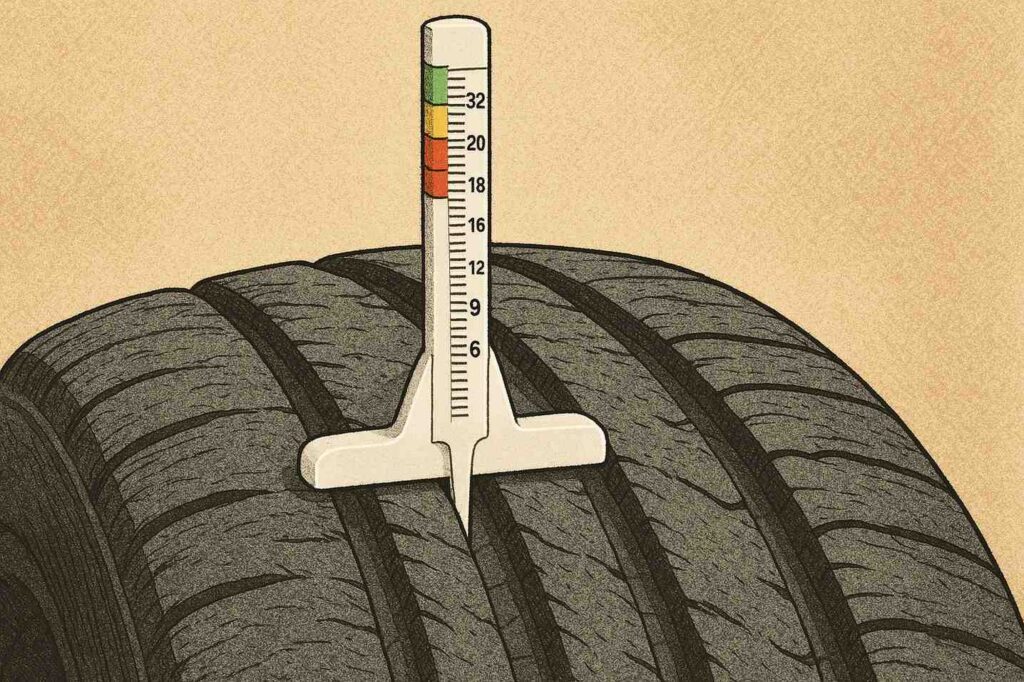
This is the most dangerous gamble a driver can make. While the legal minimum tread depth in the U.S. is 2/32 of an inch, performance—specifically wet-weather grip—degrades significantly long before you reach that limit. At 4/32 of an inch, your stopping distance on wet roads increases noticeably, and the risk of hydroplaning jumps.
Testing by Consumer Reports shows that worn tires can take several car lengths longer to stop at highway speeds compared to new rubber. If your car has ever slid further than expected during a rainstorm, it was likely your tires, not your brakes, that failed you. You can monitor this with a cheap gauge or the “quarter test”—it isn’t professional-grade, but it’s better than guessing.
What These “Small” Skips Actually Cost
| Maintenance Item | Typical Cost | What Happens If Skipped | Resulting Cost |
| Tire Rotation | $20–$50 | Uneven wear, shortened tire life | $600–$900 (early replacement) |
| Tire Pressure Check | Free–$20 (gauge) | Heat buildup, blowouts, poor MPG | $150–$300 + fuel costs |
| Wheel Alignment | $90–$150 | Crooked wear, suspension stress | $400–$1,000+ repairs |
| Tire Balancing | $60–$100 (total) | Vibration, component wear | $300–$800 suspension wear |
| Tread Monitoring | Free–$10 | Reduced grip, longer stopping | Accident risk, tire replacement |
What You Can Handle vs. What Needs a Shop
- Check tire pressure monthly: DIY.
- Visually inspect tread and sidewalls: DIY.
- Rotate tires: DIY if you have a proper jack and stands; otherwise, use a shop.
- Alignment: Shop only; requires specialized laser equipment.
- Balancing: Shop only; requires a balancing machine.
The Decision Point: When Maintenance Isn’t Enough
There is a definitive point where maintenance can no longer save a tire. If the wear is so uneven that you can feel distinct ridges across the tread, that tire is done. No amount of rotating or aligning will reverse that damage. In my professional experience, once tires reach this stage, replacement is the only safe option. However, you must fix the underlying cause (like a bad alignment) before mounting the new set, or you will simply burn through those as well.
Conclusion
The simplest way to avoid massive tire bills is to be disciplined with rotations and pressure. In my assessment, skipping rotations is the most expensive mistake a driver can make because it is so cheap to prevent but so costly when it results in premature tire death.
It is important to understand that driving style—such as aggressive cornering or frequent encounters with potholes—can shorten tire life regardless of maintenance. But the fundamental math remains. If you see uneven wear, check your alignment. If you haven’t checked your pressure in a month, do it today. Staying on top of these basics keeps your money in your pocket and your car safely on the road.
References
- Consumer Reports – Tire Testing and News 2026
- AAA – 2026 Your Driving Costs Analysis
- CarMD – 2026 Vehicle Health Index
Disclaimer: The information provided in this article is for educational and informational purposes only. It does not constitute professional advice. Readers should conduct their own research and consult with qualified professionals before making any decisions.
