
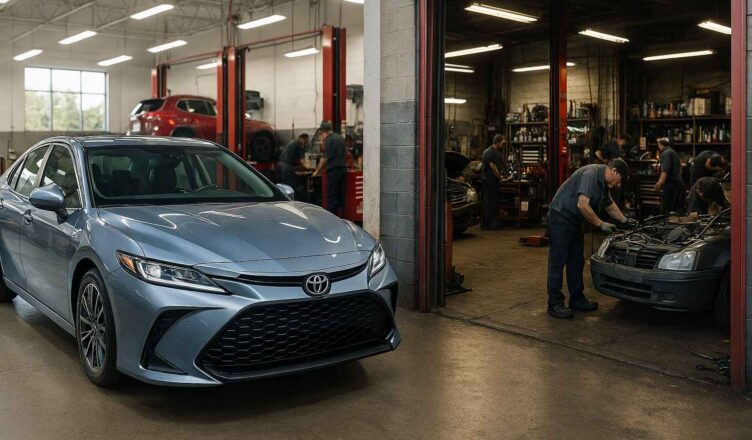
You’re staring at two quotes for the same job. One is $180. The other is $95. Same oil, same car, same day.
So what exactly are you paying for?
Most owners assume the dealership is just overpriced. Sometimes that’s true. But in 2026, the gap isn’t just markup—it’s tooling, data access, and how modern cars are built. This breaks down where the extra money actually goes, when it matters, and when you’re just paying for a nicer waiting room. We’ll lean on data from AAA, J.D. Power, and Consumer Reports, and I’ll call out where I’d send my own car.
The Labor Rate Reality: Why Dealers Charge $200+
Labor rates are the first hit. Dealerships in the U.S. typically run $180–$250 per hour in 2026, while independent shops sit closer to $120–$160 per hour, according to AAA repair cost averages. In high-cost regions like California or New York, dealer rates frequently exceed $270 per hour.
That difference alone can double a basic service bill. But the labor rate isn’t just wages. You’re paying for factory scan tools, brand-specific training, and access to manufacturer service bulletins that independents may not always have in real time. The dealer is built to handle your exact car, not just cars in general.
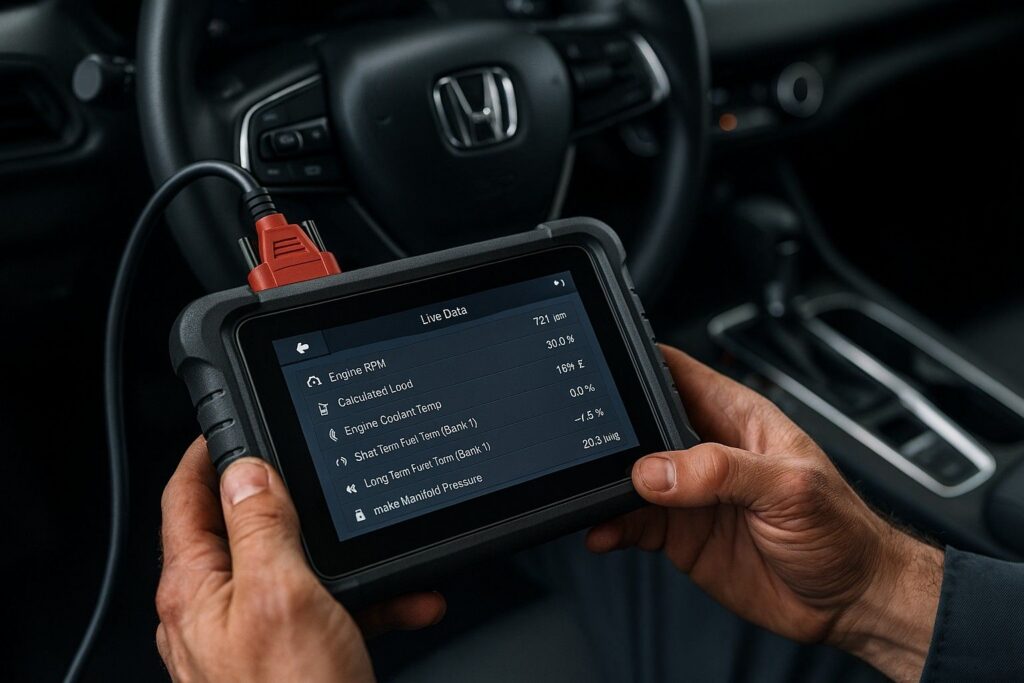
In my assessment, the overhead for a dealership includes mandatory “facility image” upgrades required by the manufacturer. If a brand decides all service bays need new digital displays, the customer eventually pays for those screens through the hourly rate. If this came into my bay with a weird electrical issue, the first thing I’d check is whether I had OEM-level scan access. Because without it, you’re guessing—and guessing gets expensive fast.
Diagnostics: The Hidden Cost of “Guessing”
Misdiagnosis is the hidden cost nobody talks about. CarMD’s 2026 Vehicle Health Index shows that diagnostic-related repairs are among the most common reasons repair costs balloon—because the first fix didn’t solve the problem.
Dealerships tend to have an edge here. They see the same models every day and know the patterns. An independent shop might see a transmission hesitation as a fluid issue, but a dealer tech might recognize it as a software update tied to a known service bulletin. That’s the difference between a $180 fluid service and a $900 “misfire” of parts swapping.
I’ve seen this exact scenario on late-model Ford transmissions. Three shops, three guesses. The dealer flashed the TCM (Transmission Control Module)—problem gone. A good independent with the right tools can match this, but consistency varies. Not all independents invest in the $4,000+ annual OEM software subscriptions required for full data access.
Parts Markup: OEM vs. Aftermarket
Dealerships use Original Equipment Manufacturer (OEM) parts as the default. Independent shops often use aftermarket parts, which can cost 20–50% less depending on the component.
| Service Type (2026 National Avg) | Dealership (OEM Parts) | Independent (Aftermarket Mix) |
| Brake Pads + Rotors | $542 | $315 |
| Alternator Replacement | $910 | $580 |
| Water Pump | $740 | $425 |
| Battery Replacement (AGM) | $385 | $215 |
OEM parts usually fit perfectly and last as expected. Consumer Reports reliability data consistently shows that improper or low-quality replacement parts can lead to repeat failures—especially in suspension and electronics.
If it’s brakes on a commuter car? A quality aftermarket brand is fine. If it’s a sensor, transmission component, or anything buried deep? I lean OEM every time. Labor to redo the job costs more than the initial savings. Based on the data here, the “savings” of a cheap water pump vanish the moment it leaks and you have to pay for six hours of labor a second time.
The Warranty Trap and Documentation
Go outside the dealer during the warranty period, and things can get messy. Legally, the Magnuson-Moss Warranty Act ensures you can service your car anywhere without voiding the warranty. However, if something fails, the burden of proof shifts to you. You may need to prove:
- The correct weight of oil and filter micron rating were used.
- Service intervals were strictly followed to the mile.
- The independent repair didn’t contribute to the system failure.
Dealership records are already in the manufacturer’s global system—no arguing. According to J.D. Power’s 2026 Vehicle Dependability Study, owners who stick with dealership service during warranty periods report fewer claim disputes. If your car is under 3 years / 36,000 miles, this documentation alone may justify the higher cost.
Routine Maintenance: The Easy Place to Save
Oil changes, filters, and tire rotations are where dealerships quietly make their highest margins. A synthetic oil change at a dealer often runs $135–$190. An independent shop typically charges $80–$115 for the same grade oil.
In our assessment, there is very little technical reason to pay a dealer for:
- Cabin air filters: Dealers often charge $80–$100 for a part that costs $15 and takes 60 seconds to install.
- Engine air filters: This is the most marked-up “convenience” item in the service bay.
- Tire Rotations: Many independent tire shops perform this for free if you bought the tires there.
If this came into my bay for a simple oil change, there’s nothing about the process that justifies a 2x price. You are paying for the car wash, the coffee in the lounge, and the “peace of mind” of a branded stamp in your service book.
The 2026 Software Gap: ADAS and Calibration
Cars in 2026 are software-heavy. Even basic systems tie into electronics. Advanced Driver Assistance Systems (ADAS), like lane assist and adaptive cruise control, require precise calibration after certain repairs—even something as simple as a windshield replacement or an alignment.
Dealerships have direct access to manufacturer calibration targets and software. Independents are catching up, but it’s uneven. Some shops invest heavily in expensive physical targets; others don’t. This is why certain jobs—ADAS calibration, transmission programming, and hybrid battery work—are drifting back toward dealerships.
AAA has flagged rising repair costs tied to ADAS, and this trend isn’t slowing down. If your car is newer and loaded with tech, the dealership advantage is real. If it’s a 2015 Corolla with no driver aids? There is no reason to pay the dealer premium.
Choosing a Winning Strategy
The best approach isn’t “one or the other.” It’s a hybrid model. Use the dealership for complex electronics, recalls, and anything covered under the powertrain warranty. Use a trusted independent mechanic for everything else—brakes, suspension, oil, and cooling systems.
This isn’t just about the hourly rate; it’s about the relationship. A local mechanic knows your driving habits. A dealership knows your VIN. Both have value, but only one is trying to meet a monthly corporate quota for “fluid flushes.”
Conclusion: Where You Should Actually Spend the Money
If your car is under warranty or has complex electronic issues, pay the dealership premium. The odds of getting the right fix the first time are higher, which in the end can save you money. For routine maintenance and wear items, a good independent shop is the smarter financial call. You’re often saving 30–50% with no real downside.
Price the same service at both a dealer and a well-reviewed independent, then run the long-term numbers using the Edmunds True Cost to Own (TCO) calculator. The difference shows up faster than most people expect.
References
- AAA: Average Mechanic Labor Rates 2026
- J.D. Power 2026 U.S. Vehicle Dependability Study (VDS)
- Consumer Reports: Car Repair and Maintenance Guide
- CarMD 2026 Vehicle Health Index
- Edmunds True Cost to Own (TCO) Calculator
- National Institute for Automotive Service Excellence (ASE) 2026 Technology Report
Disclaimer: The information provided in this article is for educational and informational purposes only. It does not constitute professional advice. Readers should conduct their own research and consult with qualified professionals before making any decisions.
