
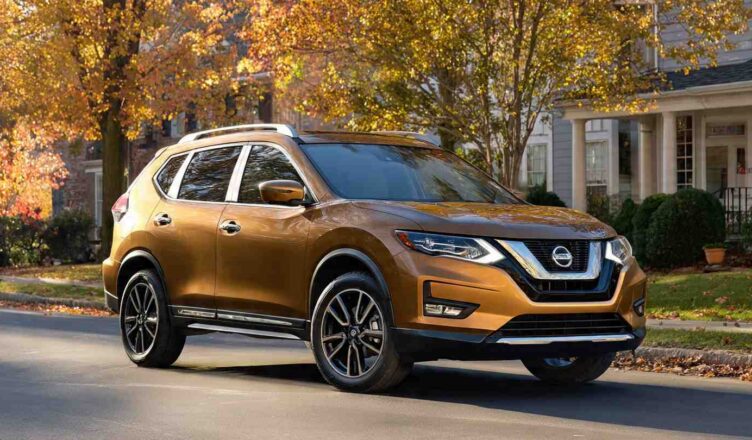
Thirty miles into the morning commute, the 2026 Nissan Rogue does something remarkable it disappears. Not in a bad way. You stop thinking about it. The steering is light, the ride absorbs everything, the cabin is quiet, and the infotainment does what you tell it. The Rogue recedes into the background and lets you think about something else.
The Rogue is America’s second best-selling vehicle only the Ford F-Series outsells it in many months. It succeeds because it does everything adequately and almost nothing exceptionally. In 2026, after a mid-cycle refresh that brought a new 1.5-liter turbocharged three-cylinder engine and updated safety technology, the question is whether Nissan fixed the gaps or simply maintained the status quo.
This review covers the 2026 Rogue’s strengths and weaknesses against its direct competition — the Toyota RAV4 Hybrid, Honda CR-V Hybrid, and Mazda CX-5. Data comes from EPA fuel economy figures, IIHS and NHTSA safety ratings, and extended driving time in SV and SL trim configurations.
The Cabin: Better Than You’d Expect at This Price
The first surprise inside the Rogue is how good the materials feel relative to the entry price. The dashboard surfaces have a soft texture that doesn’t feel like the cost-cutting you’d expect at $30,000. The SL trim adds quilted leather seats that are comfortable over long drives supportive without being overly bolstered, wide enough for most body types.
The 12.3-inch infotainment screen is large and visually clean, though the menu structure requires a learning curve. There’s a 9-inch digital instrument cluster behind the wheel that replaces analog gauges entirely a modern touch that still feels fresh in this price bracket. Physical climate controls sit below the screen: real buttons, real knobs, no haptic nonsense.
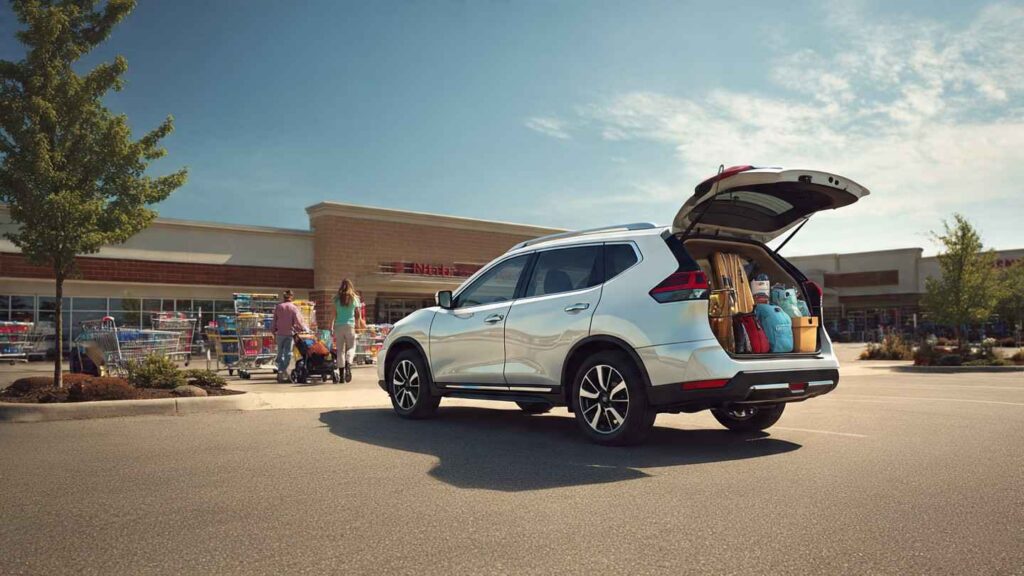
Rear seat space is genuinely generous. Nissan designed the second row for adult comfort, and it shows rear legroom measures 38.6 inches, with a slight recline adjustment on upper trims. Cargo volume behind the rear seat sits at 36.5 cubic feet, which is competitive without being exceptional. The Honda CR-V still holds more at 39.2 cubic feet.
The Rogue’s interior quality punches above its starting price. It’s not the best cabin in the segment, but it’s better than the sticker suggests.
The Engine Question: Turbocharged Three-Cylinder in 2026
This is where Nissan’s decisions get interesting. The 2026 Rogue uses a 1.5-liter turbocharged three-cylinder engine producing 201 horsepower down from the previous 2.5-liter four-cylinder. The EPA rates the 2026 Rogue at 30 mpg city / 37 mpg highway / 33 mpg combined in FWD, and 29 city / 34 highway / 31 combined in AWD.
Those numbers are respectable for a non-hybrid. But the context matters: the Toyota RAV4 Hybrid returns 41 mpg combined, and the Honda CR-V Hybrid hits 36 mpg. The Rogue’s 33 mpg is the most fuel-efficient non-hybrid compact SUV in the class, which is something but against hybrid competition, it trails meaningfully.
The engine itself is smooth and unobtrusive. Power delivery is linear, there’s no noticeable three-cylinder vibration at highway speed, and the CVT manages the torque without the rubber-band hunting that plagued older CVT-equipped Rogues. Based on extended highway driving, my read is that the 1.5-liter turbo is a genuine improvement over what it replaced it’s refined in a way earlier three-cylinder compact SUV engines simply weren’t.
Push it hard through a corner and it reminds you what it is. The steering has very little feel, the body rolls noticeably, and the car communicates clearly that dynamic driving is not its purpose. The suspension absorbs rather than responds.
How the Rogue Compares: The Competitive Landscape
| Metric | 2026 Nissan Rogue SV | 2026 Toyota RAV4 Hybrid | 2026 Honda CR-V Hybrid | 2026 Mazda CX-5 |
|---|---|---|---|---|
| Starting MSRP | ~$29,850 | ~$32,350 | ~$33,895 | ~$29,450 |
| EPA Combined MPG | 33 mpg (FWD) | 41 mpg | 36 mpg | 27 mpg |
| Cargo (seats up) | 36.5 cu. ft. | 37.6 cu. ft. | 39.2 cu. ft. | 30.9 cu. ft. |
| Rear Legroom | 38.6 in. | 37.8 in. | 40.4 in. | 39.5 in. |
| Horsepower | 201 hp | 219 hp (combined) | 204 hp (combined) | 187 hp |
| IIHS Safety Rating | Top Safety Pick+ | Top Safety Pick | Top Safety Pick+ | Top Safety Pick+ |
| Towing Capacity | 1,350 lbs | 1,750 lbs | 1,500 lbs | 2,000 lbs |
| AWD Available? | Yes | Yes | Yes | Yes |
| Best For / Verdict | Value, daily comfort | Fuel economy, reliability | Cargo, efficiency | Driving engagement |
The Rogue wins on rear legroom among this group and is the lowest-priced non-Mazda option on the list. It loses fuel economy to both hybrids, cargo to the CR-V, and driving engagement to the CX-5. It sits in the comfortable middle not exceptional in any category, but not deficient in any either.
Safety: The Rogue’s Strongest Argument
The 2026 Nissan Rogue earned a Top Safety Pick+ rating from the IIHS the highest designation, shared with the CX-5 in this competitive group. NHTSA awarded the Rogue 5 stars overall. Nissan Safety Shield 360 comes standard on all Rogue trims, including automatic emergency braking with pedestrian detection, rear automatic braking, lane departure warning, blind-spot warning, and rear cross-traffic alert.
The ProPilot Assist semi-autonomous driving system available on SL trim and above is one of the better systems for highway driving assistance in this price class. It maintains speed, distance, and lane position with less intervention than many competing systems. In our assessment, ProPilot Assist is the single most compelling reason to consider the SL trim over the base SV, particularly for buyers who spend significant time on highway commutes.
Nissan’s Honest Gap: No Hybrid Option
Nissan offers no hybrid variant of the Rogue in the US market as of the 2026 model year. That is a significant omission. The RAV4 Hybrid and CR-V Hybrid both offer hybrid powertrains that reduce fuel costs meaningfully over three to five years of ownership. For buyers who drive 15,000 miles annually, the fuel economy difference between the Rogue and a RAV4 Hybrid translates to roughly $400–$500 per year at current fuel prices.
This is the Rogue’s most significant competitive disadvantage in 2026. Nissan’s commitment to a non-hybrid compact SUV is a product strategy choice, and buyers should weigh that choice against their own fuel costs before deciding. The calculus shifts if you drive fewer miles annually or have access to significantly below-average fuel prices.
Who Should NOT Buy This
Do not buy the Rogue if fuel economy is your primary concern. The RAV4 Hybrid returns 8 more miles per gallon combined, and the CR-V Hybrid is 3 mpg ahead those gaps produce real dollars over time.
Do not buy the Rogue if you care about driving engagement. It’s purposely removed from the driver’s experience. The Mazda CX-5 is a fundamentally more interesting car to operate, and it costs less at the base trim.
Do not buy the Rogue if towing matters. Its 1,350-pound limit is the lowest in this group. The CX-5 tows 2,000 pounds, the RAV4 tows 1,750, and the CR-V manages 1,500 all meaningfully higher.
And do not buy the Rogue if you need a large cargo area for regular hauling. The CR-V’s 39.2 cubic feet simply provides more room.
The Verdict
The 2026 Nissan Rogue is a very good compact SUV for buyers who want comfortable, competent, low-stress daily transportation at a fair price and who don’t need to prioritize any single attribute above the others. It handles the commute, manages the weekend, and does it all without asking anything difficult of the driver. For that buyer which is a significant portion of the compact SUV market it’s a completely reasonable choice.
But the Rogue is not the right choice for buyers who have thought carefully about what they specifically need. If fuel costs matter: buy the RAV4 Hybrid. If cargo space matters: buy the CR-V Hybrid. If driving engagement matters: buy the CX-5. The Rogue wins by default for buyers who are genuinely indifferent on those specifics.
One gap in this review: long-term reliability data on the 2026 Rogue’s 1.5-liter turbo three-cylinder engine is still early. The previous four-cylinder had a strong track record. Buyers who weight long-term reliability should monitor owner reports on Edmunds over the coming ownership cycle before committing.
Do not buy the Rogue if you have a specific need the comparison table shows it loses in. Buy it when it’s the most balanced choice at the price, and that’s the only requirement.
References
Disclaimer: The information provided in this article is for educational and informational purposes only. It does not constitute professional advice. Readers should conduct their own research and consult with qualified professionals before making any decisions.
