
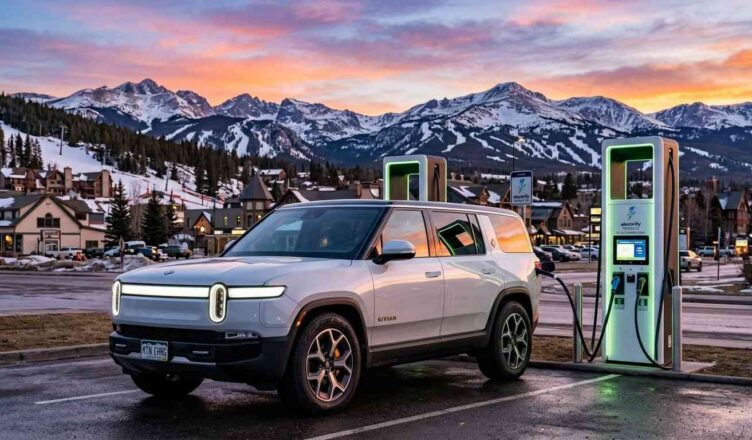
The federal Clean Vehicle Credit still provides a baseline of $7,500 for eligible buyers, but in several U.S. states, local incentive stacks can now push the total effective discount beyond $12,000. These regional programs have become the primary driver of affordability as manufacturers adjust pricing to meet 2026 production targets. However, navigating these savings requires a precise understanding of “point-of-sale” versus “tax-time” benefits, as well as the increasingly strict income caps that vary by ZIP code.
This analysis details the strongest state-level programs in the 2026 market, including real dollar amounts, utility-specific bonuses, and the infrastructure realities that dictate whether an incentive-heavy deal actually makes sense for your daily commute.
The 2026 Landscape: Stacking Federal and State Credits
The federal Clean Vehicle Credit (Internal Revenue Code Section 30D) remains the “ceiling” for most buyers, offering up to $7,500 for new vehicles that meet specific battery component and critical mineral sourcing requirements. While many buyers focus on this headline number, IRS and DOE data confirm that state-level incentives often provide the “floor” that makes the monthly payment competitive with internal combustion vehicles.
For a resident in a high-incentive state, the math is additive. You might start with the $7,500 federal credit (often applied directly at the dealership in 2026) and then add a $5,000 state tax credit and a $1,500 utility rebate for home charging. This “stacking” effect is the most significant financial advantage for EV shoppers this year, but it is highly dependent on living in specific jurisdictions.
Comparing the Top-Tier Incentive States
In 2026, three states—Colorado, New Jersey, and Massachusetts—have emerged with the most transparent and accessible programs. While California offers higher potential totals through scrap-and-replace programs, these three states provide “cleaner” savings that apply to a broader range of middle-income shoppers.
| State | Max State Rebate/Credit | Price Cap (MSRP) | Notable 2026 Benefit |
| Colorado | $3,250 – $5,000 | $80,000 | Stackable $2,500 bonus for EVs under $35k |
| New Jersey | $4,000 | $55,000 | Point-of-sale instant rebate (Charge Up NJ) |
| Massachusetts | $3,500 | $55,000 | MOR-EV program includes used vehicles ($40k cap) |
| New York | $2,000 | $42,000* | Rebate drops to $500 for vehicles over $42k |
| Connecticut | $4,500 | $50,000 | Higher tiers reserved for income-qualified buyers |
Data sources: Colorado Energy Office, NJ Board of Public Utilities, Massachusetts MOR-EV.
Colorado: The National Leader in Stackable Credits
Colorado currently offers the most aggressive incentive structure in the U.S. for 2026. Beyond the standard $3,250 state tax credit for EVs under $80,000, the state provides an additional $2,500 for vehicles with an MSRP below $35,000. This is specifically designed to incentivize the adoption of “affordable” EVs, such as the latest compact crossovers.
Residents who meet specific income requirements (typically below 80% of the Area Median Income) and trade in a vehicle older than 12 years can access the “Vehicle Exchange Colorado” (VXC) rebate, which adds up to $9,000 in additional savings. For a qualified buyer, the combined federal and state stack in Colorado can theoretically exceed $20,000 in total value.
New Jersey and the “Post-Tax-Free” Era
New Jersey made headlines in late 2025 by ending its long-standing sales tax exemption for electric vehicles. As of July 1, 2025, the standard 6.625% sales tax applies. To offset this, the state redirected its focus to the “Charge Up New Jersey” program.
In 2026, this program provides an instant, point-of-sale rebate of up to $4,000 for income-qualified residents ($1,500 for standard applicants) on vehicles with an MSRP under $55,000. The transition to a point-of-sale model is a major benefit for buyers, as it reduces the amount they need to finance immediately, rather than waiting for a tax refund a year later. According to 2026 NJ utility reports, companies like PSE&G also provide up to $1,500 for home charger installation, further reducing the total cost of ownership.
Why Infrastructure Matters More Than the Check
A $5,000 rebate is a powerful motivator, but NREL research from early 2026 indicates that “incentive fatigue” occurs when vehicle savings are not matched by local charging reliability. As of this year, the U.S. has reached over 180,000 public charging ports, but the density is heavily concentrated in the same states that offer the best incentives.
In states like California and New York, the density of DC fast chargers along highway corridors makes the transition seamless. Conversely, in states with minimal incentives—such as Texas or Florida—the lack of state-level funding often mirrors a slower rollout of public “Level 3” infrastructure. For buyers in these regions, the decision to go electric should rely less on the one-time tax credit and more on the feasibility of “Level 2” charging at home.
Utility Rebates: The “Invisible” Savings
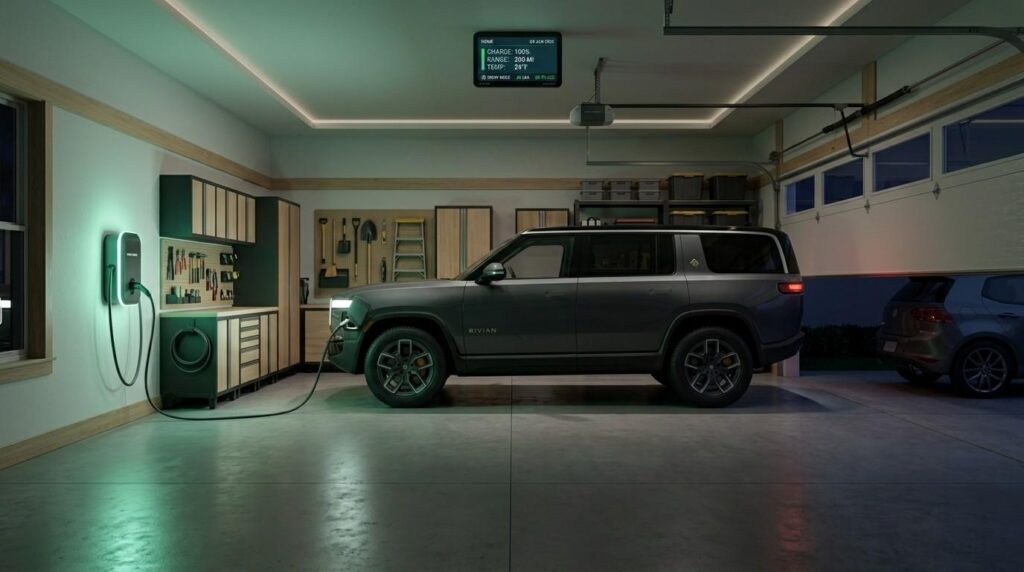
While state rebates capture the headlines, local utility incentives often provide an additional $500 to $2,000 that many buyers overlook. Utilities prioritize these programs to encourage “Managed Charging”—a technical process where the car’s charging is paused during high-demand hours and resumed overnight when the grid has excess capacity.
- Installation Credits: Many utilities offer “make-ready” rebates that cover the cost of upgrading your home’s electrical panel or wiring for a 240V circuit.
- Time-of-Use (TOU) Rates: Enrolling in a TOU plan can reduce your per-kWh cost to as little as $0.08 overnight, which EPA data confirms is the equivalent of paying roughly $1.00 per gallon for gasoline.
The Reality of Funding Cycles and Eligibility
The most critical limitation of state incentives in 2026 is their volatility. Most programs operate on a fiscal year budget; once the allocated funds are exhausted, the program typically “pauses” until the following year. California’s Clean Cars 4 All (CC4A) and New York’s Drive Clean Rebate have historically seen these pauses, leaving buyers who purchase in late autumn without access to the expected funds.
Furthermore, income caps are now a standard feature. In states like Massachusetts and California, individuals earning over $150,000 (or households over $300,000) are often excluded from state-level rebates entirely. This shifts the target audience toward the middle-market buyer, which is a key priority for state energy departments this year.
Conclusion: Planning Your Purchase
The best EV deal in 2026 is no longer a matter of national availability but a reflection of local policy. For residents in Colorado or New Jersey, the combined savings can fundamentally change the ROI of an electric vehicle, often resulting in a lower “Total Cost of Ownership” than a comparable hybrid within the first 18 months.
However, if you reside in a state with no local incentives, your focus should shift toward utility-specific programs and maximizing the federal credit. Before signing a contract, verify your eligibility on the DOE Alternative Fuels Data Center station and law locator and confirm that your chosen vehicle fits within your state’s MSRP price cap. The financial case for going electric is stronger than ever, provided you have mapped out the specific “stack” available in your ZIP code.
References
- DOE Alternative Fuels Data Center: EV Laws and Incentives (2026)
- IRS Clean Vehicle Tax Credit (Section 30D) Official Guidance
- NREL: 2026 National EV Infrastructure Progress Report
- EPA: EV Total Cost of Ownership Calculator (2026 Update)
- Massachusetts MOR-EV Official Program Data
- Colorado Energy Office: 2026 EV Tax Credit Manual
Disclaimer The information provided in this article is for educational and informational purposes only. It does not constitute professional financial, tax, or legal advice. Incentive programs are subject to rapid change, funding exhaustion, and legislative updates. Readers should conduct their own research and consult with a qualified tax professional to verify eligibility based on their specific financial situation and location.
