
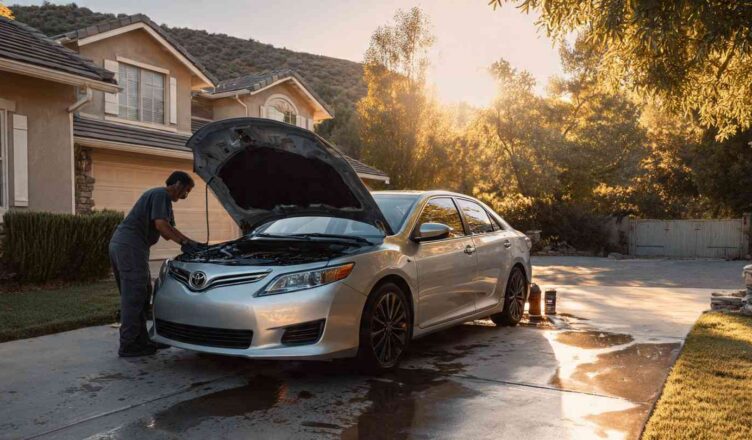
A customer rolled in last month with 142,000 miles on a 2015 Honda Accord. Complaint was simple: “It’s making a noise.” It wasn’t simple. Worn struts, tired wheel bearings, and a leaking valve cover gasket — all stacked up because none of it failed overnight.
That’s how high-mileage cars usually go. Not one big failure. A pile of smaller ones that show up together.
If your car’s pushing past 100,000 miles, this is the phase you’re in. Parts that quietly did their job for a decade start wearing out in clusters. This article breaks down what typically fails, what it costs in the U.S., and where spending early saves you from much bigger bills later. Data comes from manufacturer service schedules, Consumer Reports reliability trends, and the J.D. Power 2025 Vehicle Dependability Study.
Suspension Wear: The Ride Gets Loose First
You feel this before you see it.
The car starts floating over bumps, clunking over speed breakers, and leaning more in turns. Most manufacturers — Toyota, Honda, Ford — don’t list a hard replacement interval for shocks and struts, but in real-world U.S. driving, they typically wear out between 80,000 and 120,000 miles.
Ignore it long enough and you start chewing through tires faster.
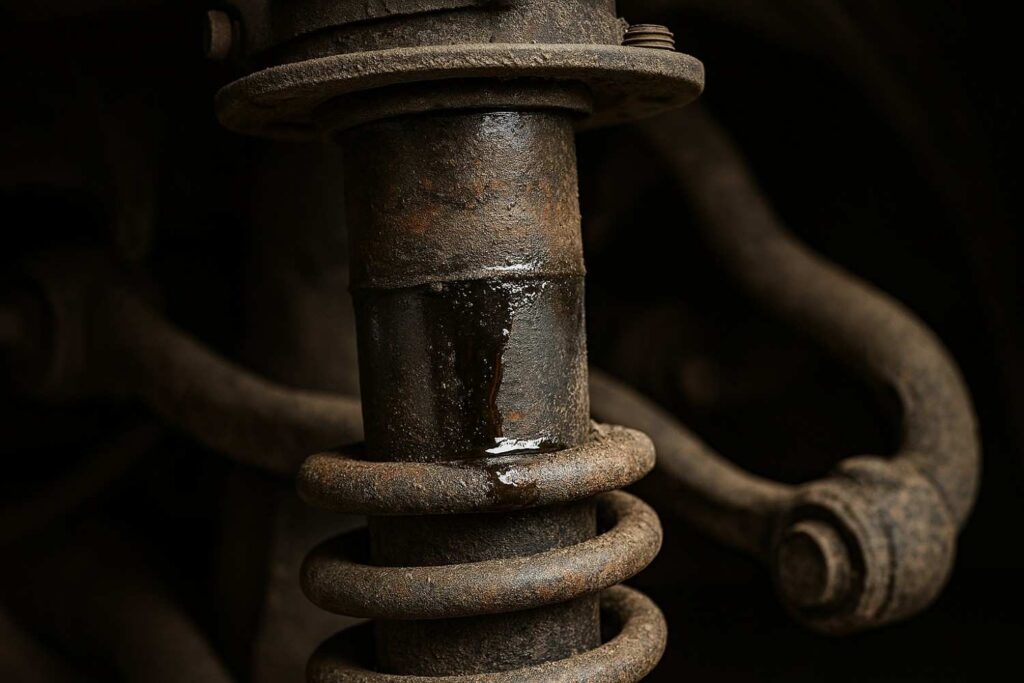
Typical suspension repair costs:
| Component | Typical Mileage Failure | Cost (Parts + Labor) |
| Struts/Shocks (all four) | 90k–130k miles | $800–$1,500 |
| Control Arm Bushings | 100k–150k miles | $300–$800 |
| Ball Joints | 100k–150k miles | $200–$600 |
If this car came into my bay with uneven tire wear and vague steering, I’d check the struts and control arm bushings first. Replacing struts at $1,000 often prevents premature tire wear that can cost another $600–$900. Skip it, and you pay both.
Oil Leaks and Gaskets: Small Seep, Bigger Problem
You’ll usually smell it before you see it. Burning oil. Slight smoke. Maybe a drip on the driveway.
Valve cover gaskets, oil pan gaskets, and timing cover seals all harden over time. Heat cycles do that. Rubber doesn’t last forever. Consumer Reports reliability data shows oil leaks become more common past 120,000 miles, especially on older German models and some aging GM V6 engines.
Typical gasket repair costs:
| Leak Source | Typical Mileage | Cost (Parts + Labor) |
| Valve Cover Gasket | 100k–150k miles | $150–$400 |
| Oil Pan Gasket | 120k–180k miles | $300–$900 |
| Timing Cover Seal | 120k+ miles | $800–$1,800 |
They ignore a $200 leak. Then oil drops low. Then the engine runs hotter or loses lubrication. Now you’re looking at internal damage that doesn’t come with a cheap fix. Fix the small leaks early; it is always cheaper.
Cooling System Failures: The Expensive Domino Effect
Engines hate heat. That hasn’t changed.
Radiators crack. Water pumps wear out. Thermostats stick. Most manufacturers recommend coolant flushes every 60,000–100,000 miles, but a lot of cars never get them. And that’s where trouble starts.
Typical cooling repair costs:
| Component | Typical Mileage | Cost (Parts + Labor) |
| Radiator Replacement | 120k–180k miles | $400–$1,200 |
| Water Pump | 90k–150k miles | $500–$1,200 |
| Thermostat | 100k+ miles | $150–$400 |
A coolant flush might cost $100–$180. Skip it, and corrosion builds inside the system. Then the radiator clogs or the water pump fails prematurely. A blown head gasket? That’s $1,500–$3,000 in most U.S. shops.
Transmission Repairs: Where Costs Jump Fast
This is the one people worry about. For good reason.
Automatic transmissions are complex, and fluid maintenance matters more than most owners realize. Many manufacturers recommend fluid changes between 60,000 and 100,000 miles, even if they market the fluid as “lifetime.”
Lifetime doesn’t mean forever. It means “until failure.”
Typical transmission service costs:
| Service/Repair | Mileage Range | Cost (Parts + Labor) |
| Transmission Fluid Change | 60k–100k miles | $150–$400 |
| Solenoid Replacement | 120k–180k miles | $300–$800 |
| Full Transmission Rebuild | 150k+ miles | $2,500–$4,500 |
According to the J.D. Power 2025 Vehicle Dependability Study, powertrain issues — including transmission problems — become significantly more common in vehicles over 10 years old. Regular fluid changes can extend transmission life by tens of thousands of miles. Skip them, and you’re rolling the dice on a four-figure repair.
Electrical and Sensor Failures: The Annoying Stuff
Check engine light. ABS warning. Random sensor fault. Modern cars rely on dozens of sensors — oxygen sensors, mass airflow sensors, crankshaft position sensors. These don’t last forever.
Typical sensor repair costs:
| Component | Typical Mileage | Cost (Parts + Labor) |
| Oxygen Sensor | 100k–150k miles | $200–$500 |
| Mass Airflow Sensor | 120k+ miles | $250–$600 |
| Battery Replacement | 3–5 years | $150–$300 |
This is where a scan tool matters. Guessing gets expensive fast. If this car came into my bay with a check engine light, I’d scan it first before replacing anything.
What the Data Says About High-Mileage Reliability
The J.D. Power 2025 Vehicle Dependability Study tracks problems per 100 vehicles (PP100) at the three-year mark, but longer-term trends still show a clear pattern: as vehicles age past 8–10 years, issues increase steadily.
Consumer Reports’ 2025 reliability data also shows that brands like Toyota and Lexus tend to have fewer major repairs at high mileage, while some European brands show higher maintenance costs as they age. However, no car is immune.
In my assessment, maintenance history matters more than brand once you’re past 120,000 miles. A well-maintained Ford can outlast a neglected Toyota. I’ve seen both.
Conclusion: Budget Smart, Not Reactive
If your car is crossing 100,000 miles, plan for suspension work, cooling system service, and at least one gasket repair in the near future. That’s the baseline. For most owners, setting aside $1,000–$2,000 per year for maintenance and repairs is realistic.
In my assessment, the better move is keeping a well-maintained high-mileage car rather than jumping into a newer one with a payment — especially if major systems like the engine and transmission are still healthy.
Use tools like Edmunds TCO, look at reliability data from Consumer Reports, and pay attention to how your car feels day to day. Additionally, check the numbers before making a trade-in decision. If something feels off, get it checked early. That’s where the real savings are.
References
- J.D. Power 2025 Vehicle Dependability Study
- Consumer Reports Car Reliability Data
- AAA Auto Repair Cost Guide
- CarMD Vehicle Health Index Report
- EPA Maintenance and Vehicle Care
Disclaimer: The information provided in this article is for educational and informational purposes only. It does not constitute professional advice. Readers should conduct their own research and consult with qualified professionals before making any decisions.
