
Motor vehicle insurance prices in the U.S. were up 11.1% year over year in February 2025, according to Bureau of Labor Statistics data. By February 2026, that annual increase had cooled to 0.2%—but repair and maintenance costs were still rising 5.6% year over year, which helps explain why your premium may still feel stuck at a painfully high level even after the rate spike eased.
That gap matters. Insurers may stop hiking rates as aggressively before drivers feel real relief, because the cost base under every claim—parts, labor, scans, calibrations, rental time, total losses—can stay elevated long after the headline inflation burst fades. And modern cars are a big reason why.
This article breaks down what actually changed in 2025–2026, why a cracked windshield or light bumper hit may now involve cameras, radar checks, and software work, and where the insurance market may be easing versus where costs still look stubborn. I’m also going to be blunt about one thing: some safety tech is absolutely worth having, but it has made even ordinary repairs a lot less ordinary.
[Image: Infographic showing a modern vehicle with labeled sensor locations—radar behind the front fascia, camera at the windshield, blind-spot modules in the mirrors, and parking sensors at the rear bumper. Alt-text: “Diagram of a 2025 model-year crossover with ADAS sensor locations highlighted on the front bumper, windshield, side mirrors, and rear bumper.”]
The fast version: what jumped, and why it mattered
Here’s the cleanest snapshot of the forces pushing premiums up.
| Cost indicator | Latest/Recent reading | Why it can raise your premium |
|---|---|---|
| Motor vehicle insurance CPI | +11.1% YoY in Feb. 2025; +0.2% YoY in Feb. 2026 | Big rate hikes hit in 2024–2025, then cooled, but at a much higher price level |
| Motor vehicle maintenance and repair CPI | +5.6% YoY in Feb. 2026 | Claim repair bills were still rising even after insurance inflation cooled |
| CCC average total cost of repair | $4,768 through Q3 2025, up from $4,700 | More expensive average claims can feed directly into rate filings |
| Scans/calibrations on repair estimates | Scans on nearly 88% of DRP estimates; calibrations on more than 35% | Modern repairs now often include software and sensor work, not just parts and paint |
| AAA windshield ADAS cost add | $360 average, or 25.4% of total windshield-replacement estimate | Even “simple” glass claims may now require camera relocation and calibration |
| Mitchell EV calibration load | 1.70 calibrations per estimate for BEVs vs. 1.54 for ICE vehicles | Sensor-heavy vehicles can raise severity, especially in EV-heavy repair pools |
Short version: insurers weren’t just charging more because they felt like it. Claim severity—the cost of each claim when one happens—had been pushed up by more complicated vehicles, pricier repairs, and a lot more diagnostic work.
A bumper cover isn’t just a bumper cover anymore
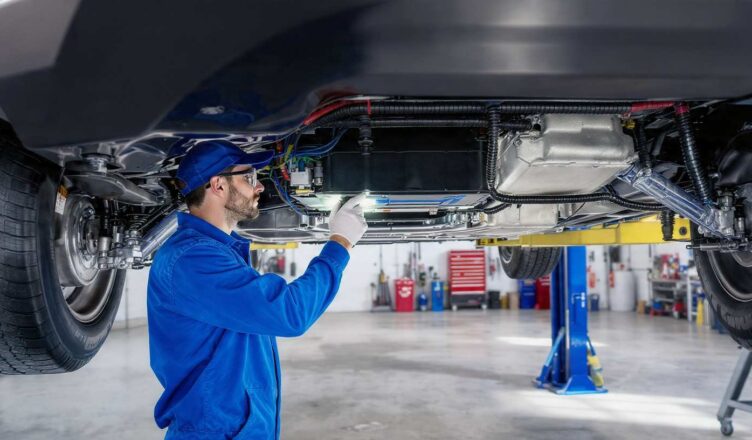
Walk around a 2025 or 2026 vehicle and you’ll see the problem hiding in plain sight. The front fascia may house radar. The windshield may be part of the forward camera system. The mirrors may contain blind-spot hardware. Rear bumpers may carry parking sensors and cross-traffic tech.
Even if the visible damage looks mild, the repair plan may not be. A colleague recently cracked the windshield on a 2025 Hyundai Tucson and was stunned when the estimate came back north of $1,400—most of that wasn’t glass. It was the forward-facing camera bracket, recalibration, and a post-install diagnostic scan. That kind of sticker shock is becoming routine.
[Image: Close-up photograph of a cracked windshield on a modern crossover with the ADAS camera housing visible behind the rearview mirror. Alt-text: “Cracked windshield showing the forward-facing ADAS camera module mounted near the rearview mirror on a late-model SUV.”]
AAA’s ADAS repair study still makes the point better than almost anything else I’ve read: in the test scenarios it examined, ADAS-related work averaged $360 in a windshield replacement, $684.63 in a minor rear collision repair, and $1,067.42 in a side-mirror replacement. The electronics and calibration work were not side notes; they were a large share of the bill. Let that sink in.
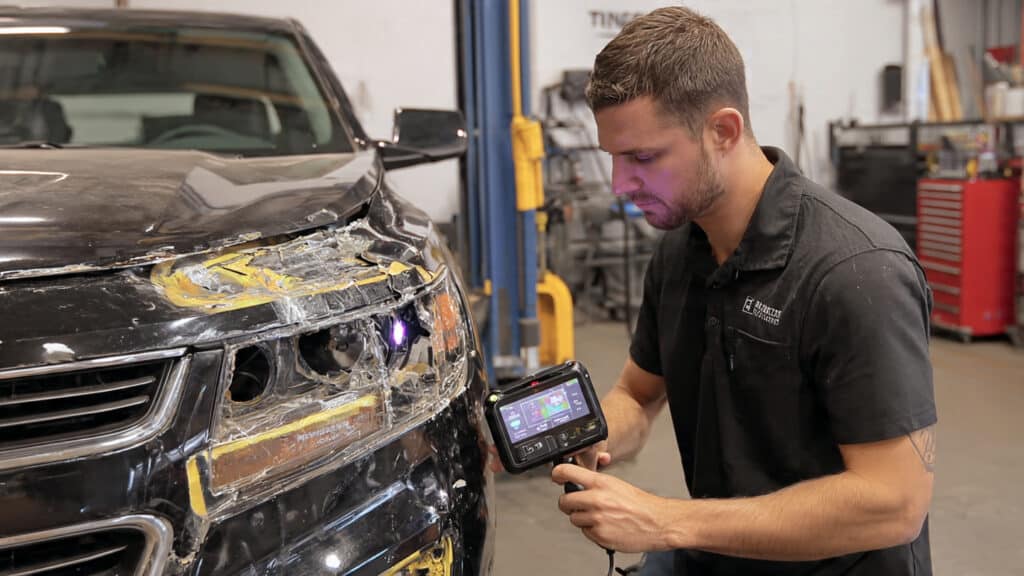
And it lines up with what CCC saw in 2025. Scans showed up on nearly 88% of direct repair program estimates, while calibrations rose to more than 35%, according to the CCC Crash Course Q4 2025 report. The post-crash workflow now often includes digital inspection and sensor setup as a routine cost, not an edge case.
In my view, this is the single biggest reason many drivers misread what happened to premiums. They assume insurers are mostly responding to reckless driving or weather losses. Those matter, sure. But the average family crossover has quietly become a rolling bundle of cameras, wiring, modules, brackets, and software checks. Repair one panel, and three systems may need verification afterward.
Why insurers cared so much in 2025
You might reasonably ask why the pain felt especially sharp in 2025 if some of this tech has been around for years.
Part of the answer is accumulation. More ADAS-equipped vehicles were flowing into body shops in larger numbers, and repairers were dealing with more variability by make, model, trim, damage location, and sensor placement, according to CCC. At the same time, the average repair bill kept climbing, and total loss frequency edged up from 22.1% to 22.8% in 2025.
That last point gets overlooked. When older vehicles with lower market values need expensive electronic repairs, insurers may total them more often—pushing payout math higher even when a crash itself doesn’t look catastrophic. Axios reported, citing LexisNexis Risk Solutions, that the total loss rate reached a record 27% in 2023, which helps explain why insurers entered 2025 already defensive on pricing.
[Image: Line chart showing the rise in total loss rates from approximately 20% in 2019 to 27% in 2023 and the subsequent trend through 2025. Alt-text: “Line chart illustrating the increase in U.S. vehicle total loss rates from 2019 through 2025, with a peak near 27% in 2023.”]
Then there’s the broader insurance backdrop. The 2025 LexisNexis U.S. Auto Insurance Trends Report said bodily injury severity rose 9.2% year over year, property damage severity climbed 2.5%, and industry rate levels were up 35% from January 2022 to the end of 2024. Rate increases slowed in 2024, but they were slowing from a much higher base.
So yes, there was some easing by 2025. But drivers were already living with the cumulative effect.
The uncomfortable truth about “safer” cars
Modern safety tech may reduce crashes. IIHS says advanced crash-avoidance features are becoming widespread and that some systems do show real-world crash reductions. Good news, genuinely.
The bad news is that safer does not always mean cheaper to insure. A car that helps avoid a front-end crash may still cost more to repair after a low-speed parking lot scrape, because the bumper, grille, windshield, or mirror may now carry hardware that has to be replaced, re-aimed, or recalibrated. In my assessment, that tradeoff is real and permanent. We are not going back to the era where a windshield claim was just glass and adhesive.
EVs may magnify that pattern. Mitchell’s Plugged-In: EV Collision Insights 2025 Year in Review found BEVs averaged 1.70 calibrations per estimate, versus 1.54 for internal-combustion vehicles. LexisNexis also said drivers moving from ICE vehicles to EVs saw a 14% rise in claim frequency. That does not mean every EV will cost more to insure in every ZIP code. But the repair market is still adapting to heavier, sensor-dense vehicles with different parts and labor needs.
Here’s my honest caveat: this article can explain the national pattern, but it can’t predict your exact quote. State regulation, your ZIP code, prior claims, vehicle choice, annual mileage, and deductible still matter a lot.
What you can do if your premium jumped anyway
Start with the car, not just the insurer. A lot of shoppers compare trim prices and fuel economy, then ignore repair complexity. That’s backwards in this market.
Compare insurance before you buy the next vehicle, especially between trims—a higher trim may add convenience tech that also raises repair severity. Check IIHS safety ratings, but also think about repair exposure. Great crash prevention is good; expensive-to-fix packaging is the tradeoff you’re actually paying for at renewal time.
If your finances can absorb it, a higher deductible may lower premium more cleanly than stripping useful coverage. I’d also shop aggressively in 2026. J.D. Power’s 2025 U.S. Auto Insurance Study said 38% of customers were “not very satisfied,” and LexisNexis said more than 45% of policies in force were shopped at least once by the end of 2024. That usually means carriers know consumers are restless, and some are already getting more competitive.
[Image: Screenshot or mockup of a side-by-side insurance quote comparison for two trims of the same crossover model, showing a noticeable premium difference. Alt-text: “Side-by-side comparison of annual insurance premium estimates for a base-trim versus a fully loaded trim of the same 2026 crossover model.”]
If you drive a newer vehicle packed with cameras, radar, a heated windshield, and high-end lighting, you’re the clearest case for checking premiums line by line before renewal. If you’re shopping used, the sweet spot may be a vehicle new enough to have strong safety tech but not so loaded that every minor claim turns into a calibration festival.
References
- Bureau of Labor Statistics — Consumer Price Index, Motor Vehicle Insurance and Maintenance/Repair categories (February 2025 and February 2026 releases): https://www.bls.gov/cpi/
- CCC Intelligent Solutions — Crash Course Q4 2025: https://cccis.com/crash-course/
- AAA — ADAS Vehicle Repair Cost Study: https://newsroom.aaa.com/2023/09/adas-repair-costs/
- LexisNexis Risk Solutions — 2025 U.S. Auto Insurance Trends Report: https://risk.lexisnexis.com/insights-resources/research/us-auto-insurance-trends-report
- Mitchell International — Plugged-In: EV Collision Insights 2025 Year in Review: https://www.mitchell.com/insights/collision-repair/article/plugged-in-ev-report
- J.D. Power — 2025 U.S. Auto Insurance Study: https://www.jdpower.com/business/press-releases/2025-us-auto-insurance-study
This article is for informational purposes only and does not constitute financial, insurance, or legal advice. Insurance premiums vary by state, insurer, driving history, vehicle, and many other individual factors. Consult a licensed insurance professional for guidance specific to your situation.
