

You’re 2,000 miles overdue. The car still runs fine. No warning lights. So you push it another month.
I’ve seen that exact car show up on a tow truck.
Not every engine fails dramatically, but the damage starts earlier than most people think—and it stacks quietly. This isn’t about scare tactics. It’s about what actually breaks, how fast it happens, and what it costs you when it does. We’ll walk through the timeline, the mechanical consequences inside the engine, and how skipping a $100 service can turn into a four-figure repair, using real intervals from manufacturers and reliability data from sources like Consumer Reports and J.D. Power.
The First Thing That Goes Bad Isn’t the Engine — It’s the Oil
Oil doesn’t just “run out.” It degrades.
Modern engine oil is packed with additives—detergents to clean, dispersants to hold contaminants, and anti-wear compounds to protect metal surfaces. Over time, heat and combustion byproducts break those down.
And then it thickens.
Most manufacturers in the U.S.—including Toyota, Honda, and Ford—recommend oil changes every 5,000 to 10,000 miles depending on engine design and oil type. That’s straight from owner’s manuals, not guesswork. The Consumer Reports 2025 Reliability Insights notes that extended oil intervals can be safe only if the oil quality and driving conditions match what the manufacturer expects.
Short trips. Stop-and-go traffic. Hot climates. These shorten oil life fast. Inside the engine, oil loses its ability to lubricate moving parts, heat builds up in tight tolerances like camshafts and bearings, and microscopic metal wear increases. You won’t feel it yet. But it’s happening.
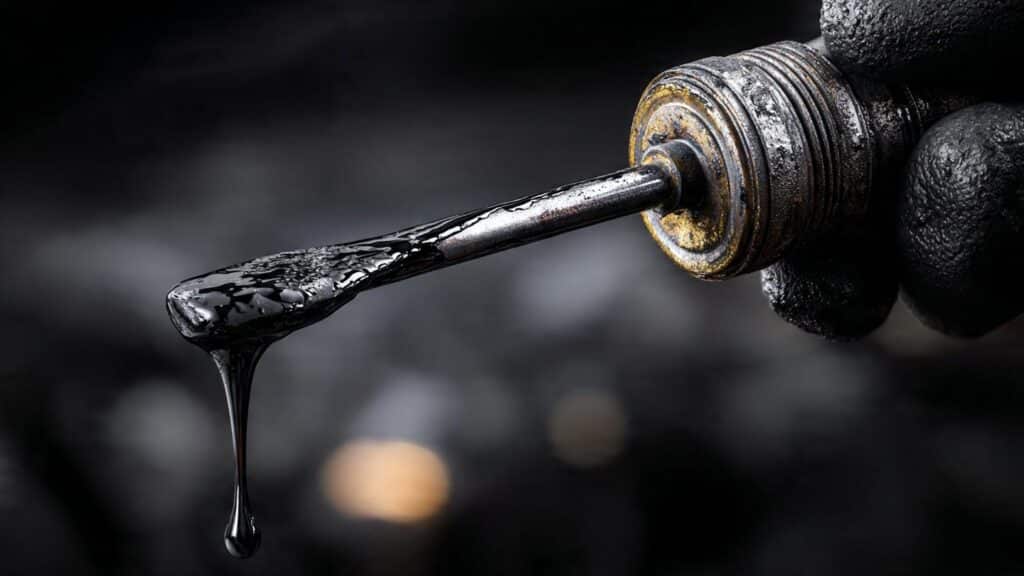
Push It Further and Sludge Starts Building
Ever seen engine sludge? It looks like black peanut butter.
That’s oil that’s broken down so far it can’t flow properly anymore. It clogs passages—the tiny channels that feed oil to critical parts like the crankshaft and valve train. This is where things get expensive.
According to the J.D. Power 2025 Vehicle Dependability Study, lubrication-related failures are still a common contributor to long-term engine issues, especially in vehicles with inconsistent maintenance histories. If this car came into my bay with thick oil and noise from the top end, the first thing I’d check is oil flow to the valvetrain. Sludge is usually the culprit.
What starts failing:
- Hydraulic lifters: These rely on precise oil pressure to function.
- Variable valve timing (VVT) systems: Small solenoids clog easily.
- Oil pump pickup screens: Sludge blocks the “straw” that drinks the oil.
Once oil flow is restricted, parts start starving. It becomes metal on metal with no buffer.
Then the Heat Takes Over
Engines are designed to run hot, but it must be controlled.
Oil plays a major role in cooling—not just lubrication. When it breaks down, friction increases, and heat spikes in localized areas. Pistons, rings, and bearings take the hit first.
This is where you may finally notice symptoms like knocking or ticking noises, a burning oil smell, reduced performance, or the oil warning light flickering at idle. By then, it may be too late. Modern engines, especially turbocharged ones, are less forgiving.
Smaller tolerances and higher pressures make them vulnerable. According to Consumer Reports’ 2025 reliability findings, turbo engines are significantly more sensitive to maintenance neglect. One skipped oil change won’t kill every engine, but repeated neglect stacks damage in a way you can’t reverse later.
What It Actually Costs: Maintenance vs. Repair
Here’s the part most owners underestimate. A skipped oil change doesn’t cost you $100; it shifts you down this table.
| Service / Repair Type | Typical Cost (USD) | When It Happens |
| Conventional Oil Change | $60–$90 | Every 5,000 miles |
| Synthetic Oil Change | $80–$120 | Every 7,500–10,000 miles |
| Engine Sludge Cleaning | $300–$800 | After severe neglect |
| Oil Pump Replacement | $700–$1,500 | Restricted oil flow |
| Rod Bearing Repair | $1,500–$3,000 | Oil starvation damage |
| Full Engine Replacement | $4,000–$8,000+ | Catastrophic failure |
I’ve personally seen engines seize—completely locked—because the oil turned to sludge and stopped circulating. At that point, there’s no repair. It’s replacement or scrap.
Not All Engines Fail the Same Way
Some engines tolerate neglect better than others. Older naturally aspirated engines—think early 2000s Toyota 2.4L or GM 3.8L V6—had looser tolerances. They could survive longer on degraded oil, though not without wear.
Modern engines are a different story:
- Turbocharged engines rely heavily on clean oil for turbo bearings.
- Direct injection engines produce more carbon and contamination.
- Smaller oil capacities mean faster degradation.
In my experience, turbo engines are the first to complain. They complain loudly via whining turbos, oil consumption, and loss of boost. This is a big deal. According to EPA 2026 fuel economy guidance, proper maintenance plays a direct role in maintaining efficiency. Dirty oil increases internal friction, which can reduce MPG over time.
The “I’ll Do It Next Month” Trap
This is where most people get caught. Life gets busy, and the engine doesn’t fail immediately, so it feels like no harm done.
But the damage isn’t linear; it accelerates. A single overdue interval might not cause noticeable issues, but repeated neglect compounds wear in bearings, piston rings, and cam surfaces. By the time symptoms show up, the wear has already happened.
In our assessment, some engines survive years of poor maintenance, while others don’t make it past 80,000 miles. There’s variability—driving style, climate, and oil quality all matter. So no, skipping one oil change doesn’t guarantee failure, but it absolutely increases the odds.
So When Should You Actually Change It?
Forget the old “every 3,000 miles” rule. That’s outdated for most modern cars. Follow the manufacturer:
- Most modern vehicles: 5,000–7,500 miles for conventional use.
- Synthetic oil: Up to 10,000 miles in ideal conditions.
- Severe driving: Closer to 5,000 miles (includes idling, towing, or extreme heat).
You can double-check intervals in your owner’s manual or use tools like the Edmunds 2026 True Cost to Own calculator to see how maintenance schedules impact long-term costs. Sticking to a 5,000–7,500 mile interval—even if your car allows longer—is cheap insurance.
The Bottom Line
If you keep cars long-term—past 100,000 miles—regular oil changes matter more than almost any other maintenance item. It’s the difference between a car aging normally and one developing expensive internal damage.
If you lease or trade in every three years, the consequences may never catch up to you. Someone else inherits that problem. That’s the reality.
Real-world driving rarely matches “ideal” conditions. That’s where problems creep in. If you’re not sure where your car stands, check your last oil change mileage, look at the oil condition on the dipstick, and verify the manufacturer interval. It takes five minutes and can save you thousands.
References
- Consumer Reports Car Reliability Data 2025
- J.D. Power 2025 Vehicle Dependability Study
- EPA Fuel Economy Maintenance Guidance 2026
- AAA Car Maintenance and Repair Costs 2026
- NHTSA Vehicle Maintenance Basics
- Edmunds True Cost to Own Calculator 2026
Disclaimer: The information provided in this article is for educational and informational purposes only. It does not constitute professional advice. Readers should conduct their own research and consult with qualified professionals before making any decisions.
