
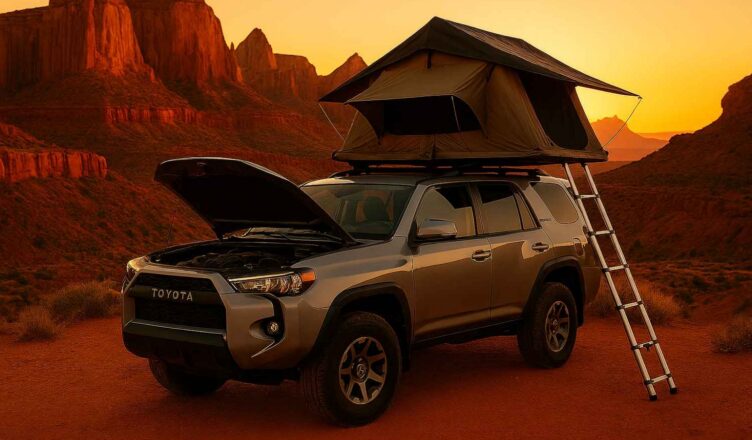
You’re 40 miles down a forest service road in Utah, the map shows a thin gray line ahead, and your cell signal dropped off half an hour ago. The campsite you pinned earlier? Still another hour away. This is where overlanding stops being a Pinterest idea and starts feeling real.
By the end of this, you’ll have a clear picture of what actually matters on your first trip in the U.S.—vehicle setup, gear priorities, route planning, and the mistakes that strand beginners. We’ll lean on data from sources like the EPA and IIHS, but also the less glamorous lessons that only show up once you’re out there.
Start With the Vehicle You Already Own
A lot of first-timers assume they need a fully built rig with a lift kit and 33-inch tires. You probably don’t. In our assessment, most first overlanding trips in the U.S. can be done in a stock SUV or pickup with decent ground clearance. Vehicles like the 2026 Subaru Outback offer up to 9.5 inches of ground clearance in the Wilderness edition, which is more than enough for graded dirt roads and light trails.
According to EPA Fuel Economy Data, a 2026 Subaru Outback with the 2.5-liter engine averages an estimated 27 mpg combined. Compare that to a heavily modified off-road rig dipping into the low 20s, and suddenly range becomes a real limitation when fuel stops are 100+ miles apart. Range is critical because rural infrastructure gaps—fuel and charging—remain significant in large parts of the western U.S., according to the 2026 DOE Alternative Fuel Infrastructure Report.
Gear Priorities: Managing Failure Points
The biggest mistake beginners make is solving hypothetical problems with expensive gear instead of managing real failure points. You don’t need a $1,200 fridge; you need reliable navigation and recovery tools.
Core Overlanding Gear for Beginners
| Category | Example Gear | Why It Matters |
| Navigation | Gaia GPS or onX Offroad | Offline maps when cell service drops. |
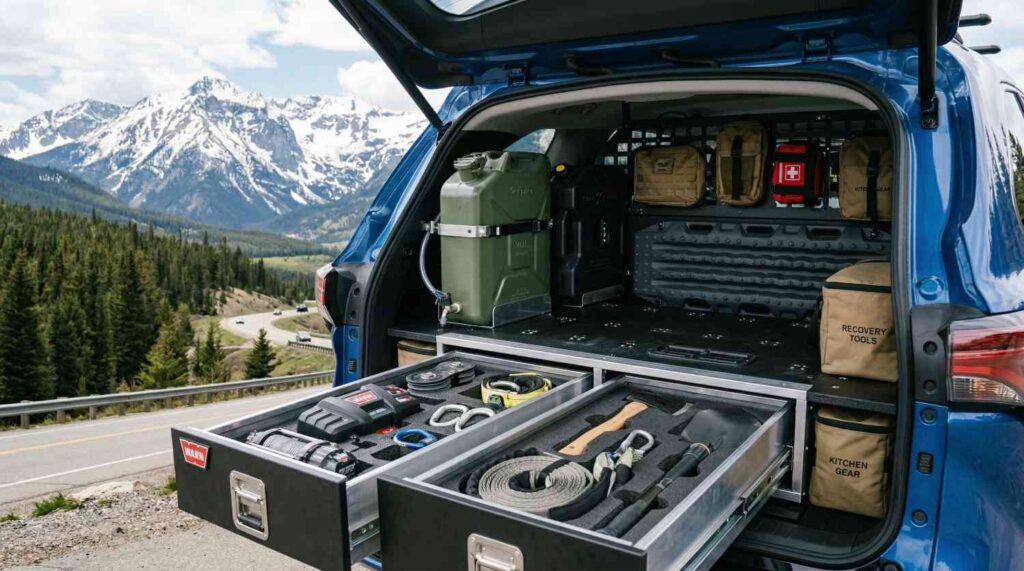
| Recovery | Tow strap, traction boards | Getting unstuck without outside help. |
| Air Management | Portable air compressor | Adjusting tire pressure for terrain. |
| Power | Portable battery station | Charging devices off-grid. |
| Water | 10–20L storage | Basic survival and hygiene. |
| Shelter | Ground or rooftop tent | Weather protection. |
Route Planning and the “No Service” Reality
Distances in the western U.S. are massive, and a route that looks manageable on a map can take twice as long due to terrain or weather. Do not rely on standard mobile navigation once you are off pavement. Tools like Gaia GPS allow you to download maps in advance, which is vital when cell service is unreliable across huge parts of the U.S..
The 2026 DOE Alternative Fuel Infrastructure Report highlights that while federal investments are targeting traditional infrastructure, rural gaps for fuel and emergency services persist. Plan for less access and always have a secondary exit route and an emergency bailout point.
Tire Pressure: The Most Cost-Effective Upgrade
Lowering tire pressure—”airing down”—increases the tire’s contact patch, providing better traction on sand and gravel while improving ride comfort. A stock vehicle with properly adjusted tire pressure often outperforms a modified rig with over-inflated tires. Typical dirt road ranges are 20–25 PSI, while sand may require 15–20 PSI. A key factor is having a portable compressor to “air back up” before returning to pavement to avoid tire damage.
Safety and Dependability Off-Grid
A graded dirt road can still leave you stranded if weather washes it out. While 2026 IIHS Safety Ratings are excellent for assessing vehicle crashworthiness, they do not account for off-grid survival. At minimum, your kit must include a first aid kit, extra water, and a satellite communicator like a Garmin inReach.
Vehicle dependability also plays a role. The 2026 J.D. Power Vehicle Dependability Study notes that while some brands maintain high scores, overall industry dependability has faced challenges, making pre-trip inspections mandatory.
The Real Cost of Overlanding
The real cost of overlanding isn’t just the gear; it’s the accelerated maintenance and fuel consumption. According to the 2026 AAA Driving Costs Study, midsize SUVs and pickup trucks remain among the most expensive segments to own, with medium SUVs costing an average of 83.89 cents per mile. Large pickups, often used for overlanding, can reach 98.54 cents per mile due to higher insurance and fuel costs.
You can estimate these long-term expenses using the Edmunds’ True Cost to Own calculator, which factors in depreciation, maintenance, and repairs that off-road use can accelerate.
Conclusion: Start Small for Long-Term Success
In our assessment, the smartest first overlanding trip is short and close to home—one or two nights with a clear exit plan. We explicitly advise against spending thousands on suspension upgrades before your first trip; a stock vehicle like a 2026 Toyota Tacoma is already highly capable with its i-FORCE hybrid powertrain.
Check your fuel stops using EPA Fuel Economy Data and verify your vehicle’s crashworthiness through 2026 IIHS Safety Ratings. Then, go drive. That is where the real learning starts.
References
- EPA Fuel Economy Data (2026)
- 2026 IIHS Safety Ratings – Nissan Release
- 2026 J.D. Power Vehicle Dependability Study – Motor1 Analysis
- 2026 AAA Driving Costs Study
- 2026 DOE Alternative Fuel Infrastructure Report (Columbia University)
- Edmunds’ True Cost to Own (2026)
Disclaimer: The information provided in this article is for educational and informational purposes only. It does not constitute professional advice. Readers should conduct their own research and consult with qualified professionals before making any decisions.
