
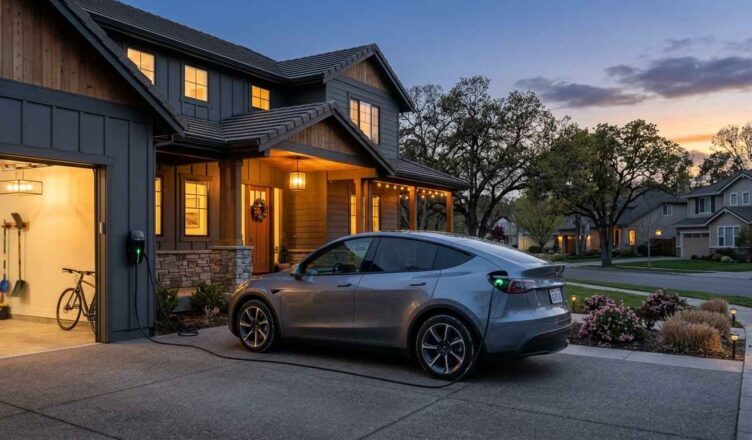
The average total cost to install a Level 2 home electric vehicle (EV) charger in the United States in 2026 typically ranges between $1,200 and $3,500. While hardware prices have stabilized, labor and material costs for electrical infrastructure remain the primary drivers of the final bill. For most homeowners, this investment is a “one-time” infrastructure upgrade that fundamentally changes the economics of vehicle ownership by enabling the cheapest possible fueling rates.
This guide provides a transparent breakdown of 2026 installation expenses, from equipment selection to the hidden costs of panel upgrades, supported by the latest data from the U.S. Department of Energy (DOE) and the Internal Revenue Service (IRS).
Breaking Down the Bill: Where Your Money Goes
When you receive a quote for a Level 2 installation, it is rarely for just the “charger.” In technical terms, the wall unit is Electric Vehicle Supply Equipment (EVSE), and its role is to safely manage the flow of electricity to the car’s onboard charger. The majority of your project budget is likely dedicated to the electrical circuit that supports it.
According to the 2026 DOE Alternative Fuels Data Center report, the national average for a standard residential installation follows this pattern:
| Component | Typical 2026 Cost Range | Primary Cost Drivers |
| EVSE Hardware | $400 – $1,200 | Amperage (32A vs 48A), Smart features |
| Electrical Labor | $400 – $1,500 | Distance from panel, wall complexity |
| Materials (Wire/Conduit) | $200 – $800 | Length of run, copper market prices |
| Permits & Inspection | $50 – $300 | Local municipal requirements |
| Panel Upgrade (Optional) | $1,500 – $3,000 | Total home electrical load capacity |
The Variable That Multiplies Costs: Distance and Copper
In our assessment, the single most significant factor in your final quote is the physical distance between your electrical panel and the charging location. Level 2 chargers require a dedicated 240-volt circuit, typically using 6-gauge or 8-gauge copper wire for 40-amp to 60-amp circuits.
If your panel is in the garage, a “back-to-back” installation might only require 5 feet of wire. However, if your panel is in a basement on the opposite side of the house, you may need 50 to 100 feet of conduit and wire. According to NREL infrastructure analysis, these “long runs” can add $15 to $25 per linear foot to your total bill. If your project requires trenching through a driveway or yard, the labor costs alone can exceed the price of the charger hardware.
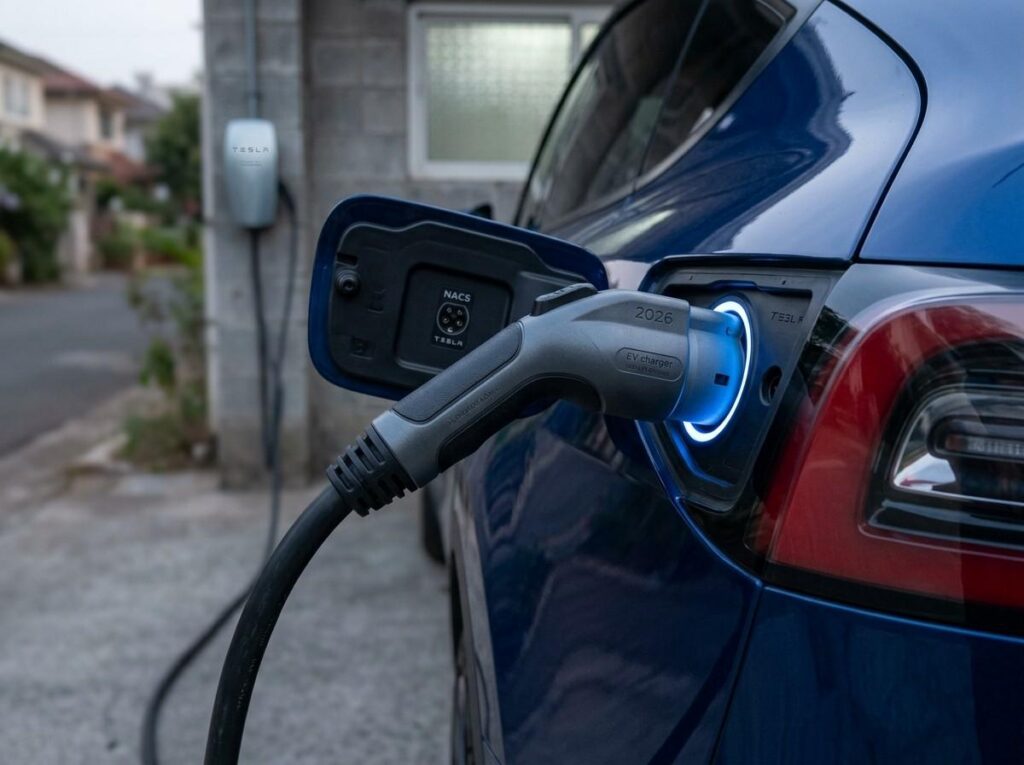
Electrical Panel Capacity: The “Load” Reality Check
Your home’s electrical panel is essentially an energy budget. Most modern homes have 200-amp service, which can usually accommodate a new 40-amp or 50-amp EV circuit. However, many older American homes operate on 100-amp or 125-amp service.
If your household already runs an electric range, clothes dryer, and central air conditioning, there may not be enough “headroom” to safely add an EV charger. According to 2026 DOE residential infrastructure trends, roughly 15% of EV buyers in older suburban tracts must invest in a panel upgrade. This adds $1,500 to $3,000 to the project but provides the side benefit of modernizing the home’s entire electrical system and increasing its resale value.
Smart Chargers vs. Basic Units: Is the Extra $400 Worth It?
Level 2 hardware in 2026 is divided into “dumb” chargers and “smart” chargers. A basic unit simply delivers power when plugged in. A smart charger connects to your home Wi-Fi, allowing you to track energy usage, schedule charging via an app, and sometimes integrate with solar power systems.
| Feature | Basic Level 2 | Smart Level 2 |
| Hardware Price | $400 – $550 | $650 – $1,200 |
| Scheduling | Via car’s infotainment | Via phone app or utility |
| Utility Integration | Manual only | Automatic off-peak syncing |
| Energy Tracking | None (Estimated) | Real-time kWh reports |
In our assessment, the primary reason to choose a smart charger in 2026 is to take advantage of utility “Time-of-Use” (TOU) rates. Many utilities now offer significantly cheaper electricity between 11:00 PM and 6:00 AM. A smart charger can automate this process, ensuring you only pull power when it is cheapest.
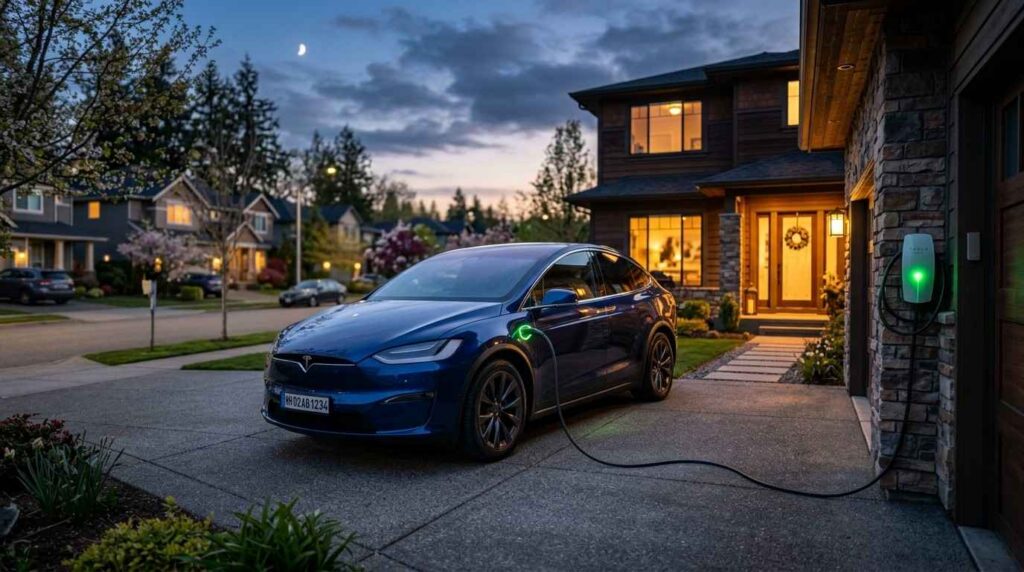
2026 Federal and Local Incentives: The 30C Tax Credit
The federal government provides a crucial financial bridge for home charging through the 30C Alternative Fuel Infrastructure Tax Credit. According to the 2026 IRS Form 8911 guidelines, eligible taxpayers can claim a credit of 30% of the cost of hardware and installation, capped at $1,000.
However, there is a geographic restriction. As of early 2026, this credit is primarily targeted at residents in “low-income or non-urban” census tracts. You should verify your eligibility using the DOE 30C Tax Credit Eligibility Locator before budgeting.
Beyond federal help, local utility rebates are the most common source of savings. For example, utilities in states like New York and California often offer $250 to $750 rebates for the installation of specific “qualified” smart chargers. Stacking these incentives can reduce a $2,000 installation to a net cost of $1,000.
Operating Costs: How Much Does Charging Actually Add to Your Bill?
Once the installation is complete, the focus shifts to monthly operating costs. According to the January 2026 EIA Electricity Monthly Update, the national average residential electricity rate is 17.45 cents per kWh.
If you drive 1,000 miles per month in a typical EV (consuming 30 kWh per 100 miles), you will use 300 kWh of electricity.
- Monthly Charging Cost: ~$52.35
- **Equivalent Gas Cost (30 MPG at $3.98/gal):** ~$132.66
This $80 monthly saving means a $2,000 installation pays for itself in roughly two years. If you reside in a low-cost state like North Dakota (10.92 ¢/kWh) or use off-peak rates, that payback period can drop to under 18 months.
Conclusion: Planning for a Seamless Installation
Installing a Level 2 charger is a significant home improvement that requires professional expertise. While the upfront cost of $1,200 to $3,500 may seem high, the combination of federal tax credits, utility rebates, and dramatic fuel savings makes it a financially sound decision for long-term EV owners.
In our assessment, the best path forward is to secure at least two quotes from licensed electricians who specialize in EVSE. Ask for a “load calculation” to ensure your existing panel can handle the new circuit safely. By choosing a mid-range 40-amp unit and placing it strategically near your vehicle’s port, you can maximize your daily range while minimizing installation complexity. For the latest model-specific requirements, visit fueleconomy.gov to compare onboard charger speeds for your specific vehicle.
References
- DOE Alternative Fuels Data Center: 2026 Infrastructure Report
- IRS Clean Vehicle Refueling Property Credit (Section 30C) 2026 Guide
- EIA Electricity Monthly Update – January 2026 Residential Rates
- NREL: 2026 National Charging Network Demand Study
- 2026 EPA Fuel Economy Data: Home Charging Efficiency
- Rewiring America: 2026 Guide to Federal Charging Incentives
Disclaimer
The information provided in this article is for educational and informational purposes only and does not constitute professional electrical, financial, or tax advice. Installation costs vary significantly by region and home configuration. Always hire a licensed electrician for high-voltage work and consult a tax professional regarding federal and state credit eligibility.
