
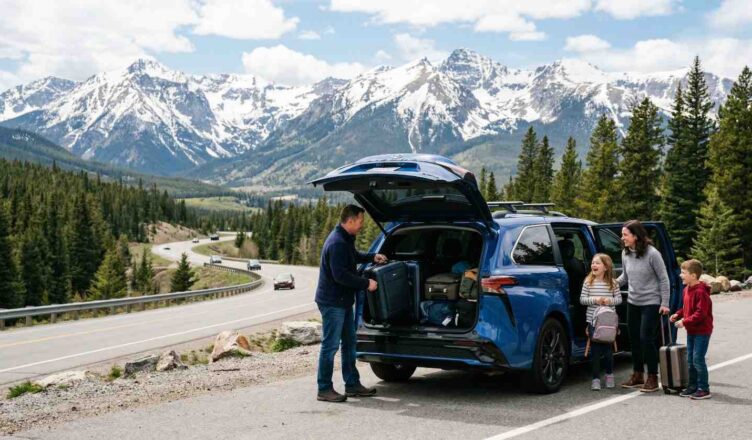
You’re somewhere outside Amarillo. One kid is asleep, the other is asking for snacks again, and you’re realizing the next rest stop is still 40 miles out. This is the moment most road trip plans either hold up—or quietly fall apart.
Traveling with kids under 10 changes everything about how you approach a road trip. Timing shifts. Space matters more. And small details—seat access, snack storage, how easy it is to clean spilled juice—start to matter as much as fuel economy.
This guide breaks down how to plan a family road trip across the U.S. with young kids, from choosing the right vehicle to structuring daily drive time and building in flexibility. We’re pulling from EPA fuel data, IIHS safety ratings, and real-world ownership insights to help you make decisions that hold up after day three—not just day one.
Start With the Vehicle—Because It Shapes Everything Else
You can plan the perfect route and still hate the trip if the vehicle fights you the whole way. Space is the first filter. According to EPA classifications on fueleconomy.gov, midsize SUVs and minivans offer similar passenger volume, but the difference shows up in usability—sliding doors, lower step-in height, and easier third-row access. And yes, minivans still win here.
Real-World Family-Friendly Vehicle Comparison (2025 Models)
| Vehicle | MPG (Combined) | Cargo Space (Max cu ft) | Starting MSRP (approx.) | IIHS Safety Rating |
| Toyota Sienna Hybrid | 36 mpg | 101 | $37,000 | Top Safety Pick+ |
| Honda Odyssey | 22 mpg | 92 | $38,000 | Top Safety Pick |
| Kia Telluride | 22 mpg | 87 | $37,500 | Top Safety Pick+ |
| Subaru Ascent | 22 mpg | 86 | $35,000 | Top Safety Pick |
| Chrysler Pacifica Hybrid | 30 mpg | 81 | $50,000 | Top Safety Pick |
EPA fuel economy data comes from fueleconomy.gov, while safety ratings are based on 2025 testing from IIHS.
In my experience, sliding doors alone justify a minivan if you’re dealing with tight parking lots and restless kids. Try loading a squirming five-year-old into a third-row SUV seat in a cramped gas station stop. It gets old quickly. But there’s a tradeoff. SUVs like the Kia Telluride tend to have higher ground clearance and may feel more stable in poor weather or rougher routes.
How Much Driving Is Too Much? Less Than You Think
Most adults overestimate how far they can comfortably drive with kids. A common benchmark for family travel is to cap your driving day at 5–6 hours behind the wheel. That’s not total trip time—it’s actual driving. Add stops, meals, and the inevitable “I need a bathroom now,” and your day stretches closer to eight hours.
According to fatigue studies from AAA, attention drops off significantly after long, uninterrupted driving periods. With kids in the car, those interruptions aren’t a nuisance—they’re a safety feature. To maintain a sustainable pace, consider these intervals:
- Stop every 2–3 hours minimum.
- Plan one longer break at a park or playground.
- Avoid driving past bedtime if possible.
Shorter days feel slower on paper. However, they make the entire trip more sustainable for everyone involved.
Packing: Preloading Your Decisions
There’s a moment on every trip where you think, “We brought too much stuff.” You didn’t. You just packed it in a way that makes it unusable. Based on organizational best practices for long-haul travel, what actually matters is accessibility:
- Accessible snacks and water: These should never be buried in the trunk.
- Spill-proof containers: These are required for younger kids to prevent interior damage.
- Backup clothes: Keep at least one full change per child within arm’s reach.
- Entertainment rotation: Introduce books, tablets, or toys one at a time to prevent clutter.
I’ve seen families pack beautifully organized trunks—and then spend half their stops digging through them. Keeping a “quick grab” bag in the cabin with wipes, tissues, and sanitizer solves problems fast.
Route Planning Isn’t About Speed—It’s About Options
Mapping apps will give you the fastest route. That’s rarely the best one with kids. You want optionality. Look for routes with frequent towns, rest stops, and alternative exits. Use tools like the EPA’s fueleconomy.gov to estimate fuel stops and Google Maps for live traffic updates.
In our assessment, the biggest planning mistake families make is locking themselves into a rigid schedule. Kids don’t respect schedules, and neither does weather. Build in at least 20% more time than the GPS suggests to account for the “kid factor.”
Safety Isn’t Just About Crash Ratings
Yes, you should check IIHS safety ratings. The 2025 Top Safety Pick+ list is a good baseline, and you can verify specific trims on iihs.org/ratings. But daily safety matters just as much.
Practical safety considerations include:
- Rear visibility: Cameras help, but physical blind spots still matter.
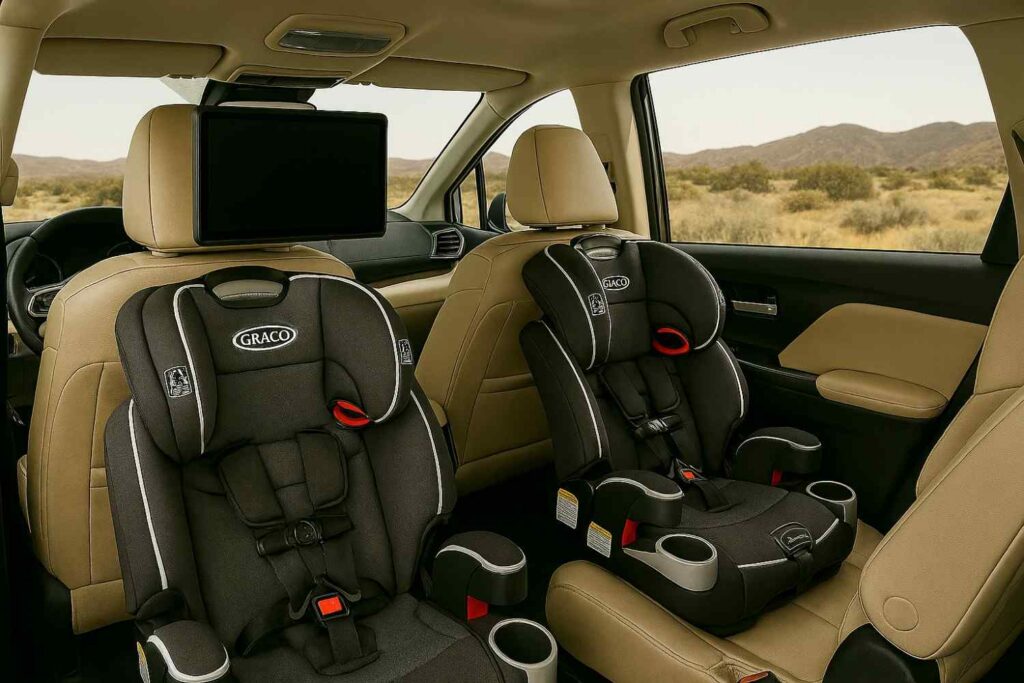
- Ease of car seat installation: Not all LATCH systems are equal in ease of use.
- Driver assistance systems: Adaptive cruise control significantly reduces leg fatigue.
According to NHTSA data, driver fatigue and distraction remain major contributors to highway incidents. Features like lane-keeping assist can reduce those risks, provided they are used correctly. One honest note: tech can feel intrusive at first. Some systems beep constantly until you get used to them. It is still worth the learning curve.
Budgeting the Trip: It’s Not Just Gas
Fuel is the obvious cost, but it isn’t the only one. Using EPA fuel estimates, a 2,000-mile trip in a Toyota Sienna (36 mpg) may cost significantly less in fuel than the same trip in a Honda Odyssey (22 mpg). Based on a fuel price of $3.50 per gallon, that difference reaches approximately $138.
Ownership costs go beyond fuel. Tools like Edmunds’ True Cost to Own (TCO) calculator factor in maintenance, depreciation, and insurance. It’s worth running your numbers there before committing to a vehicle. Don’t forget the hidden costs:
- Extra hotel nights due to fatigue.
- Food stops (they add up fast).
- Attraction or park entry fees.
Conclusion
If you’re prioritizing ease of use and stress reduction, a hybrid minivan like the Toyota Sienna is hard to beat. In our assessment, it offers the best balance of fuel efficiency and interior space for families with younger kids. If your route includes tougher terrain, a midsize SUV like the Kia Telluride is a strong alternative, though you must be ready for tighter cargo access.
This guide leans heavily on vehicle choice and planning structure, but it doesn’t cover every variable. Your mileage may vary, especially if your trip includes remote areas. Before you finalize anything, check IIHS safety ratings for your exact trim, estimate fuel costs on fueleconomy.gov, and run ownership numbers through Edmunds’ TCO calculator.
References
- EPA Fuel Economy Data
- IIHS Vehicle Safety Ratings
- NHTSA Safety Data and Ratings
- Edmunds True Cost to Own (TCO) Calculator
- AAA Driving Safety and Fatigue Studies
- Kelley Blue Book (KBB) Ownership Insights
Disclaimer: The information provided in this article is for educational and informational purposes only. It does not constitute professional advice. Readers should conduct their own research and consult with qualified professionals before making any decisions.
