
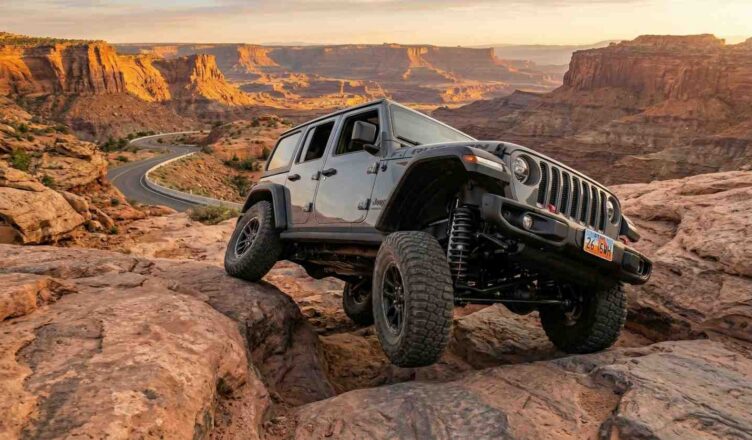
You’re halfway up a rutted dirt trail, one wheel hanging in the air, and your dashboard is blinking like it’s reconsidering your life choices. The SUV brochure said “off-road capable,” but this feels like anything but. That gap—between what marketing suggests and what your vehicle can actually handle—is where most drivers get into expensive trouble.
By the end of this, you’ll have a grounded sense of what different vehicles can realistically do off-pavement, how to read terrain before you commit, and where the hard limits tend to show up. We’ll pull from manufacturer specs, EPA Fuel Economy Data, and safety insights from the 2026 IIHS Safety Ratings to keep this rooted in real data—not just trailhead optimism.
Ground Clearance Is the First Reality Check
Ground clearance—how much space sits between your vehicle’s lowest point and the ground—dictates whether you glide over obstacles or scrape your way through them. A typical sedan sits around 5.5 inches, while many crossovers hover between 7 and 8.5 inches. A dedicated off-roader like a Wrangler Rubicon pushes past 10.5 inches in its 2026 configuration.
That difference matters more than horsepower. According to the 2026 NHTSA Trailer and Off-Road Safety Guide, clearance determines your “survival” on a trail. Here is how those numbers translate to the real world:
- 5–7 inches: Gravel roads, light dirt, and mild inclines only.
- 8–9 inches: Rutted trails, shallow rocks, and uneven forest service roads.
- 10+ inches: Technical trails, larger rocks, and deeper ruts.
But clearance isn’t the whole story. The shape of your bumpers matters too. Approach angle (front), departure angle (rear), and breakover angle (middle) determine whether you’ll scrape on inclines or get high-centered on a ridge. I’ve seen well-driven crossovers outperform poorly driven trucks, but physics eventually wins every time.
AWD vs. 4WD: The Confusion That Gets People Stuck
You’ll hear people use “AWD” and “4WD” like they’re interchangeable. They are not. All-wheel drive (AWD) systems, common in vehicles like the Toyota RAV4 or Subaru Outback, are designed for traction on slippery roads—snow, rain, and light dirt. They react automatically, shifting power where needed.
Four-wheel drive (4WD), especially systems with low-range gearing, is built for slow, controlled crawling over obstacles. Low-range gearing is the key difference. It multiplies torque at low speeds, letting you climb steep terrain without flooring the throttle. Without it, you’re relying on momentum—and momentum off-road is often what breaks components like oil pans and suspension bushings.
According to 2026 drivetrain breakdowns from the AAA 2026 Driving Costs Study, AWD systems can overheat or disengage under sustained off-road strain. In our assessment, this is a design limit rather than a failure. If your center differential gets too hot, the computer will likely cut power to the rear wheels to protect the transmission, effectively turning your SUV into a front-wheel-drive vehicle exactly when you need all four wheels most.
Tires: The Most Overlooked Off-Road Tool
You can have locking differentials and skid plates, but none of it matters if your tires aren’t up to the job. Most SUVs come with All-Season tires built for quiet road manners and fuel efficiency. We explicitly advise against using standard All-Season tires for any trail rated above “mild.” The thin sidewalls are highly susceptible to failure from sharp rocks, and the tight tread pattern quickly fills with mud, turning your tires into “slicks.”
Swapping to All-Terrain (A/T) tires provides an immediate difference:
- Deeper tread: Grips loose dirt and gravel more effectively.
- Reinforced sidewalls: Provides much higher resistance to punctures and “snake bites” from rocks.
- Lower pressure capability: Allows you to “air down” for a wider contact patch on sand.
However, there is a tradeoff. Your fuel economy will drop, a fact you can verify using EPA Fuel Economy Data. In my experience, tires are the single most transformative upgrade for any vehicle—more than drive modes or fancy badges.
What Different Vehicles Can Realistically Handle
Not all SUVs are built the same. Here is a grounded comparison of 2026 capability levels based on manufacturer specs and the 2026 IIHS Safety Ratings:
| Vehicle Type | Example Models | Ground Clearance | Drivetrain | Real Off-Road Capability |
| Sedan | Honda Accord | ~5.5 in | FWD | Paved roads and flat gravel only. |
| Compact Crossover | Toyota RAV4 | ~8.4 in | AWD | Light trails and forest service roads. |
| Soft-Roader | Subaru Outback | ~8.7 in | AWD | Mild dirt and some uneven terrain. |
| Mid-Size SUV | Toyota 4Runner | ~9.6 in | 4WD (Low) | Rocks, steep trails, and deep mud. |
| Specialist | Jeep Wrangler | ~10.8 in | 4WD + Lockers | Technical rock crawling. |
Transmission Cooling: The Hidden Limit of Crossovers
One factor rarely mentioned in brochures is transmission cooling. In 2026, many crossovers use Continuously Variable Transmissions (CVTs) or high-gear-count automatics. While efficient on-road, these can struggle with the heat generated by slow, high-torque off-road maneuvers.
If you are climbing a long, sandy grade, your transmission fluid temperature can spike. Unlike dedicated off-roaders, many crossovers lack a heavy-duty external transmission cooler. If you feel the car “shuttering” or notice a burning smell, you have already pushed past the vehicle’s thermal limits.
Electronics vs. Mechanical Hardware
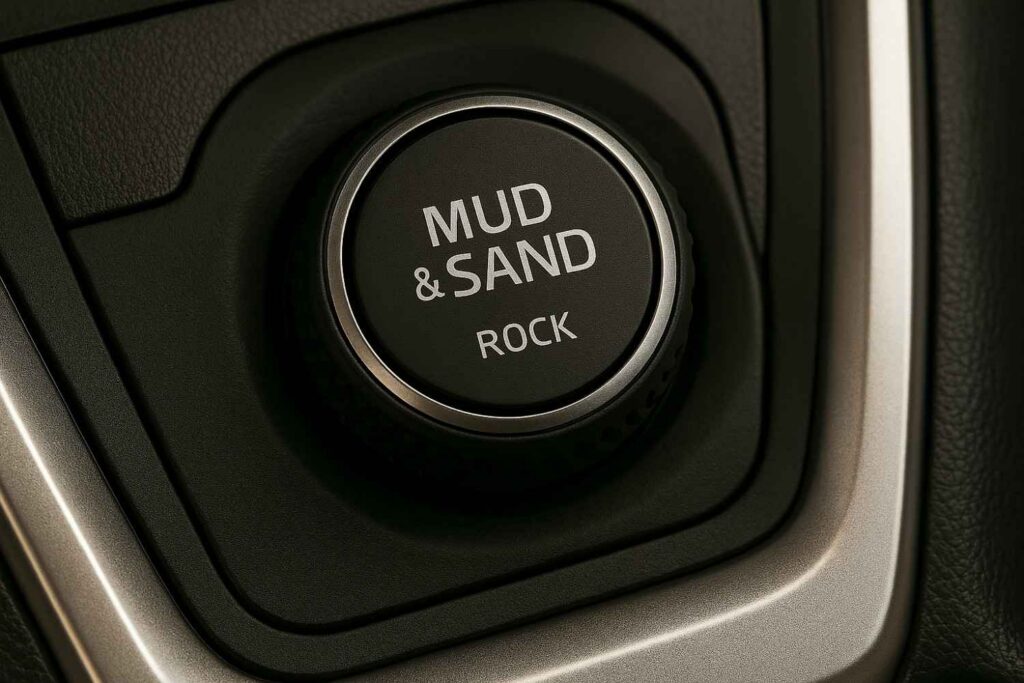
Modern vehicles come loaded with terrain modes—sand, mud, snow, and rock. These adjust throttle response and traction control. They work well as “training wheels,” but they rely on sensors. When conditions get unpredictable—such as deep mud or extreme wheel articulation—software can hesitate.
In our assessment, electronic aids are no substitute for proper hardware like a mechanical locking differential. IIHS Safety Ratings focus on crash performance, but they consistently note that stability systems can behave unpredictably when a vehicle is tilted at extreme angles off-road.
Where You Should Draw the Line
Most vehicles don’t fail dramatically; they just stop progressing. Wheels spin, and traction disappears. If you find yourself needing excessive speed to clear an obstacle, you are likely pushing too far.
If you are planning longer trips that involve unpaved sections, tools like the Edmunds’ True Cost to Own calculator can help you factor in the accelerated wear-and-tear costs. Off-road use—even “light” use—shortens the life of your bushings, dampers, and air filters.
Conclusion: Match the Vehicle to Reality
If you stick to national park trails and gravel paths, an AWD crossover like a RAV4 or Outback is more than enough. But for anything involving rocks or steep mud, you want a 4WD system with low-range gearing.
Check your vehicle’s clearance, verify your drivetrain type against EPA Fuel Economy Data, and check the 2026 IIHS Safety Ratings before pushing your vehicle’s limits. The smartest off-roaders aren’t the ones with the most gear—they are the ones who know when to turn around.
References
- EPA Fuel Economy Data (2026 Updates)
- 2026 IIHS Safety Ratings
- Edmunds’ True Cost to Own (2026 Data)
- 2026 AAA Driving Costs Study
- 2026 NHTSA Trailer and Off-Road Safety Guide
Disclaimer: The information provided in this article is for educational and informational purposes only. It does not constitute professional advice. Readers should conduct their own research and consult with qualified professionals before making any decisions.
